
Startups often begin with one product or service, but growth rarely stays simple. As companies expand, many founders add subscriptions, consulting services, online sales, partnerships, licensing fees, affiliate income, and global payment channels to increase revenue. An accountant for a startup business becomes important much earlier than many founders expect because each new income source adds financial complexity.
While multiple revenue streams can support growth and reduce risk, they also create additional accounting, reporting, tax, and payment tracking needs.
Many startup owners believe spreadsheets and basic software can manage finances during the early stages, and this may work for a short time. However, as revenue streams increase, financial management becomes harder.
An accountant for a startup business helps organize records, maintain cash flow visibility, and improve reporting accuracy before problems begin. For example, a software startup earning from subscriptions, consulting, advertising, and partner commissions must manage each income source differently.
What You Will Learn From This Blog
- Why multiple revenue streams create financial challenges
- Why founders often wait too long before hiring accounting help
- Signs that indicate a business needs support earlier
- How an accountant for a startup business helps organize finances
- Why a startup accountant service becomes more useful during growth
- Common accounting mistakes startups make during expansion
- How to choose the right accounting support for long-term growth
Why Multiple Revenue Streams Create Financial Complexity
Different Revenue Models Need Different Tracking
Subscription payments, product sales, consulting fees, and affiliate income all follow different accounting methods. Each requires separate tracking and reporting.
An accountant for a startup business helps classify and organize each source properly so reports stay accurate.
Payment Systems Become Hard To Manage
Startups often collect funds from payment gateways, marketplaces, banks, and software tools. Data may come from many systems. When records sit in many places, a startup accountant service helps connect and review them.
Revenue Recognition Rules Can Change
Revenue cannot always be recorded when money arrives. Some payments must be spread across months.
Organizations such as the Financial Accounting Standards Board established revenue recognition standards that require businesses to follow structured reporting practices.
Subscription-based startups and businesses with recurring payments often need careful revenue tracking to maintain reporting accuracy.
Tax Reporting Gets More Complicated
Multiple income channels can create sales tax and reporting issues across states or countries. An accountant for a startup business can review tax obligations before mistakes become expensive.
Growth Creates More Financial Data
More customers mean more invoices, expenses, refunds, and transactions. Without systems in place, reports can become messy very quickly.
Investor Expectations Increase
Investors often ask for financial statements and growth reports before making decisions. Clear reporting becomes easier with help from a startup accountant service.
Why Early-Stage Startups Delay Professional Accounting Support
Founders Try To Reduce Early Costs
Many startup owners focus on keeping expenses low during the early stages. As a result, hiring an accountant for a startup business may seem like something that can wait.
Software Creates False Confidence
Accounting tools can automate many tasks, but software cannot always identify errors or business risks. Tools support processes, but people still provide financial judgment.
Revenue Looks Small In Early Stages
Founders often believe that an accountant for a startup business is only necessary when revenue becomes large. Complexity often appears before high revenue arrives.
Growth Happens Faster Than Expected
Some startups gain traction quickly after funding or market demand increases. Financial systems that worked before may fail during sudden growth.
Accounting Feels Like Administrative Work
Many startup teams focus more on products and sales. Finance tasks are pushed aside until problems appear.
Problems Stay Hidden At First
Cash flow gaps, reporting issues, and tax concerns may remain unnoticed for months when financial records are not reviewed regularly. A startup accountant service helps identify risks early and prevents smaller issues from becoming expensive problems later.
Signs Your Startup Needs an Accountant Sooner Than Expected
You Earn Money From Several Sources
If your startup receives income from subscriptions, online products, services, and partnerships, tracking becomes harder. An accountant for a startup business can help organize reporting.
Cash Flow Feels Unclear
Revenue growth does not always mean strong cash flow. When founders cannot explain cash movement clearly, accounting support becomes important.
Financial Reports Take Too Long
If teams spend days collecting numbers from spreadsheets, processes need improvement. This often signals the need for a startup accountant service.
Tax Questions Keep Increasing
Questions about sales tax, international payments, or deductions often increase as businesses grow. Professional guidance helps avoid future problems.
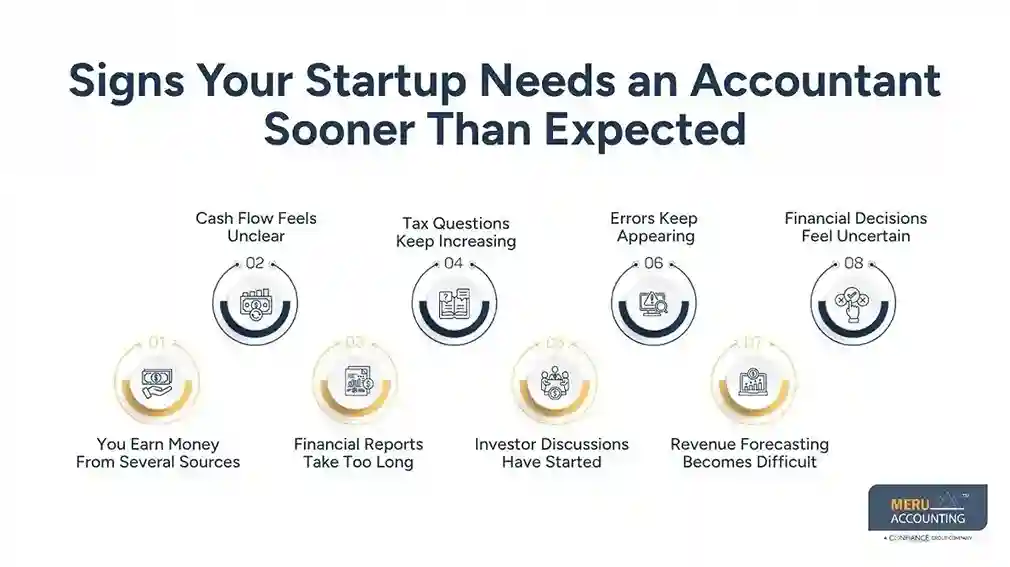
Investor Discussions Have Started
Funding discussions usually require clean financial statements and forecasts, making an accountant for a startup business increasingly important during fundraising stages. Accurate financial records help create trust and confidence during investor meetings.
Errors Keep Appearing
Repeated invoice issues or missing records indicate system gaps. These small issues often become larger and more expensive problems later.
Revenue Forecasting Becomes Difficult
Predicting future income becomes harder when startups add more subscriptions, products, partnerships, and service offerings. An accountant for a startup business helps create structured forecasting systems and improve financial planning accuracy.
Financial Decisions Feel Uncertain
Business decisions become difficult without accurate and updated financial information available. Professional accounting support helps founders make informed and confident business decisions.
How an Accountant for a Startup Business Helps Manage Revenue Complexity
Builds Better Financial Systems
An accountant for a startup business creates systems that support long-term growth. Strong systems reduce manual work and errors.
Organizes Revenue Categories
Income sources need proper classification and structure. This creates reports that owners can trust.
Helps Improve Cash Flow Visibility
Cash planning matters because startups often face changing expenses. Better visibility supports smarter choices.
Supports Compliance Requirements
Tax filings and financial reporting requirements continue evolving as startups grow. Professional accounting support helps businesses stay compliant while reducing reporting risks and improving financial accuracy.
Creates Useful Reports
Founders need reports that explain business performance in simple, clear formats. Good reports help leaders make informed decisions based on reliable financial data.
Reduces Time Spent On Financial Tasks
Startup teams often achieve stronger growth when they focus on product development, customer acquisition, and expansion opportunities. A startup accountant service helps founders spend less time on manual financial management.
Why the Startup Accountant Service Becomes Essential During Scaling
Team Size Starts Growing
New hires create payroll, reporting, compliance, and employee record management needs. Growth often increases accounting work much faster than founders initially expected, increasing the need for an accountant for a startup business.
More Transactions Need Review
Scaling companies process larger volumes of payments, expenses, invoices, and transactions daily. Manual systems become increasingly difficult to manage as operations expand, creating a greater need for organized accounting processes and financial oversight.
International Expansion Creates New Rules
Startups entering international markets may encounter different tax regulations, payment structures, and reporting requirements. A startup accountant service helps businesses prepare for expansion while maintaining organized financial processes.
Fundraising Requires Strong Financial Records
Investors review financial statements and business performance carefully before making investment decisions. Organized financial records help create confidence and support smoother fundraising discussions.
Planning Needs Better Data
Forecasting depends on accurate numbers, reports, trends, and financial business information. An accountant for a startup business helps provide useful insights for future planning decisions.
Risks Increase With Growth
Small accounting mistakes during early growth stages can eventually create costly financial and operational challenges. Professional oversight helps reduce risks and support long-term business stability.
Common Mistakes Startups Make Without Professional Accounting Support
Mixing Personal And Business Spending
Separate accounts improve financial tracking and reduce confusion across business transactions. Combining personal and business expenses creates reporting problems and accounting errors.
Waiting Too Long To Build Systems
Startups often wait until financial problems become serious and difficult to manage. Fixing outdated accounting issues later often requires more time, effort, and expense than working with an accountant for a startup business to build stronger systems early.
Ignoring Revenue Recognition Rules
Incorrect reporting often creates inaccurate financial statements and business performance records. This may affect funding opportunities, tax filings, and future business planning.
Depending Only On Spreadsheets
Manual tracking increases financial error risk and reporting issues over longer periods. Growing businesses need stronger systems for accurate and organized financial management.
Missing Tax Deadlines
Late filing penalties create avoidable costs and unnecessary financial pressure on startups. Support from an accountant for a startup business helps reduce these risks and improve tax filing accuracy.
Making Decisions Without Financial Data
Growth decisions need facts, financial reports, and numbers instead of assumptions. Reliable financial data supports better planning and stronger long-term business decisions.
Why Choosing the Right Startup Accountant Service Matters
Startup Experience Makes A Difference
Startup businesses have different financial needs compared with established and mature companies. An experienced accountant for a startup business can identify early-stage issues and help prevent future accounting-related problems.
Industry Knowledge Supports Better Advice
Software, retail, and service businesses follow different financial models and reporting structures. Specialized guidance helps improve reporting accuracy and support better financial decisions.
Communication Matters
Founders need clear explanations instead of difficult financial terms and technical language. Simple reporting supports stronger decisions and improves understanding across business teams.
Technology Knowledge Helps
Modern accounting often involves software integrations, automation tools, and reporting systems. A startup accountant service should understand current tools and financial software platforms.
Growth Planning Support Matters
Accounting support from an accountant for a startup business should help businesses prepare for future growth and expansion stages. Growth planning becomes easier with financial guidance and accurate business performance reports.
Long-Term Support Creates Stability
A reliable accountant for a startup business should grow alongside the company through different growth and change stages. Consistency improves efficiency, reporting quality, and overall financial process management.
Why Choose Meru Accounting?
At Meru Accounting, we understand that startup growth often becomes more complex sooner than founders expect. Startups with several income sources need more than basic bookkeeping support. They need guidance, planning, and organized financial systems.
Our team provides accounting support designed specifically for growing startup businesses and evolving financial operations. We help startups manage reporting, bookkeeping, tax preparation, cash flow review, and financial systems.
Our startup accountant service supports startups across different industries and business models. Whether your company earns through subscriptions, online sales, consulting, or multiple channels, we help build financial processes that support long-term growth.
Our Expert Perspective
From our experience, startup challenges often begin with growth rather than low revenue. As businesses add multiple income streams, financial tracking, reporting, cash flow, and tax requirements become more difficult to manage. Startups that seek accounting support early often build stronger systems and face fewer financial issues later.
Key Takeaways
- Multiple revenue streams often create accounting challenges faster than expected
- Revenue growth can increase tax and reporting work
- Delaying financial support can create hidden problems
- An accountant for a startup business supports better systems and reporting
- A startup accountant service helps startups during the scaling stages
- Financial organization helps attract investors and support decisions
- Early planning often prevents expensive corrections later
FAQs
Different income streams create more records and reporting work. An accountant for a startup business helps keep financial data organized and accurate.
A startup should consider hiring an accountant when revenue sources increase, tax questions appear, or reporting becomes harder to manage.
Software helps with automation, but it cannot always identify errors, provide advice, or review financial risks.
Services may include bookkeeping, tax support, payroll help, reporting, and financial planning.
An accountant helps improve reporting, organize systems, and support decisions with reliable financial information.