
Global growth gives business owners a chance to reach new customers, enter new markets, and build stronger income streams. Today, many startups and small firms can sell products and services in more than one country with fewer barriers than before. Digital tools, remote teams, and online platforms have made global business growth more useful for many entrepreneurs. But, global expansion means more accounting tasks. Business owners often deal with tax rules, filing needs, and due dates that differ from one country to another. Laws and regulations of one market may not be applicable to another. Hence, a dedicated accountant for entrepreneurs is needed who can handle cross-border taxes.
Missing a single tax law or filing step may lead to penalties and legal issues. Rather than trying to understand tax systems across several regions on their own, business owners can work with experts who help manage money tasks and support growth goals. In this blog, we will see how global expansion of your business is possible with an accountant for entrepreneurs handling cross-border taxes.
What You Will Learn From This Blog
In this blog, you will learn:
- Why global growth creates tax and accounting challenges
- The role of an accountant for entrepreneurs during global expansion
- Common cross-border tax issues businesses face
- How tax rules differ across countries
- Best practices entrepreneurs can follow when entering new markets
- How expert support can make global growth easier
Understanding the Role of an Accountant for Entrepreneurs in International Expansion
Expanding a business into new countries requires a good financial strategy. It is not limited to sales planning and market research. Business owners need to understand how taxes, filing rules, and financial records work in each place where they want to expand.
An accountant for entrepreneurs supports business owners by helping them handle these tasks in a clear and organized way.
Their role may include:
- Tracking income and costs across countries
- Managing tax filings and reporting needs
- Supporting financial planning
- Reviewing cash flow trends
- Helping follow local laws
- Creating clear financial reports
Entrepreneurs often focus on growth work such as product building, customer support, and sales. Managing several tax systems at the same time can pull focus away from those goals.
A skilled accounting expert helps lower that pressure by creating systems that support business growth.
Common Cross-Border Tax Challenges Entrepreneurs Face
Global growth can create tax issues that many business owners do not expect during the early stages. Some of the most common challenges include:
Multiple Tax Reporting Rules
Each country has its own tax filing rules and schedules. A business may need to report sales, income, payroll, or other financial details in different ways. What works in one region may not meet rules in another market.
Double Tax Risks
In some cases, income may become taxable in more than one country. Without proper planning, business owners could face higher tax costs. Understanding tax deals between countries can help lower this issue.
Currency Exchange Issues
Global businesses often receive payments and pay bills in different currencies.
Changes in exchange rates can affect:
- Revenue amounts
- Profit reports
- Tax calculations
- Financial planning
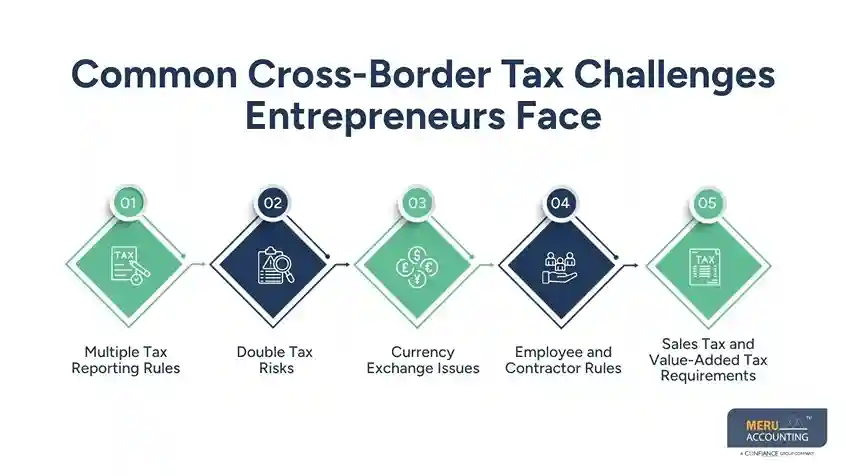
Employee and Contractor Rules
Remote teams now work across many regions. Different countries may group workers in different ways. Wrong worker classification can create tax problems and penalties.
Sales Tax and Value-Added Tax Requirements
Many countries apply taxes to products and services sold in their markets.
Entrepreneurs may need to collect and report taxes such as:
- Sales tax
- VAT
- Goods and service taxes
Missing these steps can create future problems.
How Different Tax Rules Affect Global Business Operations
Tax systems around the world do not follow one standard model. Countries create their own rules based on local laws and business goals.
Because of this, global businesses often deal with different needs. Let’s understand how different tax rules affect global business operations.
Business Registration Rules
Some countries require foreign businesses to create a local business setup before operating.
Others may allow certain business work without a full local company setup.
These differences can affect:
- Taxes
- Filing duties
- Legal needs
The registration process may also vary from one country to another. Some regions require added documents, local agents, or business permits before companies can begin operations. Missing these steps can delay business plans and create added work.
Different Filing Dates
Tax due dates vary from country to country.
A business working in three markets may face several filing schedules during the year.
Without proper systems, business owners may miss key dates.
Late filings can lead to extra fees and penalties. Keeping track of several due dates at the same time can become difficult, especially when a business is growing quickly and handling many daily tasks.
Different Deduction Rules
Business costs that qualify as tax write-offs in one country may not qualify elsewhere.
For example:
- Travel costs
- Employee benefits
- Marketing costs
- Home office costs
Rules can change based on location.
Some countries place limits on how much of an expense can be claimed. Others may ask for extra proof or records before allowing deductions. This means businesses need strong records to support tax reporting.
Transfer Pricing Requirements
Businesses with operations in more than one country sometimes move products or services between company groups.
Governments often use rules that decide how these transactions should be priced.
Poor handling may create tax risks.
Tax agencies may review these transactions to make sure pricing follows local rules. Incorrect pricing methods can create reporting issues and added tax costs.
Because of these differences, many companies rely on an accountant for entrepreneurs who understands how global financial systems work. In many cases, business owners do not need separate support teams for each country. A skilled accountant for entrepreneurs can help manage tax rules, reporting tasks, and financial needs across multiple regions while helping keep records organized.
Best Practices for Entrepreneurs Expanding Into New Countries
Strong planning can help entrepreneurs lower problems and build a smoother path for growth.
Below are several best practices that can support global expansion.
Research Local Tax Rules Early
Do not wait until after expansion starts.
Review:
- Tax rates
- Registration needs
- Payroll rules
- Reporting needs
- Local laws
Early planning can help stop future surprises.
Build Strong Financial Systems
Financial records become harder to manage when businesses work across several countries.
Clear systems help track:
- Income
- Costs
- Taxes
- Payroll
- Business results
Clear records also support faster reporting.
Monitor Cash Flow Carefully
Global growth often raises costs.
Business owners may face:
- New software costs
- Global payment costs
- Local tax payments
- Staffing costs
Cash flow planning helps lower financial stress.
Keep Business and Personal Finances Separate
Some entrepreneurs mix business and personal spending during early growth stages.
Global expansion increases financial demands.
Separate accounts and records improve organization and reporting.
Work With Experienced Professionals
Global growth can bring legal, tax, and financial questions that need expert help.
Professional guidance may help spot risks before they become larger issues.
How Meru Accounting's Accounting Services for Entrepreneurs Support Global Growth
As businesses expand into new markets, financial tasks often become harder to manage. Entrepreneurs may deal with more filing duties, tax due dates, and financial data from several regions. Our team supports businesses by creating organized accounting systems that fit growing companies. We understand that entrepreneurs need financial support that helps them stay focused on growth while lowering daily accounting work.
Our accounting services for entrepreneurs support global growth:
- Financial reporting support
- Bookkeeping services
- Tax preparation
- Cash flow tracking
- Business financial planning
- Ongoing accounting support
Our accounting services for entrepreneurs are built to help business owners gain a better view of their finances while building stronger systems for long-term growth.
Whether a company is entering one new market or expanding into several countries, financial structure plays a key role in success.
With support from an experienced accountant for entrepreneurs, businesses can spend less time dealing with financial work and more time building their future.
Our Expert Insight
Global growth is not only about entering a new market. It is also about building a business that can run smoothly across different regions and time zones. Many entrepreneurs focus heavily on customer growth and sales targets, but long-term success often depends on how quickly the business can adjust to change. Strong financial systems help create that flexibility.
As businesses expand, leaders need fast access to useful financial data to make smart choices. Clear reports, reliable numbers, and organized records can help owners spot trends, plan for future growth, and react to market changes with more confidence. Businesses that build these habits early often create a stronger base for steady growth over time.
Key Takeaways
- Global expansion creates new tax and money-related tasks.
- Cross-border work often involves different tax systems and filing rules.
- Entrepreneurs may face issues tied to reporting, exchange rates, worker classification, and tax rules.
- An accountant for entrepreneurs can help businesses manage financial work more effectively.
- Early planning and strong financial systems support smoother growth.
- Professional accounting services for entrepreneurs can help create more organized financial systems.
FAQs
Cross-border taxes can involve different filing rules, due dates, and tax systems. Expert support can help businesses handle these needs more effectively.
An accountant for entrepreneurs may help with financial reporting, tax planning, bookkeeping, support services, and financial management.
Common issues include double taxation, currency changes, reporting needs, sales tax duties, and worker classification rules.
Accounting services for entrepreneurs can help organize financial records, improve reporting, track cash flow, and support business planning.
Businesses should seek financial guidance before entering a new market. Early planning can help lower future tax and filing issues.