
A growing fleet deals with many moving parts like fuel cost, driver pay, permits, repair bills, and tax rules. Without clear financial control, profit can drop even when revenue looks strong. This is why an accountant for trucking company is not just an option but a key part of steady growth.
A skilled financial expert brings structure to financial records, improves cost tracking, and reduces errors in reporting. As fleets expand, financial tasks become more complex, and small mistakes can turn into large losses. A trained trucking accountant helps avoid these risks while keeping cash flow stable and clear.
A better understanding of where money is going also becomes possible, along with clearer visibility of how each route or vehicle is performing. This gives stronger control over daily operations and long-term planning.
What You Will Learn From This Blog
- Why financial control is important for trucking growth
- Main cost and tax issues faced by fleets
- How a trucking company accountant improves profit tracking
- Role of a trucking accountant in fuel and repair cost control
- How compliance and tax rules affect the trucking business’s health
- Signs that show when you need an accountant for trucking company
- How professional accounting services support long-term success
Importance of Financial Management in the Trucking Industry
Rising Cost Pressure In Fleet Operations
Fuel, tolls, repairs, and wages change often in trucking. Without proper tracking, cost gaps remain hidden. Each expense needs to be recorded clearly to show true profit levels.
Need For Accurate Cash Flow Tracking
Cash flow decides if a fleet can run daily operations smoothly. Income and expenses must match real-time business activity so payment delays do not create stress.
Better Control Over Profit Margins
Profit in trucking is not only about revenue but also cost control per mile. Margin calculation per trip, vehicle, and route helps in making better financial decisions.
Improved Financial Reporting System
Clear reports help owners understand business health. A trucking accountant prepares structured reports that show income, cost, and net profit in simple form.
Reduced Risk Of Financial Errors
Manual records can lead to mistakes in invoices or tax filings. An accountant for trucking company reduces such errors by using proper accounting systems and checks.
Key Financial Challenges Faced By Growing Trucking Fleets
Unstable Fuel Expenses
Fuel prices change often and affect profit quickly. A trucking accountant tracks fuel use per vehicle to control overspending and identify waste.
Driver Payroll And Settlement Issues
Driver payments, bonuses, and deductions must be handled carefully. An accountant for trucking company ensures correct and timely payroll processing.
Maintenance and Repair Cost Tracking
Truck maintenance expenses occur regularly and vary in scale. Without structured tracking, it becomes difficult to predict repair cycles and plan budgets effectively.
Tax Filing and Compliance Pressure
Trucking businesses must comply with multiple tax requirements, including fuel-related reporting obligations. Accurate documentation is essential to ensure timely and error-free filings.
Lack of Clear Financial Data
Rapid fleet expansion often leads to fragmented financial records. Without a centralized system, it becomes difficult to assess overall business performance and operational health.
How an Accountant For Trucking Company Drives Growth, Profitability, and Compliance in Expanding Fleets
Structured Financial Planning For Growth
A growing fleet needs a clear plan for expansion. An accountant for trucking company builds financial models that support hiring, new trucks, and route expansion.
Profit Tracking Per Vehicle and Route
Understanding performance at a vehicle and route level helps identify operational efficiency differences. This enables better allocation of resources across the fleet.
Cost Control Across Operations
A structured accounting system helps monitor different cost categories across the business. This allows fleet managers to maintain financial discipline while supporting operational needs.
Budget Planning and Forecasting
Future financial planning depends on analyzing historical performance and expected operational demand. A transportation accountant uses this data to build realistic budgets and forecasts.
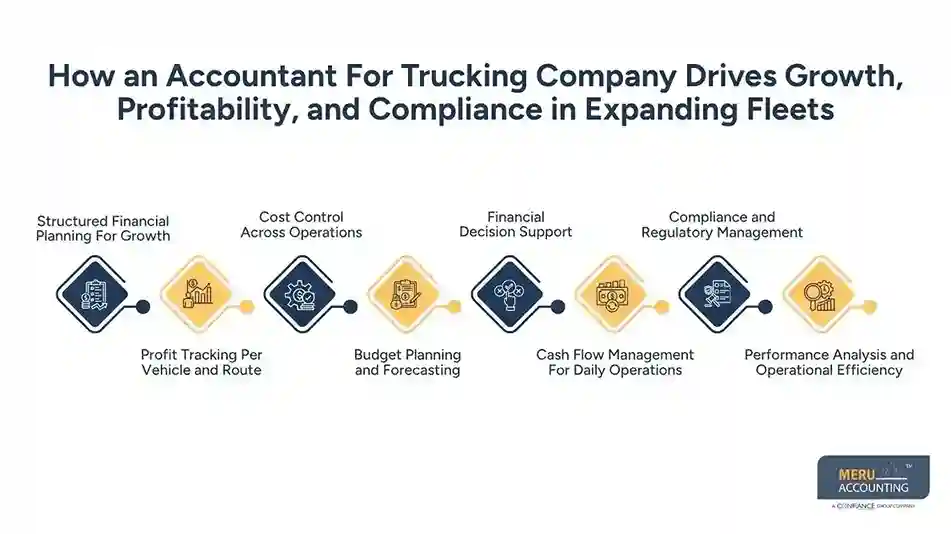
Financial Decision Support
Accurate financial reports help fleet owners evaluate major decisions such as expansion, replacement of vehicles, or operational restructuring with greater confidence.
Cash Flow Management For Daily Operations
Effective financial tracking ensures that business inflows and outflows remain aligned with operational requirements. This supports smooth day-to-day functioning without unnecessary financial pressure.
Compliance and Regulatory Management
Trucking businesses must follow strict regulatory and tax requirements. Proper financial systems ensure documentation and reporting are maintained according to compliance standards.
Performance Analysis and Operational Efficiency
Regular financial analysis helps identify inefficiencies across fleet operations. These insights support continuous improvement in productivity and resource utilization.
Role of a Trucking Accountant in Fuel Expense and Maintenance Tracking
Fuel Usage Monitoring Per Mile
Fuel is one of the highest costs in trucking. A trucking accountant calculates fuel cost per mile to detect inefficiency.
Fuel Card Reconciliation
Fuel cards often lead to confusion if not tracked properly. An accountant for trucking company matches fuel card data with trip logs.
Maintenance Scheduling and Cost Records
Maintenance planning is essential for vehicle reliability. Structured cost records help anticipate servicing needs and avoid unexpected breakdowns.
Reducing Idle Time Cost
Idle engine time contributes to unnecessary fuel consumption. Monitoring operational data helps reduce idle periods and improve efficiency.
Detecting Cost Leakages
Small inefficiencies in fuel usage or repair billing can accumulate over time. Continuous tracking helps identify and address these gaps early.
Managing Compliance, Taxes, and DOT Regulations With Expert Accounting Support
IFTA Fuel Tax Reporting
Interstate fuel tax rules are strict in trucking operations. Reports are prepared carefully to ensure accuracy and full compliance with regulations.
DOT and FMCSA Compliance Records
Trucking firms must follow safety and reporting rules. A trucking accountant helps maintain financial records aligned with DOT rules.
Income Tax Filing Accuracy
Tax filing mistakes can lead to fines. An accountant for trucking company ensures all income and cost data is correct before filing.
Audit Readiness Support
Audits require clear and organized financial history. Proper recordkeeping ensures all documents remain ready for inspection at any time.
Avoiding Penalties And Late Fees
Late filing can increase operational costs significantly. Timely reporting and documentation help ensure deadlines are consistently met without issues.
Signs Your Fleet Needs a Dedicated Accountant For Trucking Company Success
Growing Number of Trucks and Drivers
When fleet size increases, financial work becomes more complex. An accountant for trucking company becomes necessary for the structure.
Confusion In Monthly Profit Figures
If profit numbers change without reason, a fleet accounting specialist is needed to fix reporting gaps. Clear reporting systems help ensure accurate monthly performance tracking.
Difficulty In Managing Taxes
Tax filing can become complex for growing trucking operations. Compliance work is handled carefully to ensure accuracy and reduce filing stress.
Rising Fuel And Repair Costs
Unclear cost patterns often indicate weak expense tracking systems. Better monitoring helps control fuel and repair expenses more effectively.
Delayed Financial Reports
Late reporting can impact important business decisions significantly. Timely financial updates support better planning and operational control.
How Meru Accounting Supports Trucking Businesses
Meru Accounting provides expert financial services designed for transport and fleet businesses. Our team of certified experts works closely with trucking owners to manage records, reduce cost leaks, and improve financial clarity. A dedicated accountant for trucking company from Meru Accounting ensures each financial detail is tracked with care.
Meru Accounting also assigns a skilled trucking accountant who understands fuel tracking, payroll systems, and compliance rules. This helps fleet owners focus more on operations while financial tasks are managed with accuracy.
With strong experience in global accounting systems and trucking operations, Meru Accounting builds simple and clear financial processes that support steady business growth. Our service model is designed to reduce manual errors and improve reporting speed without adding complexity.
Our Expert Perspective
From our experience working closely with fleet businesses, one key insight stands out clearly: trucking profitability is not driven only by more trips, but by stronger cost control. Many fleets experience hidden losses due to small gaps in tracking fuel usage, repair expenses, or payroll processing.
A dedicated financial expert helps identify and close these gaps before they grow into larger financial issues. This support brings greater clarity to daily financial activity, allowing fleet owners to make quicker, more confident, and safer business decisions.
Key Takeaways
- Trucking growth needs strong financial control
- Cost tracking is essential for profit stability
- An accountant for trucking company improves reporting and tax accuracy
- A trucking accountant helps manage fuel and maintenance costs
- Compliance errors can be reduced with expert support
- Financial clarity leads to better business decisions
- Growing fleets need structured accounting systems
FAQs
A trucking company needs an accountant for trucking company to manage costs, taxes, and reports in a clear way. It helps avoid errors and improves profit tracking.
A trucking accountant handles fuel records, payroll, maintenance cost tracking, and tax filing support for smooth financial operations.
Yes, even small fleets benefit from an accountant for trucking company because it helps control early-stage costs and avoids future issues.
A trucking accountant tracks cost per mile, reduces waste, and helps owners understand which routes or trucks give better returns.
Yes, rules like fuel tax and DOT reporting are complex. An accountant for trucking company ensures all rules are followed correctly.