Accounting for IT companies is essential for managing client billing, invoice tracking, payment collection, cash flow, and financial reporting. IT businesses often work with multiple projects, subscription services, recurring contracts, and global clients, making financial management more complex than many other industries.
Delayed invoices, untracked payments, or weak billing processes can affect profitability and business growth. A structured accounting system allows IT companies to maintain accurate financial records, monitor project costs, track revenue, and build stronger client relationships.
Using the best accounting software for IT services companies further simplifies billing, automates routine accounting tasks, manages invoices efficiently, and provides real-time financial information.
By following organized accounting practices, IT companies can maintain better financial control, improve cash flow management, and make informed business decisions for long-term growth.
What You Will Learn From This Blog
- Importance of accounting practices for IT businesses
- Ways to manage client billing processes
- Methods for accurate invoice management
- Strategies to improve payment collection
- Role of accounting software in IT services
- Benefits of accounting automation
Understanding The Importance Of Accounting For IT Companies
IT companies manage different revenue models, including hourly billing, fixed projects, retainers, and subscriptions. Accounting for IT companies helps track income, expenses, project costs, and overall financial performance.
Tracking Project Revenue And Costs
IT projects include expenses such as employee salaries, software tools, cloud services, and vendor payments. Accurate cost tracking is a key part of Accounting for IT companies because it helps businesses measure project profitability and create better pricing plans.
Managing Different Billing Models
IT businesses use various billing methods, including hourly rates, milestone payments, and monthly service contracts. A structured accounting system records each billing method correctly and maintains accurate financial reports.
Maintaining Financial Accuracy
Accurate financial records support tax filing, business planning, and financial reporting activities. Regular reconciliation and proper record management reduce errors and provide reliable financial information.
Improving Cash Flow Visibility
IT companies may experience payment delays even with strong revenue growth. Accounting processes track invoices, expenses, and available funds to maintain better cash flow control.
Supporting Business Growth Decisions
Financial reports help IT businesses analyze revenue trends, project results, and operating expenses. Reliable accounting data allows owners to make informed decisions about hiring, expansion, and investments.
How IT Companies Can Manage Client Billing Efficiently
Client billing is one of the most important financial activities for IT service providers. Delayed invoices, unclear pricing, or incorrect billing details can create payment issues.
A professional billing process creates transparency between IT companies and clients. It ensures services are charged correctly, and payments are collected on time.
Create Clear Billing Agreements
Every IT project should begin with a clear agreement that defines pricing, payment schedules, service scope, and delivery terms.
A detailed agreement reduces disagreements and creates better understanding between clients and service providers.
Choose The Right Billing Method
Selecting the right billing approach is an important part of Accounting for IT companies, as it directly impacts revenue tracking and financial reporting. Common options include hourly billing, fixed project pricing, milestone billing, and monthly retainers.
For example, a software maintenance company may use monthly billing, while a custom software developer may prefer milestone-based payments.
Track Billable Hours Properly
Many IT companies charge clients based on working hours. Accurate time tracking ensures that all billable work is recorded.
Using automated time tracking tools reduces manual errors and creates accurate billing records for clients.
Automate Recurring Invoices
Subscription-based IT services often require monthly or yearly invoices. Automated billing reduces repetitive work and ensures invoices are sent on schedule.
This approach also creates a consistent payment process for both companies and clients.
Review Billing Data Regularly
Regular billing reviews help businesses identify unpaid invoices, incorrect charges, or missing entries.
Regular reviews are a key practice in Accounting for IT companies because they help businesses monitor receivables, revenue accuracy, and overall financial performance.
Best Practices For Invoice Management In IT Services Businesses
Invoice management is a critical part of Accounting for IT companies because it directly affects revenue collection and client satisfaction. Effective invoice practices reduce delays and create better financial control.
Create Professional Invoices
A professional invoice should include essential details such as service description, payment terms, due date, tax information, and payment methods.
Clear invoices reduce client questions and make payment processing easier.
Send Invoices On Time
Late invoice delivery can delay payments. Businesses should send invoices immediately after completing project milestones or according to agreed schedules.
Consistent invoice timing creates a reliable payment routine.
Maintain Invoice Records
Keeping proper invoice records allows companies to track payment history and review financial performance.
Organized records also make tax filing and financial reporting easier.
Monitor Outstanding Payments
Unpaid invoices can affect business operations. Finance teams should regularly review outstanding payments and follow up with clients when needed.
A proper tracking system ensures that overdue invoices receive timely attention.
Use Accounting Tools For Invoice Management
Technology-based accounting tools simplify Accounting for IT companies by improving invoice creation, payment tracking, and financial reporting. The best accounting software for IT services companies includes invoice features that reduce manual work.
These tools allow businesses to generate reports, monitor payment status, and maintain accurate transaction records.
optional anymore
on running the business
Managing Payments and Cash Flow In IT Companies
Managing payments is an important part of Accounting for IT companies because IT businesses handle projects, contracts, and client transactions. A proper payment process helps companies maintain cash flow and manage expenses effectively.
Set Clear Payment Terms
Clear payment terms define invoice dates, deadlines, payment methods, and late payment conditions for clients. Well-defined agreements reduce payment confusion and create better financial planning.
Follow A Payment Collection Process
A proper collection process tracks pending invoices and sends timely reminders to clients. Regular follow-ups help IT companies receive payments on time and maintain steady cash flow.
Manage International Payments Carefully
Many IT companies receive payments from global clients with currency and tax considerations. Accurate accounting records help track international transactions and maintain correct financial reports.
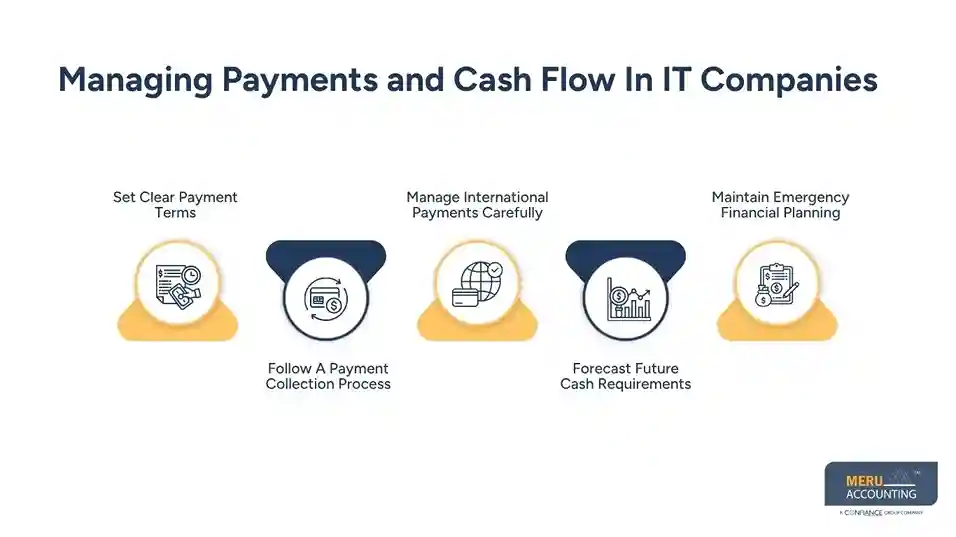
Forecast Future Cash Requirements
Cash flow forecasting helps IT companies estimate future income, expenses, and financial requirements. Regular forecasts allow Accounting for IT companies to plan salaries, software costs, and operational expenses more effectively.
Maintain Emergency Financial Planning
IT companies may face delayed payments, project changes, or unexpected expenses. Maintaining financial reserves helps businesses manage uncertain situations with better control.
How the Best Accounting Software For IT Services Companies Simplifies Financial Operations
The best accounting software for IT services companies simplifies billing, invoicing, expense tracking, and reporting for technology businesses. It organizes financial data in one system and reduces challenges caused by manual spreadsheet management.
Automates Invoice Creation
Accounting software creates invoices using saved client details, services, and billing information. Automation reduces repeated tasks and allows teams to manage invoices more efficiently.
Tracks Income and Expenses
Accounting tools record revenue and expenses such as salaries, software costs, and vendor payments. These features support better Accounting for IT companies by helping businesses monitor project costs and financial performance.
Provides Real-Time Financial Reports
Financial reports show important details about revenue, expenses, and cash flow performance. Business owners can review updated financial data before making key decisions.
Connects Multiple Business Functions
Accounting systems connect with banking platforms, payment tools, payroll systems, and project applications. These connections reduce manual data entry and improve financial workflow management.
Supports Better Client Management
Accounting software stores client details, invoice records, and payment history in one place. The best accounting software for IT services companies helps businesses maintain organized client financial information.
How Accounting Automation Helps IT Companies Improve Efficiency
Accounting automation has become an important part of modern financial management. IT companies handle many repetitive accounting activities, including invoice generation, payment tracking, expense recording, and reporting. Automation reduces manual effort and creates more consistent financial processes.
Reduces Manual Data Entry
Manual transaction entry can consume valuable time and increase the risk of mistakes. A structured approach to Accounting for IT companies reduces these issues by improving accuracy and workflow efficiency.
Improves Invoice Processing
Automated invoice systems allow companies to prepare and send invoices based on predefined schedules.
For example, an IT support company offering monthly maintenance plans can automatically generate recurring invoices for clients.
Creates Faster Financial Reports
Automated reporting tools collect financial information and prepare reports quickly. Business owners can review revenue, expenses, and outstanding payments without waiting for manual calculations. Faster reporting creates better awareness of financial performance.
Enhances Payment Tracking
Automation tools can monitor invoice status and identify overdue payments. Reminder notifications allow companies to contact clients at the right time. Better payment tracking supports healthier cash flow management.
Reduces Accounting Errors
Incorrect entries can affect financial decisions and reporting accuracy. In Accounting for IT companies, automated systems follow defined processes that reduce common human mistakes. Accurate records create a stronger foundation for financial planning.
Why Choose Meru Accounting For IT Company Accounting Services
Managing IT finances requires specialized knowledge of Accounting for IT companies, including project billing, recurring revenue, expenses, and service-based accounting needs. Meru Accounting provides professional bookkeeping and accounting services with accurate records and reliable reporting.
Industry-Focused Accounting Support
IT companies have unique financial needs, including different billing models, software costs, and contractor payments. Our accounting approach maintains records that match business operations and financial requirements.
Accurate Bookkeeping And Reporting
Regular bookkeeping helps IT companies maintain clear records of transactions, expenses, and financial reports. Strong Accounting for IT companies practices improve financial visibility and reporting accuracy.
Support For Accounting Software Solutions
Choosing the right accounting system helps IT businesses manage invoices, payments, and financial data efficiently. Meru Accounting helps organize accounting workflows using suitable technology solutions.
Better Focus On Business Growth
Outsourcing accounting tasks allows IT companies to focus more on clients and business activities. Our professionals manage financial responsibilities while businesses focus on delivering technology services.
Our Expert Perspective
From our experience working with service-based businesses, we understand that IT companies often face accounting challenges due to changing project scopes, different billing structures, and delayed client payments.
Many technology companies maintain strong technical operations but do not always give equal attention to financial processes. Regular accounting reviews create better control over revenue, expenses, and project performance.
A well-organized Accounting for IT companies system is not only about recording transactions. It creates financial clarity that allows business owners to make informed decisions, manage resources, and plan future growth.
Key Takeaways
- Accounting for IT companies is important for managing billing, invoices, payments, and financial records.
- Clear billing agreements reduce payment confusion and improve client relationships.
- Proper invoice management creates faster payment collection and better cash flow control.
- The best accounting software for IT services companies simplifies financial tasks through automation.
- Accounting automation reduces manual work and creates accurate financial reports.
- Professional accounting support allows IT businesses to focus on service delivery.
FAQs
Accounting for IT companies means managing financial activities such as billing, invoicing, expense tracking, payments, and reporting for technology businesses.
IT companies often handle project-based work, recurring services, and multiple payment methods. Special accounting practices help manage these financial needs properly.
The best accounting software for IT services companies should include invoicing, expense tracking, reporting, payment monitoring, and automation features.
IT companies can manage payments better by setting clear terms, sending invoices on time, tracking due dates, and following a regular collection process.
Yes, outsourced accounting services allow IT businesses to manage bookkeeping, reporting, and financial tasks with professional support while focusing on their core services.
optional anymore
on running the business