Accounting for real estate transactions requires more than recording the property price and mortgage balance. A real estate purchase can include earnest money, a down payment, loan proceeds, lender fees, points, prepaid interest, title costs, property taxes, insurance, and other closing items. Each item may need a different accounting treatment.
Real estate purchase accounting begins when the purchase is agreed upon and continues through closing, mortgage payments, refinancing, and the eventual sale of the property. When each cost is placed in the right account from day one, the books give a clearer view of the property’s cost, debt, income, and expenses.
This blog focuses on U.S. real estate purchases and mortgage financing. Tax treatment can vary based on the property type, ownership structure, loan terms, and use of the property, so unusual transactions should be reviewed by a qualified tax professional.
What You Will Learn From This Blog
- How to set up accounting records when a property is purchased.
- How to record earnest money, down payments, and mortgage proceeds.
- How to separate property costs from loan-related costs.
- How to record mortgage principal, interest, points, and lender charges when handling accounting for real estate transactions.
- How closing costs may affect the property’s basis.
- Which accounting mistakes can create problems in financial and tax records.
Accounting For Real Estate Transactions: What To Record From Day One
Set Up A Separate Property Account
One of the first steps in accounting for real estate transactions is to create a clear asset record for the property. For businesses with several properties, separate property-level accounts can make income, expenses, debt, and asset values easier to review.
Record The Purchase Price
In accounting for real estate transactions, the purchase price forms the main part of the property’s recorded cost. The closing statement, purchase agreement, and other source documents should be kept with the accounting records.
In real estate purchase accounting, the purchase price should not be confused with the amount paid in cash at closing. A mortgage may fund part of the purchase, while the buyer pays the rest.
Separate Land And Building
Land and buildings may have different accounting and tax treatment. For tax purposes, land is generally not depreciated, while a qualifying building may be depreciated over its applicable recovery period.
For this reason, when available purchase records allow a reasonable allocation, keep the land and building amounts clear in real estate transactions.
Record The Mortgage As A Liability
In accounting for real estate transactions, mortgage proceeds are treated as borrowed funds, not business revenue. The loan should be recorded as a liability based on the terms of the loan agreement and closing documents.
This is a basic part of real estate purchase accounting because showing loan proceeds as income would overstate revenue and distort the financial statements.
Keep The Closing File Complete
Keep the settlement statement or Closing Disclosure, loan agreement, purchase contract, invoices, receipts, title documents, and proof of payment together.
These records give the bookkeeper or CPA the source needed to review each entry later and are an important part of accounting for real estate transactions.
Mortgage & Financing Checklist For Real Estate Transactions
Loan Proceeds And Financing Costs
When the lender funds a property purchase, the loan proceeds should be recorded as a liability rather than income. The mortgage balance should match the loan documents and closing records.
Financing costs need a separate review. Under IRS guidance, certain costs connected with obtaining a loan are treated differently from costs that are part of acquiring the property.
Down Payment And Earnest Money
Earnest money is often paid before closing and may first be recorded as a deposit or other asset. At closing, that amount is applied toward the purchase according to the settlement statement.
A proper real estate purchase accounting process prevents the earnest money from being counted twice—once as a deposit and again as a separate purchase expense.
Closing Costs And Lender Fees
In accounting for real estate transactions, closing statements require careful review because they can contain many different types of charges. Some costs connected with acquiring the property may be included in the property’s basis, while loan-related charges can have different treatment.
For accounting for real estate transactions, each charge should be reviewed based on what it represents rather than placing every closing item into one general account. IRS Publication 551 provides examples of costs that may be included in property basis.
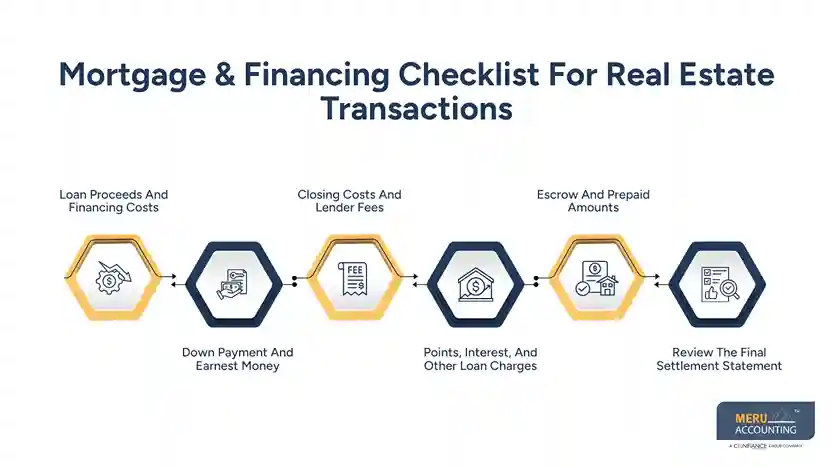
Points, Interest, And Other Loan Charges
Points are generally a form of prepaid interest when they meet the applicable requirements. For rental property, the tax treatment of points may require allocation over the loan term rather than an immediate deduction.
Mortgage interest should also be kept separate from principal. Principal reduces the outstanding loan, while interest is recorded as interest expense when the applicable accounting rules permit it.
Escrow And Prepaid Amounts
A lender may collect money at closing for future property taxes, insurance, or other items. These amounts should not automatically be added to the property’s cost.
For example, IRS guidance states that amounts placed in escrow for future taxes and insurance are not included in the property’s basis.
Review The Final Settlement Statement
The final settlement statement is one of the most useful documents for real estate purchase accounting. Compare it with the purchase contract, loan documents, and bank activity before finalizing the entries.
A short review at closing can prevent errors that may otherwise remain in the books for years.
optional anymore
on running the business
How To Record Mortgage Debt In Real Estate Accounting
Record The Original Mortgage
A key step in accounting for real estate transactions is recording the funded mortgage principal as a liability rather than treating the loan proceeds as income. The entry should reflect the actual loan amount shown in the lender documents.
For example, if a property is bought for $600,000 and the lender provides a $450,000 mortgage, the mortgage account should show the $450,000 debt rather than treating that amount as income.
Separate Principal From Interest
Mortgage payments normally contain both principal and interest. The principal portion reduces the mortgage liability, while the interest portion is recorded separately.
This distinction is central to accounting for real estate transactions because recording the full payment as interest would make both the debt balance and expenses inaccurate.
Track Escrow Payments
Some mortgage payments also include escrow for property taxes and insurance. These amounts should be tracked separately from principal and interest.
The lender statement can be used to confirm how much went toward principal, interest, escrow, and other charges.
Reconcile The Mortgage Each Month
Compare the mortgage liability in the accounting system with the lender’s statement. Check the opening balance, payment amount, principal reduction, interest, escrow activity, and ending balance.
Regular reconciliation keeps accounting for real estate transactions consistent with the lender’s records and the balances recorded in the books.
Update Changes In Loan Terms
Interest rates, payment schedules, refinancing, and loan modifications can change the accounting records. Any major change should be reviewed against the new loan documents.
Do not continue using an old amortization schedule when the lender has changed the loan terms.
Record A Mortgage Payoff
When the property is sold or the mortgage is refinanced, the old mortgage liability must be removed from the books. The payoff amount should be matched with the lender’s final statement.
The related sale or refinancing entries should then be recorded based on the nature of the transaction and applicable accounting and tax rules.
How To Account For Closing Costs And Other Purchase Expenses
Costs Added To Property Basis
Some costs directly connected with buying property may become part of its basis. IRS Publication 551 lists examples such as legal and recording fees, surveys, transfer taxes, and certain title costs.
For accounting for real estate transactions, these costs should be identified and recorded in a way that allows the business to trace them back to the closing documents.
Loan-Related Costs
Loan costs should not automatically be added to the property account. The nature of the charge matters.
IRS guidance distinguishes costs of obtaining a loan from costs incurred to acquire the property itself. This distinction is important in real estate purchase accounting because the two groups may have different tax treatment.
Interest Paid At Closing
Interest paid at closing should be reviewed based on the period covered and the type and use of the property. For rental property, mortgage interest may be subject to specific tax rules and limits.
The accounting records should show what period the payment relates to instead of treating every amount paid at closing as a property cost.
Property Taxes And Insurance
Property taxes and insurance paid at closing may relate to periods before or after the purchase. The accounting treatment should reflect the nature and period of the payment.
This is another area where accounting for real estate transactions requires a review of the settlement statement rather than a single entry for the entire closing amount.
Repairs And Improvements
A repair and an improvement are not always treated in the same way. A repair may maintain the property’s current condition, while an improvement may add value or extend its useful life.
Invoices, contracts, and descriptions of the work should be kept so the correct treatment can be determined.
Prepaid Expenses
Some amounts paid at closing relate to future services or future periods. These may need to be recorded as prepaid amounts and recognized over the relevant period.
This approach keeps real estate purchase accounting from overstating expenses in the month of purchase.
Common Accounting Mistakes In Real Estate Transactions
Recording The Full Closing Amount As An Expense
A closing statement may show dozens of charges. Recording the entire amount as one expense can cause the balance sheet and income statement to be wrong.
Each major item should be reviewed and placed in the account that reflects its nature.
Treating Mortgage Proceeds As Revenue
Borrowed funds are not sales income. Recording a mortgage as revenue can make the business appear more profitable than it is.
In accounting for real estate transactions, loan proceeds should normally be shown as debt rather than operating income.
Adding Every Closing Cost To The Property
Not every settlement charge becomes part of the property’s basis. Loan costs, escrow amounts, interest, and other charges may require different treatment.
A proper real estate purchase accounting review should classify each item before the final entries are posted.
Recording The Full Mortgage Payment As Interest
A mortgage payment is usually made up of principal and interest, and it may also include escrow. Recording the full payment as interest will overstate interest expense and leave the loan balance incorrect.
Mixing Property And Personal Costs
Personal spending should not be mixed with property expenses. Separate accounts and clear supporting records make accounting for real estate transactions more reliable and easier to review.
Partner With Meru Accounting For Real Estate Accounting Services
Property-Level Bookkeeping
Meru Accounting provides accounting and bookkeeping services for U.S. businesses with real estate accounting needs. Records can be organized by property so owners can review income, expenses, assets, and debt.
Mortgage And Closing Entries
Meru Accounting provides accounting services for mortgage entries, closing statements, purchase costs, lender charges, and related transaction records. Each item can be reviewed and posted based on its nature as part of accounting for real estate transactions.
Financial Reporting
Property-level financial reports can show rental income, operating expenses, mortgage activity, and other financial data. These reports give owners a clear view of the financial results of each property.
Multi-Property Accounting
Businesses with several properties may need separate records for each asset. Meru Accounting provides bookkeeping and accounting services that can be structured around property-level reporting needs.
Accounting Software
Meru Accounting provides services using accounting platforms such as QuickBooks, Xero, Zoho Books, NetSuite, and Odoo. The system can be set up around the business’s reporting needs and requirements for accounting for real estate transactions.
Our Expert Perspective
From an accounting standpoint, the closing statement should be treated as a starting point, not as a single expense entry.
In accounting for real estate transactions, one closing payment can contain property costs, mortgage debt, loan charges, prepaid amounts, taxes, insurance, and other items. Separating them at the start creates a much clearer record.
For real estate purchase accounting, the best practice is to keep the books tied to the source documents. A future bookkeeper, CPA, lender, or tax preparer should be able to trace a major entry back to the closing statement or loan document without having to rebuild the transaction.
Key Takeaways
- Accounting for real estate transactions should begin at the purchase stage and continue through the property’s full life cycle.
- Record the purchase price, land, building, down payment, earnest money, mortgage, and closing costs in the right accounts.
- Keep mortgage principal, interest, escrow, and loan costs separate because their treatment can differ.
- Review each closing cost to determine whether it belongs in property basis, financing costs, prepaid amounts, or expenses.
- Effective accounting for real estate transactions also requires reconciling the mortgage account with lender statements and retaining all key purchase and loan documents.
- Real estate purchase accounting should make each transaction easy to trace and review.
- Consult a qualified tax professional for refinancing, related-party deals, mixed-use property, or complex financing arrangements.
FAQs
In accounting for real estate transactions, record the property purchase in the asset account, the buyer’s cash contribution separately, and the mortgage amount as a liability.
Split each mortgage payment into principal, interest, and escrow amounts when applicable, and record each part in its proper account.
Costs tied to acquiring the property may be added to its basis, while financing and other closing charges may need separate treatment.
Loan fees should be identified separately from property acquisition costs and recorded according to their specific nature and applicable accounting rules.
A mortgage financing checklist is an important part of accounting for real estate transactions because it ensures that the purchase price, loan, down payment, closing costs, interest, and other financing items are recorded correctly.
optional anymore
on running the business