
Small and medium-sized businesses work hard to grow sales, build customer trust, and expand their market reach. Yet many companies face a major issue of delayed customer payments that slows down the growth. A business may have strong sales numbers and a solid customer base, but if payments do not arrive on time, day-to-day work can suffer. Hence, companies should move to dedicated accounts receivable management services.
Late collections can put pressure on cash flow and make it hard for owners to pay vendors, manage payroll, and plan for future growth. Many SMEs still rely on manual methods to track invoices and payment follow-ups. As a business grows, these methods become less useful and may lead to errors and delays.
Accounts receivable management services help businesses improve invoice tracking, speed up collections, and keep a healthy cash flow process. With better systems and expert help, SMEs can spend less time chasing payments and more time growing the business. In this blog, we will see why SMEs are shifting to accounts receivable management services.
What You Will Learn From This Blog
In this blog, you will learn:
- What accounts receivable management services are and why they matter
- Common collection problems faced by SMEs
- Why businesses are changing their way of handling receivable work
- How a management accounting service supports better business choices
- The benefits of outsourcing receivable tasks
- How expert help can improve collection speed and cash flow
Understanding Accounts Receivable Management Services and Their Role in Business Growth
Accounts receivable is the amount customers owe a business for goods or services already delivered. Managing these payments matters because unpaid invoices directly affect cash on hand.
Accounts receivable management services help businesses manage the full payroll process. These services often include:
- Invoice creation and tracking
- Payment reminders
- Collection follow-ups
- Customer account tracking
- Aging reports
- Payment status updates
A well-run process helps businesses collect payments faster and reduce unpaid balances.
Business growth depends on steady cash flow. When companies struggle to collect money on time, they may delay hiring, put off growth plans, or slow business growth. Strong receivable control creates better control and supports long-term business growth.
As SMEs grow, handling these tasks in-house can become hard. This is why many businesses are moving toward expert help.
Common Collection Challenges Faced by Small and Medium-Sized Businesses
Many SMEs deal with payment collection problems on a regular basis. Even businesses with strong products and loyal customers can face collection issues.
Late Customer Payments
Customers may delay payments because of internal approval steps, cash issues, or missed due dates. Late payments create gaps in cash flow and affect day-to-day work.
Poor Invoice Tracking
Many small businesses still use spreadsheets or manual systems for invoices. These methods can lead to missed invoices and payment mistakes. Without proper tracking, businesses may not know which customers have overdue balances.
Limited Staff Time
SMEs often work with smaller teams. Employees may handle sales, customer service, accounting, and office work at the same time. This leaves less time for payment follow-ups and collection work.
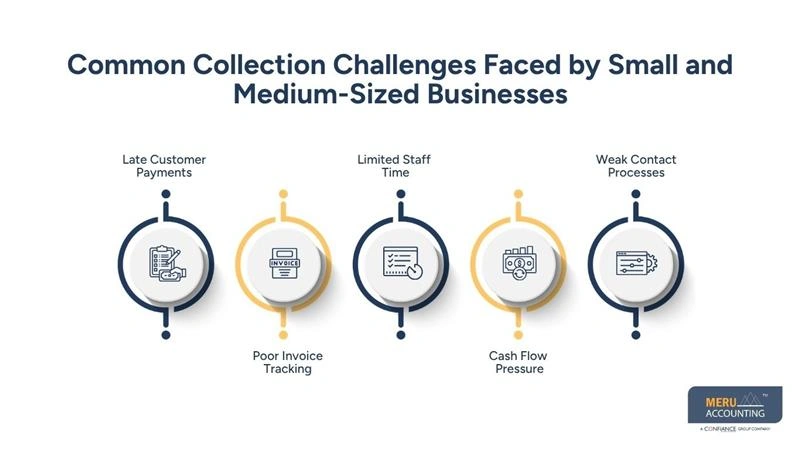
Cash Flow Pressure
Delayed collections affect daily business costs. Businesses still need to pay employee wages, vendors, rent, and other costs. When incoming cash slows down, financial pressure grows.
Weak Contact Processes
Some businesses do not have a clear process for sending reminders and following up with customers. Delayed contact often leads to delayed payments.
These common problems explain why many companies are looking for better solutions.
Why SMEs Are Moving Toward Accounts Receivable Management Services
More businesses now understand that collecting payments is not only about sending invoices. It needs a full process that includes tracking, contact, and reports.
Here are several reasons SMEs are shifting toward accounts receivable management services:
Faster Payment Cycles
Automated systems help businesses send invoices and payment reminders on time. Faster contact can reduce payment delays. Customers are more likely to respond when reminders are sent on a set schedule.
Better Cash Flow Control
Cash flow affects every part of a business. Better collection systems help companies keep stronger control over cash. With healthier cash flow, businesses can plan future costs with more confidence.
Reduced Office Work
Manual collection work takes time. Teams may spend many hours checking invoices and contacting customers. Expert help removes much of this workload.
Better Accuracy
Human errors can create billing issues and collection delays. Automated systems and clear processes help reduce mistakes.
Better Customer Relationships
Many businesses worry that collection efforts may hurt customer relationships. Strong collection systems often create more organized and respectful contact. Customers receive clear payment details without added pressure.
Access to Better Reports
Detailed reports give business owners a clear view of unpaid balances and payment trends. These facts help businesses spot issues before they grow.
Because of these benefits, more SMEs now view receivable work as an important business task instead of office work.
How Management Accounting Service Supports Financial Visibility and Decision-Making
Many businesses focus only on recording transactions. However, financial data becomes more useful when it helps owners make better business choices.
A management accounting service helps businesses understand business results through reports, review, and planning support. With receivable control, this service can provide a clear view of business data in several ways.
Better Cash Flow Review
Business owners need to understand how cash moves through the company.
Financial reports can show:
- Payment trends
- Outstanding balances
- Customer payment patterns
- Collection results
This data helps businesses plan future spending.
Better Budget Planning
Delayed collections can affect budgets and future plans. A management accounting service helps businesses create more accurate plans based on real payment data.
Stronger Support for Business Choices
Business owners make choices every day about staffing, growth, and spending. Clear financial data gives a stronger base for these choices.
Early Risk Finding
Financial review can help businesses spot warning signs before problems grow.
For example:
- Growing overdue invoices
- Rising customer balances
- Slower collection speed
Early action often prevents larger financial problems. With management accounting service, you get a clear view that helps SMEs move from quick choices to better planning.
Benefits of Outsourcing Accounts Receivable for SMEs
Many SMEs do not have large accounting teams. Outsourcing can give them access to skilled accountants without adding more pressure for in-house staff.
Here are some major benefits of outsourcing accounts receivable for SMEs:
Lower Office Work
Employees can focus on key business tasks instead of spending time on payment tracking and reminders.
Better Collection Processes
Expert teams often use proven methods that improve payment cycles. This creates a more steady payment process.
Cost Savings
Building an in-house team may require hiring, training, software costs, and ongoing support. Outsourcing can reduce these costs.
Faster Payment Collection
Dedicated systems and skilled teams often improve collection speed. This helps businesses keep stronger cash flow.
Access to Better Tools
Many providers use automation tools and reporting systems that may cost too much for smaller businesses to set up on their own.
Greater Focus on Business Growth
Business owners can spend more time on sales, daily work, and customer service rather than handling overdue accounts.
As businesses grow, outsourced support can also grow with changing business needs.
Meru Accounting’s Financial Management for Startups
At Meru Accounting, we understand that startups need more than basic bookkeeping. Early-stage businesses need clear, well-structured financial systems that help control costs, improve clarity, and support better day-to-day decisions.
Our financial management for startups services are built to manage the full financial process with accuracy, steady flow, and cost control.
Our services include:
- Bookkeeping and transaction tracking
- Payroll management
- Budget planning and tracking
- Cash flow monitoring and review
- Tax prep and compliance support
- Financial reports and insights
We help startups cut operating costs by reducing the need for in-house finance staff, multiple software tools, and time-heavy manual work. At the same time, we improve financial clarity so founders can make faster and more informed business choices.
At Meru Accounting, we also focus on giving clear financial insight that supports planning, growth, and long-term stability. Our systems are built to scale as the business grows.
Our goal is to make startup financial management simple, cost friendly, and reliable so founders can focus more on building and growing their business.
Our Expert Insight
Many SMEs wait too long before fixing payment flow issues. Business owners often focus on getting new sales while unpaid bills keep growing in the background. Sales growth matters, but strong cash flow matters just as much for long-term success.
A good payment process helps businesses stay on track and avoid cash gaps. Fast invoice follow-ups, clear reports, and regular payment checks can improve cash flow over time. With the right systems and expert help in place, SMEs can spend less time chasing payments and more time building steady business growth.
Key Takeaways
- Delayed customer payments create cash flow problems for SMEs.
- Accounts receivable management services help improve collection speed and reduce payment delays.
- Better receivable processes support steady business growth.
- A management accounting service gives a clear view of business results.
- Outsourcing receivable work can reduce workload and improve speed.
- Expert help allows business owners to focus more on growth efforts.
FAQs
Accounts receivable management services help businesses manage invoices, payment tracking, collection work, and customer balances to improve cash flow.
Many SMEs use these services to improve collection speed, reduce manual work, and strengthen cash flow control.
Late payments can create cash shortages and make it hard to pay vendors, employees, and operating costs.
A management accounting service provides reports and useful data that support planning, budgeting, and business choices.
Yes. Outsourcing can reduce staffing costs, lower office work, and provide access to skilled help and systems.