Affordable bookkeeping services for small business should give you the bookkeeping work you need at a fair rate. The right plan is not just the one with the lowest fee. A good plan should match your sales, costs, bank feeds, staff, tax needs, and report needs. The IRS says good records should show income and costs and back up the items on your tax return.
Many small firms do not need a full-time bookkeeper. Some need only a few hours of work each month. Others need bank checks, bills, payroll, sales data, and reports each week. Outsourced bookkeeping for small businesses can fit such firms when they need bookkeeping care but do not want to add a full-time role.
The key is to first know what your firm needs. Once the work is clear, you can compare plans, fees, tools, and service terms with less risk of paying for work you do not need.
What You Will Learn From This Blog
- How to identify your bookkeeping needs before choosing a service.
- Which bookkeeping tasks are most useful for small businesses.
- What factors can affect bookkeeping service costs.
- How to match service scope with your business size and needs.
- When outsourced bookkeeping for small business can be a suitable option.
- What to check before hiring a bookkeeping service provider.
- How to avoid low-cost plans with limited service coverage.
- How affordable bookkeeping services for small business can support better cash and tax record management.
What Are Affordable Bookkeeping Services for Small Business?
Fair Price For The Work
Affordable bookkeeping services for small businesses mean a fair cost for the work done. A low fee has little value if key tasks are left out or errors stay in the books.
Clear Service Scope
A good plan should state what the fee covers. It may list bank checks, sales, bills, reports, or payroll, along with any limits on the work.
Monthly Plans
Many bookkeeping firms charge a fixed monthly fee for a defined set of services. Fixed pricing can make budgeting easier when the transaction volume and service scope remain within the agreed limits.
Basic Or Full-Service Support
A new business may need basic transaction recording and bank reconciliation. A growing business may also need accounts payable, accounts receivable, payroll support, inventory tracking, and monthly financial reports.
Remote Bookkeeping Support
Outsourced bookkeeping for small businesses allows companies to receive professional bookkeeping support from an external accounting team. This option can suit businesses that need regular financial record management without hiring a full-time bookkeeper.
Value Over Price
Price is only one part of the choice. Skill, work quality, report use, response time, data safety, and scope also matter when you pick a plan.
Why Small Businesses Need Professional Bookkeeping
Clear Income Data
Affordable bookkeeping services for small businesses can keep income records clear and organized. The IRS notes that good records can show income sources and aid tax work.
Clean Cost Data
Costs should go to the right account and period. Clear cost data gives the owner a better view of where cash goes each month.
Tax Ready Records
Tax forms need sound source data. The IRS says records must back the income, costs, and credits shown on a tax return.
Bank Checks
Bank checks compare the records with bank data. Such checks can find missed fees, old checks, wrong posts, and items that need review.
Cash View
Profit and cash are not the same thing. A firm may show a profit while some sales are still due from clients, so cash flow needs its own view.
Less Owner Work
Work can take time from sales, staff, and client tasks. Outsourced bookkeeping for small business can move routine tasks to a trained outside team.
What Bookkeeping Services Does a Small Business Need?
Bank Reconciliation
Bank reconciliation checks entries against bank data. Regular checks can catch errors before they build up.
Sales And Income
Sales should be posted to the right account and date. Firms with card sales, cash sales, online sales, or more than one sales source may need extra checks.
Bills And Costs
Bills, fees, rent, tools, and other costs should be logged with care. The IRS lists invoices, receipts, paid bills, and account records as key business documents.
Client Dues
If clients buy on credit, open bills should be tracked. An aged list can show which bills are late and which cash may come in soon.
Vendor Dues
Open vendor bills should also be tracked. A due list gives the owner a view of what must be paid and when each bill falls due.
Monthly Reports
Affordable bookkeeping services for small businesses may include these core monthly reports within a suitable service plan. The SBA also lists key bookkeeping tasks such as bank checks, accounts due, accounts owed, cash, and payroll.
optional anymore
on running the business
How To Match Bookkeeping Services To Your Business Needs
Start With Firm Size
A sole owner with few sales may need a light plan. A firm with staff, many sales, stock, or many accounts may need a wider plan.
Check Item Volume
Count your sales, bills, bank items, card posts, refunds, and other entries. More items can mean more time and may change the fee.
Review Your Industry
A shop may need stock and sales checks. A builder may need job costs, while a service firm may need client bills and time data.
Count Your Accounts
List each bank, card, loan, payment app, and sales feed. Knowing your account count can help you compare affordable bookkeeping services for small businesses more accurately.
Set Report Needs
Some owners need only a profit and loss report. Others need cash data, balance sheets, class reports, job reports, or reports by branch.
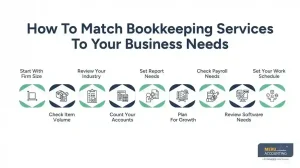
Plan For Growth
Your needs may change as sales rise. Outsourced bookkeeping for small business can be useful when you want to add bookkeeping work without first hiring a full-time bookkeeper.
Check Payroll Needs
Firms with staff may need payroll records, pay reports, and payroll tax data. If payroll is part of your needs, check whether the bookkeeper includes it in the base fee or charges extra.
Review Software Needs
Your firm may use QuickBooks, Xero, a POS system, payment apps, or other tools. Check whether the bookkeeper has experience with your tools and can manage the needed data links.
Set Your Work Schedule
Some firms need books closed each month, while others may need weekly updates. Choose a service cycle that gives you financial data when you need it for cash and business decisions.
Affordable Bookkeeping Services for Small Business: What Affects Cost?
Number Of Accounts
Affordable bookkeeping services for small businesses can cost more when the firm has many bank and card accounts. Each account may need a feed, match, review, and monthly check.
Transaction Count
The number of entries is a key cost factor. A firm with 200 bank items each month may need less work than one with 2,000 items.
Payroll Work
Payroll adds more tasks than basic data entry. Staff count, pay runs, payroll tax data, and pay records can all affect the total fee.
Report Level
A basic monthly report takes less work than a full set of reports by client, job, class, or branch. Ask which reports are part of the base plan.
Software Setup
Bookkeeping software, POS tools, payroll apps, payment tools, and bank feeds can affect the work needed. Ask which software links, setup tasks, and data checks are included in the quoted fee.
Common Mistakes When Choosing Bookkeeping Services
Choosing Only By Fee
Affordable bookkeeping services for small businesses should not be judged by price alone. Compare task scope, review steps, reports, skill, and service terms before you choose.
Ignoring Item Limits
Some plans set limits on accounts, transactions, reports, or support. Ask for these limits in writing so later fees do not come as a shock.
Skipping a Scope Check
A low fee may cover only data entry. Bank checks, bill tracking, payroll, cleanup, and reports may cost more, so read the scope with care.
Not Checking Experience
Ask who will manage your bookkeeping and who will review the work. Experience with your type of business and accounting software can matter a lot.
Mixing Personal Costs
Business and personal costs should not be mixed without proper review. The IRS says personal costs are not business costs and notes that separate accounts can make records easier to keep.
Why Choose Meru Accounting For Bookkeeping Services?
Tailored Bookkeeping Plans
Meru Accounting can set bookkeeping work around the needs of each firm. The goal is to keep the scope clear so clients pay for the work that fits their needs.
Skilled Accounting Team
Our team works on core bookkeeping tasks such as bank checks, sales, costs, bills, and reports. Work can be set on a clear cycle based on the client’s needs.
Cloud Bookkeeping
Cloud-based tools give firms a shared view of their financial data. They also make it easier for owners and accounting teams to access and work with the same records.
Flexible Service Scope
Affordable bookkeeping services for small businesses can be structured around the level of support each firm actually needs. Outsourced bookkeeping for small business gives firms a way to set the level of work based on their needs.
Clear Cost Model
Meru Accounting uses set monthly service plans for many clients. Clear scope and set fees can make it easier to plan the cost of bookkeeping work.
Our Expert Insight
Our Expert Perspective: Start by listing the bookkeeping work your business needs, then compare fees based on that scope. Choose a bookkeeping cycle that fits your sales and cash needs, review key reports regularly, keep invoices, bills, receipts, bank, and payroll records in order, and ask who checks the work for errors. A good bookkeeping plan should also be flexible enough to add accounts, staff, reports, or sales feeds as your business grows.
Key Takeaways
- Affordable bookkeeping services for small businesses should match the work you need.
- List your bank accounts, sales, bills, payroll, and reporting needs first.
- Review your monthly transaction and account volume before choosing a plan.
- Confirm which bookkeeping tasks are included in the service fee.
- Check for limits on accounts, transactions, reports, or support.
- Ask whether bookkeeping cleanup requires an additional fee.
- Keep personal and business expenses separate for cleaner records.
- Set a regular schedule for bookkeeping and financial review.
- Choose a provider with suitable bookkeeping and industry experience.
- Outsourced bookkeeping for small business can fit firms that do not need a full-time bookkeeper.
- Review the plan as your firm grows.
- Use affordable bookkeeping services for small business as a value test, not only a price test.
FAQs
Affordable bookkeeping services for small business are bookkeeping services that fit the firm’s needs, workload, and budget.
The fee can vary based on the number of bank accounts, transactions, payroll needs, reporting needs, cleanup work, and level of service.
Yes, outsourced bookkeeping for small businesses can be a good fit when a firm needs bookkeeping skills without hiring a full-time bookkeeper.
A bookkeeper may record sales and costs, check bank data, track bills, match payments, and make monthly reports.
List your bookkeeping needs first, then compare the service scope, fee, expertise, software, review process, support, and data security.
optional anymore
on running the business