
Starting a new business in the UK feels exciting. But to grow, you must track your money from day one. Learning basic bookkeeping in the UK helps start-ups stay on the right path. You need to record all the money you earn and spend. If you skip this, you won’t know if you gain or lose money.
Good records help you file taxes on time and avoid fines from HMRC. They also show if you have enough cash to pay your bills. This blog explains basic bookkeeping and shows UK startups how to build a strong system that fits UK rules.
What You Will Learn From This Blog
- What basic bookkeeping in the UK means for start-ups.
- Why bookkeeping for startups is essential from the first day of business.
- How bookkeeping helps businesses meet HMRC compliance requirements.
- Which financial records every UK start-up should maintain.
- The difference between manual bookkeeping and digital bookkeeping software.
- How to set up a bookkeeping system for a new business.
- Daily and monthly bookkeeping tasks every start-up should follow.
- When it makes sense to hire a professional bookkeeping service.
- How accurate bookkeeping supports better cash flow, tax filing, and business growth.
What Is Basic Bookkeeping?
Basic bookkeeping is the process of recording, organizing, and maintaining a business’s financial transactions. It creates a complete financial record that supports accounting, tax reporting, and business planning.
Bookkeeping includes recording:
- Sales and income
- Business expenses
- Customer payments
- Supplier invoices
- Bank transactions
- Payroll records
- VAT-related transactions
Accurate bookkeeping provides a clear picture of a company’s financial position. Instead of relying on estimates, business owners can review real financial data to understand profitability, cash flow, and spending patterns.
Modern basic bookkeeping is often managed through cloud-based accounting software that automates many routine tasks while maintaining organized financial records.
Why Bookkeeping for Startups is Essential
Bookkeeping for startups plays a crucial role in helping UK startups stay organised, manage cash flow, and meet legal requirements from day one. Basic bookkeeping in the UK helps small businesses stay compliant, manage cash flow, and avoid costly financial mistakes.
Helps You Stay on Top of Finances
Tracking your income and expenses closely helps you identify financial issues early. It reveals if you’re spending more than you’re earning and allows you to make timely adjustments.
Makes Tax Filing Easier
Bookkeeping in the UK makes self-assessment or Corporation Tax returns, easier. HMRC needs clear, accurate records. Staying on top avoids fines and saves time during tax season.
Builds Business Confidence
If you want to raise funds or get a loan, investors and banks will ask for your financial data. Clean, up-to-date records show that your business is well run.
Saves Time and Reduces Stress
With a set system, you won’t waste time looking for receipts or trying to recall sales. It also makes daily work smoother.
Keeps You Legal
UK law says you must keep business records for at least six years. Not doing so may lead to penalties. Bookkeeping for startups ensures you stay on the right side of the law.
Effective Bookkeeping for StartUps helps lay a strong financial foundation that supports compliance, smarter decisions, and future business growth.
Key Elements of Basic Bookkeeping in the UK
Basic bookkeeping in the UK refers to the core accounting tasks required to manage business finances in line with UK regulations. It covers income tracking, expense recording, cash flow analysis, and preparing essential financial reports for start-ups.
Income Tracking
UK startups should record every sale the business makes to maintain accurate financial records. It helps you see what’s working and what’s not. Invoices, receipts, and bank deposits all count. Income tracking is a vital part of basic bookkeeping in the UK for start-ups.
Expense Management
Track every cost, no matter how small. This includes rent, supplies, transport, and meals. Keeping records of these helps reduce tax bills.
Cash Flow Reports
This report shows how much money comes in and goes out each month. It helps plan when to spend or save.
Profit and Loss Statement
It is also called the income statement, and it shows how much profit your business made over a set period.
Balance Sheet
It shows what your business owns and owes. Assets, debts, and equity are all part of this report. It gives a snapshot of your financial position and is part of the basic bookkeeping standards.
Receipt Storage
HMRC can ask for proof at any time. Bookkeeping for a start-up should include safe storage of digital or paper receipts for all expenses.
How Basic Bookkeeping Helps Meet HMRC Compliance Requirements
HMRC expects businesses to maintain complete and accurate financial records throughout the year. Basic bookkeeping plays a significant role in meeting these requirements while reducing compliance risks.
Keeping Accurate Financial Records
Every financial transaction should be recorded promptly and accurately.
These records generally include:
- Sales invoices
- Purchase invoices
- Bank statements
- Payment receipts
- Business expenses
- Payroll information
Complete records help businesses prepare accurate financial statements and support tax calculations if HMRC requests additional information.
Tracking Income and Business Expenses
Recording income and expenses regularly allows businesses to calculate taxable profits accurately.
Expense tracking also helps identify deductible business costs, such as:
- Office expenses
- Travel costs
- Software subscriptions
- Marketing expenses
- Professional service fees
Accurate expense records help avoid incorrect tax reporting while improving financial planning.
Maintaining VAT and Tax Documentation
Businesses registered for VAT must maintain proper VAT records.
Bookkeeping helps organize:
- VAT invoices
- Purchase records
- Sales records
- VAT payment history
- Digital transaction records
Maintaining these documents supports accurate VAT returns and helps businesses comply with HMRC’s digital record-keeping requirements under Making Tax Digital (MTD).
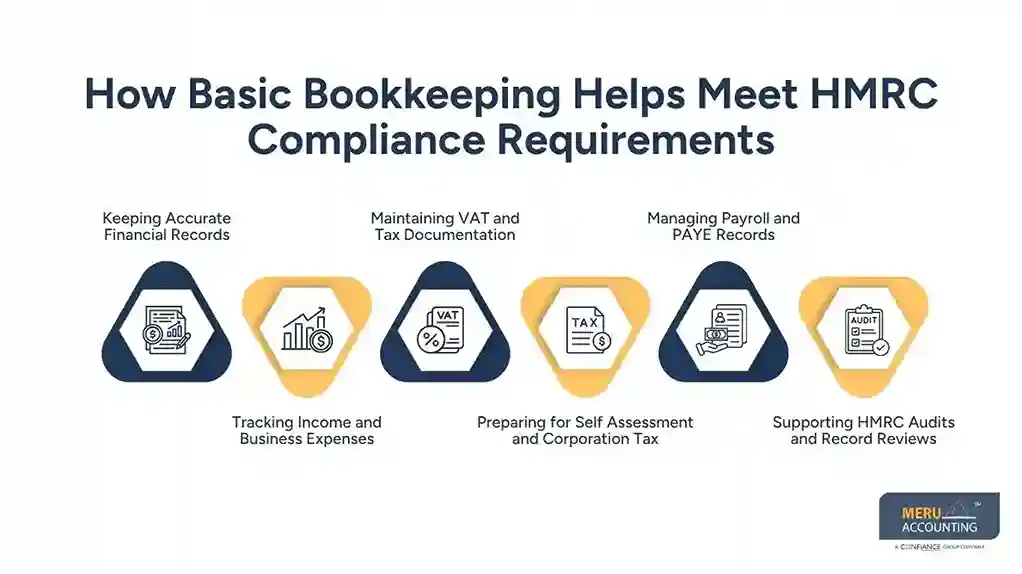
Preparing for Self Assessment and Corporation Tax
For UK startups, bookkeeping makes tax preparation much more straightforward.
Accurate financial records help calculate:
- Taxable income
- Allowable expenses
- Business profits
- Corporation Tax liabilities
- Self-assessment income
Instead of collecting documents at the end of the financial year, businesses already have organized records available for reporting.
Proper bookkeeping also reduces the likelihood of filing errors that could result in penalties or additional HMRC queries.
Managing Payroll and PAYE Records
Businesses with employees must maintain accurate payroll records to meet HMRC reporting requirements. Basic bookkeeping helps record payroll information correctly and supports timely submissions.
Payroll records generally include:
- Employee wages
- PAYE income tax deductions
- National Insurance contributions
- Pension contributions
- Employee payslips
Maintaining accurate payroll records helps businesses meet statutory obligations, prepare payroll reports, and reduce the risk of reporting errors or penalties.
Supporting HMRC Audits and Record Reviews
HMRC may request financial records during compliance checks or tax reviews. Well-maintained basic bookkeeping helps businesses respond quickly by keeping financial documents organized and accessible.
Important records include:
- Sales and purchase invoices
- Bank statements
- Payment receipts
- VAT records
- Payroll documents
- Tax filings
Keeping these records updated supports smooth audits, demonstrates compliance with HMRC requirements, and reduces the time needed to provide supporting information when requested.
Bookkeeping Methods: Manual vs Digital Tools
Feature | Manual Bookkeeping | Digital Bookkeeping Tools |
Cost | Manual bookkeeping often costs less. It uses basic tools like paper or simple sheets. You don’t need to buy software or pay for updates. | Digital tools may charge a fee each month or year. Some offer free plans made for small firms and start-ups. |
Ease of Use | It is easy to learn and works well for very small firms. But as records grow, it gets hard to keep up. | For bookkeeping for start-up firms, tools like Xero or QuickBooks offer simple features that help track income, expenses, and invoices with ease. |
Speed | Basic bookkeeping performed manually takes more time because every transaction must be recorded by hand. | Digital tools help you record deals fast. They save time and help you work with less stress. |
Error Risk | Manual work often leads to slips—wrong sums or missed items can hurt your records. | Digital tools lower risk with auto-sums and checks. These tools help keep your books right. |
Tax Compliance | You must know tax rules and apply them by hand. This may lead to slips during tax filing. | Most tools follow UK tax rules and alert you on time. They help you file taxes with less stress. |
Access | Records stay on paper or local drives. They are hard to share or reach from far away. | Cloud tools let you access files from any place. You can share with your team or a tax expert with ease. |
Scalability | As your firm grows, manual books take more time and become tough to manage. | Digital tools grow with your firm. They support more tasks and save time as your work expands. |
For UK startups, bookkeeping tools like Xero or QuickBooks are ideal. They simplify income tracking, expense logging, and tax compliance.
Setting Up Your Start-Up’s Bookkeeping System
Basic bookkeeping for UK startups begins with setting up the right system from day one. A strong setup helps you avoid mistakes, track money better, and meet HMRC rules. Follow these simple steps to build a bookkeeping process that works for your business.
Step 1: Open a Business Bank Account
Keep your personal and business funds apart. This avoids mix-ups and gives a clear view of business spending.
Step 2: Choose Your Bookkeeping Method
Pick between manual and software methods based on your needs for basic bookkeeping. UK startups often choose digital tools for easier compliance with MTD rules.
Step 3: Set Up Categories
Group your income and costs. For example, office rent, sales, transport, and wages. This makes reports easier to read.
Step 4: Schedule a Time
Set aside time weekly or daily to update your records. This keeps everything fresh and correct.
Step 5: Store Your Records Safely
Use cloud storage, folders, or a tool that keeps all your files in one place. Always back up your data.
Step 6: Review Often
Look at your numbers every month. Check for errors and see if you’re meeting goals. Bookkeeping for start-ups is not just about recording; it’s also about reviewing.
Start-up’s Guide to Bookkeeping
Once your bookkeeping system is ready, it’s time to manage it daily and monthly. This section walks you through the key steps to keep your books clean, accurate, and ready for tax time.
Keeping Records of Documents
Save every document that proves your earnings, spending, or tax-related claims. These include receipts, invoices, bank statements, bills, and past tax returns.
HMRC expects you to store these for six years. Good records are the foundation of basic bookkeeping, helping you avoid trouble with HMRC and track every penny.
Use Software or Spreadsheets
Choose a digital tool or Excel to store all records in one place. They help store records, update data in real-time, and create reports for VAT, PAYE, or Self Assessment.
Reconcile Bank Accounts
Check your bank statement each month. If the bank balance and your records don’t match, fix the difference. This keeps your books accurate and helps spot issues early.
Post to Ledger Accounts
Ledgers track accounts like sales, expenses, and money owed. Update these when journal entries are made. It shows the bigger picture of your finances.
Make a Trial Balance
This compares total debits and credits. If they match, your books are balanced. If not, you may have missed or mistyped something.
Close Temporary Accounts
At the end of your accounting period, close income and expense accounts. Then update the profit and loss account to show your final earnings or losses.
When to Hire a Professional for Bookkeeping for Startups
If You Lack Time
Running a start-up takes a lot of energy, leaving little time to manage basic bookkeeping consistently. If you’re busy growing your business, you may not have time to do your books.
If You Don’t Know Tax Rules
A professional bookkeeper knows UK laws, VAT rules, and deadlines. They help you avoid mistakes and find legal tax relief.
When You’re Growing Fast
As UK startups grow, their financial records become more complex. A professional helps keep everything neat and in line.
If You Plan to Seek Funding
Lenders want to see clean books. A bookkeeper ensures your records look right and follow UK standards.
If You Keep Making Errors
Errors in numbers can lead to wrong decisions or fines. A skilled bookkeeper ensures your data is correct.
At Meru Accounting, we know what UK startups need. Our team offers full basic bookkeeping services for small businesses in the UK. We keep your records clear, up-to-date, and HMRC-ready. So you can focus on growing your business.
Why Choose Meru Accounting?
Starting a business comes with many financial responsibilities. Meru Accounting helps UK startups establish reliable bookkeeping systems that support compliance, financial visibility, and long-term growth.
Accurate Day-to-Day Bookkeeping
Our team records income, expenses, bank transactions, invoices, payroll records, and VAT-related transactions accurately. Well-maintained basic bookkeeping records help businesses understand their financial position throughout the year.
HMRC-Compliant Record Management
We maintain organised financial records that support Corporation Tax, Self Assessment, VAT returns, PAYE reporting, and Making Tax Digital (MTD) requirements. Proper documentation helps reduce compliance risks and prepares businesses for HMRC reviews.
Cloud-Based Bookkeeping Support
Meru Accounting works with leading cloud accounting platforms, allowing businesses to access real-time financial information, automate routine bookkeeping tasks, and securely manage business records from anywhere.
Cash Flow Monitoring and Financial Reporting
Regular bookkeeping provides accurate financial reports, including profit and loss statements, balance sheets, and cash flow reports. These reports help business owners make informed financial decisions and plan for future growth.
Scalable Support for Growing Businesses
As your business expands, basic bookkeeping requirements become more detailed and require greater attention. Our bookkeeping services grow alongside your business, helping you maintain accurate financial records without increasing administrative workload.
Our Expert Perspective
Accurate basic bookkeeping helps UK startups build strong financial habits from the beginning. Keeping organised records supports HMRC compliance, improves cash flow management, and provides reliable financial information for better decision-making. At Meru Accounting, we help businesses maintain accurate bookkeeping systems that support compliance while creating a strong foundation for long-term growth.
Key Takeaways
- Basic bookkeeping in the UK helps businesses maintain accurate financial records.
- Bookkeeping for startups supports HMRC compliance and reduces reporting errors.
- Recording income and expenses regularly improves cash flow management.
- Organised bookkeeping simplifies VAT, PAYE, Corporation Tax, and Self Assessment reporting.
- Financial reports help business owners measure profitability and business performance.
- Cloud bookkeeping software improves accuracy, accessibility, and efficiency.
- Regular bookkeeping helps businesses prepare for audits, funding applications, and future expansion.
- Professional bookkeeping services reduce administrative workload and improve financial accuracy.
FAQs
It’s the process of recording income, expenses, and other financial tasks to keep a clear record of your business in the UK.
Yes. Start-ups need strong systems from day one. Focus on tracking cash flow and cutting extra costs. This builds healthy financial habits from the start.
Use tools like Xero, FreeAgent, or QuickBooks. They track income, send invoices, and make reports. These tools help you stay organised.
A bookkeeper handles daily entries. An accountant looks at reports and taxes. At first, a bookkeeper is often enough for start-ups.
Businesses should keep sales invoices, purchase invoices, receipts, bank statements, payroll records, VAT documents, expense records, and tax-related information for the required retention period.
optional anymore
on running the business