Running a business takes time, focus, and sound financial knowledge. Yet, many owners put off their books until month-end or tax time. This can make it hard to know where the business stands. The benefits of hiring a bookkeeper go far beyond maintaining records. A skilled bookkeeper can help keep your books up to date, track cash flow, spot errors, and give you clear data to guide your next move.
For a small or growing firm, good books can also help you save time and stay on top of costs. This can give you more time to serve your clients, grow sales, and run the day-to-day work of your firm.
What You Will Learn From This Blog
In this blog, you will learn:
- What a bookkeeper does for a business.
- The key benefits of hiring a bookkeeper.
- When to hire a bookkeeper as your firm grows.
- How outsourced bookkeeping services can help save time and cut admin work.
- How good books can help you make good business decisions.
Why Bookkeeping Matters for Business Growth
Bookkeeping is the base of good financial control. It helps you keep a clear log of sales, costs, bills, and cash moves. With clean books, you can see how much your firm earns and where its cash goes.
Good books also give you data you can use to spot trends. You may see that one cost is rising fast or that a key client is slow to pay. You may also find that some parts of your firm bring in more cash than others.
This is why the benefits of hiring a bookkeeper can grow as your firm grows. A bookkeeper can keep your data in good shape while you focus on the work that drives sales and client care.
What Does a Bookkeeper Do for a Business?
A bookkeeper keeps track of key day-to-day money tasks. These tasks may include recording sales, posting costs, matching bank data, and keeping bills and cash due in order.
A bookkeeper may also help with:
- Bank and card account checks.
- Accounts payable and accounts receivable.
- Expense tracking.
- Payroll data and records.
- Monthly reports.
- General ledger upkeep.
- Tax-ready book prep.
The exact scope can vary by firm and need. A bookkeeper does not take the place of a CPA or tax pro in all cases. But clean books can make tax work much more smoothly.
Knowing what a bookkeeper does also helps you see the real benefits of hiring a bookkeeper. The value is not just in data entry. It is in having sound and timely books that help you run the firm.
What Are the Benefits of Hiring a Bookkeeper?
The benefits of hiring a bookkeeper can vary by firm size, needs, and stage of growth. Still, many firms gain key value from having a book professional handle the books.
Keeps Your Financial Records Accurate and Organized
Organized books give you a clear view of your firm’s money. A bookkeeper can record each sale and cost in the right place. They can also check bank data and fix gaps. This can help you avoid old or mixed-up records. It also gives you a sound base for tax work and key money calls. For firms with many daily sales or costs, this is one of the key benefits of hiring a bookkeeper.
Saves Business Owners Valuable Time
Bookkeeping can take hours each week. For many owners, that time could be used for sales, staff, or client work. A bookkeeper can take on tasks such as data entry, bank checks, and report prep. This frees up time and can help you stay on track with your main goals. Time saved is one of the clearest benefits of hiring a bookkeeper, more so when your books take up too much of your workday.
Improves Cash Flow Visibility
Cash flow is key to any firm. You need to know what cash is in the bank, what bills are due, and what cash is due in. Up-to-date books can help you see these items with less guesswork. A bookkeeper can keep your records fresh and help you spot gaps in cash flow. A better cash flow view can help you plan for bills, pay staff on time, and set funds aside for tax.
Helps Track Business Expenses and Spending
Small costs can add up fast. If you do not track them well, it can be hard to know where your cash goes. A bookkeeper can sort costs into the right groups and keep a clear record of spending. This can help you spot costs that rise over time. You may also find areas where you can cut waste. This is one of the benefits of hiring a bookkeeper that can have a direct impact on your bottom line.
Provides Timely Financial Reports
Reports are more useful when the data in them is fresh. A bookkeeper can help keep your books up to date so you can review key reports on a set time frame.
Common reports may include the profit and loss, balance sheet, and cash flow report.
These reports can show sales, costs, assets, debts, and cash trends. With this data at hand, you can act based on facts, not a guess.
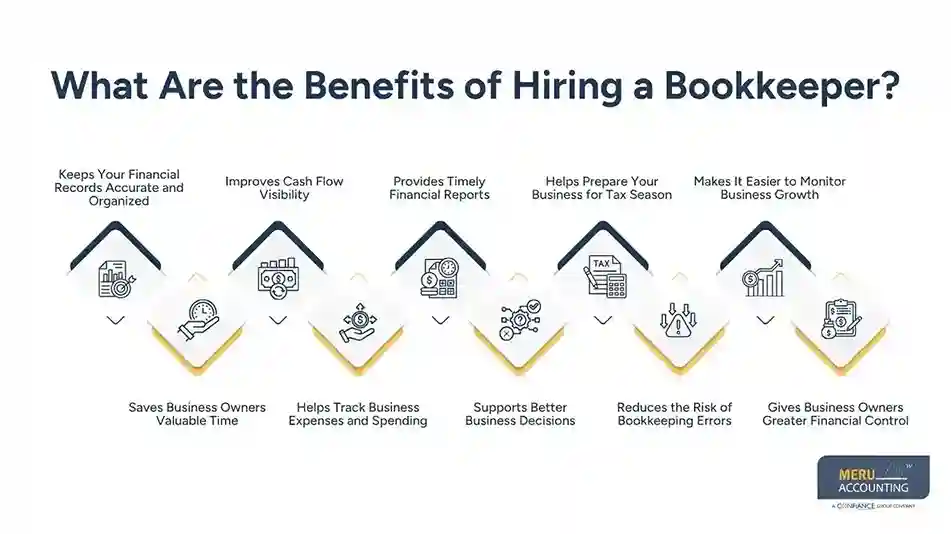
Supports Better Business Decisions
A good business call needs good data. If your books are late or full of gaps, it is hard to know what you can spend or save. A bookkeeper helps keep key data in place. This can make it easier to review your sales, costs, and cash before you make a big move. You may use this data when you plan to hire staff, add a new site, buy gear, or set a new price. This is one of the most useful benefits of hiring a bookkeeper for firms that want to grow with care.
Helps Prepare Your Business for Tax Season
Tax time can be hard when books are not up to date. Missing bills, poor records, or mixed costs can slow down the tax prep work. A bookkeeper can help keep your records in order all year. This can give your tax pro the data they need to do their work with less back-and-forth. A bookkeeper does not give tax advice unless they are also a tax pro. But clean books can make tax preparation far less hard.
Reduces the Risk of Bookkeeping Errors
Manual book work can lead to missed costs, wrong entries, and data gaps. These errors may seem small, but they can hurt the value of your reports. A bookkeeper can use set steps to record and check your data. Bank recs and account checks can also help find issues. This does not mean errors will never occur. It means you have a clear process to help find and fix them.
Makes It Easier to Monitor Business Growth
Growth is more than higher sales. You also need to know if costs rise at the same rate. Good books can help you track sales, profit, cash, and key costs over time. This lets you see if growth is real and if it adds to the bottom line. With the right reports, you can compare one month or year with the next. These trends can help you set clear goals and plan your next step.
Gives Business Owners Greater Financial Control
One of the main benefits of hiring a bookkeeper is a better view of your firm’s money. You do not need to spend each day in your books. But you should know what the key numbers mean. A bookkeeper can help keep those numbers clear and ready to view.
With good records, you can spot cash needs, watch costs, and plan with more care. This gives you more control over the money side of your firm.
optional anymore
on running the business
How Outsourced Bookkeeping Services Support Growing Businesses
Not every firm needs a full-time bookkeeper on staff. For many small and mid-size firms, outsourced bookkeeping services can be a more flexible way to get expert help.
With outsourced bookkeeping services, you can get help with core book tasks without the full cost of an in-house hire. The scope can also grow as your needs grow.
These services may cover:
- Daily or weekly transaction entry.
- Bank and card account recs.
- Accounts payable and receivable.
- Expense tracking.
- Monthly close work.
- Financial reports.
- Tax-ready book preparation.
The right setup can give you many of the benefits of hiring a bookkeeper while letting you scale the level of help to fit your needs.
When to Hire a Bookkeeper
Knowing when to hire a bookkeeper is just as key as knowing why you need one.
You may need help when:
- Your books are often late.
- You spend too much time on book work.
- You are not sure how much cash you have.
- Your sales and costs have grown.
- Tax preparation takes too much time.
- You have more bank or card accounts to track.
- You plan to add staff, sites, or new services.
There is no single sales level that determines when to hire a bookkeeper. The right time depends on your business needs, workload, and the time you can spend managing your books.
For many firms, outsourced bookkeeping services can be a good first step. They can add support without the need to build a full in-house team.
Bookkeeping Services for Small Businesses by Meru Accounting
Meru Accounting provides bookkeeping support built around the needs of small businesses. Our bookkeeping services for small businesses include:
- Daily transaction recording and categorization
- Bank and credit card reconciliation
- Accounts payable and accounts receivable
- Expense tracking and record maintenance
- Monthly bookkeeping and account close
- Financial statement preparation
- Tax-ready bookkeeping support
Our services can be tailored to your business needs and bookkeeping workload, whether you need ongoing support or help with specific accounting tasks.
If you are unsure when to hire a bookkeeper, Meru Accounting can help you review your current process and find the level of support that fits your firm.
Our Expert Insight
Bookkeeping should give a business owner a reliable view of what is happening financially, not just a record of past transactions. In our experience, the real value comes from having consistent processes, clear account records, and financial data that can be reviewed with confidence.
A business may have strong sales and still face cash pressure if costs, unpaid invoices, or upcoming bills are not tracked closely. That is why we recommend treating bookkeeping as an ongoing part of financial management rather than a task saved for month-end or tax season.
For businesses with growing transaction volume or limited internal capacity, outsourced bookkeeping services can provide the structure needed to keep financial records current without adding a full-time bookkeeping role.
Key Takeaways
- Bookkeeping helps keep your financial data clear and up to date.
- The benefits of hiring a bookkeeper include saved time, a better cash flow view, and fewer bookkeeping errors.
- Good books can help you track costs and spot growth trends.
- A bookkeeper can help keep records ready for tax prep.
- Outsourced bookkeeping services can give growing firms flexible book support.
- The right time to hire a bookkeeper depends on your workload, time, and business needs.
FAQs
The main benefits of hiring a bookkeeper include accurate records, saved time, better cash flow insight, clear reports, and stronger control of business costs.
A business should review when to hire a bookkeeper when books fall behind, money data is hard to track, or bookkeeping takes time away from core business tasks.
Yes. Outsourced bookkeeping services can give a small business access to book support without the need to hire and manage a full-time in-house bookkeeper.
A bookkeeper can keep financial records organized and tax-ready. A CPA or tax pro can then use those records to handle tax prep and tax advice.
You may need outsourced bookkeeping services if your books are late, your business is growing, or you lack the time or skill to keep your records up to date.
optional anymore
on running the business