
Starting a new firm is a huge step for anyone. You may spend a lot of time on your product, your team, and your first sale. Yet one of the first choices you must make is your business structure. The way you set up your firm can affect your taxes, legal risk, day-to-day work, and growth plans. It can also shape how banks, buyers, and new partners see your firm. The right structure can help keep your own assets safe, make tax work less hard, and give your firm room to grow. The wrong one can lead to more costs, more risk, and hard-to-fix issues later.
There is no best choice for every firm. What works well for one owner may not work for the next. Your field, goals, size, and plans all play a part in the right choice. In some cases, an alternative business structure may also be worth a close look.
This blog will walk you through the main types of business structures, the key things to think about, and the steps that can help you pick the best fit for your firm.
What You Will Learn From This Blog
By the end of this blog, you will know:
- What a business structure is.
- Why the right setup can help your firm.
- The main kinds of structures in the United States.
- The good and bad points of each type.
- When an alternative business structure may make sense.
- What to think about before you make your choice.
- How a financial advisor can help you pick the best path.
What Is a Business Structure?
A business structure is the legal way a firm is set up. It tells the law who owns the firm, who pays its debts, how taxes work, and what rules the firm must meet.
Every firm must have a legal setup. Even if you work on your own, your structure still plays a big part in how your firm runs.
Your choice can affect:
- Taxes
- Legal risk
- Daily work
- Bookkeeping
- Profit sharing
- Who owns the firm
- State rules
- Plans for growth
The right structure gives your firm a strong base. It can also help build trust with banks, buyers, and new partners.
As your firm grows, your first setup may no longer fit your needs. Some owners then move to a new structure that gives more help as the firm gets bigger. In some cases, an alternative business structure may also fit new goals.
Since each type has its own rules, it is smart to think about your short-term and long-term plans before you make a choice.
Why Choosing the Right Business Structure Is Important
Your business structure does much more than meet a legal rule. It can shape how your firm runs each day and how well it grows over time.
Here are some of the main ways your choice can affect your firm.
Helps Keep Your Own Assets Safe
One of the first things most owners think about is risk. Some types of structure help keep your own home, car, and savings apart from the firm’s debts. If the firm is sued or owes money, this legal wall may help keep your own assets safe. The level of help can change from one type of structure to the next, so it is a key point to review.
Can Change Your Tax Bill
Taxes are a big part of every firm. The structure you choose can affect how your firm pays tax and how you report income. Some firms pay tax through the owner’s tax return. Some file tax forms for the firm. The best fit depends on your goals and how your firm earns money. A smart tax plan can help save both time and money.
Makes It Easier to Grow
The best structure should fit your plans now and later.
As your firm grows, you may want to:
- Hire more staff
- Open more sites
- Add new owners
- Bring in new funds
- Sell new goods or services
A good setup can make those steps much easier.
Builds Trust
A clear structure can also help build trust. Banks, buyers, and vendors often feel more at ease when they work with a firm that has a clear legal setup. It shows that the firm plans to stay in business for the long run.
Helps You Raise Funds
Many firms need more cash as they grow. If you plan to ask for a loan or bring in new owners, your structure can make a big difference. Some types make it much easier to raise funds than others.
Helps You Meet State Rules
Each state has its own rules for firms.
Your structure can affect:
- Tax forms
- State forms
- Yearly reports
- Licenses
- Fees
Knowing these rules can help you avoid fines and keep your firm in good standing.
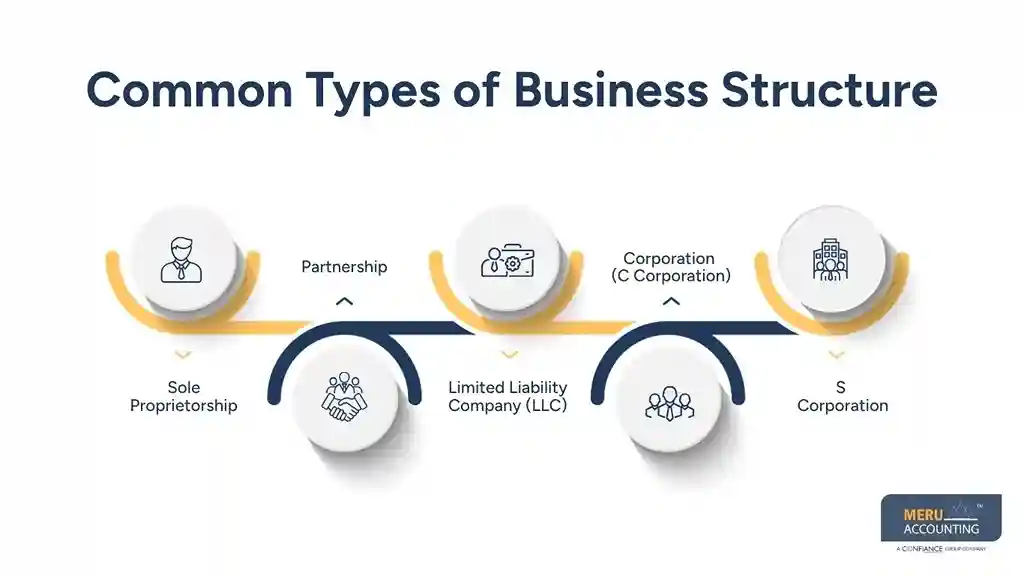
Common Types of Business Structure
There are a few main kinds of business structure in the United States. Each one has good points and limits.
The best choice depends on your goals, your work, and how you plan to grow.
Sole Proprietorship
A sole proprietorship is the most basic structure.
One person owns and runs the firm. The owner and the firm are the same under the law.
Best For
- Freelancers
- Self-employed workers
- Small local firms
- New business owners
Good Points
- Easy to start
- Low cost
- Full control
- Easy tax filing
Limits
- The owner is liable for all debts.
- It is harder to raise funds.
- The firm may end if the owner leaves.
Many firms start with this structure and later move to a new one as they grow.
Partnership
A partnership is a structure where two or more people own the firm.
The owners share the work, the costs, and the profit based on their deal.
Best For
- Family firms
- Small service firms
- Two or more founders
- Joint work
Good Points
- Shared costs
- Shared work
- More skills
- Easy to form
Limits
- Owners may share legal risk.
- Profit is split.
- The owners must work well as a team.
A clear written deal can help stop issues later.
Limited Liability Company (LLC)
An LLC is one of the most used types of structure for small firms.
It gives legal help while still being easy to run.
Best For
- Small firms
- Online stores
- Service firms
- New firms with plans to grow
Good Points
- Helps keep the owner’s assets safe
- Easy to run
- Tax choices
- Good fit for many small firms
Limits
- State filing fees
- Yearly forms in many states
- State rules may differ
Many owners pick an LLC because it gives a good mix of legal help and day-to-day ease.
Corporation (C Corporation)
A corporation is a structure that is its own legal entity.
It is not the same as its owners.
Best For
- Large firms
- Fast-growth firms
- Firms that want new funds
- Firms that may sell stock
Good Points
- Strong legal help
- Easier to raise funds
- Can grow with ease
- The firm stays in place if owners change
Limits
- More forms
- More state rules
- More tax work
- Higher costs
This type often fits firms with big plans for growth.
S Corporation
An S corporation is a tax choice for some firms that meet IRS rules.
This business structure gives legal help while letting income pass to the owners for tax use.
Best For
- Small firms
- Family firms
- Firms with steady profit
Good Points
- Legal help
- Pass-through tax
- Good image
- May lower some tax costs
Limits
- IRS rules
- Limits on owners
- More forms
- More state and tax rules
Before you choose this structure, it is smart to speak with a tax or finance expert. They can help you see if it fits your goals.
Factors to Consider Before Choosing a Business Structure
There is no single business structure that works for every company. The best fit depends on your work, your goals, and your plans for the years ahead. Before you make a choice, look at these key points.
Type of Business
Start with the kind of work you do.
A home repair firm has different needs than an online store or a tech startup. Some jobs carry more risk than others. If your work has a high chance of legal claims, you may need a structure that gives more legal help.
Pick a setup that fits your work now and can still fit as your firm grows.
Risk to Your Own Assets
Think about how much risk you are ready to take.
Some business owners want to keep their home, car, and savings apart from the firm. A structure that gives legal cover may help if the firm faces debt or a court case.
If your work has more risk, this point should rank high on your list.
Taxes
Tax rules change based on the structure you pick.
Some firms pay tax through the owner’s tax return. Some file a tax return for the firm. The best choice depends on your income, your costs, and your tax plan.
Talk with a tax expert so you know how each choice may affect your tax bill.
Cost to Start and Run
Each structure comes with its own costs.
Think about:
- State filing fees
- Yearly fees
- Legal forms
- Bookkeeping costs
- Tax filing costs
Do not look at the start-up cost alone. Think about what the firm may cost to run each year.
Plans to Raise Money
If you may need a loan or want to bring in new owners, your structure can make a big difference.
Banks and other lenders often look at how a firm is set up. Some forms also make it much easier to add new owners or bring in new funds.
Plan for the next five or ten years, not just the next few months.
Owners and Daily Work
Ask who will own the firm.
Will you run it on your own?
Will you have one or more partners?
Do you hope to add new owners later?
Your answers can help you pick the right structure from the start.
State Rules
Each state has its own laws for new firms.
The rules may cover:
- Filing forms
- Tax reports
- Yearly reports
- Licenses
- Fees
Learn the rules in your state before you choose a structure. This can help you stay in good standing and avoid fines.
Plans for Growth
Think about where you want the firm to be in a few years.
Ask these questions:
- Will you hire more staff?
- Will you open new sites?
- Will you sell the firm one day?
- Will you ask for outside funds?
The best structure should fit both your needs now and your plans for later.
When Should You Look at an Alternative Business Structure?
In some fields, a standard setup may not be the best fit. An alternative business structure can give more ways to own or run a firm where state law allows it.
Some law firms and other licensed firms may use an alternative business structure to bring in new funds or new owners when the law allows.
Before you pick an alternative business structure, learn your state rules and get advice from tax and legal pros.
How Meru Accounting's Financial Advisory Services Can Help
The right structure can save time, lower risk, and help your firm grow with more ease.
At Meru Accounting, our Financial Advisory Services help you look at each choice with care. We learn about your work, your goals, and your plans before we make a plan that fits your needs.
Our team can help you:
- Compare each business structure
- Learn the tax side of each choice
- Check setup and yearly costs
- Build a plan for growth
- Stay on track with tax and state rules
- Review your setup as your firm grows
If you are just starting or want to change your current business structure, we can help you make a smart choice with clear facts and sound advice.
Our Expert Insight
Many owners pick a structure because it is quick or low in cost. That may work for the short term, but it may not fit the firm a few years from now. The best choice should do more than cut taxes. It should also help guard your own assets, make growth less hard, and fit your long-term goals.
As your firm grows, take time to look at your setup again. A structure that worked at the start may not be the best fit later. In some cases, an alternative business structure may be worth a close look if state law allows it and it meets your needs.
Key Takeaways
- A business structure sets the legal and tax base for your firm.
- The right setup can help guard your own assets and make growth much easier.
- Each type of structure has its own pros and limits.
- Think about risk, tax, cost, and growth before you make your choice.
- An alternative business structure may work well for some firms where state law allows it.
- Good tax and finance advice can help you pick the best path for your firm.
FAQs
The best business structure depends on your work, your goals, your tax plan, and how much risk you face. Many small firms pick an LLC because it gives legal help and stays easy to run.
An alternative business structure is a legal setup that uses a different way to own or run a firm than a standard model. In some states and fields, it can give more ways to grow or raise funds.
Yes. Many owners change their structure as the firm grows. A new setup may fit better when the firm adds staff, earns more, or takes on more work.
In most cases, LLCs and corporations give more legal help than sole proprietorships or general partnerships because they keep the owner’s assets apart from the firm’s debts.
A tax or finance expert can explain how each structure may affect your taxes, costs, and growth plans. Their advice can help you avoid mistakes and pick a setup that fits your goals.
optional anymore
on running the business