Bookkeeping costs for small businesses can vary a lot. Bookkeeping costs for small businesses also change as sales and accounts grow. A small shop with one bank account does not need the same level of work as a firm with staff, stock, many sales, and many bills. The right price depends on transaction volume, account count, service type, data quality, and review needs. The goal is not to find the lowest fee. The goal is to pay a fair fee for clean books that you can trust. Bookkeeping costs should match the work you need.
What You Will Learn From This Blog
- What drives bookkeeping costs for small businesses.
- How to read an average cost of bookkeeping services quote and compare an average cost of bookkeeping services.
- How needs change by type of business.
- When outside bookkeeping may cost less.
- How to compare price, scope, and value.
What Determines Bookkeeping Costs for Small Businesses?
Transaction Volume
More transactions mean more work. A firm with 50 bank and card entries each month may need less time than one with 1,000 entries. Sales, bills, refunds, payroll items, and transfers can all affect bookkeeping costs for small businesses.
Number of Accounts
Each bank, card, loan, and payment account needs review and matching work. More accounts can mean more checks and more time each month. Monthly bookkeeping expenses may increase when a firm adds new bank cards, loans, or payment systems.
Type of Bookkeeping Work
Basic data entry is not the same as full monthly bookkeeping. A quote may cover bank matching but leave payroll, bills, sales tax, stock, or reports outside the plan. Small business bookkeeping fees can rise when more review is needed.
Quality of Source Data
Clean data can cut review time. Missing bills, mixed-use charges, old bank items, and poor file setup can add work and raise the fee.
Good source records can keep bookkeeping costs for small businesses more stable over time.
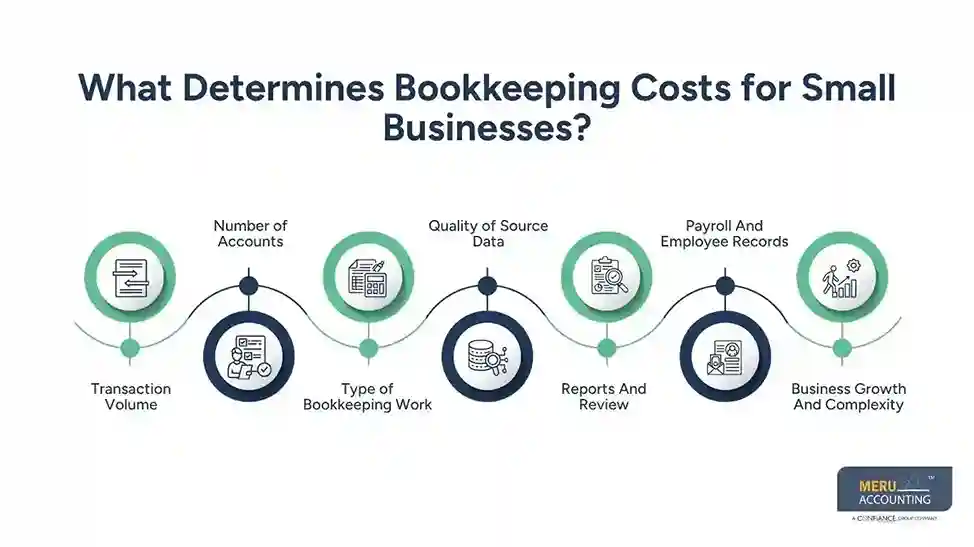
Reports And Review
Some firms need only a basic profit and loss report. Others need a balance sheet, cash flow view, job reports, or month-end review.
More review can raise the fee, but it can also give owners a clearer view of cash, costs, and profit.
Payroll And Employee Records
Businesses with employees often need more bookkeeping work. Payroll entries, wages, benefits, reimbursements, and payroll taxes can add more records to review each month.
A business should check whether payroll work is part of the base fee or priced as an extra service.
Business Growth And Complexity
A growing firm may add staff, sales channels, vendors, loans, or new bank accounts. Each change can add more records and more review work.
For that reason, bookkeeping costs for small businesses should be reviewed as the firm grows rather than based only on its current size.
optional anymore
on running the business
What Is The Average Cost Of Bookkeeping Services?
Hourly Bookkeeping
Hourly work is still used for many small jobs. Rates can differ by skill, place, task, and firm, which affects bookkeeping costs for small businesses.
When comparing the average cost of bookkeeping services, ask what skill level is assigned and how many hours may be needed.
Monthly Packages
A fixed plan can make costs easier to plan. The fee may cover bank matching, reports, account review, and basic client help.
Ask whether the average cost of bookkeeping services stays fixed when transaction volume rises.
Catch-Up Work
Old books often need one-time clean-up before monthly work starts. The fee may be higher because the bookkeeper must trace old items and fix errors.
Catch-up work should be listed apart from normal monthly work so the price is clear.
Tax-Ready Books
Tax-ready work can affect bookkeeping costs for small businesses because it requires more review than basic data entry. A bookkeeper may check key accounts, loans, fixed assets, and owner draws.
Good records also give a tax professional a better base for tax work. The IRS says businesses should keep records that clearly show income and expenses.
Bookkeeping Costs for Small Business by Business Type
Solo Service Firms
A solo coach, designer, or consultant may have few bills and no stock. Their bookkeeping costs for small business may stay low when the books are clean and the account count is small.
Retail Firms
Retail firms can have many sales, refunds, card feeds, and stock items. The work can be more involved than for a solo service firm, even when sales are close.
Ecommerce Firms
Online sellers may use more than one sales channel and payment app. Fees, refunds, sales tax, and payout matching can add time.
Construction Firms
Builders may need job cost data, bills, retainage, loans, and many vendors. A simple plan may not cover the level of review that such books need. Bookkeeping costs for small businesses can be higher when job data needs regular review.
Firms With Staff
Payroll adds more records and checks. A firm with several staff may also have benefits, tax items, and pay runs. These needs can raise the monthly fee compared with a firm that has no staff.
How To Calculate Your Small Business Bookkeeping Costs
List Your Accounts
Start with each bank, card, loan, and payment account. Note which ones need monthly matching work. A clear account list gives a bookkeeper a better base for a quote.
Count Monthly Transactions
Count sales, bills, expenses, refunds, transfers, payroll items, and other entries. Use both a normal month and a busy month. Bookkeeping costs for small businesses are easier to estimate when the expected volume is clear.
Add Extra Work
Write down payroll, sales tax, bills, invoicing, stock, reports, and year-end work. Ask if each task is part of the base fee or billed apart. Also ask if the bookkeeping cost per month changes when volume grows.
Set Your Bookkeeping Cost Per Month
Add the monthly fee, software fee, and set add-on fees. Your bookkeeping cost per month should also show any likely extra work. For hourly work, multiply the hourly rate by expected hours. This gives a better view of the total cost.
Check The Value
A low fee may not be a good deal if the books are late or hard to use. Bookkeeping costs for small businesses should be judged by the full work scope. A higher fee may make sense when the service gives timely reports, clean account matching, and clear answers.
When Is Outsourcing Bookkeeping More Cost-Effective?
When Owner Time Is Costly
An owner who spends six hours each month on books does not get that time back. If those hours could be used for sales or client work, an outside bookkeeper may make more sense.
When Work Volume Grows
More sales and more accounts can push bookkeeping past a simple DIY task. Outsourcing can give the firm a set process as volume rises.
The right bookkeeping cost per month may be easier to plan than an uneven in-house workload.
When Books Need Skilled Review
Some books need more than entry. Loan matching, payroll checks, fixed asset work, and month-end close tasks may call for a skilled bookkeeper.
The average cost of bookkeeping services should be judged against the skill and work included.
When Staff Cost More
An in-house hire may bring wage, tax, leave, training, and tool costs. For a small firm with limited bookkeeping work, an outside plan can be a lower-cost choice.
A full comparison of bookkeeping costs for small business should include wages, benefits, software, training, and management time.
When Reports Matter
Owners need more than a pile of entries. Monthly reports can show sales, costs, cash, and debt.
The right service can give owners a clear view without taking their own work time.
Common Mistakes When Comparing Bookkeeping Costs
Choosing The Lowest Fee
Price alone does not show the full scope. A low quote may cover only bank matching while key tasks sit outside the plan. Bookkeeping costs for small businesses should not be judged by price alone.
Ignoring Clean-Up Fees
Ask if old book repair is part of the first quote. A low monthly fee can look good until a large clean-up bill appears. Ask for one-time fees before work starts.
Not Asking About Limits
Some plans have limits on account count, transaction count, calls, or reports. Ask for each limit in writing before you sign. A clear plan makes the bookkeeping cost per month easier to predict.
Mixing Bookkeeping And Tax Work
Bookkeeping and tax filing are linked, but they are not the same task. Ask if tax forms, tax planning, or CPA review are included. Separate pricing can make the average cost of bookkeeping services easier to understand.
Using One Price For Every Firm
A fixed price can be useful, but needs differ by firm. The right bookkeeping cost per month for a solo firm may not fit a retail or construction firm. Bookkeeping costs for small businesses should reflect the actual work, not only the business size.
How Meru Accounting Builds Cost-Effective Bookkeeping Support
Start With A Scope Review
At Meru Accounting, we first look at the books, account count, transaction volume, and work needs. Our goal is to set a clear scope before a fee is agreed.
Use Clear Monthly Plans
Our monthly plans are based on the work needed, not a vague fee. We can cover core bookkeeping and add tasks that fit the firm’s needs.
Focus On Clean Monthly Books
Our team reviews key accounts and keeps records ready for review. Keeping books clean each month can make bookkeeping costs for small business more predictable over time.
Match Service To Business Size
A small service firm may need a light plan. A firm with staff, stock, or many accounts may need more review.
We shape the work around the firm’s actual needs instead of using one plan for every client.
Give Owners More Work Time
Good bookkeeping should not take an owner’s core work time. Meru Accounting takes on routine bookkeeping tasks so owners can focus on clients, sales, and daily work.
Our Expert Perspective
At Meru Accounting, we find that bookkeeping costs for small businesses work best when pricing is based on the actual work involved. For example, a business with 300 monthly transactions, three bank accounts, payroll, and regular bill payments will need more bookkeeping time than a consultant with 50 monthly transactions and one bank account.
Before choosing a service, review the number of accounts, monthly transactions, payroll needs, reconciliations, reporting needs, and any catch-up work. A clear scope makes it easier to compare quotes and avoid unexpected charges. We also recommend checking whether monthly reports, account reviews, year-end adjustments, and client support are included in the quoted fee.
Key Takeaways
- Bookkeeping costs for small businesses depend on transaction count, accounts, data quality, and service scope.
- The average cost of bookkeeping services is not one fixed number for every firm.
- A bookkeeping cost per month should include the base fee and likely add-ons.
- Retail, ecommerce, construction, and firms with staff often need more work.
- Ask about clean-up, payroll, tax, reports, and account limits.
- Compare the full service, not just the headline price.
- Choose a plan that fits current needs and can grow with the firm.
FAQs
The average cost of bookkeeping services varies by firm, task, and service level. A quote should state the work, limits, and extra fees.
Add the monthly book fee, software fee, and expected add-on fees. For hourly work, multiply the hourly rate by the expected hours.
Yes. Costs can rise when sales, accounts, payroll, or special work increase. Ask whether the plan has limits or extra fees.
Often, it can be for a small firm with limited work. Compare wages, taxes, tools, training, and time with the outside service fee.
Keep receipts and invoices organized, limit unnecessary accounts, use bank feeds, and send records on time. A clear bookkeeping process can reduce extra review and clean-up work.
optional anymore
on running the business