
Seasonal restaurants often face a very different financial cycle from restaurants that operate at the same pace all year. A beachside restaurant may earn most of its revenue during summer. A ski town restaurant may have its strongest months in winter. A restaurant near a major tourist area may depend heavily on holiday travel and local events. This makes bookkeeping for seasonal restaurants more than a task completed during the busy months. Restaurant owners need a clear system that supports the business before, during, and after the peak season.
When revenue is strong, the focus is often on serving guests and keeping up with daily sales. During slower months, the business may need to manage rent, loan payments, insurance, repairs, and other costs with little or no income coming in. Without current financial records, it can become harder to understand how much cash is available and how long it needs to last.
A year-round process can help restaurant owners track performance across each stage of the business cycle. It can also support better planning for staffing, food purchases, vendor payments, taxes, and the next opening season.
This blog explains how to manage bookkeeping throughout the year and keep financial records useful during both busy and slow periods.
What You Will Learn From This Blog
In this blog, you will learn how to:
- Manage restaurant books during busy and off-season periods
- Track sales, food costs, labor, and other key expenses
- Build a better system for managing seasonal cash flow
- Prepare financial records before opening and closing each season
- Review financial data to support better planning
- Understand when professional restaurant accounting and bookkeeping services may help
Understanding the Unique Challenges of Bookkeeping for Seasonal Restaurants
Seasonal restaurants do not receive revenue at the same level throughout the year. A large part of annual sales may come from only a few months. However, some business costs may continue even when the restaurant is closed or operating with limited hours.
For example, a restaurant may continue to pay for:
- Rent or mortgage payments
- Insurance
- Loan payments
- Accounting and software costs
- Equipment maintenance
- Licenses and permits
- Utilities at a reduced level
- Repairs and property upkeep
This creates a gap between when the business earns money and when it needs to pay expenses.
Another challenge is that seasonal restaurant owners may make many financial decisions quickly during peak months. Higher sales can lead to larger food orders, more staff, extra shifts, and higher supply costs. If records are not updated on time, the owner may see strong sales but still miss signs of rising costs.
Bookkeeping for seasonal restaurants should help owners understand both the current season and the full year. Looking at only the busiest months can create an incomplete picture of the business.
For this reason, financial records should be organized around the restaurant’s full operating cycle. The goal is not only to record past activity. It is to create useful information for planning the next phase of the year.
How to Manage Daily Bookkeeping During Peak Restaurant Season
Peak season is often the most demanding time for a seasonal restaurant. Sales volume increases, more employees may be added, food purchases rise, and vendor invoices can arrive more often.
A consistent daily or weekly bookkeeping routine can help prevent records from falling behind.
Record and Review Daily Sales
Sales should be reviewed and recorded from the restaurant’s POS system. This may include:
- Food sales
- Beverage sales
- Takeout and delivery sales
- Catering revenue
- Discounts
- Refunds
- Tips
The sales data should be checked against payment records and bank deposits. This helps identify missing transactions or differences that may need attention.
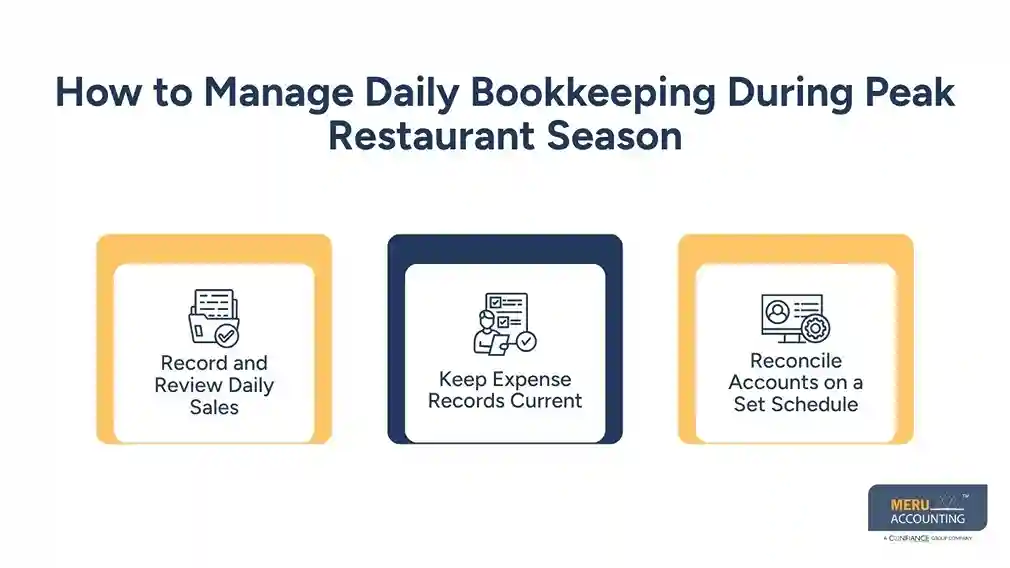
Keep Expense Records Current
Busy periods can create a high number of vendor bills and receipts. Waiting until the end of the month to organize them may make the process harder.
Restaurant owners should keep records for food purchases, supplies, repairs, equipment, and other operating costs. Each transaction should be assigned to the right account so monthly reports show a clearer picture of spending.
Reconcile Accounts on a Set Schedule
Bank and credit card accounts should be reconciled regularly. This confirms that the transactions recorded in the books match the actual account activity.
Regular reconciliation can help find duplicate entries, missing expenses, payment errors, and other issues before they grow.
During peak months, bookkeeping for seasonal restaurants works best when financial tasks follow a set schedule. A regular process can reduce the rush that often occurs after the busy season ends.
optional anymore
on running the business
Tracking Revenue, Food Costs, Labor, and Other Seasonal Expenses
Sales alone do not show how well a restaurant performed during a season. A strong revenue month may still have weak profit if food, labor, or other costs rise too quickly.
Restaurant owners should track the key parts of their operation throughout the season.
Revenue
Revenue should be reviewed by source when possible. A restaurant may want to compare dine-in, takeout, delivery, catering, and event sales.
This can show which parts of the business are creating the most value during the season.
Food and Beverage Costs
Food costs can change because of supplier prices, waste, menu changes, and purchase volume. Regular expense tracking can help owners compare costs over time and spot unusual changes.
It is also helpful to separate food and beverage expenses from other purchases. Clear categories can make monthly reports easier to review.
Labor Costs
Seasonal restaurants may hire temporary staff or increase employee hours during busy months. Payroll should be tracked carefully to understand the true cost of staffing.
Owners can compare labor costs with sales trends and staffing needs. This may help with scheduling decisions during the current season and planning for the next one.
Other Operating Costs
Restaurants should also track costs such as:
- Utilities
- Rent
- Marketing
- Repairs
- Software
- Insurance
- Delivery fees
- Payment processing fees
Accurate tracking makes it easier to understand where money is going. This is an important part of bookkeeping for seasonal restaurants, especially when costs change from one part of the year to another.
Managing Cash Flow During Slow and Off-Season Periods
Cash flow planning is one of the most important parts of managing a seasonal restaurant.
The business may earn a large share of its annual revenue during a short period. That cash may then need to support the business through several slower months.
A cash flow plan can help owners estimate:
- Expected sales during the operating season
- Fixed costs during the off-season
- Planned repairs and maintenance
- Debt payments
- Tax obligations
- Equipment purchases
- Cash needed before reopening
Owners should avoid assuming that all cash earned during peak season is available for immediate use. Some of it may be needed for future costs.
One helpful approach is to build a reserve based on expected off-season expenses. The amount will vary by restaurant, but the purpose is to set aside funds before revenue slows down.
Monthly financial reports can also help owners review how actual results compare with their plans. If food costs or payroll rise faster than expected, the restaurant may need to adjust spending before the season ends.
A clear cash plan can make the off-season less uncertain. It can also help owners prepare for the costs that arrive before the next season begins.
How to Prepare Financial Records for Opening and Closing Seasons
The opening and closing periods are important points in the annual bookkeeping cycle.
Before opening, restaurant owners may begin spending money before significant sales start. These costs can include inventory purchases, equipment repairs, cleaning, marketing, staff training, and permit renewals.
These transactions should be recorded correctly from the start. Mixing startup costs, operating expenses, personal spending, and capital purchases can make later reporting less useful.
Before opening the new season, owners should consider reviewing:
- Cash on hand
- Outstanding vendor balances
- Loan balances
- Prior-year sales trends
- Inventory needs
- Expected payroll
- Equipment repairs
- Upcoming tax obligations
At the end of the season, financial records should also be brought up to date before the business moves into a slower period.
This may include:
- Reconciling bank and credit card accounts
- Recording unpaid bills
- Reviewing inventory
- Checking payroll records
- Reviewing customer and vendor balances
- Organizing receipts and supporting records
- Reviewing the season’s profit and loss results
A proper closing process gives owners a cleaner starting point for the off-season. It also makes it easier to compare one season with another.
For bookkeeping for seasonal restaurants, opening and closing checklists can create consistency. The same process can be used each year and adjusted as the business changes.
How Meru Accounting Supports Seasonal Restaurant Financial Management
Managing a seasonal restaurant requires financial attention throughout the year, even when the business is not operating at full capacity. Peak months can bring high sales, frequent vendor purchases, larger payrolls, and a heavy volume of daily transactions. The off-season brings a different set of needs, including cash planning, fixed expenses, repairs, and preparation for reopening.
Meru Accounting provides restaurant accounting and bookkeeping services that help seasonal restaurants maintain a more organized financial process across every stage of the business cycle. Our team can support your books during the busy season, slow months, and periods before opening or after closing.
Our services can help with:
- Daily and regular transaction recording: Keeping restaurant sales, purchases, expenses, and other financial activity properly recorded.
- Bank and credit card reconciliation: Matching financial records with actual account activity to help keep the books current and accurate.
- Revenue and sales tracking: Organizing sales data to provide a clearer view of restaurant income throughout the season.
- Food and operating expense tracking: Monitoring food purchases, supplies, utilities, repairs, and other business costs.
- Payroll bookkeeping support: Recording and organizing payroll-related financial transactions and labor costs.
- Accounts payable management: Helping track vendor bills and outstanding payments to support better cash planning.
- Accounts receivable support: Monitoring customer balances and incoming payments when the restaurant has catering, events, or other credit-based sales.
- Financial reporting: Preparing reports that help owners review revenue, expenses, profitability, and financial trends.
- Cash flow support: Helping maintain organized financial data that can be used to plan for slow and off-season periods.
- Opening and closing season bookkeeping: Organizing financial records before a new season begins and reviewing accounts after the season ends.
Our restaurant accounting and bookkeeping services are designed to help seasonal restaurant owners maintain financial consistency instead of dealing with a large backlog after the busiest months end.
With organized and current records throughout the year, owners can spend less time catching up on financial tasks and more time preparing for each stage of the restaurant’s seasonal cycle.
Our Expert Insight
For seasonal restaurants, the most useful financial records do more than explain what happened after the season ends. They should help owners prepare for the next stage of the business cycle.
One important practice is to review the season as a complete financial period before moving into the off-season. Compare sales with labor, food costs, and major expenses. Then use those results to estimate how much cash the business needs before the next peak period begins.
This approach can turn bookkeeping for seasonal restaurants into a planning tool. Accurate records from one season can provide a stronger starting point for staffing, purchasing, pricing, and cash decisions in the next one.
Key Takeaways
- Seasonal restaurants need a bookkeeping process that works throughout the entire year.
- Daily sales and expenses should be kept current during peak months.
- Food costs, labor, and other major expenses should be reviewed along with revenue.
- Cash earned during busy periods may need to support the business during slower months.
- Opening and closing seasons are important times to review and organize financial records.
- Regular reports can help owners compare results and plan future seasons.
FAQs
Seasonal restaurants can compare sales, labor costs, food costs, and other major expenses across similar periods. This can help owners identify changes in performance and use past results when planning future seasons.
Restaurant owners should use separate business bank and credit card accounts for restaurant transactions. Keeping personal and business expenses separate can make bookkeeping easier and provide a clearer view of actual business performance.
Keeping income, expenses, payroll records, vendor payments, and financial accounts organized throughout the year can make tax preparation easier. Complete records may also reduce the need to search for missing transactions later.
Major equipment purchases should be recorded separately from routine operating expenses when appropriate. The correct accounting treatment can depend on the type and cost of the asset, so professional guidance may be useful for significant purchases.
A profit and loss statement, balance sheet, and cash flow information can provide different views of the business. Together, these reports can help owners review profitability, financial position, and available cash throughout the year.
optional anymore
on running the business