Every successful business starts with a clear financial plan. A business budget helps owners understand where money comes from, where it goes, and how to use it wisely. Without a proper budget, businesses may spend more than they earn, struggle with cash flow, or miss growth opportunities.
Many business owners find budgeting difficult because they are busy managing daily operations. They may not have enough time to review financial reports, track expenses, or forecast future income. This is where outsourced accounting becomes valuable.
Outsourced accounting professionals bring financial expertise, accurate reporting, and regular monitoring that make budgeting easier and more effective. They help businesses prepare realistic budgets, monitor financial performance, and make informed decisions throughout the year.
This article explains how outsourced accounting helps businesses build and manage a business budget while improving planning and budgeting for long-term success.
What You Will Learn From This Blog
- What a business budget is and why it is important
- How outsourced accounting improves budgeting accuracy
- Ways to monitor expenses and maintain healthy cash flow
- Practical smart spending habits for business growth
- Common budgeting mistakes and how to avoid them
- Budgeting tools that simplify financial management
- How financial reports support better business decisions
- How Meru Accounting helps businesses improve planning and budgeting
What is a Business Budget and Why Does It Matter?
A business budget is a financial plan that estimates expected income and expenses over a specific period. It helps businesses allocate resources, control spending, and achieve financial goals.
A well-prepared budget allows business owners to:
- Estimate future revenue.
- Plan operating expenses.
- Track business performance.
- Maintain healthy cash flow.
- Prepare for unexpected costs.
- Support business growth.
Instead of making financial decisions based on assumptions, businesses can rely on actual financial data to guide their operations.
A budget also provides a benchmark for measuring performance. Business owners can compare actual results with planned figures and make adjustments whenever necessary.
Understanding the Role of Budgeting in Smart Financial Decisions
Budgeting is not just a task; it’s the basis of smart financial planning. When done right, it helps you make strong business decisions with a clear focus.
Purpose of a Budget:
A business budget is a spending plan that guides daily and long-term financial decisions. It helps you:
- Know how much money you earn
- Plan how much you can spend
- Avoid overspending or missing payments
- Save for taxes, upgrades, or plans
- Invest in areas that give returns
Why Smart Spending Habits Depend on Good Budgets
Smart spending habits help you avoid money stress. But to build those habits, you need a solid budget.
- A budget gives you control over your cash
- It helps you say “no” to wasteful spending
- It pushes you to think before spending
- It helps you focus on needs, not wants
Smart spending habits start with setting a realistic business budget. A budget backs every good financial choice.
Top Smart Spending Habits to Improve Your Business Cash Flow
Cash flow shows how money moves in and out of a business. If you spend more than you earn, your business can fall.
1. Track Every Cost Daily
Recording every rupee you spend gives you control. Daily tracking helps you see where money leaks. It prevents overspending and makes your finances more stable.
2. Review Your Bank Balance Weekly
Weekly checks help you stay alert. It shows you where you stand. If your balance is low, you can act before a problem grows.
3. Choose Cost-Friendly Tools and Apps
Pick software that gives value for money and supports effective planning and budgeting. Avoid tools with features you don’t need. Budget tools must be simple, effective, and affordable.
4. Stop Spending on Things That Don’t Help
Cut out costs that don’t help you grow. Each expense must add value to your business. Unused subscriptions and tools should be dropped.
5. Compare Prices Before Buying
Don’t buy the first option you see. Compare vendors and deals to stay within your business budget. This habit saves money and builds negotiation skills.
6. Invest in Tools That Bring Long-Term Gain
Some tools cost more but give great results. If a tool saves time or helps make more money, it’s a smart spend.
How Outsourced Accounting Helps Build an Accurate Business Budget
Professional accountants use reliable financial information, industry experience, and structured processes to prepare accurate budgets. Their expertise reduces errors and improves financial planning.
Collecting and Organizing Financial Data
The first step in preparing a reliable business budget is maintaining accurate financial records.
Outsourced accounting professionals organize:
- Sales records
- Purchase invoices
- Payroll information
- Operating expenses
- Bank transactions
- Tax records
Organized financial information creates a strong foundation for budgeting. Instead of estimating figures, businesses use actual financial data to prepare realistic budgets.
Accurate bookkeeping also makes financial reports easier to understand and improves confidence in budgeting decisions.
Forecasting Revenue and Expenses
One of the most valuable benefits of outsourced accounting is financial forecasting.
Professional accountants analyze:
- Historical sales trends
- Seasonal demand
- Customer purchasing patterns
- Operating expenses
- Market conditions
These insights help businesses estimate future income and expenses with greater accuracy.
Realistic forecasts reduce the risk of overspending and help management prepare for slower business periods before they occur.
Monitoring Cash Flow
Cash flow plays an important role in every business budget.
A profitable business can still face financial difficulties if cash inflows and outflows are not managed properly.
Outsourced accountants monitor:
- Customer payments
- Vendor payments
- Payroll schedules
- Loan obligations
- Monthly operating costs
Regular cash flow monitoring helps businesses maintain enough working capital to meet financial commitments while avoiding unnecessary borrowing.
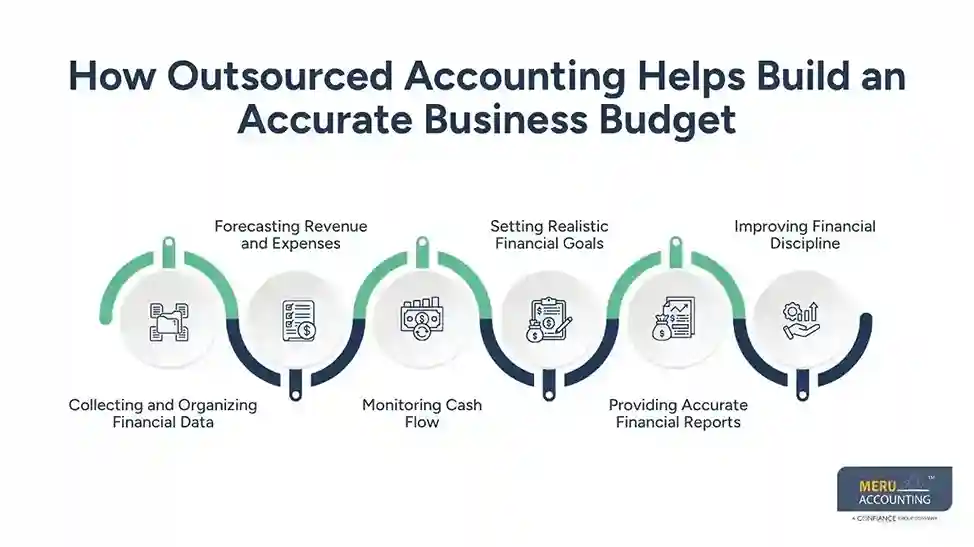
Setting Realistic Financial Goals
Budgets should support achievable business objectives rather than unrealistic expectations.
Outsourced accountants help businesses establish practical goals based on:
- Current financial performance
- Industry benchmarks
- Available resources
- Expected market conditions
Examples of financial goals include:
- Increasing monthly revenue
- Reducing operating expenses
- Improving profit margins
- Building emergency reserves
- Expanding into new markets
Realistic goals make budgeting more practical and easier to measure throughout the year.
Providing Accurate Financial Reports
Reliable financial reports help business owners understand whether their budget is performing as expected.
Outsourced accounting teams prepare reports such as:
- Profit and Loss Statements
- Balance Sheets
- Cash Flow Statements
- Budget Performance Reports
- Expense Analysis Reports
These reports provide valuable information for improving financial decisions and keeping the budget aligned with business objectives.
Instead of waiting until year-end, business owners receive regular financial updates that support timely decision-making.
Improving Financial Discipline
Budgeting is not only about creating a financial plan. It also requires consistent monitoring and financial discipline.
Outsourced accountants encourage businesses to:
- Record transactions regularly
- Review expenses every month
- Compare actual results with your business budget to identify gaps early
- Identify unnecessary spending
- Update financial forecasts
This ongoing process strengthens planning and budgeting while helping businesses maintain better financial control and avoid costly surprises.
Strong financial discipline improves the effectiveness of planning and budgeting while supporting long-term business growth.
How to Track and Control Expenses
Smart spending is not about cutting all costs. It’s about spending better while following your business budget. You must know what each rupee is doing for your business to support effective planning and budgeting.
Use Simple Tools to Track Costs
Free tools like Excel or Wave make cost tracking easy. With daily records, you avoid missing out on small but growing expenses.
Divide Expenses into Fixed and Variable Types
Understand the nature of your spending. Fixed costs are steady; variable ones change often. This division helps in planning and control.
Review Spending Monthly for Better Insight
Monthly reviews let you see what worked. They help spot wasteful spending. You can adjust your budget based on real data.
Set Limits for Each Cost Category
Put a cap on each expense type. If you limit marketing to 20%, you stay in control. This prevents budget shocks.
Avoid Last-Minute Purchases
Rushed buys often cost more. They lack planning and often don’t match your goals. Stick to planned spending to support effective planning and budgeting.
Create an Emergency Fund for Unplanned Needs
Keep aside funds for surprise costs. This avoids stress during unexpected times. It keeps your core budget safe.
Tips to Align Business Goals with Smart Spending Habits
Your goals and budget must work together. This helps your business stay on track and grow steadily.
Make Clear, Measurable Goals
Write goals that are clear and time-bound. For example, aim to increase revenue by 20% in six months. This makes planning and budgeting more focused, helping your business budget support measurable goals.
Match Budget with Business Plans
If your focus is scaling, spend on tech or staff. If profit is the goal, cut non-essential costs. Spend to support the strategy.
Review Spending in Line with Goals Every Quarter
Don’t let habits go unchecked. If a cost doesn’t help a goal, cut it. Quarterly reviews keep budgets sharp.
Build Flexibility into Your Budget
Some months need more funds than others. A flexible budget adjusts to this change. This supports effective planning and budgeting for long-term business success.
Prioritize Needs Over Wants
Wanting new office chairs is fine. But if software upgrades are more vital, choose them. Always fund needs first.
Use KPIs to Track Goal Progress
Use simple indicators to measure whether your business budget is helping achieve financial goals. If leads rise after a campaign, it’s working. This links goals to the budget.
Smart spending habits must match with your goals. Only then can your business reach new levels.
Common Budgeting Mistakes and How to Avoid Them
Even a well-planned business budget can fail if common mistakes are overlooked. Recognizing these issues early helps businesses improve financial control and strengthen long-term planning.
Spending Without a Clear Plan
Making purchases without a monthly spending plan often leads to unnecessary expenses. Set clear spending limits before each month begins and review them regularly.
Ignoring Small Daily Costs
Small recurring expenses can gradually reduce profits if they are not tracked. Recording every business expense provides a more accurate picture of overall spending.
Relying Too Much on Credit
Using credit without a repayment strategy can increase debt and interest costs. Include credit repayments in your business budget to maintain healthy cash flow.
Failing to Set Aside Money for Taxes
Tax payments should be planned throughout the year rather than at the last minute. Setting aside funds every month helps avoid financial pressure during tax season.
Not Updating the Budget as the Business Changes
Business conditions change over time, and budgets should change with them. Regular updates keep financial plans aligned with current revenue and expenses.
Lack of Budget Awareness Across the Team
Employees should understand spending policies and approved expense limits. Clear communication encourages responsible spending and better budget management.
Tools and Apps That Help Build Smart Spending Habits
The right accounting and budgeting tools simplify financial management and improve decision-making. They help businesses track expenses, monitor cash flow, and maintain an organized business budget.
1. Wave: A Free Tool for Budget Starters
Wave offers free accounting features that help businesses record income, manage expenses, and prepare financial reports. It is an excellent option for startups and small businesses.
2. Mint: For Tracking Linked Bank Data
Mint connects with bank accounts to automatically categorize transactions and monitor spending. Its simple dashboard makes budgeting easier for business owners.
3. Zoho Books: Ideal for Indian Businesses
Zoho Books supports invoicing, expense tracking, GST compliance, and financial reporting. It is a reliable solution for businesses looking to improve planning and budgeting.
4. Google Sheets or Excel: For Manual Control
Spreadsheets allow businesses to build customized budgets and monitor financial performance. They offer flexibility for businesses that prefer manual budgeting.
5. QuickBooks: Premium Features for Growing Firms
QuickBooks provides budgeting tools, payroll management, financial reporting, and bank reconciliation. It is suitable for businesses that require advanced accounting features.
6. PocketGuard: Simple App for Expense Control
PocketGuard calculates available spending after accounting for bills and savings goals. This helps businesses control expenses and avoid unnecessary spending.
Real-Life Success Stories: Businesses That Grew Through Smart Budgeting
Many businesses have improved profitability by following disciplined budgeting practices. These examples show how better financial planning supports sustainable growth.
A Digital Marketing Agency
The agency reduced office expenses by adopting remote work and redirected the savings toward marketing activities. This approach lowered operating costs while helping the business attract more clients.
A Local Bakery
The bakery improved inventory management and reduced daily food waste after reviewing its expenses. Better cost control increased profitability and strengthened its overall business budget.
A Freelance Professional
The freelancer reviewed recurring software subscriptions and eliminated tools that were no longer required. Lower monthly expenses improved cash flow and increased overall savings.
A Growing Technology Startup
The startup analyzed its operating expenses and discovered overlapping software subscriptions. Redirecting those savings into business development supported faster growth and better financial performance.
A Retail Store
The business created quarterly budgets for seasonal promotions and managed marketing expenses more effectively. Careful planning and budgeting helped improve sales during peak business periods.
A Coaching Center
The institute reduced operating costs by expanding its online services and optimizing resource allocation. The resulting savings were invested in better learning tools and future business growth.
Why Choose Meru Accounting for Business Budget Planning?
Every business needs accurate financial information to create a practical business budget. At Meru Accounting, we help businesses build reliable budgets through organized bookkeeping, detailed financial reporting, and continuous financial monitoring.
Our outsourced accounting professionals work closely with business owners to understand their financial goals, control expenses, and improve planning and budgeting. Instead of relying on estimates, we use real financial data to prepare budgets that support informed business decisions.
Our services include:
- Accurate bookkeeping and financial record management
- Budget preparation and financial forecasting
- Cash flow monitoring
- Expense tracking and cost analysis
- Monthly financial reporting
- Budget variance analysis
- Tax planning support
- Ongoing financial guidance for business growth
With Meru Accounting managing your financial records, you gain better visibility into your business performance while spending more time growing your business.
Our Expert Perspective
At Meru Accounting, we believe a business budget is most effective when it is supported by accurate bookkeeping, regular financial reporting, and continuous monitoring rather than assumptions. Our outsourced accounting professionals help businesses prepare realistic budgets, track financial performance, control expenses, and adjust plans as business needs change, enabling better decision-making, improved cash flow, and sustainable long-term growth.
FAQs
A business budget is a financial plan that estimates expected income and expenses over a specific period. It helps businesses control spending, manage cash flow, and achieve financial goals.
Yes. Tools like Wave, Zoho Books, and Mint help small firms track money easily. These tools offer reports, reminders, and cost control, which improve decision-making and reduce spending errors.
Some common mistakes include ignoring daily expenses, not saving for taxes, using credit carelessly, and not updating budgets often. These can break your budget and create long-term problems.
They reduce waste and prevent impulse buys. By tracking expenses, comparing vendors, and cutting non-essentials, you keep more cash in hand and ensure steady business growth.
The IRS charges heavy fines per shareholder per month.
Form 1120-S is the return used for S corporations.
Yes, if it loses its S corporation status due to mistakes.
It is March 15 for calendar-year corporations.
No, profits are passed to shareholders to report.
Quarterly reviews let you fix spending leaks and align costs with new goals. This helps make timely changes and ensures your budget stays effective as your business evolves.
optional anymore
on running the business