Every business faces risks that can impact revenue, expenses, operations, and growth. A business risk assessment helps companies identify potential challenges, evaluate their financial impact, and create effective strategies. By including risk analysis in financial planning, businesses can improve decision-making, manage resources better, and prepare for future uncertainties.
Business risk refers to the chance that something could stop a company from reaching its financial goals. This means any obstacle that could slow or hurt business progress. In this article, we will explore the risk factors in business, discuss various factors of business risk, and learn how to mitigate them. Risk in business can happen because of several things. It could be due to lower profits, losses, changes in government rules, or growing competition.
All of these can stop the business from making enough money. Business risk is usually not fully in the company’s control. It depends on factors like external, internal, and personal issues.
What You Will Learn From This Blog
- What a business risk assessment is and why it is important.
- The major risk factors that affect business performance.
- The difference between internal, external, and personal business risks.
- Practical methods to identify and assess business risks.
- Effective strategies to reduce business risks.
- How a business risk assessment improves financial planning.
- The importance of risk management in long-term business success.
- Ways to build a risk-aware culture within an organization.
- How professional accounting support strengthens risk management.
- How Meru Accounting helps businesses manage financial risks and improve decision-making.
What is Business Risk Assessment and Why is it Important for Businesses?
A business risk assessment is a structured process used to identify, analyze, and manage risks that may affect business operations and financial performance. The process involves reviewing possible threats, measuring their impact, and developing plans to reduce negative outcomes.
Business risks can come from different areas, including financial operations, market conditions, technology changes, customer behavior, and regulatory requirements. A proper assessment helps businesses understand where vulnerabilities exist and how those risks may influence future decisions.
For example, a company planning expansion may evaluate risks related to increased operating costs, market demand, staffing requirements, and cash availability. The information gathered through a business risk assessment helps create a more accurate financial strategy.
What Are Risk Factors in Business?
Risk factors in business are things that can hurt a company’s success. These can include money issues, problems with how the business runs, or bad plans. Every business faces these risks, no matter what it does. Knowing these risks helps companies make better choices.
Key Risk Factors in Business
External Factors
These are things outside the company that affect its work. They can’t be controlled or predicted. Three types of external risks are:
Natural Risks
Natural events, like floods, earthquakes, or droughts, can harm a business. For instance, an earthquake might destroy buildings and stop work. While insurance can help with damage, it may not cover losses from being closed down.
Political Risks
Changes in the government, like new taxes, trade rules, or laws, can affect business operations. These changes may hurt business profits or raise costs.
Economic Risks
Risks arise from market changes, like price hikes for materials, higher loan rates, or tough competition. These can hurt profits or increase costs.
Internal Risk Factors
A business risk assessment also focuses on internal risks that come from within the company. They are easier to manage since the company can control them. Three common types are:
Human Risks
Risks from staff issues, like strikes, fraud, bad management, or unpaid debts. Good management and strong staff policies can reduce these risks.
Technological Risks
Risks from outdated tech or systems. For example, using old software can disrupt production. Regular upgrades and investment in new tech can prevent these problems.
Physical Risks
This involves damage to the company’s physical assets, like buildings or equipment. A company can protect itself with insurance or other risk management strategies.
Personal Factors
Personal risks arise from problems like poor work-life balance or complacency. If key staff members take time off at critical moments or if employees avoid taking new opportunities, it could harm business growth.
How to Find and Assess Risk Factors in Business
Finding and assessing risk factors in business is key to managing them well. Here are some steps companies can take:
Risk Tools
Many companies use tools like SWOT (Strengths, Weaknesses, Opportunities, Threats) to find risks. This helps spot inside and outside threats.
Check Money Health
Regularly look at cash flow, balance sheets, and income statements to spot money risks early. Poor cash flow and high debt are key factors of business risk.
Review Business Tasks
A business risk assessment should include a review of how processes run inside the company. Outdated or slow tasks can raise risks. Inefficiencies and outdated systems are common factors of business risk.
Customer Views
What customers say can show market risks. If they are not happy, there may be a risk in the market.
Legal and Rule Checks
Check rules and laws often. Not following them can lead to big legal risks.
Tech and Data Checks
A business risk assessment should also examine technology systems to identify risks such as cyberattacks. Update systems and train staff to cut this risk.
optional anymore
on running the business
Strategies to Mitigate Business Risks
Once businesses identify potential risks through a business risk assessment, the next step is to implement strategies that reduce their impact. The following approaches help businesses improve stability and support effective financial management.
Diversify
Offering multiple products or services helps reduce dependence on a single source of income. A diversified business is better prepared to manage market changes and fluctuations in customer demand.
Manage Money
Maintain a realistic budget, monitor cash flow regularly, control unnecessary expenses, and keep emergency funds available. Good financial management helps businesses handle unexpected costs more effectively.
Get Insurance
Choose appropriate insurance coverage to protect the business from financial losses caused by property damage, legal claims, accidents, or other unexpected events. Insurance provides financial security during difficult situations.
Have a Backup Plan
Develop a business continuity plan that outlines how operations will continue during emergencies such as natural disasters, cyberattacks, or system failures. A well-prepared backup plan minimizes disruptions and supports faster recovery.
Monitor and Report
Review financial reports, operational performance, and business risks regularly to identify potential issues early. Continuous monitoring allows businesses to take corrective action before risks become major problems.
Train Employees
Provide regular training on workplace safety, compliance, cybersecurity, and risk management procedures. Well-trained employees can identify risks early and respond effectively during unexpected situations.
How Business Risk Assessment Supports Better Financial Planning
A business risk assessment helps businesses identify financial challenges and prepare strategies to manage uncertainty. It improves financial planning by supporting better budgeting, forecasting, and decision-making.
Identifies Potential Financial Challenges
Businesses can identify risks like rising costs, lower sales, and delayed payments. Early risk detection through a business risk assessment allows companies to prepare solutions and maintain financial stability.
Improves Budget Accuracy
Risk evaluation helps create realistic budgets by considering possible financial challenges. Accurate budgeting supports better expense control and improves overall financial management.
Supports Better Resource Allocation
Businesses can identify areas requiring investment and cost reduction. Proper resource allocation ensures efficient use of finances and supports business growth.
Enhances Revenue And Expense Forecasting
Risk evaluation helps analyze factors affecting future revenue and expenses. Accurate forecasting improves financial management and supports better financial decisions.
Helps Create Different Financial Scenarios
Businesses can prepare for different financial situations through scenario planning. This approach helps manage uncertainty and reduce potential financial risks.
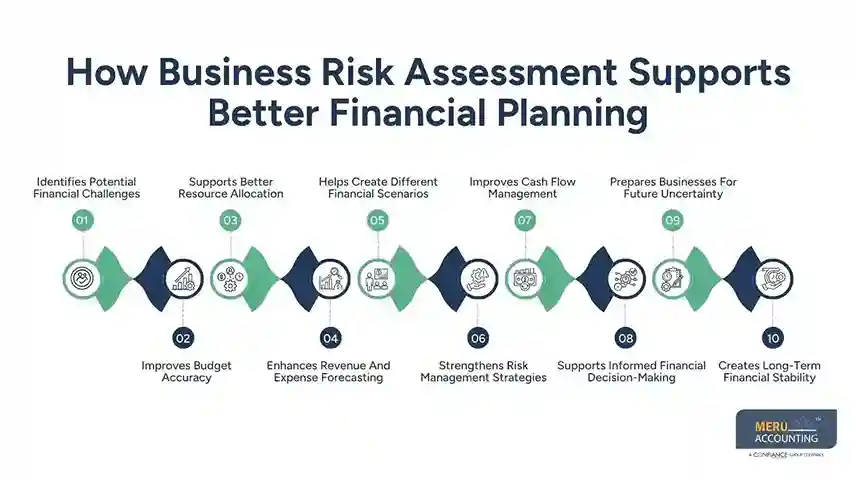
Strengthens Risk Management Strategies
Identifying risks helps develop strategies to reduce their financial impact. Effective risk management supports stronger financial decision-making and business continuity.
Improves Cash Flow Management
Businesses can identify possible cash flow challenges before they occur. Preparing financial reserves and improving cash management strategies supports long-term stability.
Supports Informed Financial Decision-Making
Risk evaluation provides valuable insights before making important financial decisions. Businesses can evaluate investments, expenses, and growth plans with greater confidence.
Prepares Businesses For Future Uncertainty
Risk analysis helps businesses identify future challenges and changing conditions. Including it in financial decision-making helps companies remain prepared and flexible.
Creates Long-Term Financial Stability
Combining risk assessment with financial planning helps businesses build stronger strategies. Regular risk reviews support sustainable growth and long-term financial success.
The Role of Risk Management in Business Success
Risk management helps businesses grow and last long. By finding and fixing risks early, companies avoid big losses and stay strong. It means spotting threats and having plans to reduce harm.
Key Benefits of Risk Management
More Stability
A regular business risk assessment helps businesses stay strong during unexpected situations by identifying possible risks early. It reduces disruptions and helps maintain smooth business operations during uncertain situations.
Better Decisions
With a risk plan, businesses can make smarter choices, weighing risk and gain. Better information allows business leaders to make informed and confident decisions.
Stronger Reputation
Businesses that manage risks well build a good name. This makes customers and investors feel safe. A strong reputation also helps build long-term trust with clients and business partners.
Smarter Resource Use
Knowing risks helps businesses use time and money wisely. Businesses can focus resources on important priorities and avoid unnecessary financial losses.
The Importance of a Risk-Aware Culture
A risk-aware culture supports the business risk assessment process by encouraging staff to identify, report, and share risks. They also help to fix them before they become bigger problems. This kind of workplace culture helps lower overall business risk across the whole organization.
Steps to Build a Risk-Aware Culture
Open Communication
Let staff speak up openly about possible risks. Make sure they feel safe to share their thoughts without fear of criticism.
Open communication helps businesses identify problems early and respond more effectively.
Regular Risk Checks
Hold regular risk checks often across different business areas. Get staff involved so they can help find weak spots and suggest improvements.
Frequent reviews help businesses monitor changing risks and improve overall preparedness.
Clear Risk Rules
Set clear and practical rules for how to deal with business risk. Make sure each worker clearly knows what to do in different situations.
Well-defined guidelines help employees respond consistently and reduce confusion.
Ongoing Staff Training
Train staff regularly on business risks and safety procedures. Help them learn about new risks and how to deal with them confidently.
Continuous training improves employee awareness and strengthens the organization’s overall risk management efforts.
How Meru Accounting Helps Businesses With Business Risk Assessment And Financial Planning
Managing business risks requires accurate financial information, regular monitoring, and informed decision-making. At Meru Accounting, we help businesses strengthen their business risk assessment process through reliable accounting and financial management solutions.
Our professionals prepare accurate financial reports, monitor cash flow, and analyze business performance to identify potential financial risks before they become major challenges. With organized bookkeeping and timely reporting, businesses gain better visibility into their financial position.
We also support financial planning by helping businesses prepare realistic budgets, improve cash flow management, forecast revenue and expenses, and develop financial strategies based on business goals. Our cloud-based accounting solutions provide real-time financial information, allowing business owners to make informed decisions with confidence.
Whether you are a startup, small business, or growing enterprise, Meru Accounting provides the accounting expertise needed to reduce financial uncertainty and support long-term business success.
Our Expert Perspective
A business risk assessment should not be viewed as a one-time exercise. Business conditions, customer expectations, regulations, and market trends continue to change, making regular risk assessments essential for sustainable growth.
From our experience at Meru Accounting, businesses that combine risk assessment with structured financial planning are better prepared to manage cash flow, control expenses, and respond to unexpected financial challenges. Accurate financial records and timely reporting provide valuable insights that strengthen business decisions and reduce uncertainty.
Instead of reacting to financial problems after they occur, businesses should continuously monitor risks and adjust their financial strategies. A proactive approach helps improve operational efficiency, protect business resources, and support long-term profitability.
Key Takeaways
- A business risk assessment helps businesses identify financial and operational risks before they affect performance.
- Understanding business risks supports stronger financial planning and better budgeting.
- Internal, external, and personal factors can all influence business success.
- Regular risk assessments improve decision-making and reduce financial uncertainty.
- Diversification, budgeting, insurance, and employee training help reduce business risks.
- Accurate financial reporting plays an important role in identifying business risks.
- Risk management supports better cash flow, forecasting, and resource allocation.
- Building a risk-aware culture helps employees identify and respond to risks early.
- Professional accounting support strengthens both business risk assessment and financial planning.
- Businesses that review risks regularly are better prepared for long-term growth and stability.
FAQs
The main factors of business risk are financial, operational, market, and legal risks.
Businesses can assess risk using tools like SWOT, checking finances, and getting customer feedback.
Businesses can cut financial risk by diversifying income, keeping cash flow steady, and avoiding too much debt.
Cyber risks are big because attacks can steal data, cost money, and harm the company’s image.
A business risk assessment helps businesses identify potential financial challenges before they occur. This information allows companies to create more accurate budgets, forecasts, and long-term financial planning strategies.