
Hospitality businesses such as hotels, restaurants, and catering services often face uneven income patterns. Some days bring strong revenue, while others remain slow. In such situations, cash flow bookkeeping becomes essential for keeping daily operations stable and predictable.
Without structured records, even profitable businesses may struggle to pay staff, suppliers, or utility bills on time.
This blog explains how hospitality businesses can manage money movement in a structured way, reduce cash gaps, and stay financially steady using cash flow bookkeeping practices. It also explains how outsourced bookkeeping firms can support better financial control and reduce financial stress.
What You Will Learn From This Blog
- Why hospitality businesses face frequent cash shortages
- How cash flow bookkeeping keeps financial movement organized
- Common mistakes that lead to cash gaps
- Practical methods to improve daily financial tracking
- Role of outsourced bookkeeping firms in managing cash flow
- Simple strategies to maintain financial stability in hospitality
Introduction to Cash Flow Bookkeeping
Cash flow bookkeeping is the process of tracking all money that enters and leaves a business in a clear and organized way. It includes recording daily sales, supplier payments, employee wages, rent, utilities, and other operating costs.
In the hospitality sector, where transactions happen continuously and in varying amounts, maintaining accurate records is essential for financial control.
In restaurants and hotels, income often changes based on customer traffic, seasons, and special events. This makes it important to know the exact cash position at any point in time. It gives managers better clarity on available funds and reduces the risk of spending beyond what the business can support during slower periods.
Cash flow bookkeeping focuses on tracking the timing of cash inflows and outflows to ensure businesses always understand their real-time liquidity position. This timing-based view is important for day-to-day financial decisions, especially in businesses with frequent transactions.
It also plays a key role in planning future activities such as hiring staff, upgrading menus, or managing seasonal demand. Whether it is a small café or a large hotel chain, it ensures decisions are made based on real financial position rather than assumptions, helping maintain stability across different types of hospitality businesses.
Common Causes of Cash Flow Problems in the Hospitality Industry
Seasonal Revenue Fluctuations
Tourism seasons strongly impact overall income in hospitality businesses. Without structured financial tracking systems, businesses may overspend during peak seasons and face shortages later.
Poor Expense Tracking
Many hospitality businesses fail to record daily expenses properly on time. This weakens cash flow bookkeeping accuracy and creates financial blind spots in operations.
Delayed Customer Payments
Corporate bookings and event services often involve delayed payments from clients. These delays disrupt smooth financial cycles and create cash gaps in operations.
High Operating Costs
Food supply, staff wages, and utilities consume large portions of revenue. Without disciplined financial tracking, costs can exceed income during slow periods.
Lack Of Financial Planning
Without forward planning supported by financial records, businesses struggle during slow periods. This often results in last-minute borrowing or cutting essential expenses quickly.
How Proper Cash Flow Bookkeeping Prevents Cash Shortages
Real-Time Cash Visibility
Structured cash flow bookkeeping provides real-time visibility of available cash and highlights early signs of declining inflows. This allows managers to take corrective action quickly before cash shortages develop, ensuring smoother financial stability across operations.
Better Expense Control
Tracking every expense helps prevent unnecessary spending and keeps costs aligned with income and business priorities. By maintaining strict control over daily costs, hospitality businesses can also reduce financial stress and avoid last-minute borrowing during slow revenue periods.
Early Warning Signals
When cash inflow decreases, financial tracking highlights the issue early, allowing corrective actions before shortages occur. Managers can quickly adjust spending plans before financial pressure becomes critical.
Improved Supplier Payments
Timely records ensure vendors are paid on schedule, maintaining strong supplier relationships and avoiding service disruption. Stronger payment discipline often helps secure better credit terms for future business needs.
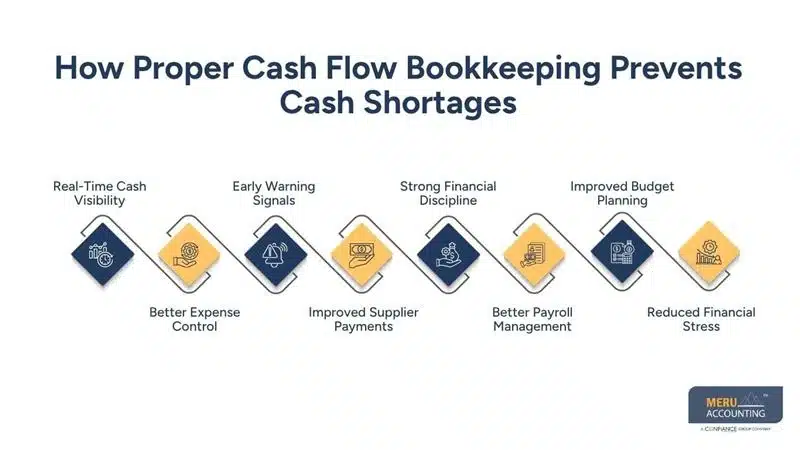
Strong Financial Discipline
Consistent monitoring builds discipline in managing money and reduces financial uncertainty across daily operations. Better financial habits develop across departments within hospitality businesses over time.
Better Payroll Management
Accurate tracking ensures staff salaries are processed without delay across busy and slow seasons. Employee trust improves when salary cycles remain stable and predictable throughout the year.
Improved Budget Planning
Clear financial records allow better planning for food costs, utilities, and operational needs. Hospitality businesses gain better control over seasonal spending patterns and future investments.
Reduced Financial Stress
Clear visibility into daily cash position reduces pressure on managers during low revenue periods. Better planning decisions replace emergency borrowing and rushed financial actions.
Key Cash Flow Bookkeeping Practices for Hospitality Businesses
Daily Transaction Recording
Recording every sale and expense daily forms the base of accurate financial management in hospitality businesses. Consistent entry of transactions reduces the risk of missing important income or cost details.
Cash Flow Forecasting
Forecasting expected income and expenses helps businesses plan ahead using historical financial data. Better forecasting supports preparation for seasonal demand changes in hotels and restaurants.
Bank Reconciliation
Matching bank statements with internal records strengthens financial accuracy and reduces reporting errors. Regular reconciliation helps detect mismatches early and improves trust in financial data.
Expense Categorization
Sorting expenses into food, payroll, and utilities improves clarity in financial reporting systems. Clear categorization allows managers to understand where major costs are concentrated.
Weekly Cash Reviews
Weekly cash flow bookkeeping reports help managers review spending patterns and adjust decisions quickly when needed. Regular monitoring also highlights irregular spending trends before they grow into financial pressure.
Benefits of Outsourced Bookkeeping Firms For Hospitality Businesses
Professional Financial Handling
Skilled finance professionals bring structured systems that manage financial records with accuracy and consistency. Strong expertise ensures hospitality accounts remain organized and reliable throughout daily operations.
Reduced Internal Workload
Delegating accounting tasks allows hospitality staff to focus more on customer service rather than financial work. Cash flow bookkeeping support reduces pressure on internal teams and improves daily operational efficiency.
Cost Efficiency
Hiring external financial services is often more affordable than maintaining a full in-house accounting team.
Businesses save on salaries, training, and software expenses while maintaining professional financial support. Lower overhead costs allow more investment in guest experience and operations.
Improved Accuracy
Experienced accounting professionals reduce errors in financial reporting and improve record quality. Accurate data helps hospitality owners make better decisions during peak and slow seasons.
Better Compliance Support
Finance professionals ensure financial records follow tax and regulatory requirements. Proper compliance reduces the risk of penalties and keeps business operations legally stable.
How Outsourced Bookkeeping Firms Improve Cash Flow Management
Real-Time Reporting
Updated financial reports give hospitality managers clear visibility of income and expenses on a regular basis.
Quick access to data supports faster and more confident financial decisions.
Cash Flow Monitoring Systems
Structured tools improve accuracy in tracking money movement across daily operations.
Better monitoring reduces the chance of missing important financial details.
Expense Control Insights
With help from outsourced bookkeeping firms, businesses identify unnecessary costs and adjust spending patterns. Clear insights make it easier to control wastage and improve cost discipline.
Payroll Management Support
Cash flow bookkeeping ensures salaries are paid on time, maintaining balance in financial records. Timely payroll processing improves employee satisfaction and operational stability.
Financial Planning Assistance
Better forecasting becomes possible using past financial data and reporting trends. Hospitality businesses can plan future expenses with greater clarity and confidence.
Best Practices to Maintain Healthy Cash Flow in Hospitality
Maintain Emergency Cash Reserve
A reserve fund protects businesses during slow periods and supports financial stability in uncertain times. Having backup funds reduces dependency on urgent loans during revenue drops.
Track Daily Sales Trends
Monitoring sales patterns improves accuracy in cash flow bookkeeping planning. Better visibility of daily trends helps identify peak hours and slow business periods clearly.
Control Inventory Levels
Overstocking ties up cash, so inventory control is essential in financial planning systems. Proper stock management reduces wastage and improves available working capital.
Manage Vendor Credit Terms
Negotiating payment terms supports smoother financial cycles in hospitality operations. Flexible credit terms help balance outgoing payments with incoming revenue.
Review Financial Reports Weekly
Regular reviews ensure financial records remain accurate and useful for decisions. Weekly analysis helps detect issues early and maintain better financial control.
Why Hospitality Businesses Trust Meru Accounting For Cash Flow Bookkeeping
Industry Focused Financial Support
Meru Accounting works closely with hotels, restaurants, and catering units to manage daily financial records with accuracy. Our approach is designed specifically for hospitality operations where income and expenses change frequently.
Structured Daily Financial Tracking
We maintain clear records of all transactions, including sales, vendor payments, and payroll. This structured system helps hospitality owners understand real-time cash positions without confusion or delay.
Cloud-Based Accounting Systems
Our team uses modern cloud tools to manage financial records efficiently. These systems allow business owners to access financial data anytime, which supports better planning and faster decisions during busy operations.
Collaboration With Outsourced Models
We also work as one of the trusted outsourced bookkeeping firms, offering flexible support based on business size and workload. This allows hospitality owners to reduce internal accounting pressure while maintaining strong financial control.
Our Expert Perspective
Hospitality cash flow challenges often arise from timing gaps between revenue collection and operational expenses. Structured cash flow bookkeeping helps identify these gaps early and maintain steady liquidity across daily operations.
Meru Accounting supports hospitality businesses with consistent financial monitoring and reporting systems designed to reduce cash flow uncertainty. Our approach ensures better alignment between income patterns and expense planning, helping businesses maintain long-term financial stability.
Key Takeaways
- Cash flow bookkeeping is essential for hospitality financial stability
- Cash shortages often come from poor tracking and seasonal changes
- Proper financial recording reduces payment delays and overspending
- Outsourced bookkeeping firms provide expert financial support
- Regular reviews and forecasting strengthen business decisions
- Hospitality businesses must focus on daily cash tracking for stability
FAQs
Cash Flow bookkeeping is the process of tracking all money coming in and going out of a hospitality business to maintain financial control and avoid shortages.
Cash shortages occur due to seasonal income changes, delayed payments, and poor expense tracking.
Outsourced bookkeeping firms manage financial records, reduce errors, and provide accurate cash reports for better decision-making.
Yes, it helps small restaurants track daily income and expenses, ensuring smooth financial operations.
Ideally, cash flow should be reviewed weekly using structured cash flow bookkeeping reports.