Catering accounting helps businesses track event profitability by comparing revenue with costs such as food supplies, labor, rentals, transportation, and vendor payments. Accurate financial tracking shows the actual profit from each event, allowing catering owners to control expenses, review performance, and make better planning decisions. It also helps identify areas where costs are increasing and where adjustments can create better profit margins.
Since every event has different requirements, businesses need clear records to understand which services and packages generate better returns.
Catering accounting software helps organize financial data, monitor costs, and create reports that support smarter budgeting and profitability analysis. With better financial visibility, catering companies can plan future events more effectively and make decisions based on accurate performance data.
What You Will Learn From This Blog
- How catering accounting connects event costs with profitability
- Ways to identify revenue sources for different catering events
- Methods to track food, labor, and operational expenses
- How food cost percentage affects profit margins
- How financial reports show event performance
- Ways to use financial data for better event planning
Understanding Catering Accounting and Its Role in Event Profitability
Catering accounting focuses on recording, organizing, and reviewing financial activities related to catering operations, including income tracking, expense management, payroll records, vendor payments, and event profitability analysis.
Since catering businesses often manage multiple events with different requirements, event-level financial tracking provides better insights than general accounting. It helps owners understand which projects generate stronger profits by comparing revenue with related expenses such as ingredients, labor, rentals, transportation, and supplier payments.
Maintaining separate financial records for each event allows businesses to track income sources, service charges, menu upgrades, and additional fees more accurately. For example, a catering company managing multiple weddings in a month can identify which event achieved better profit based on its revenue and cost structure.
Catering accounting software can organize event records, automate calculations, and provide accurate financial data for reviewing pricing, spending patterns, and service performance.
Regular profit margin reviews allow catering businesses to identify rising costs and make timely adjustments to pricing, suppliers, and service plans. By analyzing financial information after each event, owners can make better decisions, improve cost control, and create stronger strategies for future catering projects.
Identify Key Revenue Sources For Each Catering Event
Understanding revenue sources is a major part of accurate event profitability tracking. Catering businesses often earn income from multiple services beyond the basic food package.
Catering accounting methods allow businesses to record each revenue source separately and understand which services contribute most to total earnings.
Tracking Food Package Revenue
Food sales usually represent the largest revenue category for catering events. Businesses should record menu packages, guest counts, and additional food selections.
A detailed record shows whether pricing covers ingredient costs, preparation time, and service requirements.
Recording Additional Service Charges
Many events include extra services such as staffing, beverage packages, setup services, and special menu requests.
These additional charges should be tracked separately because they often provide higher profit opportunities.
Monitoring Venue And Rental Income
Some catering companies provide equipment, furniture, tents, or venue-related services. These charges should appear as separate revenue sources.
Clear tracking helps determine whether rental services generate worthwhile returns.
Reviewing Client Package Upgrades
Premium upgrades can increase event revenue. Examples include customized menus, specialty desserts, premium beverages, and additional service hours.
Reviewing upgrade performance helps businesses identify profitable offerings.
Track Event Expenses With Effective Catering Accounting Methods
Expense tracking is one of the most important parts of event profitability management. Catering businesses often deal with changing supplier prices, seasonal ingredient costs, and different labor requirements.
Accurate catering accounting methods ensure every expense is assigned correctly to the related event.
Recording Food and Ingredient Costs
Food costs directly affect catering profits. Businesses should track ingredients purchased for each event, including meat, vegetables, beverages, and specialty items. Comparing planned food costs with actual spending identifies areas where waste or overspending occurs.
Managing Labor and Staffing Expenses
Labor expenses include chefs, servers, event managers, drivers, and temporary staff. These costs can vary depending on event size and service requirements. Tracking labor hours and wages helps businesses create accurate event budgets.
Monitoring Equipment and Rental Costs
Many catering events require rented equipment such as tables, chairs, cooking tools, and serving materials. Recording these costs under each event prevents inaccurate profit calculations.
Tracking Transportation and Delivery Expenses
Transportation costs include fuel, vehicle use, delivery charges, and travel expenses. Large events may require multiple deliveries and additional logistics planning. Including these costs gives a more realistic view of event profitability.
Organizing Vendor and Supplier Payments
Catering businesses often work with multiple suppliers. Payment records should include supplier names, invoice dates, and event details. Catering accounting software can store vendor information and organize payment records for easier review.
Reducing Unplanned Event Costs
Unexpected expenses can reduce event profits. Common examples include extra staff requirements, last-minute purchases, and additional transportation needs. Regular cost reviews allow businesses to prepare better estimates for future events.
Calculate Food Cost Percentage To Improve Catering Profit Margins
Food cost percentage is one of the most important measurements in catering profitability. It shows how much of the event revenue is spent on ingredients and food preparation. Monitoring this percentage gives businesses better control over menu pricing and purchasing decisions.
Catering accounting methods allow businesses to compare estimated food costs with actual expenses after an event. This comparison helps identify waste, pricing gaps, and opportunities to increase profit margins.
A common formula used by catering businesses is:
Food Cost Percentage = (Food Cost ÷ Food Sales) × 100
For example, if a catering event generates $10,000 in food sales and ingredient costs are $3,000, the food cost percentage is 30%. This information helps owners understand whether the menu pricing is suitable.
Review Ingredient Usage And Waste
Food waste can reduce event profits even when sales numbers look strong. Tracking unused ingredients, damaged products, and excess preparation helps businesses understand where money is being lost.
Detailed records created through catering accounting software allow managers to compare planned ingredient usage with actual consumption.
Compare Menu Pricing With Food Expenses
Menu prices should reflect ingredient costs, preparation time, and service requirements. A low-priced menu may attract clients but create lower profit margins.
Reviewing food cost percentage regularly helps businesses adjust pricing while maintaining value for customers.
Monitor Supplier Price Changes
Ingredient prices can change due to seasonal demand, market conditions, and supplier updates. These changes directly affect catering profitability.
Regular expense reviews help businesses identify price increases and update budgets before margins decline.
Control Portion Sizes Across Events
Consistent portion control reduces unnecessary food expenses. Large variations in serving sizes can create higher costs without increasing revenue.
Standard recipes, measured portions, and proper preparation plans create better cost control.
Analyze Profitability Of Different Menus
Different menu options produce different profit results. A premium menu may generate higher revenue but can also involve greater ingredient costs. Financial reports help businesses compare menu performance and focus on options with stronger returns.
optional anymore
on running the business
Analyze Event Profitability Through Catering Accounting Reports
Financial reports provide detailed information about how each catering event performs. These reports combine revenue, expenses, and profit details into a clear financial view.
A strong reporting process allows business owners to understand which events create value and which areas need improvement.
Review Event Profit And Loss Reports
Profit and loss reports show the total income earned from an event and the expenses paid to complete it. These reports help determine the actual profit after considering all event-related costs.
Compare Estimated And Actual Event Budgets
Budget comparisons show whether an event stayed within planned limits. Differences between estimates and actual spending highlight areas requiring better planning. For example, higher labor costs may indicate inaccurate staffing estimates.
Track Cost Trends Over Multiple Events
Reviewing multiple events reveals spending patterns. Businesses can identify whether food prices, labor costs, or rental expenses are increasing over time. Catering accounting software can organize these trends into easy-to-review reports.
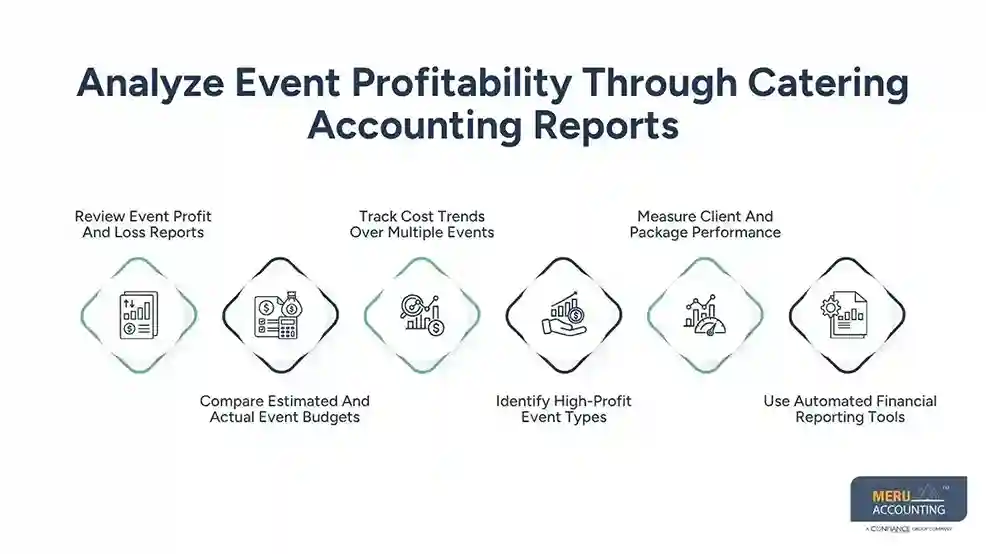
Identify High-Profit Event Types
Some event categories may produce better margins than others. Corporate events, weddings, private parties, and social gatherings may have different profitability levels. Analyzing these differences helps businesses focus their resources on profitable opportunities.
Measure Client And Package Performance
Reports can show which clients, packages, or services generate stronger financial results. This information allows businesses to create better offers and improve future event planning.
Use Automated Financial Reporting Tools
Manual reporting can take significant time and may increase the chance of errors. Automated reporting tools organize financial data and create accurate summaries. Catering accounting software provides access to financial reports that help businesses make informed decisions.
Improve Future Event Planning With Data-Driven Catering Accounting Insights
Past event data provides valuable information for planning future catering projects. Businesses that review financial results can improve pricing, resource planning, and service decisions.
Catering accounting gives owners a detailed record of what worked well and where adjustments are needed.
Create More Accurate Event Budgets
Historical financial records help businesses estimate future costs more accurately. Previous food, labor, and vendor expenses provide useful reference points. Better budgeting reduces unexpected costs during upcoming events.
Improve Menu Planning Decisions
Financial data shows which menu items generate better returns. Businesses can focus on popular options that also maintain healthy margins. Menu decisions become based on actual performance rather than assumptions.
Plan Staffing Requirements Better
Labor costs can change significantly depending on event size and service style. Reviewing previous event records helps managers estimate staffing needs and avoid unnecessary labor expenses.
Strengthen Vendor Management
Supplier records help businesses evaluate vendor pricing, reliability, and payment patterns. Better vendor decisions can reduce costs while maintaining quality standards.
Improve Client Pricing Strategies
Event profitability data helps businesses create pricing models that reflect actual costs. Accurate pricing protects margins while providing clear value to customers.
Use Catering Accounting Software For Long-Term Planning
Catering accounting software stores financial information that can be reviewed over time. Businesses can identify trends, compare events, and create stronger operational plans. Long-term financial visibility allows catering companies to prepare for growth with better information.
Partner With Meru Accounting For Reliable Catering Financial Management
Managing catering finances requires accurate records, regular reviews, and proper reporting. Many catering owners spend valuable time handling invoices, expense tracking, payroll records, and financial statements instead of focusing on event operations.
Meru Accounting provides outsourced accounting and bookkeeping services designed for businesses that need organized financial management. Our team helps catering companies maintain accurate records, review expenses, and understand their financial performance.
With professional catering accounting support, businesses can maintain better control over event costs and profitability. Our accounting experts manage financial processes while business owners focus on delivering quality catering experiences.
We also use modern accounting software solutions to organize transactions, create reports, and maintain reliable financial records. Accurate financial information allows catering businesses to make stronger decisions about pricing, budgeting, and future events.
Our approach focuses on clear reporting, industry understanding, and consistent financial processes. Whether a catering company manages small private events or large corporate functions, proper accounting practices create better financial visibility.
Our Expert Perspective
Successful catering businesses do not measure performance only by the number of events completed. Profitability comes from understanding every financial detail behind each event. A structured accounting process gives owners the information needed to price correctly, manage costs, and build sustainable growth.
Key Takeaways
- Catering accounting connects event income with actual expenses.
- Separate records for each event show true profitability.
- Revenue tracking includes food sales, upgrades, and additional services.
- Expense tracking covers food, labor, rentals, and transportation.
- Food cost percentage helps control menu pricing decisions.
- Financial reports show which events generate better returns.
- Catering accounting software organizes financial data efficiently.
- Historical records support better event planning.
- Accurate accounting creates stronger profit management.
- Professional accounting support reduces financial confusion.
FAQs
Catering accounting is the process of tracking income, expenses, and profits for catering events. It helps businesses understand the financial results of each event.
Catering business accounting compares event revenue with expenses like food, labor, and rentals. This shows the actual profit earned from each catering project.
Catering accounting software organizes financial records, tracks expenses, and creates reports. It reduces manual work and provides clearer information about event performance.
Catering businesses should track food costs, employee wages, equipment rentals, transportation, supplier payments, and other event-related expenses.
Businesses can increase margins by controlling food costs, reviewing expenses, setting accurate prices, and using financial reports to improve planning.
optional anymore
on running the business