
Client on boarding is the first step where businesses and bookkeeping providers connect, exchange information, and establish working procedures. The process ensures that accounting professionals understand the company’s financial structure, reporting needs, and business goals.
Bringing in a new client for bookkeeping starts with a smooth and clear process. A strong first step builds trust and supports effective client relationship management by showing your client that you are well-prepared. It also sets the tone for the rest of your work together.
When you begin right, the whole journey becomes easy to handle and less stressful for both sides. A client on boarding checklist for bookkeeping helps you collect the right details, set clear goals, and create a better flow in your tasks.
This blog explains how to use this checklist the right way. You will learn what to include, which tools can help, and how to give every client the best start possible.
What You Will Learn From This Blog
- How client on boarding works when you outsource bookkeeping services
- Why a client on boarding checklist is important for smooth bookkeeping operations
- The key steps involved in collecting client information and financial documents
- How to set up accounting software, access permissions, and financial systems
- Ways to create effective bookkeeping workflows and reporting processes
- How technology and tools improve the client on boarding experience
- The essential items to include in a bookkeeping on boarding checklist
- Benefits of following a structured client onboarding process for better accuracy and communication
- How proper onboarding helps build strong client relationship management
- How Meru Accounting supports businesses with a professional bookkeeping onboarding process
Why You Need a Bookkeeping Onboarding Checklist
When you start with a new client, many steps come up. Without a clear plan, you might miss details or cause delays. A client onboarding checklist for bookkeeping shows you what to do at each stage. It helps you stay organized and gives the client a smooth, professional experience.
This checklist helps you collect all needed documents, learn the client’s business, and set up the right systems. Whether you work with a small business or a larger firm, it gives you the structure to do your best.
Following the checklist also helps you spot the client’s special needs early, supporting better client relationship management and allowing you to offer services that add more value.
Technology and Tools for Efficient Client On boarding
In today’s world, tools make the job smoother. Digital tools help track tasks, store files, and share info fast. A smart checklist for bookkeeping should include tech steps, too.
Tools You Should Use
- CRM systems: Track all client information in one place
- Cloud accounting software: QuickBooks, Xero, Zoho Books
- Document management tools: Google Drive, Dropbox, DocuSign
- Communication tools: Slack, Zoom, Microsoft Teams
How Tech Helps
- Speeds up client info sharing
- Reduces back-and-forth emails
- Keeps files safe and easy to find
- Let teams work together better
When your checklist links with your tools, you waste less time. These systems also support client relationship management by helping you serve clients better and faster.
Step-By-Step Client On Boarding Process for Outsourced Bookkeeping Services
The client on boarding process involves several important steps that prepare businesses and bookkeeping providers for successful collaboration.
Initial Client Consultation and Requirement Gathering
The first stage of client on boarding begins with an initial consultation. During this discussion, the bookkeeping provider learns about the business, financial challenges, and service expectations.
The consultation usually covers:
- Current accounting processes
- Business goals
- Required bookkeeping services
- Reporting preferences
- Existing software systems
This step helps create a clear understanding between the business and bookkeeping provider. It also allows the accounting team to identify the right solutions based on client needs.
Collecting Financial Documents and Business Information
After understanding client requirements, the bookkeeping team collects important financial documents. Accurate documentation helps create reliable accounting records.
Common documents collected during client on boarding include:
- Bank statements
- Credit card statements
- Previous financial reports
- Expense records
- Sales information
- Payroll details
- Tax-related documents
Secure document collection methods help protect sensitive financial information while ensuring the bookkeeping team has everything needed to begin work.
Setting Up Accounting Software and Access Permissions
Many outsourced bookkeeping services use cloud accounting platforms to manage financial data. During client on boarding, the provider sets up or reviews accounting software access.
Common accounting platforms include:
- Xero
- QuickBooks Online
- Zoho Books
The bookkeeping team ensures proper user permissions, account settings, and integration requirements are completed. Correct software setup helps maintain accurate records and secure financial management.
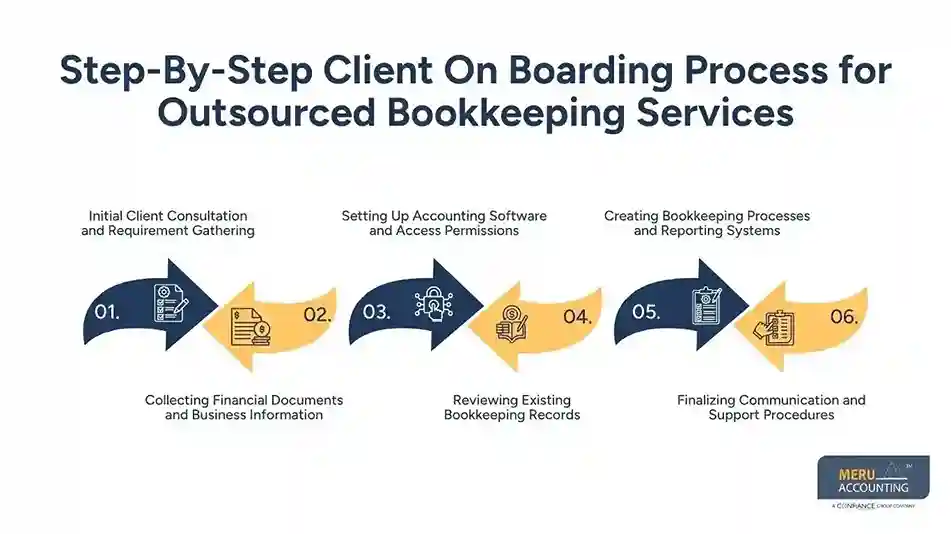
Reviewing Existing Bookkeeping Records
Before starting regular bookkeeping activities, professionals review existing financial records. This review helps identify errors, incomplete transactions, outdated accounts, or reconciliation issues.
The review process may include:
- Checking account balances
- Reviewing the chart of accounts
- Examining previous reports
- Identifying missing transactions
- Confirming accounting methods
A detailed review helps create a clean starting point for ongoing bookkeeping services.
Creating Bookkeeping Processes and Reporting Systems
After reviewing existing records, the outsourced bookkeeping team creates a structured workflow for managing financial tasks. A proper process ensures that bookkeeping activities are completed consistently and accurately.
The workflow may include:
- Recording daily financial transactions
- Managing accounts payable and receivable
- Completing bank reconciliations
- Tracking expenses
- Preparing monthly financial reports
- Reviewing financial data regularly
Reporting requirements are also discussed during client on boarding. Businesses may need different types of reports depending on their goals. Some companies require profit and loss statements, cash flow reports, balance sheets, or customized financial summaries.
A clear reporting system helps businesses understand their financial position and make better decisions. It also strengthens client relationship management by improving communication between clients and bookkeeping providers.
Finalizing Communication and Support Procedures
The final stage of client on boarding focuses on establishing communication and support procedures. Both parties agree on how updates, questions, and financial discussions will be managed.
Important points include:
- Preferred communication channels
- Reporting frequency
- Meeting schedules
- Response expectations
- Contact persons for approvals
A defined communication process improves efficiency and reduces delays. It also supports strong client relationship management by ensuring clients receive consistent support throughout the partnership.
Key Elements of the Client Onboarding Checklist for Bookkeeping
A good checklist for bookkeeping should have these steps. This keeps the work clear, neat, and complete:
Meet and Learn
Talk with the client to know their business and goals. Ask what problems they face and how often they want reports. This helps you make a list that fits their needs.
Gather Info and Papers
Get business papers, tax numbers, bank info, and access to their accounting tools. Check that the info is right and safe.
Set Up Software and Links
Log in or set up their accounting system. Connect needed tools like cash registers, online shops, or payment systems. This makes sure all is ready before you start.
Set Roles, Tasks, and Deadlines
Say who does what job. Set dates for reports, taxes, and checks. This keeps both sides clear.
Sign Papers and Set Work Limits
Use the list to check that all contracts, like service deals and NDAs, are signed. Say what work you will do and how often.
Essential Items in the Client On boarding Checklist
To build a solid client on boarding checklist for bookkeeping, it’s essential to know what items will guide your workflow and improve service quality. Each one on the list ensures a smooth start and reduces the chance of confusion or delays later on.
Key Information to Collect
- Business name and legal structure
- Contact person and their details
- Type of industry
- Scope of bookkeeping work
- Start date and records
Documents to Request
- Bank statements (last 6-12 months)
- Previous financial reports
- Invoices and receipts
- Tax ID and registrations
- Payroll records, if any
Other Checklist Items
- Access to accounting software
- Logins for banking and payment portals
- Chart of accounts setup
- Communication plan (weekly, monthly)
- List of key deadlines
Having this full client on boarding checklist helps you work without delays. It also ensures you have everything to get started right.
optional anymore
on running the business
Benefits of Following a Detailed client on boarding Checklist
Bookkeepers use a client on boarding checklist for bookkeeping because it streamlines the process, cuts down on errors, and keeps the experience consistent. Whether you work alone or in a team, following this checklist helps you avoid missing any important steps during client intake.
Saves Time and Avoids Mistakes
When you have all the information from the start, you spend less time asking for missing items. You also avoid making errors due to gaps in records.
Builds Client Trust
Clients feel safe when they see you have a plan. A structured approach also improves client relationship management by showing that you care about doing things right.
Makes You Look Professional
A good checklist adds to your brand. It tells clients that you have systems, not just skills.
Keeps Everyone Aligned
It ensures your team knows the steps, too. Everyone can check the same list and update the progress.
Helps with Scaling
As your firm grows, a checklist helps you train others. You won’t have to start from scratch every time.
Why Choose Meru Accounting?
Meru Accounting follows a structured client on boarding approach to help businesses transition smoothly to outsourced bookkeeping services.
Our process focuses on understanding client requirements, organizing financial information, setting up accounting systems, and creating efficient workflows.
Meru Accounting provides support through:
- Document collection and review
- Accounting software setup
- Bank reconciliation processes
- Financial reporting
- Ongoing client communication
A well-planned client on boarding process allows businesses to receive accurate bookkeeping support while maintaining clear communication with accounting professionals.
Our focus on client relationship management helps create long-term partnerships by providing reliable support and transparent financial services.
Our Expert Perspective
A well-planned client on boarding process creates a strong foundation for successful bookkeeping services. At Meru Accounting, we focus on understanding client requirements, collecting complete financial information, setting up the right accounting systems, and creating clear workflows.
A detailed checklist helps reduce delays, improve accuracy, and strengthen client relationship management by maintaining better communication between businesses and accounting professionals throughout the partnership.
Key Takeaways
- A client on boarding checklist helps create a clear and organized bookkeeping process
- Collecting accurate financial documents helps maintain reliable accounting records
- Proper accounting software setup supports secure and efficient financial management
- Reviewing existing records helps identify errors and missing information before starting work
- Clear workflows and reporting systems improve communication between clients and bookkeeping providers
- Defined communication procedures help maintain strong client relationships
- A structured client on boarding process helps businesses receive consistent bookkeeping support
FAQs
It is a step-by-step list used when taking on a new client. It helps gather all the needed information to start bookkeeping work.
It ensures you have all the details, tools, and records in place. This helps avoid errors and delays in financial tasks.
It should include client data, access to tools, key documents, and a timeline of tasks. It must be clear and simple.
Yes. Tools like CRMs, cloud software, and e-sign tools speed up the process and keep things secure.
It depends on the client, but with the right checklist and tools, most onboarding is done in 3–7 business days.