Business owners, regardless of the size of the business, have to deal with many financial tasks each day. They track sales, pay bills, manage teams, watch cash flow, and meet tax laws. As tax laws change and records grow, many firms find it hard to keep up with old systems and manual work. Cloud based accounting software offers a solution to this problem. It helps in storing data online, automating core tasks, and making records easy to access from any place. It also plays a huge role in making tax filing faster, more precise, and less stressful.
Whether a firm is small, mid-size, or large, the right accounting system can improve tax work and help support long-term growth. This blog explains why many firms are moving to cloud tools and how these systems help with smooth filing.
What You Will Learn From This Blog
In this blog, you will learn:
- What cloud based accounting software is
- Why tax filing has grown more complex for firms
- How cloud tools make tax work easier
- Main gains of using cloud accounting tools
- How cloud systems help firms grow
- Future trends in accounting and taxation
What is Cloud Based Accounting Software?
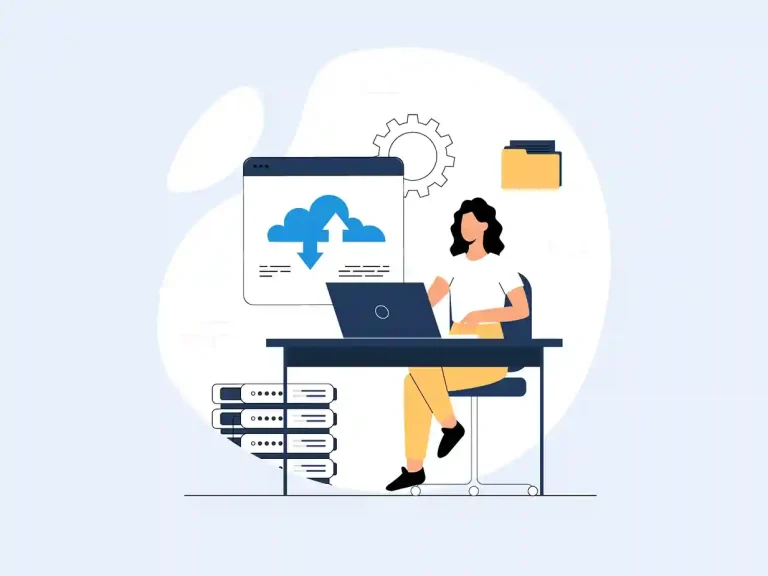
Cloud based accounting software is an online accounting system that stores financial data on safe remote servers instead of a local computer. Users can sign in through the web and access their records at any time. Owners, accountants, and bookkeepers can work from different places while seeing the same data in real time.
Common features include:
- Income and cost tracking
- Invoice tracking
- Bank feed links
- Financial reports
- Payroll support
- Tax tools
- Data backup and safety controls
Unlike old software that must be set up on one device, cloud based accounting software lets users work from almost any place while keeping data up to date and safe.
Why Tax Filing Has Become More Complex for Businesses
Tax filing is no longer a simple yearly task. Firms now face many rules and reporting needs that call for careful recordkeeping.
A few key factors add to this challenge.
Frequent Tax Rule Changes
Tax laws often change. Firms must stay up to date to avoid errors and fines.
Large Amounts of Data
As firms grow, they handle more sales, costs, payroll records, and vendor bills. Managing all this data by hand can be hard.
Multiple Income Sources
Many firms now sell through websites, online shops, market sites, and brick-and-mortar stores. Tracking all sales the right way needs clear systems.
Compliance Requirements
Firms must keep full records to back deductions, credits, and tax reports. Missing data can cause issues during a review or audit.
Time Pressure
Many firms wait until tax season to sort records. This adds stress and raises the risk of mistakes.
Due to these issues, firms are seeking better ways to manage records and improve tax processes.
How Cloud Based Accounting Software Simplifies Tax Filing
One of the top reasons firms adopt cloud based accounting software is its power to make tax work easier.
Centralized Financial Records
All financial data stays in one place. Sales, costs, invoices, payroll data, and bank records can be seen through one system.
This cuts down on mix-ups and makes the tax process easier.
Real-Time Updates
Transactions are logged as they happen. Owners do not need to wait until month-end or year-end to check records.
Current data helps improve tax planning and reporting.
Automated Calculations
Many cloud systems work out taxes on their own based on logged transactions. This helps lower the risk of manual errors.
Easy Report Creation
Firms can make financial reports and tax reports fast. Reports that once took hours may now take only a few minutes.
Better Document Storage
Receipts, invoices, and support files can be stored online. This helps firms stay neat and ready for tax reviews.
Faster Teamwork
Accountants and owners can view the same records at the same time. Questions can be solved faster, helping improve tax accuracy.
Key Benefits of Cloud Based Accounting Software for Tax Filing
Better Accuracy
Manual data entry can lead to errors. Automated tasks help cut down on human mistakes and improve record quality.
Good records help make tax filing smoother and lower the risk of later fixes.
Time Savings
Many accounting tasks can run on their own. Firms spend less time sorting records and more time running the business.
Better Compliance
Cloud systems help firms keep full and clear records. This makes it easier to meet tax rules and filing due dates.
Less Paper Use
Online storage cuts the need for large stacks of paper files. Key records stay easy to find when needed.
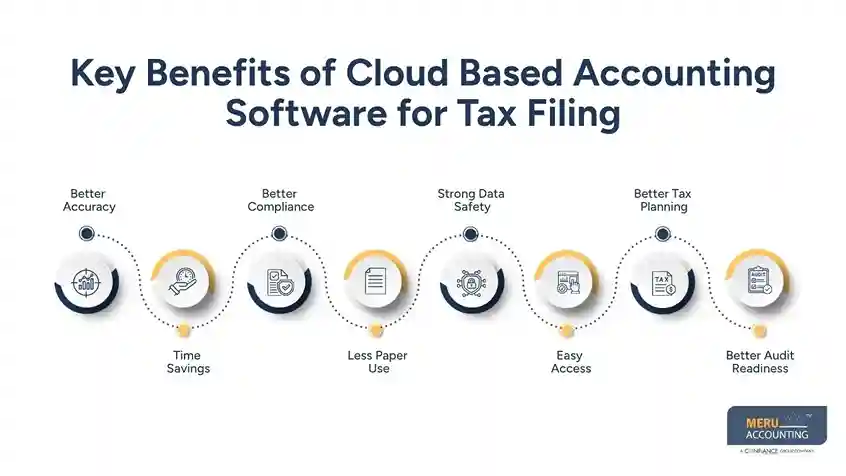
Strong Data Safety
Most cloud providers use strong safety measures to guard financial data.
Features often include:
- Data encryption
- User access controls
- Multi-factor sign-in
- Auto backups
Easy Access
Owners can view records from the office, home, or while on the road. This helps support better choices all year.
Better Tax Planning
Real-time reports give a clear view of firm finances. Firms can estimate tax costs and spot tax-saving chances before due dates.
Better Audit Readiness
Well-kept records help firms reply fast if tax agencies ask for proof or files.
This can lower stress and save time.
How Cloud Based Accounting Software Supports Business Growth
Beyond tax filing, cloud accounting tools help firms grow in a smoother way.
Supports Growth
As transaction volume grows, cloud systems can grow with the firm without major system changes.
Firms do not need to replace their full accounting process when growth takes place.
Better View of Finances
Owners can see current financial data at any time.
This helps with:
- Budget planning
- Cost control
- Cash flow tracking
- Profit review
Better Team Collaboration
Many users can work in the same system at the same time.
Even if you are an owner, manager, accountant, or bookkeeper, you can work together without sending files back and forth through email.
Faster Decisions
Real-time data helps leaders react fast to shifts in sales, costs, and market trends.
Links With Other Business Tools
Many cloud platforms link with:
- Payroll systems
- Payment tools
- Stock tools
- Client management tools
These links cut repeat work and help boost speed.
Cost Savings
Cloud systems often need less hardware and lower upkeep costs than old accounting software.
This helps firms control costs while improving work quality.
The Future of Cloud Based Accounting Software and Tax Filing
Tech keeps changing the way firms manage finances.
A few trends are shaping the future of cloud based accounting software and tax filing.
More Automation
Software firms keep adding more automated tools.
Future systems may handle even more work with less human effort.
Artificial Intelligence
AI tools can help find errors, spot odd transactions, and offer tax planning tips.
This can improve accuracy and support better financial choices.
Real-Time Tax Checks
Future systems may send alerts when records do not match current tax rules.
This can help firms fix issues before filing due dates.
Better Data Insights
Advanced reports will give deeper views into firm results and tax costs.
More Remote Teamwork
As remote work keeps growing, cloud systems will make it easier for firms and accounting pros to work together from many places.
Stronger Security
Cyber risks remain a key concern. Future cloud tools will keep improving data safety and user controls.
These changes will make tax filing faster, easier, and more dependable for firms of all sizes.
Meru Accounting's Tax Filing Services Using Cloud Based Accounting Software
At Meru Accounting, we help firms improve financial management and simplify tax filing through modern cloud accounting tools.
Our team works with top cloud based accounting software platforms to provide clear bookkeeping, tax support, and financial reporting services.
Our services include:
- Bookkeeping and account management
- Tax prep and tax support
- Financial statement prep
- Bank and card reconciliation
- Payroll accounting support
- Tax planning
- Cloud accounting setup and move support
- Ongoing accounting guidance
By using cloud tools, we help clients keep clear records, improve tax compliance, reduce manual work, and gain better control of financial data.
Our method lets owners focus on growth while we help manage accounting and tax work in an efficient way.
Our Expert Insight
Firms that wait until tax season to sort financial records often face extra stress, delays, and costly errors. The most successful firms treat tax work as a year-round task rather than a once-a-year event.
Cloud based accounting software helps support this method by keeping records up to date, improving data access, and making financial records easier to manage. Firms that adopt cloud accounting today are often better prepared for growth, tax law changes, and rising reporting needs.
Key Takeaways
- Cloud based accounting software stores financial data online for easy access and management.
- Firms face growing tax challenges due to changing tax laws and larger amounts of data.
- Cloud accounting systems simplify tax filing through automation and real-time reports.
- These tools improve accuracy, compliance, safety, and work speed.
- Cloud platforms support firm growth through scale and better financial insight.
- Future systems will include more automation, AI tools, and advanced reports.
- Meru Accounting helps firms manage tax and accounting tasks through modern cloud technology.
FAQs
Cloud based accounting software is an online accounting system that stores financial data on remote servers and lets users access records through the web.
It helps by keeping records in order, automating tax tasks, creating reports, cutting errors, and giving real-time access to financial data needed for tax filing.
Most trusted providers use encryption, secure access controls, sign-in tools, and regular backups to help protect financial data.
Yes. Small firms can improve speed, cut manual work, keep good records, and simplify tax filing through cloud accounting tools.
Many firms choose cloud tools because they offer remote access, auto updates, better teamwork, easier growth, and stronger support for tax and financial management.
optional anymore
on running the business