
Running a business with many locations creates chances of growth, but it also brings financial challenges. As companies grow, cost accounting services become important because they help business owners see where money is being spent and where profits are really coming from. More locations can increase sales, reach more customers, and build a stronger brand, but they also add more financial work.
Many business owners look at total revenue and think all locations perform at the same level. Strong sales numbers may look good, but sales alone do not always tell the full story. One branch may bring in high revenue while also carrying high labor costs, higher overhead costs, or poor inventory control. Another location with lower sales may actually create stronger profit margins.
Without a clear cost analysis, businesses may make choices based on missing information. This can lead to weak budget planning, wasted resources, and lower profits. Understanding the true cost behind each location helps businesses make better financial choices and support long-term growth.
What You Will Learn From This Blog
In this blog, you will learn:
- The financial challenges faced by businesses with multiple locations
- Why sales numbers alone do not always show true profitability
- What cost accounting services are and why they matter
- How a cost accountant helps track costs across locations
- Hidden expenses that can affect profit reporting
- How businesses use cost analysis to make better decisions
- The advantages of using professional cost management support
Understanding the Financial Challenges of Running Multiple Business Locations
Managing one location already involves many financial tasks. Running several locations increases the amount of financial data and cost tracking that businesses need to manage.
Different locations often operate under different conditions. One store may have higher rent costs. Another location may require more employees. Some branches may deal with higher shipping expenses or different vendor pricing.
Businesses often manage:
- Payroll costs
- Inventory expenses
- Rent and utilities
- Marketing expenses
- Vendor payments
- Administrative costs
- Location-specific operating expenses
Many business owners focus on total sales and overall profit numbers. However, total numbers can hide problems at individual locations. For example, a business with five locations may see healthy company-wide revenue growth. At the same time, two locations may be creating lower profits because of rising expenses. Without clear financial visibility, these issues may continue for months before being discovered.
This is where cost accounting services become valuable because they help businesses see what standard reports often miss.
What Are Cost Accounting Services and Why Do They Matter?
Cost accounting services help businesses collect, organize, and analyze cost information. The goal is to understand how spending affects profitability.
Traditional financial reports often focus on income and expenses at a high level. Cost accounting goes deeper by showing exactly where money is being spent.
These services help businesses:
- Track operating costs
- Review department expenses
- Monitor labor costs
- Analyze inventory spending
- Measure location performance
- Improve budget planning
Cost information gives business owners a clearer view of financial performance.
Instead of asking, “How much revenue did we make?” business leaders can ask stronger questions such as:
- Which location generates the highest profit?
- Which branch has the highest operating costs?
- Where are expenses increasing?
- Which locations need changes?
This deeper understanding supports stronger business decisions.
How a Cost Accountant Helps Track Costs Across Different Locations
A cost accountant helps businesses organize and evaluate cost data across multiple locations. Their work goes beyond basic bookkeeping because they focus on identifying how expenses affect profit.
A cost accountant may review:
Labor Expenses
Employee wages, overtime costs, and staffing levels can vary between locations. These changes can have a direct effect on overall operating costs.
Inventory Costs
Storage costs, waste, and product shortages may affect profitability. Poor inventory control can also increase extra business costs.
Operating Expenses
Rent, utilities, and equipment costs can create major differences between locations. Small cost gaps can become larger over time.
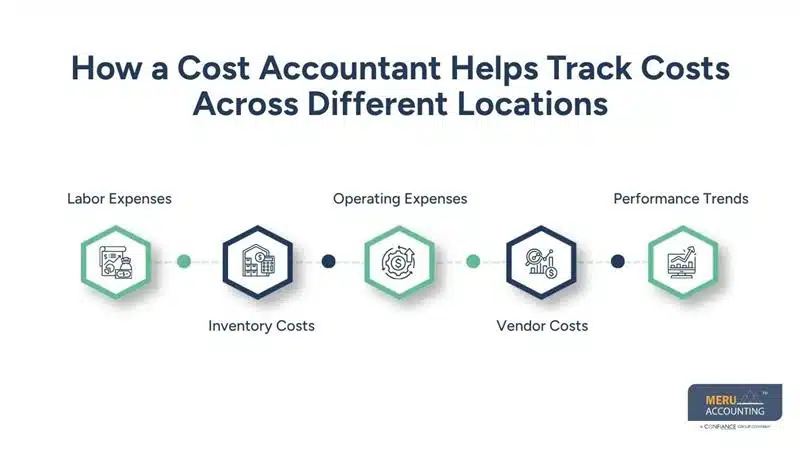
Vendor Costs
Different suppliers may charge different prices depending on the region. Price changes can affect total spending across locations.
Performance Trends
Location reports help identify branches that perform better or worse over time. These reports can also show patterns that need attention.
The work of a cost accountant allows business leaders to understand why some locations perform differently from others.
This information helps management create plans based on facts instead of assumptions.
Hidden Costs That Can Distort Profit Reporting in Multi-Location Businesses
Many expenses remain hidden when businesses only review high-level reports. These costs can slowly reduce profit without attracting attention.
Some common hidden costs include:
Excess Labor Costs
Overstaffing, overtime pay, and temporary labor can increase expenses. These costs can rise quickly during busy work periods.
Inventory Waste
Damaged products, unused stock, and storage fees can reduce margins. Poor inventory planning can also increase business costs.
Technology Expenses
Software subscriptions and system costs often vary across locations. Small system costs can grow over time across many branches.
Vendor Pricing Differences
One location may pay more for supplies than another location. Different vendor terms can also affect total spending.
Administrative Costs
Office supplies, local service fees, and support costs can add up over time. Small daily costs can create larger expenses later.
Inefficient Processes
Manual work and duplicate tasks may increase labor expenses. Slow processes can also reduce team productivity.
Without proper tracking, businesses may not realize how much these hidden costs affect profits.
Many companies discover that locations with strong sales actually produce weak returns because operating costs are too high.
How Cost Accounting Services Identify Where Profits Are Really Coming From
Business owners often assume that locations with the highest sales numbers generate the highest profits. In many situations, this assumption creates misleading conclusions.
Cost accounting services help businesses identify actual profit drivers by examining both income and costs.
Several methods are used to create better visibility.
Location Profit Analysis
Businesses can compare income and expenses across locations.
Cost Allocation
Shared expenses such as advertising, software, and management costs can be divided correctly.
Margin Analysis
Products and services can be reviewed to determine actual returns.
Expense Tracking
Businesses can identify unusual spending patterns and cost increases.
Trend Reporting
Financial data over time can reveal long-term performance patterns.
This process helps businesses answer important questions.
For example:
- Which location performs best?
- Which products generate the highest returns?
- Which branch creates high costs?
- Which areas need improvement?
These answers support stronger business planning.
Benefits of Using Cost Accounting Services for Multi-Location Companies
Businesses with several locations can gain many advantages from using cost accounting services. These benefits help companies improve both financial control and daily operations.
Better Profit Visibility
Businesses can clearly understand where profits come from. This helps leaders see which locations create stronger returns.
Improved Decision Making
Management teams make decisions using accurate financial information. Better data can reduce guesswork during planning.
Stronger Budget Planning
Cost analysis helps businesses create realistic budgets. This also helps companies manage future spending more effectively.
Better Resource Allocation
Funds and staffing can be directed toward higher-performing locations. Resources can also be adjusted based on business needs.
Increased Cost Control
Businesses can identify spending areas that require attention. This helps reduce waste and control extra expenses.
Improved Operational Efficiency
Financial visibility often reveals areas where processes can improve. Small process changes can support better workflow.
Higher Profit Potential
When businesses understand costs more clearly, they can make changes that improve profit margins. Better cost control can also support long-term growth.
These benefits become increasingly important as companies continue expanding into additional markets. Strong financial insight helps businesses grow with better control.
Why Meru Accounting Is the Right Choice for Cost Accounting Services
Businesses need financial support that goes beyond basic reporting. They need insight that helps them understand how costs affect growth and profit.
Meru Accounting provides professional cost accounting services designed to help businesses gain a clearer picture of financial performance across multiple locations.
Our team works closely with businesses to provide:
- Cost tracking and reporting
- Expense analysis support
- Location-based financial insights
- Budget planning assistance
- Profitability analysis
- Better financial visibility
Our experienced cost accountant professionals help businesses organize financial information and identify areas that affect profit.
At Meru Accounting, we help companies understand where profits are truly coming from so they can make informed business decisions.
Our Expert Insight
Many multi-location businesses focus on sales growth when they review performance. Sales numbers are important, but they do not always show the full picture. A location with strong sales can still create weak profit if labor costs, inventory costs, and daily operating expenses remain high. Looking at revenue alone can lead to business decisions based on incomplete data.
Our team believes that strong cost tracking helps businesses understand true financial performance. Clear cost data helps leaders see which locations create profit and which areas need changes. Better financial insight also supports stronger planning, smarter use of resources, and long-term business growth.
Key Takeaways
- Multi-location businesses often face complex financial challenges.
- Revenue alone does not always show actual profitability.
- Hidden costs can reduce profit without being noticed.
- Cost accounting services help businesses analyze spending patterns and financial performance.
- A cost accountant helps organize cost data and identify financial trends.
- Better cost visibility supports stronger business decisions.
FAQs
Cost accounting services help businesses track, analyze, and manage costs to improve financial performance and profitability.
Businesses with multiple locations often deal with different operating costs. Cost accounting helps identify which locations generate stronger profits.
A cost accountant reviews expenses, tracks cost patterns, analyzes profitability, and helps businesses improve financial control.
Hidden costs such as labor expenses, inventory waste, and operating inefficiencies can reduce profits without appearing obvious in standard reports.
Cost accounting provides detailed financial information that helps businesses improve budgeting, resource allocation, and long-term planning.