
Hospitality accounting covers the daily money work that keeps hotels, inns, cafes, bars, and food groups on track. Sales, room income, tips, stock, wages, tax, and vendor bills can move each day. When staff must track all of this in-house, close work can take too long.
Outsourcing gives the firm a set team for day-to-day books, checks, and close work. The aim is not to hand over all finance work with no control. The aim is to set clear roles, checks, and due dates so owners and managers can see what the books say and act on it.
What You Will Learn From This Blog
- How hospitality accounting works across hotels and food firms.
- Why daily sales, stock, tips, and payroll can add more work.
- How an outside team can take on set book tasks.
- What to look for in the best accounting software for hospitality industry needs.
- What fees can shape the cost of an outside team.
- Which errors to check before and after an outsourcing move.
What is Hospitality Accounting?
Hospitality accounting covers the financial work of hotels, restaurants, and other food and lodging businesses. It includes tracking room sales, food and drink income, fees, tips, payroll, stock, vendor bills, and other daily transactions. Sales may also need to be grouped by site, channel, location, or tax rate.
Good records require regular checks of sales, bank accounts, cards, cash, payroll, and stock. Food and beverage businesses also need to track waste, spoilage, purchases, and usage to keep cost figures accurate. Payroll data should match the payroll system and general ledger so wage costs and profit reports remain reliable.
Tax records also form part of the process. Since tax rules can vary by location and business type, firms should keep complete records and seek qualified tax advice when needed. Regular checks give owners a clearer view of income, costs, cash, and amounts due.
Why is Hospitality Accounting Challenging for Hotels and Restaurants?
High Transaction Volume
Hotels and restaurants can use the best accounting software for hospitality industry to organize high transaction volumes across rooms, food, drinks, and other services. Small errors in taxes, tips, refunds, or fees can affect monthly records.
Many Payment Channels
Guests may pay through cards, cash, apps, gift cards, or booking sites. Each payment source must be matched correctly with the accounting records.
Frequent Staff Changes
Hotels and restaurants often manage changing staff across shifts and seasons. Clear accounting procedures can reduce errors when new employees handle financial tasks.
Cost and Margin Pressure
Food, labor, rent, utilities, and other costs can change throughout the year. Timely reports help managers track margins and control rising operating costs.
Multi-Site Records
Hospitality groups may manage separate sales, expenses, vendors, and staff across locations. A consistent hospitality accounting structure makes individual and group reporting easier.
How Outsourcing Simplifies Hospitality Accounting
Routine Book Entry
An outside team can record sales, bills, expenses, and other routine transactions. Staff can focus more on guest service and daily operations.
Bank and Card Reconciliation
The team can match bank and card transactions with the books. Regular checks can identify missing sales, fees, refunds, or errors.
Month-End Close
A clear hospitality accounting close process can organize accruals, bills, payroll, reconciliations, and reports. Defined responsibilities can help complete the close on time.
Accounts Payable and Receivable
Bills can be tracked by vendor, site, and cost type, while receivables show open balances. Approval checks can also help reduce duplicate or unapproved payments.
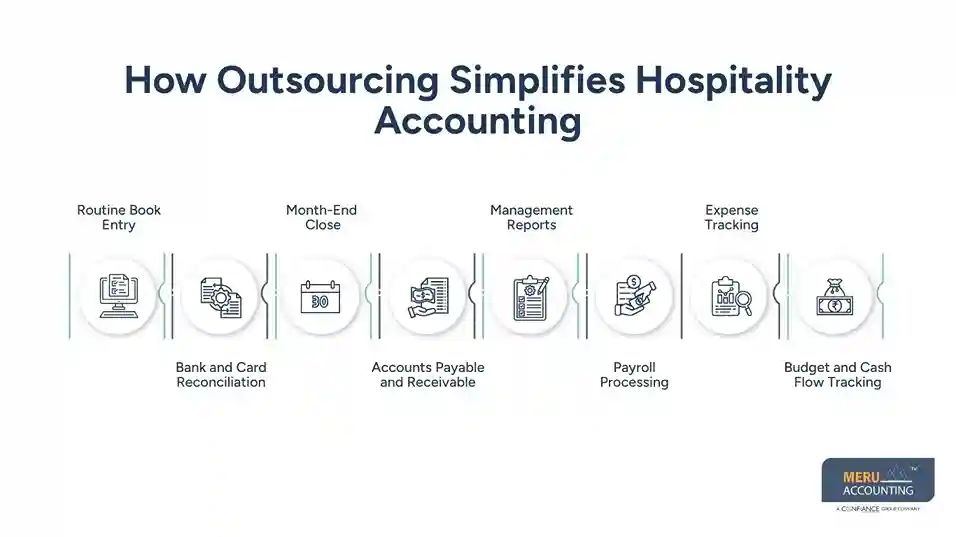
Management Reports
The best accounting software for hospitality industry can help generate reports covering sales, costs, cash flow, and profitability for management review. Site-level reports can help managers compare performance and identify rising costs.
Payroll Processing
An outside team can organize payroll records, wages, deductions, and payroll-related entries. Regular processing can help keep payroll records accurate and current.
Expense Tracking
Expenses can be recorded and categorized by property, department, or cost type. Clear tracking helps management understand where money is being spent.
Budget and Cash Flow Tracking
Outsourced teams can help track budgets against actual spending and income. Regular cash flow updates can help management plan upcoming payments and expenses.
optional anymore
on running the business
How to Choose the Best Accounting Software for Hospitality Industry
Core Book Features
The best accounting software for hospitality industry use should cover bank feeds, bills, invoices, taxes, and reports. Simple workflows can make routine accounting easier to manage.
POS and PMS Links
Hotels may need PMS integrations, while restaurants often need POS links. Check how the software handles sales, refunds, fees, and missing data.
Multi-Unit Reporting
Hospitality groups need reports by property, location, or business unit. The right accounting software should make it easy to manage unit-level records while also providing consolidated group reporting.
User Roles and Audit Logs
Set system access based on each user’s role and responsibilities. Audit logs can also show who changed financial data and when.
Cost and Fit
Compare pricing based on the features, support, and reporting your business actually needs. Choose software that fits your business size, existing systems, and accounting requirements.
Benefits of Outsourcing Hospitality Accounting
Lower Admin Load
Outsourcing can move routine bookkeeping away from site staff. Managers can focus more on guests, sales, and daily operations. Less administrative work can also reduce pressure during busy periods.
More Consistent Close Work
An outside team can follow a standard monthly close process. Consistent steps can help reduce delays and missed tasks. Clear responsibilities can also make the close easier to track.
Better Cost View
Clear cost coding can show food, labor, rent, and other expenses. Managers can use this data to monitor spending and budgets. Better cost visibility can support more informed operating decisions.
Flexible Capacity
Hospitality workloads can increase during holidays and peak seasons. Outsourcing can provide extra accounting support without short-term hiring. Support levels can also be adjusted as transaction volumes change.
Access To Skilled Staff
Businesses can access accounting staff without maintaining a full-time team at every site. Skilled support can help with reconciliations, reporting, and close work. Management can retain approval and oversight while routine work is handled externally.
How Much Does Outsourced Hospitality Accounting Cost?
Scope Of Work
Cost depends on the accounting tasks included in the agreement. Basic bookkeeping usually costs less than services covering payables, close work, reports, and tax support. A clear scope should list included tasks and extra charges. This helps avoid confusion about the final fee.
Transaction Volume
More sales, bills, bank feeds, and locations can increase the workload. A small cafe may need less support than a multi-property hotel group. Providers may charge based on volume, hours, or a fixed scope. The pricing method should be clear before work begins.
Service Level
Daily, weekly, and monthly accounting work can have different costs. Businesses should confirm how often tasks are completed and reviewed. Response times and month-end deadlines can also affect the service cost. Clear service terms help set the right expectations.
Team Location
Accounting fees can vary based on team location and experience. Lower labor costs should still be weighed against quality, security, and communication. Time zones and review needs can also affect the overall value. Businesses should consider service quality alongside price.
How To Compare Quotes
Ask providers to quote the same scope of work. Compare tasks, deadlines, reports, review steps, and additional fees. A low quote may exclude important accounting tasks. Clear service terms can help prevent unexpected costs later.
Common Mistakes to Avoid When Outsourcing Hospitality Accounting
Choosing on Price Alone
Price matters, but it should not be the only factor. Low-cost services may create problems if work is late or incomplete. Consider the provider’s skills, process, communication, and controls. The service should match the business’s accounting needs.
Poor Data Access Rules
Give each team member only the access needed for their role. Access should be reviewed when staff or vendors leave. Strong access controls can help protect financial information. Businesses should also understand how the provider handles data security.
No Close Checklist
A hospitality accounting close checklist should cover sales, bills, payroll, bank accounts, cards, and key balances. The best accounting software for hospitality industry can make it easier to organize these records and support the month-end close.
Weak Communication
Set clear channels for questions, documents, and accounting issues. Both sides should know who prepares, checks, and approves the work. Regular updates can help resolve issues sooner. A simple issue list can also track open items.
No Review of Work
Outsourcing does not remove management oversight. Key reports, reconciliations, and unusual balances should still be reviewed. Regular checks can help identify errors before they affect decisions. Management can focus on important items rather than every transaction.
Partner With Meru Accounting for Hospitality Accounting
Industry-Focused Book Support
Hospitality firms need books that cover sales, bills, payroll, card fees, and site reports. Meru Accounting can support routine bookkeeping, reconciliations, payables, and month-end work.
Our team can adapt workflows for hotels, restaurants, and related businesses. Tasks can be arranged around daily, weekly, or monthly needs.
Clear Workflows
Our process uses defined task lists, roles, and review points. Each task can have a clear owner and deadline. Structured workflows help keep routine accounting organized.
Cloud-Based Work
Meru Accounting can work with cloud accounting platforms and common finance systems. Businesses choosing the best accounting software for hospitality industry should consider user access, reporting, integrations, and the needs of each location.
Scalable Support
Hospitality businesses can experience changes in sales and transaction volume. Our support can adjust to agreed changes in workload and reporting needs. Clear scope terms help businesses understand service costs.
Our Expert Perspective
Good outsourcing starts with process, not software alone. Before moving the work, map each sales source, payment path, bill flow, payroll feed, and month-end task. Then set who enters data, who checks it, and who approves the final reports.
The best accounting software for hospitality industry needs can make data flow easier, but software cannot fix poor source data or unclear roles. A strong hospitality accounting setup pairs the right tools with a clear close plan and regular checks.
Key Takeaways
- Hospitality accounting must track sales, costs, payroll, tips, stock, tax, cash, and other key records.
- Hotels and restaurants face high transaction volume and many payment sources.
- Outsourcing can move routine bookkeeping to a set outside team.
- Reconciliations and month-end close need clear owners and due dates.
- The best accounting software for hospitality industry needs should fit the firm’s systems and reporting needs.
- Outsourcing fees depend on scope, volume, service level, and team structure.
- Business owners should keep control of approvals, access, and key financial checks.
- A good outsourcing plan should include clear processes, review steps, and communication rules.
FAQs
Hospitality accounting is the process of recording and checking income, costs, payroll, stock, tax, cash, and other financial data for hotels, restaurants, and related firms.
Outsourcing can move routine book entry, reconciliations, payables, and close work to an outside team. The business keeps control of approvals and key decisions.
The best accounting software for hospitality industry should include core book tools, bank and card feeds, useful reports, user controls, and links to key hotel or restaurant systems.
The cost varies with transaction volume, number of sites, service scope, team location, and reporting needs. A clear scope is needed before comparing fees.
Yes. Small firms can outsource part of the work, such as monthly books and reconciliations. The right scope depends on sales volume, staff time, reporting needs, and the level of control the owner wants to keep.
optional anymore
on running the business