Running an online store is fun, but the numbers can get messy fast. Tracking sales, returns, and fees — plus dealing with sales tax in many states — can be a real pain. That’s where an ECommerce Accountant helps. They keep your books in order, file taxes, track stock, and make reports that show your true profit. Their help keeps your business safe, helps you follow the rules, and gives you time to grow your store.
But what does it cost? A basic accountant for an ecommerce business may charge $300 to $1,000 or more each month, based on your sales and what you need. If you sell on sites like Amazon, Shopify, or Etsy, or need help with tax and growth plans, the fee might be more. Even so, most online sellers say it’s worth it. A smart accountant can save you money, stop fines, and help you make wise choices. Over time, they pay for themselves by helping your store grow.
Why Do You Need an Accountant for an Ecommerce Business?
1. Keep your books clean
An accountant records your sales, returns, and costs. You stay updated on profits and losses. It avoids wrong entries or missing bills. This helps you track how your store is doing, month by month.
2. Helps with taxes
Online stores deal with many tax types, like sales tax, VAT, and income tax. An accountant for an ecommerce business makes sure they’re filed correctly and on time. They know tax rules and help you avoid mistakes or delays.
3. Track inventory
Knowing what you have in stock helps you avoid lost sales or overbuying. Accountants track the cost of each item you sell. This helps you find your best-selling and most profitable products.
4. Saves time
You spend less time on numbers and more on your business. Your ECommerce Accountant handles your books, so you don’t have to. This gives you space to focus on ads, customer service, and growth.
5. Avoids penalties
Missed tax filings or wrong entries can lead to fines. Accountants keep records clean and submit them on time. This helps you stay safe and stress-free during audits or tax reviews.
How Much Does an ECommerce Accountant Cost?
1. Monthly rates
Most ecommerce accountants charge between $200 and $1,000 per month. Smaller stores may pay less, while bigger stores with more orders pay more. This often includes bookkeeping, tax help, and monthly reports.
2. Hourly rates
Some work hourly and charge $30 to $150 per hour. This works well for smaller tasks like fixing books or filing taxes. It’s a flexible way to get help when you need it.
3. One-time setup fees
You might pay $100 to $500 to get started. This includes setting up software and cleaning old records. It’s a one-time cost that makes future work easier.
4. Tax season fees
At year-end, you may need to pay $300 to $1,200 for tax returns. This includes preparing and filing all forms on time. It also covers help during audits or follow-ups.
5. Add-on services
Some accountants offer extras like payroll, budgeting, or cash flow reports. These may cost $100 to $500 more per month. You can choose the services that fit your business.
Is It Worth Hiring an ECommerce Accountant?
1. More free time
With an accountant, you no longer spend hours balancing books. You get time back to focus on your brand and sales. This improves your store and gives you peace of mind.
2. Fewer mistakes
Accountants check every number. They spot errors before they cause problems. They know the latest rules and update their books often. This reduces the risk of overpaying taxes or losing data.
3. Better money control
You get monthly reports showing where your money goes. You can check product profit, returns, fees, and more. This helps with smarter decisions and long-term planning.
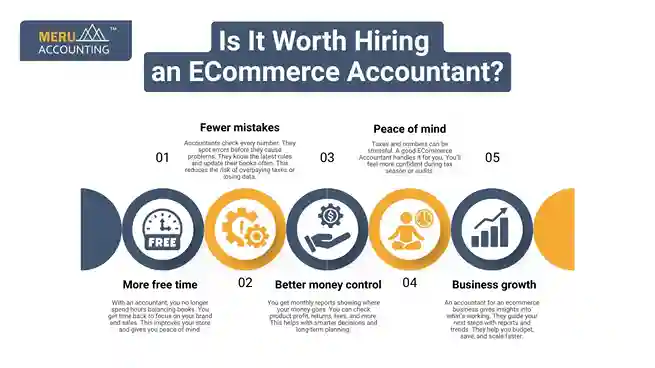
4. Peace of mind
Taxes and numbers can be stressful. A good ECommerce Accountant handles it for you. You’ll feel more confident during tax season or audits.
5. Business growth
An accountant for an ecommerce business gives insights into what’s working. They guide your next steps with reports and trends. They help you budget, save, and scale faster.
What Does an ECommerce Accountant Do?
1. Record daily sales
They track sales from all platforms — Shopify, Amazon, eBay, etc. Every transaction is logged, matched, and sorted by date. This helps keep your income reports accurate and current.
2. Handle returns and chargebacks
Returns and refunds are part of ecommerce. Your accountant adjusts the books to reflect these properly. This ensures that your profits aren’t shown higher than they are.
3. Track inventory costs
They monitor how much each item costs to buy or make. They factor in shipping, packaging, and taxes too. This gives you the real cost and profit margin for every sale.
4. Reconcile bank accounts
They compare your store records with actual bank statements. This helps find any missing or duplicate entries. It also keeps your balances accurate and clean.
5. File taxes
They handle all tax forms, sales tax, VAT, and income tax. They ensure that taxes are filed on time with zero errors. This helps you stay compliant with state and federal laws.
6. Create reports
They give you monthly profit and loss statements. They also show which products are doing well. This helps you make smart, data-based business choices.
What to Look for in an ECommerce Accountant?
1. Experience in ecommerce
Not all accountants understand online businesses. Pick one who has worked with ecommerce sellers before. They’ll know the pain points and how to fix them.
2. Knowledge of ecommerce tools
The accountant must understand platforms like Amazon, Etsy, and Shopify. They should know tools like A2X, QuickBooks, or Xero. This ensures smooth syncing and fewer tech issues.
3. Good with sales tax
Online stores often deal with sales tax in many states. The accountant should know how to track and file these taxes. This avoids legal trouble and overpayments.
4. Certified
Look for CPA or equivalent certifications. It shows they meet high standards and follow the law. You’ll get quality work and trustworthy advice.
5. Clear communication
They must explain things in plain, simple words. You should never feel lost or confused about your numbers. Good communication builds trust.
6. Flexible pricing
Pick someone with clear, upfront pricing plans. Avoid surprise charges or hidden fees. You should know what you’re paying for each month.
Tools ECommerce Accountants Use
1. QuickBooks Online
Used to record income, expenses, and payroll. It’s cloud-based and great for real-time updates. Perfect for small to medium-sized ecommerce businesses.
2. Xero
Another top choice for bookkeeping. It offers simple reports and easy bank sync. Works well with other ecommerce apps.
3. A2X
A tool that connects Amazon and Shopify with your books. It helps match each order to your accounting software. It makes reconciliation fast and error-free.
4. TaxJar or Avalara
Used to handle sales tax across states or countries. They help track tax owed, due dates, and filings. They save time and prevent costly errors.
5. Inventory software
Tools like DEAR Systems or TradeGecko help track stock. Accountants use these to know what’s in and out. This supports smooth ordering and better planning.
Outsourced vs In-House ECommerce Accountant
Feature | Outsourced Accountant | In-House Accountant |
Cost | Lower, pay for only what you use | Higher, including salary and benefits |
Flexibility | Can scale services up or down | Fixed hours may not be flexible |
Expertise | Often ecommerce specialists | May lack online business experience |
Tools | Use your own software and tools | You may need to provide tools |
Support | Available as needed, even off-hours | Limited to business hours |
An outsourced ECommerce Accountant is a great choice if you want flexibility and expert advice without the cost of full-time staff.
How ECommerce Accountants Help Grow Your Business
1. Plan better
They give financial insights and forecasts. You can set clear targets for growth. This helps you avoid risks and aim for higher profits.
2. Forecast sales
They use past data to predict future income. This helps with budgeting, ordering, and staffing. It also prevents cash flow shortages.
3. Improve profit margins
They analyze which items earn the most. They help cut waste and reduce low-margin items. This increases your net profit.
4. Catch problems early
They notice trends and errors before they get big. This can save you from fraud or loss. You fix problems faster and stay in control.
5. Stay compliant
They handle all tax laws and accounting rules. You avoid fines, penalties, or legal issues. This gives you peace and safety while growing.
Examples of Where ECommerce Accountants Make a Difference
1. Amazon seller
Amazon charges many hidden fees. Accountants break down these charges. They show what you really earn per product.
2. Shopify store
Shopify has many plugins and payment gateways. An accountant links your store with tools like A2X. This keeps your records synced and clean.
3. Etsy shop owner
Etsy sellers have both digital and physical goods. Accountants track taxes and expenses for both. They help you price better and file taxes right.
4. Dropshipping business
Margins are tight in dropshipping. An accountant for an ecommerce business tracks every cost and fee. They help you find areas to save and increase profit.
Common Accounting Problems Faced by ECommerce Sellers
1. Mixing personal and business expenses
Many sellers use the same account for both. This causes confusion during tax time. An ECommerce Accountant helps keep them separate.
2. Not tracking shipping and returns
Shipping fees and returns can eat profits. Most store owners forget to track these. A good accountant adds them to your records.
3. No backup of records
Some sellers store bills only on their computers. This is risky in case of system failure. Accountants use cloud-based tools that keep your data safe.
Signs You Need an ECommerce Accountant Now
1. You’re behind on tax filing
Missing tax deadlines leads to heavy fines. If this keeps happening, it’s time for help.
2. You don’t understand financial reports
If reports feel like a foreign language, an accountant for an ecommerce business can break it down.
3. Your sales are growing fast
More sales mean more data to manage. A skilled accountant helps you keep up.
4. You sell in different states or countries
Each region may have different tax rules. An expert will handle this with ease.
Types of Reports an ECommerce Accountant Can Give You
1. Profit & Loss (P&L) Statement
Shows how much money you made and spent. Helps find your true profit each month.
2. Cash Flow Statement
Shows money coming in and going out. Helps plan for future bills and spending.
3. Sales Report by Product
Shows which products sell best. You can focus more on top-selling items.
4. Expense Report
Breaks down costs like ads, shipping, and fees. Helps cut waste and boost profit.
DIY vs Professional ECommerce Accounting
Feature | DIY (Do-It-Yourself) | Professional Accountant |
Cost | Lower upfront | More cost but more value |
Time Needed | High | Low — handled by an expert |
Risk of Errors | High for new sellers | Very low with trained support |
Tax Knowledge | Often lacking | Always up to date |
Business Growth | Slower due to weak planning | Faster with solid reports and advice |
Doing it all alone works only at the start. As you grow, hiring help becomes smart and needed.
Questions to Ask Before You Hire an ECommerce Accountant
- Do you have experience with online stores?
- Which platforms (Amazon, Shopify, etc.) do you support?
- What accounting software do you use?
- How do you handle sales tax?
- Can you help during tax season?
- What is your monthly fee, and what’s included?
- Do you provide financial advice too?
Asking these questions helps you find the right fit.
How ECommerce Accounting Saves You Money
1. Catch small mistakes before they grow
Even tiny errors can cost a lot later. Accountants catch them early and fix them fast.
2. Find unused or wasteful expenses
You may pay for things you don’t need. They help you cut costs with smart plans.
3. Avoid overpaying taxes
Wrong entries or missed write-offs raise your tax bill. An expert makes sure you claim all you should.
Hiring an ECommerce Accountant is absolutely worth it. They help you manage money, grow faster, and avoid mistakes. Whether you’re just starting or earning six figures, they make a big difference. With their help, you focus on your brand, while they handle the backend.
It’s one of the best investments for a healthy ecommerce business. Meru Accounting has deep skills in ecommerce books, tax work, and reports. We give simple and clear support to sellers on sites like Amazon, Shopify, and Etsy. With Meru Accounting, your store gets smart help to grow fast and stay safe with rules.
FAQs
- What does an ECommerce accountant do?
They handle bookkeeping, inventory, reports, and tax filings. - How much does an ecommerce accountant cost?
It ranges from $200 to $1,000+ monthly, based on your needs. - Do I need an accountant if I sell only on one platform?
Yes, even single-platform stores have taxes and finances to manage. - Can an ecommerce accountant help with taxes?
Yes, they file sales tax, income tax, and help you avoid penalties. - What tools do ecommerce accountants use?
They use QuickBooks, Xero, A2X, and sales tax apps like TaxJar. - Is it better to hire in-house or outsource?
Outsourcing is cheaper and gives you access to specialists. - Can an accountant help me grow my business?
Yes, they give advice, find trends, and help you earn more.