A dental practice can be busy, profitable, and still have financial blind spots. You may know how many patients you see each week, but do you know which costs are cutting into your profit or how much cash you’ll need for your next tax bill? That’s where a CPA for dentists can bring value beyond tax filing.
A CPA who knows the dental industry can help you understand your practice numbers, plan for taxes, manage costs, and prepare for major decisions such as buying equipment or expanding your office.
But hiring any CPA for dentists isn’t always enough. Dental CPA experience can matter when your financial needs involve insurance collections, lab fees, payroll, equipment, and other costs that are common in dental practices. Here’s what practice owners should know before choosing one.
What You Will Learn From This Blog
This guide covers:
- What a CPA for dentists does
- Why dental practices may need specialized accounting
- Key financial areas dentists should track
- How a dental CPA can support tax planning
- What to look for when choosing an accounting professional
- How accounting support can help your practice grow
What Is a CPA for Dentists?
A CPA for dentists is a certified public accountant who provides accounting and tax support for dental professionals and their practices. A CPA may help with bookkeeping oversight, financial reports, tax returns, tax planning, and other financial needs.
The value goes beyond preparing a tax return once a year. A CPA who understands dental practices can help you review your numbers throughout the year and spot issues before they become larger problems.
For example, your CPA may help you review collections, payroll costs, lab fees, supplies, equipment purchases, and other practice expenses. These numbers can show where your money is going and whether your practice is meeting its financial goals.
CPA for Dentists vs. General Accountant
A general accountant may have strong accounting skills, but industry knowledge can still matter. Dental practices have unique financial needs, from insurance payments and patient collections to high equipment costs and staff payroll.
A CPA with dental industry experience may understand these issues more clearly and provide advice that fits the way your practice operates.
Why Dental Practices Need Specialized Accounting
Dental practices deal with financial activity that can be more complex than a basic service business. You may receive payments from patients, insurance companies, and financing plans while also managing payroll, rent, supplies, lab costs, equipment, and other expenses.
Good accounting for dentists helps bring these numbers together in a clear way.
Specialized accounting can help you:
- Track practice income and expenses
- Keep business and personal costs separate
- Monitor accounts receivable
- Review overhead and operating costs
- Prepare accurate financial reports
- Plan for taxes and major purchases
- Understand whether the practice is profitable
Clean records also make it easier to work with your CPA, tax preparer, lender, or other financial professionals.
The goal is not just to keep records. It is to turn those records into useful information that can guide your next business decision.
What Does a Dental CPA Do?
A dental CPA can handle or oversee several financial tasks based on your practice’s needs. The exact services from a CPA for dentists will vary by firm, but common areas include bookkeeping, tax work, financial reporting, and planning.
Bookkeeping and Financial Reporting
Your CPA can help make sure financial records are complete and useful. Monthly reports can give you a better view of revenue, expenses, profit, and cash flow.
Common reports include:
- Profit and loss statements
- Balance sheets
- Cash flow reports
- Accounts receivable reports
- Expense reports
These reports help you see how your practice is doing instead of waiting until tax season to review the numbers.
Tax Preparation and Planning
Tax work is another key part of CPA services. Your CPA can prepare tax returns and help you plan for tax payments during the year.
Planning ahead can be especially useful when you buy equipment, expand your practice, change your business structure, or expect a major change in income.
Payroll and Payroll Tax Support
Payroll can be a large practice expense. It also comes with tax and reporting duties.
Accounting support can help you keep payroll records accurate and make sure payroll costs are reflected correctly in your financial reports.
Financial Planning
A CPA can also help you look ahead. This may include cash flow planning, budgeting, expense reviews, and financial analysis.
The aim is to give you a clearer view of what your practice can afford and where changes may improve its financial position.
optional anymore
on running the business
Key Accounting Areas Every Dentist Should Monitor
You do not need to review every accounting detail every day. However, certain numbers deserve regular attention.
Revenue and Collections
Revenue is important, but collections matter just as much. A practice can show strong production while still facing cash flow pressure if payments are slow.
Review your collections and accounts receivable to see how much money is owed and how quickly it is being collected.
Payroll and Labor Costs
Staff costs can make up a large share of a dental practice’s expenses. Track wages, benefits, payroll taxes, and other labor costs against revenue.
This can help you spot changes in labor costs and assess whether staffing levels fit current demand.
Supplies and Lab Fees
Dental supplies and lab work can add up quickly. Tracking these costs helps you see how they affect your margins.
Large changes in supply or lab costs may be worth reviewing with your CPA.
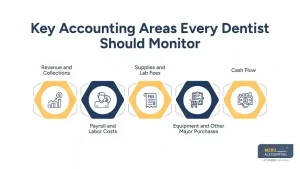
Equipment and Other Major Purchases
Dental equipment can require a large cash outlay. Your accounting records should show these purchases correctly and account for them under the applicable tax and accounting rules.
Before making a major purchase, discuss the financial and tax impact with your CPA.
Cash Flow
Profit and cash are not the same thing. A profitable practice can still have periods of tight cash flow.
Regular cash flow reviews can help you plan for payroll, taxes, equipment, debt payments, and other upcoming needs.
How a CPA for Dentists Helps With Tax Planning
Tax planning should not start when you are ready to file your return. It works best when you review your financial position during the year.
A CPA for dentists can review your income, expenses, business structure, and planned purchases to help you make informed tax decisions.
Depending on your situation, your CPA may discuss areas such as:
- Estimated tax payments
- Business expense deductions
- Equipment and depreciation
- Retirement plan contributions
- Owner compensation
- Business structure
- Year-end tax planning
Tax rules can change, and the right treatment depends on your specific facts. That is why dentists should avoid making major tax decisions based only on general online advice.
Your CPA should review your records and explain how the rules apply to your practice.
How to Choose the Right CPA for Your Dental Practice
Choosing a CPA for dentists is about more than finding someone who can prepare your tax return. You want a professional who understands your practice and can support your financial needs as they change.
Look for Dental Industry Experience
Ask whether the CPA works with dental practices and how familiar they are with common dental financial issues.
Relevant experience can make it easier to understand your reports, expenses, collections, and tax needs.
Ask What Services Are Included
Find out whether the firm provides only tax preparation or also offers bookkeeping, financial reporting, tax planning, payroll support, and other services.
A clear scope can help you avoid surprises later.
Check Their Accounting Technology
Ask what accounting software and systems the firm uses. Your accounting process should make it easy to share records, review reports, and keep financial data current.
Discuss Communication
You should know how often you will receive reports, how questions are handled, and who will be your main contact.
Good communication matters when you need to make a quick financial decision.
Ask How They Support Practice Growth
Your accounting needs may change when you hire more staff, add a location, buy a practice, or invest in new equipment.
A good CPA for dentists should be able to support your practice through these changes rather than only focus on year-end tax filing.
CPA for Dentists by Meru Accounting
You shouldn’t have to dig through your books to figure out whether your practice is doing well. Meru Accounting helps dental practice owners turn day-to-day financial data into clear, useful information they can act on.
Our accounting for dentists can help with:
- Keeping books and transactions up to date
- Reconciling bank and credit card accounts
- Tracking collections, expenses, and accounts receivable
- Preparing clear monthly financial reports
- Monitoring payroll and practice overhead
- Keeping records organized for tax filing
- Reviewing financial trends and practice performance
We focus on keeping your financial data clear, current, and useful. With better records, you can spend less time sorting through transactions and more time making informed decisions about your practice.
If you are looking for accounting support that understands the needs of dental practices, Meru Accounting can help you build a more organized financial process.
Our Expert Insight
One of the most useful ways to assess a dental practice is to look beyond revenue. A practice can have strong production and still see lower profit if collections, payroll, lab fees, supplies, or other overhead costs are out of balance. Comparing these areas helps reveal where the practice is performing well and where a change may be needed.
We recommend using financial reports to support real business decisions, not just tax filing. Before hiring another employee, purchasing equipment, or expanding the practice, review whether current cash flow and profit can support the added cost. A dental CPA can help turn these numbers into clear, practical guidance so you can make decisions based on the financial position of your practice.
Key Takeaways
- A CPA for dentists can provide accounting, tax, reporting, and financial planning support.
- Dental practices have financial needs that can benefit from industry-specific experience.
- Revenue, collections, payroll, supplies, lab fees, equipment, and cash flow should be reviewed on a regular basis.
- Tax planning works best when it starts before the end of the tax year.
- A dental CPA should understand both your current needs and your future practice goals.
FAQs
A dentist should review the profit and loss statement, balance sheet, cash flow statement, and accounts receivable report. These reports give a quick view of practice performance and cash position.
There is no single ideal percentage for every practice. Compare your overhead over time and use relevant industry benchmarks to spot unusual increases.
It depends on the practice structure, tax needs, and how income and expenses are tracked. A CPA can help determine which accounting method is appropriate for your practice.
Look at collections, operating expenses, and profit rather than production alone. Comparing these numbers over several months gives a clearer picture of financial performance.
Ask about their experience with dental practices, services offered, accounting software, and communication process. It’s also helpful to know whether they provide year-round guidance or only tax preparation.
optional anymore
on running the business