
Strong cash flow depends on how well a business tracks customer payments and credit sales. Poor control over outstanding dues can slow operations and create financial stress. This is where debtor management becomes essential for business stability and planning.
In many firms, unpaid invoices and delayed collections lead to pressure on working capital. Proper handling of Bills Receivable ensures money owed by customers is recorded, tracked, and collected on time. When debtor management is structured well, a business gains better control over income timing and reduces payment gaps.
A clear system for tracking receivables is not only an accounting task but also a financial control process that directly affects growth, liquidity, and long-term stability.
What You Will Learn From This Blog
- Meaning and importance of debtor control in daily business operations
- Common issues that delay customer payments
- How unpaid invoices affect cash flow stability
- Practical methods to manage receivables with fewer delays
- Key financial metrics for tracking outstanding payments
- Role of professional accounting support in receivable tracking
- Ways to reduce bad debts and improve cash inflow timing
What is Debtor Management and Why is it Important?
Meaning of Debtor Tracking System
Debtor management is the process of tracking money owed by customers after credit sales. It includes billing, follow-ups, and collection tracking. A structured system ensures fewer missed payments and better control over cash inflow.
Role of Credit Sales Control
Businesses often sell on credit to grow faster. Without proper tracking of customer dues, credit sales can turn into delayed payments. Clear credit rules help reduce overdue accounts and improve cash stability.
Importance for Business Liquidity
Cash flow depends on how fast invoices are collected. A strong tracking system ensures funds return quickly into the business cycle, supporting daily expenses and operations.
Link With Accounting Records
Accurate tracking of Bills Receivable ensures financial statements reflect real income status. This helps management understand which clients still owe money.
Risk Reduction in Credit Exposure
A structured system reduces the risk of unpaid dues. With proper monitoring, businesses can identify risky accounts early and take corrective steps.
Common Challenges Businesses Face in Debtor Management
Late Customer Payments
One major issue is delay in payments beyond agreed terms. This creates cash gaps and affects working capital flow.
Weak Invoice Tracking System
Without proper systems, outstanding invoice records may become unclear or outdated. This leads to missed follow-ups and slow collections.
Lack of Credit Policies
Many businesses do not define clear credit terms. Poor control happens when customers are not guided by strict payment rules.
Manual Record Errors
Manual accounting increases the chance of missed entries. This weakens debtor management and creates confusion in receivable balances.
Poor Follow-Up Process
Irregular follow-ups lead to an increase in overdue invoices. This negatively affects receivable recovery and delays business cash inflow.
How Poor Debtor Management Affects Cash Flow
Working Capital Pressure
Weak control over outstanding dues reduces available cash for daily operations. Businesses may struggle to pay suppliers or staff on time.
This situation often forces firms to delay their own payments, which can harm business relationships.
Increase in Borrowing Needs
Delayed receivable collection often forces businesses to take short-term loans, increasing financial cost. Repeated borrowing adds interest burden and reduces overall profit margins over time.
Disturbed Financial Planning
Uncertain cash inflow makes planning difficult. Poor debtor management affects budgeting and investment decisions.
Higher Risk of Bad Debts
Long-overdue invoices may never be collected. Weak control increases the chance of financial loss. In many cases, old dues must be written off, directly impacting profit figures.
Impact on Business Growth
Slow collection reduces funds available for expansion. Strong receivable control is necessary for stable growth. This limits the ability to invest in new projects, staff, or market expansion.
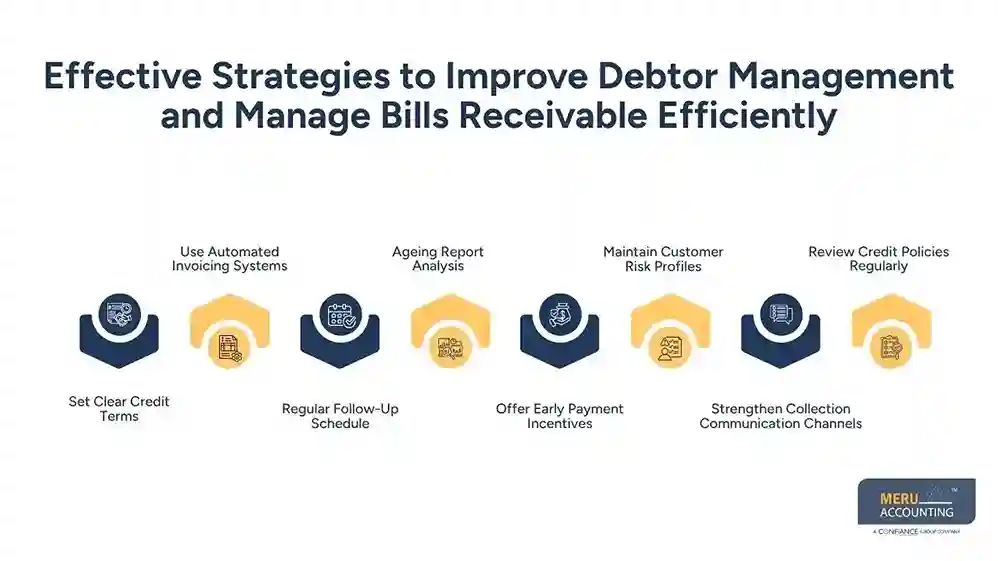
Effective Strategies to Improve Debtor Management and Manage Bills Receivable Efficiently
Set Clear Credit Terms
Define payment timelines before offering credit. This improves debtor management and reduces confusion in accounts receivable handling.
Use Automated Invoicing Systems
Digital invoicing reduces manual errors. It strengthens payment tracking by sending timely reminders and updates. It also ensures invoices are generated and shared quickly, reducing delays in the billing cycle.
Regular Follow-Up Schedule
Consistent follow-ups ensure customers pay on time. Recovery of outstanding invoices depends on active communication. A fixed follow-up routine also builds discipline in payment behavior over time.
Ageing Report Analysis
Track overdue invoices using ageing reports. This improves the identification of risky accounts early. It also helps businesses prioritize collections based on how long payments have been pending.
Offer Early Payment Incentives
Small discounts for early payments can improve cash inflow. This method strengthens Bills Receivable collection cycles.
Maintain Customer Risk Profiles
Maintain detailed records of customer payment behavior and credit exposure. Risk profiling helps identify customers who may delay payments and allows better credit planning.
Strengthen Collection Communication Channels
Use multiple communication methods such as email, calls, and reminders for follow-ups. Clear and consistent communication reduces misunderstandings and improves payment response rates.
Review Credit Policies Regularly
Regularly update credit rules based on customer behavior and market conditions. Updated policies help reduce overdue invoices and keep credit risk under control.
Key Metrics to Monitor For Better Receivables Management
Days Sales Outstanding (DSO)
DSO measures the average time to collect payments. Strong debtor management aims to reduce this number for better cash flow.
Receivables Turnover Ratio
This shows how fast bills receivable are collected in a period. A higher ratio means stronger collection efficiency.
Overdue Invoice Percentage
This metric shows unpaid invoices beyond due dates. Weak control often reflects higher overdue percentages. It also indicates how many customers are consistently missing payment deadlines.
Collection Efficiency Rate
It measures how much cash is collected against total credit sales. Strong receivable control improves this rate. A higher rate shows that a business is collecting payments on time and reducing delays.
Customer Payment Behavior
Tracking payment history helps predict delays. This supports better financial decisions. It allows businesses to identify reliable and high-risk customers before extending credit.
How Outsourced Accounting Services Improve Debtor Management
Structured Financial Monitoring
Professional firms bring clear systems for receivable control, ensuring no invoice is missed or delayed. Regular review cycles help businesses maintain accurate tracking of customer dues and payment status.
Timely Reporting Systems
Regular reports help track outstanding invoices in real time, improving decision speed for management. Real-time financial updates ensure data stays current and reduce delays in corrective actions.
Expert Credit Control
Accounting professionals analyze customer risk profiles. Strong analysis reduces exposure to unpaid invoices and financial loss. Careful review of customer credit behavior helps businesses set safer credit limits.
Automation and Tools Use
Outsourced teams use advanced tools for tracking. This improves Bills Receivable accuracy and speed of collection.
Compliance and Record Accuracy
Proper documentation ensures financial records remain correct. Strong debtor management reduces audit issues.
Tips to Reduce Bad Debts and Improve Cash Flow
Set Credit Limits Per Customer
Limit exposure for each client. This helps control financial risk at an early stage.
Clear limits ensure businesses do not extend more credit than a customer can safely handle.
Review Customer History
Analyze past payment behavior before extending credit. This helps manage outstanding invoices more effectively.
Strong review practices reduce the chance of late payments and financial loss.
Send Early Reminders
Reminders before due dates improve collection speed. This strengthens payment discipline. Early communication increases the chance of receiving payments on time.
Stop Credit for Defaulters
Restrict further sales for late payers. This protects Bills Receivable from becoming bad debts.
Maintain Updated Records
Clean data ensures accurate tracking. Strong debtor management depends on updated financial records.
Why Choose Meru Accounting?
Businesses often struggle with tracking overdue invoices due to limited time and systems. Meru Accounting provides structured accounting and bookkeeping support to improve receivable control and reporting accuracy.
Through professional tracking of Bills Receivable, the team ensures that every invoice is monitored from billing to collection. Our accounting systems help improve debtor management by reducing delays, improving follow-ups, and maintaining clear ageing reports.
With experience across global accounting platforms like Xero, QuickBooks, and Odoo, Meru Accounting helps businesses build reliable financial visibility and improve cash flow control.
Our Expert Perspective
In real practice, most payment delays do not come from customers unwilling to pay, but from weak tracking systems inside businesses. When debtor management is set with clear rules and regular review cycles, overdue cases naturally reduce. A structured approach to Bills Receivable gives owners better control over cash timing, which is often more valuable than higher sales numbers.
Key Takeaways
- Debtor control is important for stable cash flow
- Unpaid invoices can create financial pressure if not tracked well
- Regular monitoring of receivables reduces the risk of bad debts
- Structured follow-ups improve payment speed
- Outsourced accounting can strengthen receivable systems
- Proper tools and reports improve financial clarity
FAQs
It is the process of tracking the money customers owe after credit sales. It includes billing, follow-ups, and collection control.
Bills Receivable show money expected from customers. It helps businesses plan cash flow and manage expenses better.
If payments are delayed, cash inflow slows down. Good debtor control keeps money moving in a steady cycle.
Accounting software like QuickBooks, Xero, and Odoo can track invoices, send reminders, and manage overdue accounts.
Yes, outsourced accounting teams provide structured tracking, regular reporting, and better follow-ups for unpaid invoices.