Every dollar spent by a dental practice has a job. Some dollars keep the office running, some pay the team, and others go toward supplies, labs, equipment, software, or marketing. The challenge is that these costs do not all have the same impact, and small increases can add up fast. That is why dental office expenses management is more than keeping receipts or checking a bank statement.
It means knowing what you spend, where you spend it, and how each cost affects the practice. With the right system, you can spot waste, plan ahead, and make better choices without cutting costs that support patient care.
What You Will Learn From This Blog
This guide covers the main expenses a dental practice should track and the ways to review them. You will learn:
- Which costs need close attention
- How fixed and variable expenses differ
- How to spot rising costs early
- What to include in an expense checklist
- How bookkeeping support can improve expense tracking
- How expense data can help with practice decisions
What Is Dental Office Expenses Management?
Dental office expenses management is the process of recording, sorting, reviewing, and controlling the costs tied to running a dental practice. It covers daily spending as well as higher costs that may come up once or twice a year.
A good system does not mean making every expense as low as possible. Some costs are needed to keep care safe, staff supported, and the office running well. The goal is to know which costs are essential, which can be adjusted, and which deserve a closer look.
For example, a rise in supply costs may come from higher patient volume. A jump in software costs may be due to new tools or added user seats. Looking at the reason behind each change gives you more useful insight than looking at one total.
Why Tracking Dental Office Expenses Matters
Expense tracking gives you a clearer view of how money moves through the practice. Without regular reviews, small charges for supplies, software, repairs, or outside services can continue without much attention.
Strong dental office expenses management helps you compare costs from month to month and year to year. It can also help you find unusual charges and see where spending is moving up.
Accurate records make budgeting easier, too. When you know your usual costs, you can plan for rent, payroll, supplies, equipment, insurance, and other bills with less guesswork.
Clean expense records also support tax work. Your CPA can use organized records to review business expenses and determine which costs may qualify for deductions based on your situation.
Key Dental Office Expenses Every Practice Should Track
Not every cost needs the same level of review, but every practice should have clear records for its major expense groups.
Payroll and Employee Benefits
Payroll is often one of the highest costs in a dental office. Track wages, payroll taxes, bonuses, health benefits, retirement plans, and other employee costs.
Watch for changes in overtime, staffing levels, or benefit costs. These figures can help you see whether labor costs are moving in line with patient demand.
Dental Supplies and Clinical Materials
Gloves, masks, anesthetics, burs, impression materials, sterilization items, and other clinical supplies can create a large monthly spend.
Track supply use over time and look for sharp changes. Better ordering can help reduce rush purchases, excess stock, and expired products.
Rent, Utilities, and Office Costs
Rent may stay stable, but utilities and other building costs can change. Track electricity, water, internet, phone service, cleaning, waste removal, and similar office costs.
These expenses may seem routine, but tracking them over time can help you spot rate increases or services that are no longer needed.
Equipment and Technology
Dental chairs, imaging systems, computers, scanners, printers, and other equipment can require large investments. Track purchase costs as well as repair and service fees.
Technology costs also include software, cloud tools, security services, and support plans. Review these charges from time to time to make sure the practice is paying for tools it still uses.
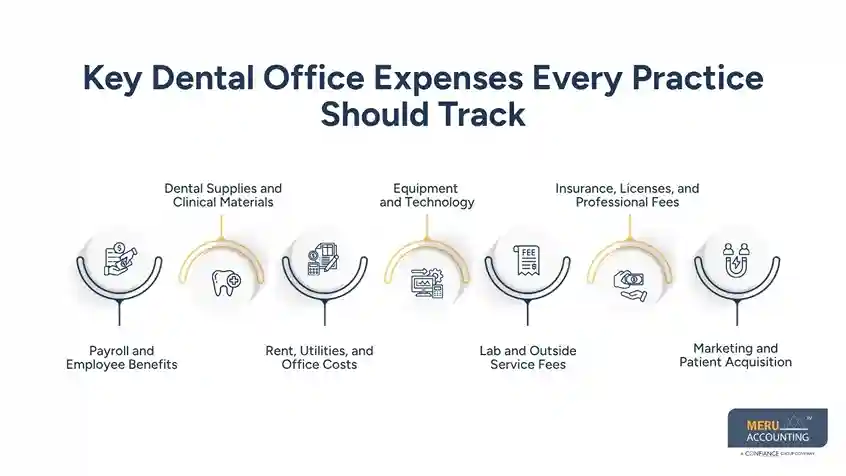
Lab and Outside Service Fees
Dental labs can be a major variable cost. Track lab bills by service type and compare them with production and patient volume.
You should also track outside services such as equipment repair, IT support, shredding, consulting, and other vendor work.
Insurance, Licenses, and Professional Fees
Professional liability coverage, property insurance, business insurance, licenses, permits, accounting, legal work, and other professional fees should have clear categories.
Some of these costs are annual, so monthly records may not show the full picture. A yearly review can help you prepare for large renewal bills.
Marketing and Patient Acquisition
Marketing costs can include paid ads, website work, social media services, mailers, events, and referral programs.
Do not judge these costs only by how much you spend. Track them against results so you can see which efforts are producing useful returns.
optional anymore
on running the business
Fixed vs. Variable Expenses in a Dental Practice
Understanding fixed and variable costs makes dental office expenses management more useful.
Fixed expenses tend to stay stable for a set period. Rent, some insurance costs, software plans, and certain salaries may fall into this group.
Variable expenses can change with patient volume or business activity. Dental supplies, lab fees, merchant fees, and some marketing costs may move up or down each month.
This split helps with planning. If patient visits increase, variable costs may rise as well. That is not always a problem. The key is to understand whether the added spending makes sense compared with the added activity.
How to Identify and Control Rising Practice Expenses
The first step in dental office expenses management is finding the cost that changed. The next step is finding out why.
Start by comparing current spending with prior months and the same period last year. Look for large changes in supplies, payroll, lab fees, repairs, software, or marketing.
Then ask:
- Did patient volume change?
- Did a vendor raise its rates?
- Are employees working more hours?
- Did the practice add a new service?
- Are there duplicate subscriptions?
- Are supplies being ordered in larger amounts than needed?
Do not cut an expense simply because it increased. A higher lab bill may come from more cases. A higher supply bill may follow higher production. Good dental office expenses management looks at the reason behind the number before making a change.
Vendor reviews can help, too. Check contracts, renewal dates, service terms, and pricing at least once a year. If a service no longer provides value, remove it rather than letting the charge continue.
Dental Business Expenses Checklist: What Should You Review?
A dental business expenses checklist can make monthly and quarterly reviews more consistent. It gives you a set list of expense areas to check instead of relying on memory.
Your checklist should include:
- Payroll and employee benefits
- Dental and clinical supplies
- Lab fees
- Rent and utilities
- Equipment purchases and repairs
- Software and technology
- Insurance and licenses
- Marketing costs
- Merchant and bank fees
- Office supplies
- Cleaning and waste services
- Accounting and legal fees
- Training and continuing education
- Other business-related costs
Use the checklist each month to look for unusual charges. Then conduct a deeper review each quarter to assess trends, vendor costs, recurring services, and areas where spending has changed.
The goal is not to question every purchase. It is to create a repeatable process that makes important changes easier to spot.
How Meru Accounting’s Dental Bookkeepers Help With Dental Expense Management
Dental practices have many expense lines to track, from clinical supplies and lab fees to payroll, equipment, software, and office costs. Meru Accounting’s dental bookkeepers help keep these costs organized so practice owners can see where money is being spent and how expenses change over time.
Our Dental Bookkeeping Services Include
- Expense categorization: Classifying dental, office, lab, payroll, technology, and other business expenses correctly.
- Bank and credit card reconciliation: Matching transactions with financial records to help keep the books accurate.
- Vendor expense tracking: Monitoring payments to labs, suppliers, software providers, and other vendors.
- Monthly financial reports: Providing clear expense reports that help you review spending and spot changes.
- Expense trend review: Helping identify unusual increases, recurring charges, and areas that may need attention.
Because we understand the cost structure of dental practices, our approach to dental office expenses management goes beyond recording transactions. We help maintain financial records that give practice owners a clearer basis for budgeting, expense reviews, and financial decisions.
Our Expert Insight
One expense number rarely tells the full story in a dental practice. The more useful question is whether the cost is reasonable for the level of production it supports.
For example, higher dental supply costs may be expected when patient volume rises. A higher lab bill may also reflect a shift toward more complex procedures. Looking only at the dollar amount can make a healthy increase look like overspending.
We recommend comparing major expenses with related practice activity. Review supply costs against patient volume, lab fees against production, and labor costs against revenue. This gives you a more useful view of whether an increase comes from growth, pricing, waste, or a change in how the practice operates.
That distinction matters because the goal of dental office expenses management isn’t simply to spend less. It is to understand which costs are supporting production and which ones may be reducing profitability without adding equal value.
Key Takeaways
- Dental office expenses management helps you understand where practice funds are going.
- Track payroll, supplies, labs, rent, equipment, technology, insurance, and marketing.
- Separate fixed costs from variable costs for better planning.
- Review unusual increases before deciding to cut them.
- Use a dental business expenses checklist to keep reviews consistent.
- A dental bookkeeper can help keep expense records organized and current.
- Better expense data can support budgeting, tax work, and practice decisions.
FAQs
There is no fixed percentage for every practice. Overhead varies by location, staffing, specialty, and practice model.
Compare the cost with production, collections, and patient volume. A rising expense may be reasonable if practice activity is also increasing.
Many dental supplies may qualify as ordinary business expenses. The exact treatment depends on how the expense is used and applicable tax rules.
Track major equipment separately from routine expenses. Some purchases may need to be capitalized and depreciated rather than recorded as regular expenses.
A profit and loss statement is the main starting point. Expense reports and period-to-period comparisons can also help identify changes in spending.
optional anymore
on running the business