
Dental practice accountants can help you see the financial side of your practice with more clarity. Revenue, overhead, payroll, insurance payments, and accounts receivable all affect your bottom line, but looking at each item on its own does not give you the full picture. The real value comes from bringing these numbers together and using them to understand how the practice is performing.
Strong financial management helps you spot cost increases, track cash flow, review profit, and plan for major expenses before they put pressure on the practice. With accurate records and timely financial reports, you can see where money is going and make better choices about staffing, spending, equipment, and growth.
This is where professional dental accounting services can support your practice. By taking care of key financial tasks and providing useful financial data, an accounting team can give you a clearer basis for day-to-day decisions and long-term planning.
What You Will Learn From This Blog
In this blog, you will learn:
- What dental practice accountants do for dental practices
- The main financial issues that can affect dental practices
- How dental accounting services improve financial visibility
- How better accounting can support cash flow
- What to look for when choosing accounting support
What Do Dental Practice Accountants Do for a Dental Practice?
A dental practice has many financial tasks that need steady care. Small errors or missed entries can affect reports, tax records, and cash flow. An accountant can help bring these tasks into one clear process.
Bookkeeping and Reconciliation
Bookkeeping tracks the money coming into and going out of your practice. This includes patient payments, insurance payments, payroll, rent, supplies, lab fees, and other expenses.
Account reconciliation adds another layer of control. It helps confirm that the amounts in your accounting records match your bank and credit card statements. This gives dental practice accountants a reliable starting point for reviewing the practice’s financial records.
Financial Reporting
Reports help you see where your practice stands. A profit and loss statement can show revenue, expenses, and net income over a set period.
A balance sheet gives a view of assets, liabilities, and equity. Cash flow reports can help you see how money moves through the practice. Dental practice accountants can use these reports to compare results and identify changes that need attention.
Expense Tracking
Dental practices often have many ongoing costs. Supplies, lab work, software, staff costs, equipment, and facility expenses can add up fast.
A clear expense system helps you track these costs by type and spot changes over time. Regular review also gives dental practice accountants a better view of where practice costs are increasing.
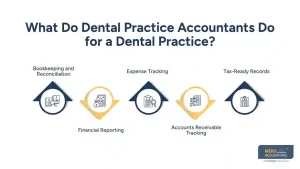
Accounts Receivable Tracking
Patient and insurance balances can sit unpaid for weeks or months. Proper tracking helps you see what is owed, how long it has been outstanding, and where follow-up may be needed.
Tax-Ready Records
Organized books make it easier to prepare financial information for tax work. Your accountant can help maintain records and supporting documents that your tax professional may need.

Key Financial Challenges Dental Practices Face
Dental practices face financial issues that can make planning harder. Strong clinical results do not always mean strong financial results.
Managing Practice Revenue
Revenue may change based on patient visits, treatment plans, insurance payments, and seasonal demand. Looking only at total revenue may not tell you how profitable the practice is.
You also need to know how much revenue turns into cash and how much is still waiting to be collected. Dental practice accountants can help separate production, collections, and outstanding balances when reviewing practice revenue.
Controlling Overhead
Overhead can include staff wages, rent, supplies, lab fees, software, insurance, utilities, and other costs. When these costs rise faster than revenue, profit can shrink even when the practice is busy. This is one area where dental practice accountants can help track cost changes against practice revenue.
Tracking Insurance and Patient Payments
Dental billing can involve both patients and insurance plans. Delays, adjustments, denials, and unpaid balances can make it harder to know your true cash position.
Planning for Equipment Costs
Dental equipment can be a major investment. A practice may need new chairs, imaging systems, sterilization equipment, computers, or other tools.
Without proper planning, a large purchase can put pressure on working cash.
Managing Payroll
Payroll is often one of the largest costs in a dental practice. Tracking payroll costs against revenue can help owners understand whether staffing levels fit current practice needs.
optional anymore
on running the business
How Dental Accounting Services Improve Financial Visibility
Financial visibility means knowing what is happening with your money and why. You should not have to wait until tax time to find out whether your practice had a good month.
Dental accounting services can help create a regular process for recording, reviewing, and reporting financial activity.
Keep Records Updated
Current records give you a more useful view of your finances. If transactions are entered weeks late, reports may not reflect what is really happening in the practice.
Regular bookkeeping helps keep your financial data ready for review. For dental practice accountants, current records are essential for producing reports that reflect recent practice activity.
Use Reports to Spot Trends
A single report tells you what happened during one period. Comparing reports over several months can show useful trends.
For example, you may notice that supply costs are rising while revenue stays flat. You may also see that payroll costs are taking up a larger share of revenue.
These trends can help you decide where to look next.
Track Revenue and Profit Separately
High revenue does not always mean high profit. A practice may collect more money while also facing higher labor, supply, or facility costs.
Tracking both revenue and expenses gives you a better view of the practice’s actual financial performance.
Find Unusual Changes
Regular financial review can help flag unusual expenses, missing transactions, or large changes in income. Finding these issues early is easier than trying to explain them months later.
How Dental Practice Accountants Help Improve Cash Flow
Cash flow is one of the most important parts of financial management. A profitable practice can still face cash pressure if money is tied up in unpaid balances or large upcoming bills.
Monitor Outstanding Balances
A clear accounts receivable report shows how much money is still owed. It can also group balances by age, helping you see older unpaid amounts that may need attention. Dental practice accountants can use aging data to help practice owners see where unpaid balances are building up.
Review Payment Patterns
Looking at payment data can show where delays occur. For example, you may find that certain types of balances take longer to collect.
This information can help your team review its billing and collection process.
Plan for Regular Expenses
Cash flow planning should account for payroll, rent, supplies, loan payments, taxes, and other expected costs. Knowing what is due and when helps you avoid surprises.
Prepare for Large Purchases
A new piece of equipment may make sense for the practice, but the timing matters. Reviewing available cash and future needs can help you decide whether the purchase fits your current financial position.
Dental Accounting Services From Meru Accounting
Dental practices have a lot of financial activity to keep up with, from patient payments and insurance deposits to payroll, supplies, and equipment costs. Meru Accounting provides dental accounting services to keep these transactions organized and your financial records up to date.
What Our Services Include
- Bookkeeping: Recording income, expenses, payments, and other transactions.
- Bank reconciliation: Matching your books with bank and credit card statements.
- Financial reporting: Preparing reports that show revenue, expenses, profit, and other key numbers.
- Expense tracking: Keeping a clear record of operating and practice-related costs.
- Accounts receivable: Tracking outstanding patient and insurance balances.
- Accounting software support: Maintaining your records in the accounting system your practice uses.
A Practical Approach to Dental Accounting
Every dental practice has different needs. Meru Accounting’s dental practice accountants can customize support based on your practice size, transaction volume, software, and internal setup. The focus is simple: keep your books accurate, your records current, and your financial information ready when you need it.
With the right accounting process in place, dentists and practice owners can spend less time dealing with routine bookkeeping and more time managing the business.
Our Expert Insight
In our experience, dental practice accountants should look beyond revenue when reviewing practice performance. A practice can have strong production numbers while still facing cash pressure if collections are slow or overhead is rising. Reviewing production, collections, accounts receivable, overhead, and cash on hand together gives a more useful view of financial health.
We also recommend watching for changes from month to month rather than relying on a single report. A steady rise in payroll, lab costs, supplies, or other overhead can affect margins before it becomes obvious. These trends can help practice owners spot issues early and decide where a closer review is needed.
Key Takeaways
- Dental practice accountants can help keep financial records accurate and organized.
- Regular reports give you a clearer view of revenue, expenses, profit, and cash flow.
- Accounts receivable tracking can help you understand outstanding patient and insurance balances.
- Reviewing expenses can help identify cost changes before they become larger problems.
- Cash flow planning can help you prepare for payroll, taxes, equipment, and other major costs.
- Dental accounting services can provide ongoing financial support beyond basic bookkeeping.
- The right accounting process should match your practice size, systems, and financial goals.
FAQs
Review collections, production, overhead, payroll, accounts receivable, and cash balances. Comparing these figures with prior months can also reveal unusual changes.
Group costs into areas such as payroll, supplies, lab fees, rent, technology, and other operating expenses. This makes it easier to spot rising costs and changes in profit margins.
Accounts receivable shows money that has been earned but not yet collected. An aging report can help identify overdue patient and insurance balances.
Software can automate bookkeeping tasks and create financial reports, but it does not replace professional review. Dental practice accountants can review the numbers and identify issues that software may not flag.
Look for experience with dental practices, reliable reporting, regular reconciliations, and familiarity with your accounting software. Clear communication and a defined scope of work are also important.
optional anymore
on running the business