Choosing a tax professional for your dental practice is not just about finding someone who can file a return. The right dental tax consultant should help you plan ahead, spot tax risks, and make better choices with your practice income. A dentist may have payroll, equipment costs, lab fees, loans, owner pay, and many other items that can affect the tax bill.
That is why fit matters. You want a dental tax consultant who knows how dental practices work and can explain tax choices in plain terms. The right fit can also work with your bookkeeper, CPA, or other advisors so your tax plan matches your full financial picture.
What You Will Learn From This Blog
This guide will help you assess a dental tax consultant before you hire one. You will learn:
- What a dental tax consultant does for a practice
- Why dental practices may need focused tax knowledge
- What skills and services to look for
- Questions to ask during the hiring process
- What can affect the cost of tax services
- How dental tax accounting can support better tax work
- Warning signs to watch for when comparing providers
What Does a Dental Tax Consultant Do?
A dental tax consultant helps dentists manage tax matters and plan for future tax needs. The work can go well beyond preparing a tax return at the end of the year.
A good consultant may review your income, costs, owner pay, and business setup to find areas that need care. They can also help you plan for large purchases, changes in your practice, and shifts in income.
Tax planning is one key part of the role. Instead of waiting until tax season, a dental tax consultant can review your numbers during the year. This gives you time to act before a tax due date or major business move.
The scope of work can vary by firm. Some may focus on tax prep, while others offer a wider mix of tax planning, tax filing, and dental tax accounting support.
Your needs should guide the choice. A small start-up may need help with setup and tax filings. An established group practice may need more work on tax plans, entity changes, owner pay, and growth.
Why Dentists Need Specialized Tax Expertise
A dental practice has its own mix of costs, income, staff, assets, and business needs. A tax pro who knows these issues can spend less time learning the basics of your field and more time on your case.
For example, a dentist may buy new chairs, imaging tools, software, or other large assets. The timing and tax treatment of these costs can matter. Practice growth can also change the way income, payroll, and other costs should be reviewed.
Practice structure is another key area. A dentist may operate as a sole proprietor, partnership, LLC, or S corporation. Each setup can have different tax needs and filing rules. A dental tax consultant should know how to review your setup and work with your legal and financial team when a change may make sense.
Dentists also need to keep business and personal tax needs in view. Practice income can affect estimated tax payments, owner pay, and cash needs. A consultant who sees the full picture can give advice that fits your goals.
Specialized knowledge does not mean a consultant should promise a set amount of tax savings. Tax results depend on your facts, records, and current tax rules. Be cautious of anyone who makes large savings claims before reviewing your records.
What to Look for in a Dental Tax Consultant
Not all tax firms offer the same level of service. Before you hire a dental tax consultant, look at these areas.
Experience With Dental Practices
Ask how much of the firm’s work is tied to dental practices. A consultant who works with dentists on a regular basis may be more aware of common practice costs and tax needs.
Do not stop at a claim of “industry experience.” Ask what types of dental clients they serve and what services they provide.
Strong Tax Knowledge
Check the person’s credentials, tax background, and scope of work. If you need tax advice, you want someone who stays up to date with changes in federal and state tax rules.
You can also ask how they keep their tax knowledge current. A clear answer can tell you a lot about their work style.
Year-Round Support
Tax planning works best when there is time to act. A dental tax consultant who only contacts you during tax season may not give you the level of planning you need.
Ask how often they review your numbers and when they will alert you to tax issues.
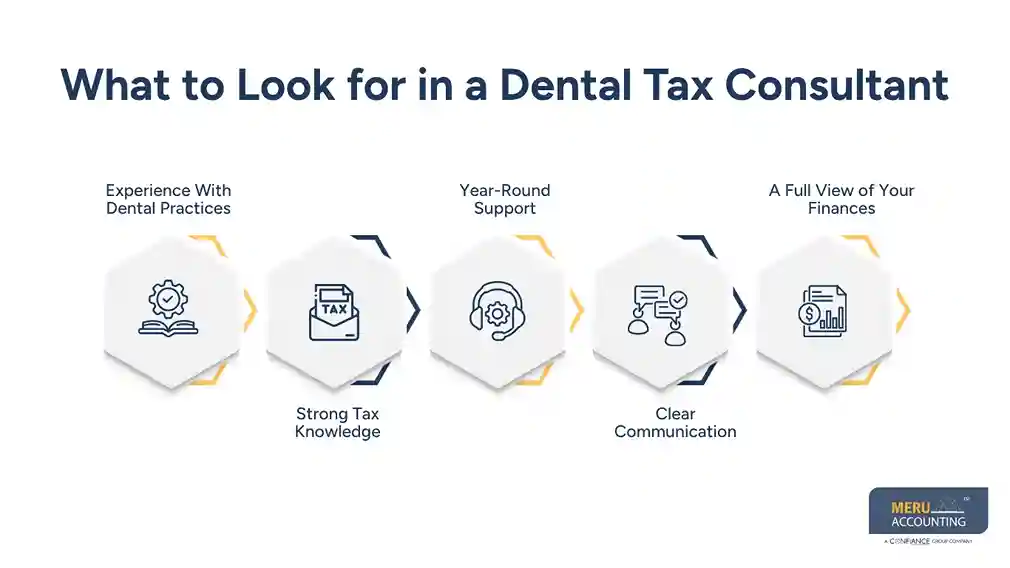
Clear Communication
Tax terms can get hard fast. Your consultant should be able to explain what an issue means, what choices you have, and what each choice may change.
Good communication also means clear deadlines. You should know what records are needed and when.
A Full View of Your Finances
Tax work is tied to your books. If your records are late or not set up well, tax planning can be harder.
This is where dental tax accounting can add value. When tax and accounting work are well linked, your tax pro can work from cleaner data and spot trends sooner.
optional anymore
on running the business
Key Questions to Ask Before Hiring a Dental Tax Consultant
An initial call can help you compare firms before you sign an agreement. Consider asking:
- How many dental practices do you serve?
This can show whether dental work is a key part of their practice or just a small part of it. - What tax services are included?
Ask if the fee covers tax prep, planning, estimated taxes, tax projections, and other work you may need. - Who will work on my account?
You may speak with a senior advisor during the sales call but work with another person later. Know who will handle your account. - How often will you review my tax position?
A year-round plan can give you more time to make smart choices. - How do you handle changes in my practice?
Ask how they support events such as buying equipment, adding a partner, opening a new location, or selling a practice. - What records do you need from me?
A good process should make it clear what you need to send and how often. - How do you charge for your services?
Ask for a clear fee plan. Also ask what work may lead to an extra charge.
These questions can help you judge both skill and fit. The best dental tax consultant is not always the one with the longest service list. It is the one whose service model fits your practice.
How Much Does a Dental Tax Consultant Cost?
There is no single price for tax consulting. Fees can vary based on the size of your practice, business structure, number of entities, level of tax planning, and amount of work needed.
A simple practice with clean books may need fewer services than a multi-location practice with several owners. More complex tax work can also take more time.
Some firms use a flat fee for a set group of services. Others may bill by the hour or use a mix of pricing methods. Before you agree to work together, ask what the fee covers.
Do not judge a dental tax consultant only by the lowest price. A low fee may not include the planning or support your practice needs. On the other hand, a high fee does not always mean better service.
Look at the full value. Consider the advisor’s experience, service scope, response time, reporting, and ability to work with your other financial pros.
Dental Tax Accounting by Meru Accounting
Dental practices have tax needs that go beyond filing returns. At Meru Accounting, we provide dental tax accounting support that brings bookkeeping, financial reporting, and tax planning together.
Our dental tax consultants provide:
- Tax preparation and planning
- Bookkeeping and account reconciliation
- Tax-ready financial statements
- Estimated tax planning
- Expense and deduction review
- Equipment purchase and depreciation planning
- Support for practice structure changes
Our experience with dental practices helps us understand the financial details that can affect your tax position. We keep your records organized, review key numbers, and help you plan ahead instead of waiting until tax season.
Our Expert Insight
One of the biggest tax mistakes we see is making major practice decisions without considering the tax impact first. Buying equipment, changing ownership, adding a partner, or increasing owner compensation can affect your tax bill in ways that are easy to miss.
A good dental tax consultant should be involved before these decisions are finalized. That gives you time to compare options, plan for the tax cost, and avoid fixing problems after the fact.
Key Takeaways
- Choose a dental tax consultant with real experience serving dental practices.
- Look for year-round tax planning, not just tax return prep.
- Ask what services are included before you agree to a fee.
- Check how the consultant handles practice growth and major business changes.
- Make sure the advisor can explain tax matters in clear, simple terms.
- Strong dental tax accounting can give your tax advisor better financial data.
- Avoid consultants who promise fixed or unrealistic tax savings.
- Compare service, experience, communication, and value—not just price.
FAQs
Yes. They can review deductions, depreciation, estimated taxes, and other planning options based on your practice.
A dental tax consultant has specific experience with dental practices and their tax needs, such as equipment purchases, ownership changes, and practice structures.
You may need to provide financial statements, expense records, payroll details, prior tax returns, and records of major purchases or practice changes.
Yes. They can review the tax impact of the purchase structure and help you plan before the deal is finalized.
Quarterly reviews are often useful for keeping tax planning current. You may also need a meeting when your practice has a major financial or ownership change.
optional anymore
on running the business