
Strong sales don’t always mean strong profits. An ecommerce store can bring in $100,000 in sales and still have far less cash than expected after product costs, shipping, platform fees, refunds, and other costs. Ecommerce bookkeeping services help make those numbers easier to follow, but the quality of that support depends on how well the books handle the details behind each sale.
For an online store, bookkeeping needs to cover more than sales and bank deposits. Inventory, COGS, returns, refunds, and chargebacks can all change your actual profit. In this blog, we’ll look at what to expect from bookkeeping for Ecommerce business needs and what an Ecommerce bookkeeper should know before you hire one.
What You Will Learn From This Blog
- What Ecommerce bookkeeping services include
- Why inventory and COGS need close tracking
- What an Ecommerce bookkeeper should track
- How returns, refunds, and chargebacks affect your books
- What to look for when hiring bookkeeping support
- How Meru can support bookkeeping for Ecommerce business needs
What Are Ecommerce Bookkeeping Services?
Ecommerce bookkeeping services are bookkeeping tasks built around the way online stores sell, collect money, buy stock, and handle customer orders. The work can include recording sales, matching payouts, reconciling bank accounts, tracking expenses, managing inventory records, and preparing monthly financial reports.
A key difference is the number of systems involved. An online store may use a sales platform, payment processor, marketplace, shipping tool, and bank account at the same time. These systems may show different numbers because a sale, fee, refund, or payout can appear at a different time.
Good Ecommerce bookkeeping services bring these records together. Instead of treating every payout as simple income, an Ecommerce bookkeeper can break it down into sales, fees, refunds, taxes, and other items. This helps keep revenue and costs in the right accounts.
For growing stores, bookkeeping for Ecommerce business needs may also include support for more than one sales channel. This makes regular review and account reconciliation even more important.
Why Accurate Bookkeeping Matters for an Ecommerce Business
Ecommerce businesses can have strong sales and still have weak cash flow. A large sales number does not show how much you paid for stock, shipping, platform fees, ads, refunds, or other costs. Accurate books help you see the gap between sales and actual profit.
With reliable Ecommerce bookkeeping services, you can review your gross margin, operating costs, cash flow, and other key numbers on a regular basis. This gives you a better base for choices such as ordering more stock, changing prices, cutting costs, or adding a new sales channel.
Accurate books also make tax work easier. Your tax pro needs records that show income and expenses in a clear way. If sales, fees, refunds, and costs are mixed together, it can take more time to sort them out later.
For an owner who is doing bookkeeping for Ecommerce business needs alone, the work can also take time away from sales, product work, and customer care. Hiring an Ecommerce bookkeeper can help keep routine records up to date while giving you cleaner data to review.
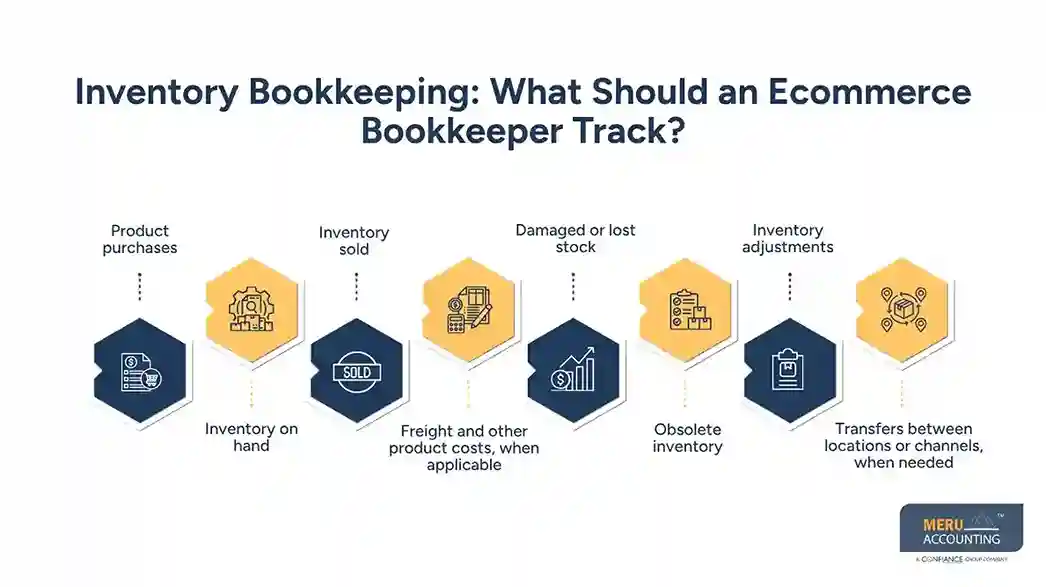
Inventory Bookkeeping: What Should an Ecommerce Bookkeeper Track?
optional anymore
on running the business
Inventory is one of the biggest areas to review when you compare Ecommerce bookkeeping services. Your books should reflect not just what you bought, but how those purchases relate to the products you sell.
An Ecommerce bookkeeper may need to track:
- Product purchases
- Inventory on hand
- Inventory sold
- Freight and other product costs, when applicable
- Damaged or lost stock
- Obsolete inventory
- Inventory adjustments
- Transfers between locations or channels, when needed
Inventory records and accounting records should also agree as closely as possible. If your store says you have 500 units but your books do not support the related cost, your financial reports may not give you a useful view of the business.
This is why bookkeeping for Ecommerce business operations should include regular inventory checks. Small errors can grow when a store has many SKUs or sells through more than one channel.
The right Ecommerce bookkeeping services provider should also ask how your inventory system works. There is no one setup that fits every online store. The process should match your products, sales volume, software, and internal controls.
COGS Tracking: A Key Part of Ecommerce Bookkeeping
Cost of goods sold, or COGS, shows the cost tied to products that were sold during a period. It is a major part of ecommerce profit reporting because sales alone do not show how much money you keep.
For example, a store may sell $100,000 of products in a month. If the related product cost is $60,000, the gross profit before other operating costs is much lower than the sales figure suggests.
That is why COGS needs careful treatment in Ecommerce bookkeeping services. If product costs are recorded in the wrong period or inventory is not kept up to date, gross profit can look too high or too low.
An Ecommerce bookkeeper should review how product purchases flow into inventory and then into COGS. The exact method can depend on the business and its accounting setup, so the bookkeeping process should be consistent with the company’s records and tax needs.
COGS may also need a close look when there are shipping or other costs tied to getting products ready for sale. These costs should not simply be placed in random expense accounts. A sound Ecommerce bookkeeping services process keeps the chart of accounts clear and makes reports easier to review.
For bookkeeping for Ecommerce business needs, the goal is not just to enter numbers. The goal is to make sure the numbers help show what each sale really costs.
Returns, Refunds, and Chargebacks: What Bookkeeping Support Should Include
A sale does not always stay a sale. Customers may return an item, ask for a refund, or dispute a payment. These events can affect both revenue and cash.
Strong Ecommerce bookkeeping services should account for these changes rather than leaving the original sale untouched. An Ecommerce bookkeeper can help record refunds and review whether the related product returned to inventory.
Returns can also create costs. You may pay for return shipping, lose a saleable unit because an item is damaged, or charge a restocking fee. Each situation may need a different accounting treatment.
Chargebacks need review as well. A payment dispute may lead to the loss of the sale amount plus a fee. If the transaction is not matched to the related bank or payment processor activity, your records can become hard to trace.
This is another reason bookkeeping for Ecommerce business operations should include regular reconciliation. Refunds and chargebacks can happen after the original sale, so they need to be matched to the right transaction and period.
When comparing Ecommerce bookkeeping services, ask how the provider handles these events. A provider that only records bank deposits may miss the detail you need to understand sales and returns.
Sales Tax and Ecommerce Bookkeeping Responsibilities
Sales tax can add another layer to ecommerce records. Online stores may collect tax through different sales channels, and the amount collected may not be business income.
An Ecommerce bookkeeper can help keep sales tax amounts separate from sales revenue and make sure the related accounts are reconciled. The bookkeeping team can also organize records that your tax professional may need for filings.
However, bookkeeping and tax filing are not always the same service. Sales tax rules can vary by state and by business activity. Your Ecommerce bookkeeping services provider should know the limits of its role and work with your tax professional when needed.
For bookkeeping for Ecommerce business needs, clean sales tax records can make tax review much easier. It also reduces the risk of treating tax collected from customers as money the business actually earned.
Meru Accounting's Ecommerce Bookkeeping Services
Ecommerce books need to connect the parts of the business that affect profit. At Meru Accounting, our Ecommerce bookkeeping services are designed to help online businesses keep those records organized and useful.
Our team can support bookkeeping for Ecommerce business operations with tasks such as:
- Recording and categorizing ecommerce transactions
- Bank and credit card reconciliation
- Sales and payment reconciliation
- Inventory and COGS tracking
- Returns and refund tracking
- Chargeback review
- Accounts payable support
- Monthly bookkeeping and close tasks
- Financial reporting
- Tax-ready bookkeeping records
- Accounting software support
We work with common accounting platforms and can help keep ecommerce data aligned with the accounting records. The goal is simple: give business owners books they can use to review sales, costs, margins, and cash flow.
Our Ecommerce bookkeeper support can also be adjusted to the way your store operates. A business selling through one site may need a different process from a business selling through several marketplaces. The bookkeeping setup should reflect that difference.
Our Expert Insight
A useful check we make in ecommerce bookkeeping is to compare gross profit trends with inventory and cash movement. If sales are growing but cash is getting tighter, the issue may not be weak sales. The business may be holding too much inventory, paying higher product costs, or losing more revenue to fees and returns.
This is why we don’t judge an ecommerce business from its sales report alone. Ecommerce bookkeeping services should give owners numbers they can use to spot changes in margins and cash needs early. For bookkeeping for Ecommerce business needs, the goal is to keep the records accurate while making it easier to see what the numbers are really saying.
Key Takeaways
- Ecommerce bookkeeping services should cover more than sales entry and bank reconciliation.
- Inventory records need to connect with product purchases and COGS.
- COGS must be tracked well to show a more useful gross profit figure.
- Returns, refunds, and chargebacks should be matched to the right transactions.
- Sales tax collected from customers should not be treated as regular business income.
- Bookkeeping for Ecommerce business operations should account for the store’s sales channels and systems.
- The right Ecommerce bookkeeper should help keep records accurate, current, and useful for business decisions.
FAQs
Ecommerce bookkeeping costs vary based on sales volume, inventory, sales channels, and the level of support needed. Many small stores pay a few hundred dollars per month, while more complex businesses may pay more.
Consider hiring one when sales volume grows, you add sales channels, or keeping up with reconciliations takes too much time. It can also help when you’re unsure whether your reported profit reflects your actual results.
Most ecommerce businesses should review the P&L, balance sheet, cash flow statement, and inventory reports regularly. These reports give a clearer picture of profit, cash, and the money tied up in stock.
Yes. An experienced Ecommerce bookkeeper can work with platforms such as Shopify and Amazon and reconcile their sales and payout data with the accounting records.
Ask whether the provider has experience with ecommerce platforms, inventory, COGS, refunds, and payout reconciliation. You should also confirm which accounting software they support and what reports you’ll receive each month.
optional anymore
on running the business