Export invoice finance gives small and medium export businesses access to funds before overseas buyers complete their payments. Exporters often ship goods first and receive payment after 30, 60, or 90 days, creating cash flow gaps that can slow daily operations.
Managing export orders requires money for raw materials, production costs, shipping, wages, and supplier payments. Delayed buyer payments can create pressure, even when the business has strong sales and confirmed invoices. Export invoice finance allows businesses to use unpaid invoices to access working capital and maintain regular operations.
For many growing exporters, maintaining cash flow is as important as increasing sales. A stable funding plan allows businesses to accept new orders, manage expenses, and build stronger relationships with global buyers. With support from professional financial providers, exporters can manage payment cycles with better control.
What You Will Learn From This Blog
- How export invoice finance works for exporters
- Why exporters face cash flow challenges
- Benefits of invoice-based funding solutions
- How invoice finance companies assist businesses
- Ways exporters can manage payment delays
- How accounting tools support finance management
What is Export Invoice Finance?
Export invoice finance is a funding method where exporters receive money against unpaid invoices from international customers. It allows businesses to access invoice value earlier instead of waiting for buyer payments.
The exporter sends an invoice after completing an order, and the finance provider reviews details before releasing approved funds. After the buyer makes payment, the remaining amount is settled after applicable charges.
Understanding the Basic Process
Export invoice financing connects exporters, buyers, and finance providers through a simple funding process. The exporter raises an invoice after shipping products or completing services.
Many exporters partner with invoice finance companies to complete verification processes and receive funds against approved invoices. This allows exporters to manage short-term cash needs without waiting for long payment cycles.
Role of Unpaid Invoices
Unpaid invoices represent future income but may not provide immediate cash for business expenses. Exporters can face challenges managing supplier payments, inventory costs, and daily operations.
Export receivables financing converts pending invoices into available funds for business needs. Exporters can use this money for production, shipping, and growth activities.
Difference Between Loans and Invoice Finance
Traditional loans often require fixed repayments and approval based on business financial records. Invoice finance depends on customer invoices and sales activity instead of only business assets.
Exporters can access funds based on their outstanding invoices and payment cycles. This option can provide better control over working capital requirements.
Importance For International Trade
International trade involves longer payment periods due to overseas transactions, shipping timelines, and customer credit terms. These delays can create cash flow pressure for exporters.
Export invoice finance provides financial flexibility during payment waiting periods. Businesses can continue operations while waiting for international customers to complete payments.
Example of Export Invoice Finance
A textile exporter ships products worth $50,000 to an overseas buyer with a 60-day payment term. The business needs funds immediately to purchase materials for the next order.
Through invoice financing for exporters, the business receives funds against the invoice instead of waiting two months. The exporter can continue production and manage new opportunities.
Understanding the Role of Export Invoice Finance For Growing Exporters
Growing export businesses need proper cash flow planning because international customers often make delayed payments. Working with experienced invoice finance companies allows exporters to manage this payment gap with structured funding support.
Managing Export Payment Delays
Exporters often provide credit terms to attract overseas buyers, which can create payment gaps. Export working capital finance allows businesses to maintain cash availability during these waiting periods.
Maintaining Regular Business Operations
Export businesses need funds for production, packaging, logistics, employee payments, and suppliers. Invoice-based funding allows operations to continue while customer payments are pending.
Supporting Business Expansion
Growing exporters require funds for inventory, suppliers, production capacity, and new markets. Export invoice finance provides access to money linked with completed sales.
Building Better Supplier Relationships
Timely supplier payments create trust and support long-term business relationships. Better cash flow management allows exporters to meet payment commitments on time.
Improving Financial Planning
Clear visibility of available funds and expected payments supports better budgeting decisions. A structured finance approach helps exporters plan current needs and future business activities.
Why Small and Medium Export Businesses Need Export Invoice Finance
Small and medium exporters often face cash flow challenges due to limited funds, delayed payments, and rising operating costs. Export invoice finance allows businesses to manage expenses without waiting for international buyer payments.
Limited Working Capital Challenges
Small exporters may struggle to manage large orders due to limited financial resources. Invoice-based funding provides access to funds for production, inventory, and operating expenses.
Handling Long Payment Cycles
International buyers often follow payment terms of 30 to 90 days, creating cash gaps. Export receivables funding allows businesses to maintain operations while waiting for customer payments.
Managing Increasing Export Orders
Growing order volumes require more inventory, staff, and logistics support. Invoice funding allows exporters to accept new opportunities while maintaining financial balance.
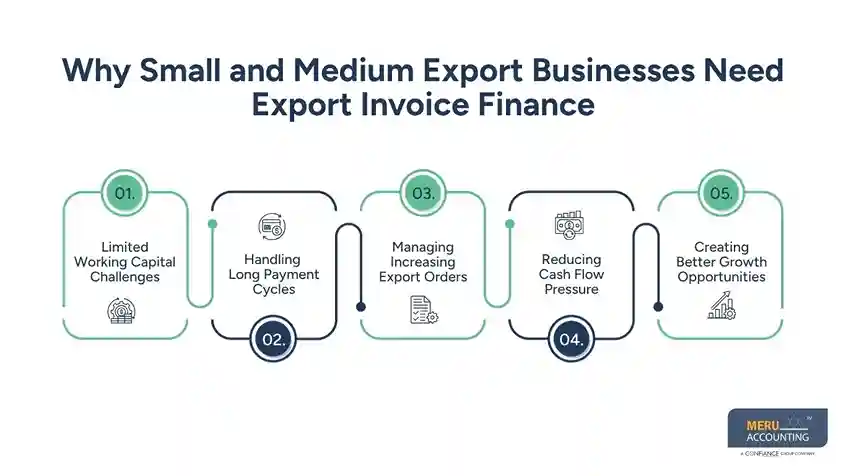
Reducing Cash Flow Pressure
Delayed customer payments can create financial pressure even for profitable businesses. Export cash flow financing provides access to funds during important business periods.
Creating Better Growth Opportunities
Stable cash flow allows exporters to explore new markets and accept larger orders. A reliable funding method supports planned growth and future business expansion.
optional anymore
on running the business
Key Benefits of Export Invoice Finance For Export Businesses
Export businesses need funding solutions that match their trade cycles and payment terms. By partnering with suitable invoice finance companies, exporters can access funding options aligned with their sales cycles.
Faster Access To Business Funds
Exporters can access funds after invoice approval instead of waiting for buyer payments. This allows businesses to manage expenses and maintain regular operations.
Better Cash Flow Management
Invoice-based funding provides better control over available cash and expected payments. Exporters can plan purchases, production, and shipments with more confidence.
Opportunity To Accept More Orders
Limited funds can restrict exporters from accepting larger orders or expanding production. Export invoice finance allows businesses to manage new opportunities without waiting for old payments.
Reduced Dependence On Traditional Loans
Invoice funding depends on customer invoices rather than only business history or assets. This option connects finance access with actual sales activity.
Better Support For International Sales
International transactions often involve longer payment cycles and additional challenges. Trade finance solutions allow businesses to manage these delays while focusing on customers and growth.
How Export Invoice Finance Supports Small and Medium Export Businesses
Export businesses have different financial needs based on products, markets, and buyer payment terms. Export invoice finance provides funds against completed sales to manage daily expenses effectively.
Supporting Inventory Purchases
Exporters need funds to purchase raw materials before starting production. Invoice-based funding helps maintain inventory levels while waiting for customer payments.
Managing Shipping and Logistics Costs
International shipments involve costs like transportation, packaging, customs, and documentation. Export working capital solutions provide funds to manage these expenses without payment delays.
Handling Seasonal Demand
Seasonal demand can increase orders and require additional working capital. Invoice funding allows exporters to prepare inventory and manage higher production needs.
Supporting New Export Markets
Entering new markets requires investment in marketing, compliance, and product changes. Invoice-based finance gives exporters additional funds to explore new opportunities.
Managing Multiple Customer Payments
Exporters often handle buyers with different payment schedules and terms. Support from professional invoice finance companies can help exporters manage invoice tracking, payment cycles, and working capital requirements more efficiently.
How Invoice Finance Companies Help Exporters Access Funding Solutions
Invoice finance companies provide funds against unpaid invoices after reviewing invoice details, buyer information, and business requirements. These providers help exporters manage payment cycles and maintain working capital.
Reviewing Export Invoices
Invoice finance organizations check invoice value, buyer details, and payment terms before approving funds. This review helps determine suitable funding amounts based on invoice reliability.
Providing Working Capital Access
Exporters need funds for operations while waiting for customer payments. Finance providers offer capital against approved invoices to maintain business cash flow.
Understanding International Trade Needs
Export transactions involve different countries, currencies, and payment systems. Experienced providers create funding solutions based on exporter requirements and trade conditions.
Managing Payment Collection
Some finance arrangements include payment tracking and collection services from buyers. This reduces administrative work and allows exporters to focus on business activities.
Choosing The Right Finance Partner
The finance provider checks invoice value, buyer details, and payment terms before approving funds. This review helps determine suitable funding amounts based on invoice reliability.
Common Challenges Export Businesses Face Without Invoice Finance Support
Export businesses without proper funding options may experience cash flow problems despite having strong sales. Delayed payments from international buyers can create difficulties in managing daily operations.
Understanding these challenges helps exporters prepare better financial strategies.
Delayed Customer Payments
International buyers often receive credit periods before making payments. Long waiting periods can reduce available cash for exporters.
Without export invoice finance, businesses may struggle to manage expenses during these payment gaps.
Difficulty Managing Large Orders
Large export orders require higher investment in materials, production, and logistics. Small businesses may not have enough cash reserves to handle these requirements.
Limited funds can restrict growth opportunities and order fulfilment capacity.
Supplier Payment Pressure
Suppliers usually expect payments within agreed timelines. Delays can affect relationships and future business terms.
Better cash availability allows exporters to maintain timely supplier payments.
Limited Business Expansion
Financial restrictions can prevent exporters from entering new markets or accepting larger contracts.
Businesses may miss growth opportunities when available funds are tied up in unpaid invoices.
Increased Financial Stress
Managing multiple expenses while waiting for international payments can create pressure for business owners.
A planned funding solution allows exporters to manage financial responsibilities with better confidence.
How Meru Accounting Supports Export Businesses With Better Financial Management
Export businesses need accurate records, payment tracking, and clear financial information to manage international transactions. Meru Accounting provides professional bookkeeping and accounting services that help businesses maintain organized financial records and improve financial management.
Managing Invoice Records
We maintain accurate invoice records for customers, suppliers, and service providers across multiple countries. Organized documentation supports efficient accounting and timely payment tracking.
Improving Financial Visibility
We prepare accurate financial reports that provide clear insights into payments received, outstanding invoices, and business expenses. Better visibility supports informed financial decisions.
Reducing Manual Accounting Work
Our experienced accountants handle routine bookkeeping tasks, reducing manual effort and minimizing accounting errors. Efficient processes help businesses save time and improve accuracy.
Supporting Export Finance Planning
We maintain reliable financial records that help businesses evaluate cash flow and prepare for funding or financing discussions. Accurate accounting supports better financial planning.
Managing Business Growth
As export businesses expand, we provide scalable accounting and bookkeeping services to manage higher transaction volumes. Meru Accounting helps businesses maintain accurate financial records while supporting long-term growth.
Our Expert Perspective
Export businesses often focus on increasing sales but may overlook the importance of managing payment cycles. From our experience, many small exporters face difficulties because customer payments arrive later than business expenses.
A strong financial process requires proper invoice management, accurate records, and clear cash flow planning. Export invoice finance can provide access to funds, but businesses also need reliable accounting practices to understand their financial position.
Combining invoice-based funding with organised accounting records allows exporters to make better decisions. Businesses that track invoices, expenses, and payments regularly can identify cash needs earlier and plan future activities more effectively.
Key Takeaways
- Export invoice finance gives exporters access to funds before buyer payments arrive.
- Small businesses can manage working capital challenges with invoice-based funding.
- Exporters can handle production, shipping, and supplier costs more effectively.
- Invoice finance companies provide funding solutions based on unpaid invoices.
- Proper accounting records support better financial planning.
- Cash flow management plays an important role in export business growth.
FAQs
Export invoice finance is a funding option where exporters receive money against unpaid invoices before customers complete payments.
Small businesses submit unpaid invoices to a finance provider and receive funds based on approved invoice values.
Exporters use invoice finance companies to manage delayed payments and access working capital for daily business needs.
Yes, export invoice finance gives businesses funds to manage larger orders, supplier payments, and expansion activities.
Yes, export invoice finance uses unpaid invoices as the basis for funding, while traditional loans usually depend on fixed repayment terms and other approval factors.
optional anymore
on running the business