Filing 1099 form is an essential tax requirement for businesses that pay freelancers, contractors, or external service providers. It ensures that non-employee income is reported correctly to tax authorities.
Many businesses face challenges in Filing 1099 form because payment records, vendor details, and tax documents are often not managed in one place. When reporting is delayed or handled at the last minute, errors increase, and correction requests become common.
Proper financial tracking throughout the year reduces these issues and makes compliance smoother. Another important part of the process is collecting a W-9 form, which provides verified vendor tax details needed for reporting.
What You Will Learn From This Blog
- Basics of Form 1099 and why businesses need to report contractor payments
- Who needs to prepare and submit contractor payment reports
- Importance of collecting vendor tax details before reporting
- Role of Form W-9 in maintaining accurate vendor records
- How outsourced accounting services simplify reporting and compliance
- Common mistakes businesses make during contractor payment reporting
- Step-by-step process followed by accounting teams for accurate preparation
- How proper bookkeeping helps maintain organized financial records
What is Form 1099 and Why Does it Matter
Form 1099 is used in the United States to report payments made to individuals who are not part of a company’s payroll system. These include freelancers, independent contractors, consultants, and certain vendors. It helps tax authorities track income earned outside regular employment.
This reporting becomes important because businesses are responsible for maintaining correct payment records throughout the year. Any mismatch or missing detail can lead to reporting issues during year-end filing and tax review.
Who Needs to File a 1099 Form?
Businesses Hiring Independent Contractors
Any business paying freelancers or contractors may need to handle reporting for Filing 1099 form, depending on payment limits and IRS rules. These payments are often made for project-based or short-term work arrangements.
Companies Working With External Vendors
Organizations that outsource services such as design, IT, or consulting must track payments properly for Filing 1099 form. Clear payment records help avoid confusion during year-end reporting.
Property And Facility Operations
Maintenance, repair, and service payments in real estate operations often require structured reporting. These payments are usually made to multiple service providers throughout the year.
Professional Service Providers
Legal, financial, and advisory firms often deal with contractor payments that fall under reporting rules. Proper classification of each payment is important for accurate records and review.
What is the W-9 Form and Its Importance
The W-9 form is a document used in the United States to collect basic tax details from individuals or businesses that provide services. It includes important information such as legal name, business type, and taxpayer identification number.
This form is usually filled out by contractors or vendors before receiving payments. It ensures that the paying business has correct details for tax reporting and recordkeeping. Without this information, preparing accurate year-end tax reports becomes difficult and may lead to errors or delays in compliance processes.
Role of the W-9 Form in the 1099 Filing Process
Vendor Information Collection
The W-9 document is used to collect essential details from vendors before any payments are processed, helping streamline filing 1099 form requirements later. It captures legal name, address, and tax identification details, which are required for accurate recordkeeping. This step ensures that businesses have verified vendor data before year-end reporting begins.
Tax Identification Accuracy
Accurate tax ID details ensure vendor records correctly match payment entries. Collecting this information early reduces mismatches during review and keeps accounting records clean and organized throughout the year.
Foundation For Reporting Accuracy
Vendor tax forms provide verified details needed for correct payment matching. When these records are properly collected, it reduces errors in reporting and avoids delays or corrections during submission.
Reduction Of Compliance Issues
Missing or incomplete vendor details often create issues during tax checks and increase verification work, making filing 1099 form more time-consuming and error-prone. Having complete records in place reduces such risks and makes financial closing more straightforward.
Support For Year-End Reconciliation
At year-end, vendor data is matched with payment records to confirm accuracy. This process helps identify gaps early and ensures financial statements are properly aligned before final reporting.
How Outsourced Accounting Services Simplify Compliance
Organized Financial Tracking
Accounting teams maintain structured records throughout the year, reducing end-of-period pressure in Filing 1099 form preparation. Consistent updates throughout the year keep financial data ready for reporting.
Vendor Information Management
Professionals ensure each vendor submits a valid W-9 form, which is required for accurate tax reporting. Proper vendor verification strengthens accuracy in payment records and compliance checks.
Reduced Data Errors
Centralized systems reduce mismatches between payment data and vendor details during contractor reporting. Accurate data matching improves reliability during year-end review.
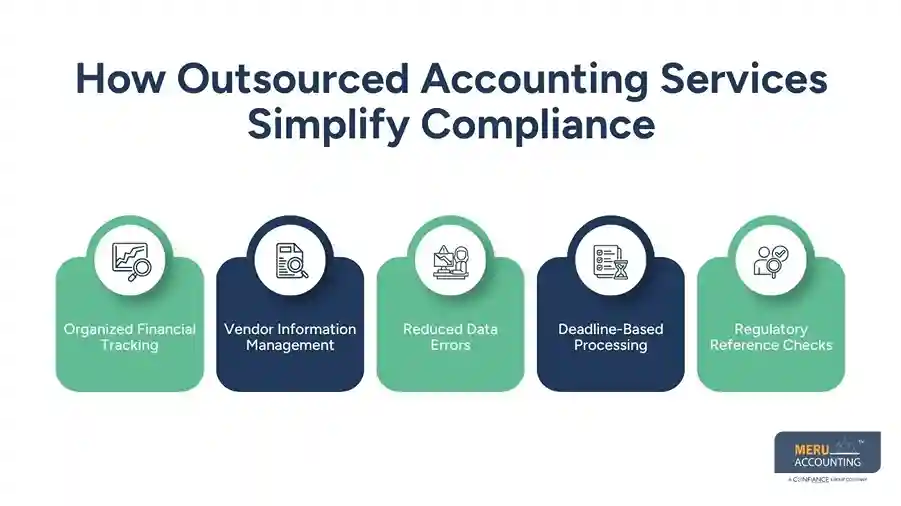
Deadline-Based Processing
Outsourced teams follow fixed schedules, so reporting is completed before deadlines without last-minute stress. Early planning allows sufficient time for review and correction before submission.
Regulatory Reference Checks
Teams regularly refer to official IRS updates available at the Internal Revenue Service IRS official site to ensure compliance standards are followed. Updated regulatory guidance ensures reporting aligns with current tax requirements.
Common Mistakes In Filing 1099 Form And How To Avoid Them
Missing Vendor Details
Incomplete records due to missing W-9 form submissions often lead to reporting issues. Incomplete onboarding records often create gaps during year-end review.
Incorrect Tax Identification Numbers
Wrong tax IDs create rejection or correction notices during filing 1099 form, often requiring time-consuming corrections. Verification of tax details at the start reduces such errors later.
Delayed Preparation
Late data collection increases errors and makes compliance more difficult. Early record preparation keeps reporting work under control.
Wrong Payment Classification
Misclassifying employee and contractor payments affects reporting accuracy. Clear classification rules prevent confusion during financial reporting.
Poor Data Reconciliation
If bank records are not matched properly with vendor data, filing 1099 form becomes inaccurate and may require rework. Regular reconciliation improves accuracy across all payment records.
Step-By-Step Process Outsourced Teams Follow
Vendor Identification
All eligible vendors are identified based on payment type and reporting requirements. Clear categorization helps avoid confusion during year-end reporting.
Collection of W-9 Form
Each vendor submits Form W-9, which is verified before payments are processed. Proper validation of vendor details ensures accurate tax records from the start.
Year-Round Tracking
Payments are recorded throughout the year to ensure complete reporting data. Ongoing tracking reduces the risk of missing transactions during closing.
Data Verification
Payment records are matched with vendor tax details before final preparation. Cross-checking records improves accuracy and reduces reporting errors.
Draft Preparation
Reports are created and reviewed for accuracy before submission. Internal review ensures inconsistencies are corrected before final filing.
Final Submission
Once verified, reports are submitted for filing 1099 form before deadlines to avoid penalties. Timely submission helps avoid penalties and last-minute compliance pressure.
How W-9 Form Collection Supports Accurate Reporting
Vendor Identity Verification
A valid Form W-9 ensures the correct identification of vendors for tax reporting. Clear identity records reduce confusion during payment tracking and review.
Tax ID Accuracy
It provides the correct tax numbers needed for compliance reporting. Accurate tax details improve matching between vendor records and payments.
Error Reduction
Correct vendor data reduces mistakes in reporting and corrections later in the filing 1099 form process. Fewer data gaps lead to smoother review during year-end processing.
Faster Processing
Complete vendor records speed up year-end preparation. Well-organized information reduces time spent on corrections and follow-ups.
Better Data Matching
Accounting teams rely on verified vendor details for accurate reconciliation. Consistent records support cleaner financial alignment across systems.
Why Businesses Choose Meru Accounting
Meru Accounting provides structured bookkeeping and compliance support for businesses handling contractor payments. Their systems ensure smoother execution of the Filing 1099 form through continuous record management instead of a year-end rush.
Strong internal processes ensure payment data remains updated and ready for reporting at any stage of the year. Each vendor is required to submit a W-9 form, which is verified before payments are finalized. This reduces errors and ensures cleaner reporting data throughout the year.
Regular verification of vendor details helps maintain consistency across financial records and reporting cycles. With experience in global accounting operations, Meru Accounting helps businesses maintain accurate financial records and reduce compliance risk without manual pressure. Dedicated review systems and trained teams support accurate reporting and timely completion of compliance tasks.
Our Expert Perspective
In our experience, most reporting issues come from incomplete vendor records and late preparation rather than complexity in the process itself. When W-9 form collection and payment tracking are handled early, contractor reporting becomes more stable and accurate. A consistent bookkeeping routine reduces year-end pressure and lowers correction work significantly.
Key Takeaways
- Contractor payments require proper tax reporting
- Vendor documentation is critical for accuracy
- Structured bookkeeping reduces year-end stress
- Proper records reduce reporting errors
- Organized data improves compliance readiness
FAQs
To file 1099 form for contractors, businesses must collect payment records, verify vendor details through a W-9 form, and report total payments to the IRS before the deadline.
The deadline for submitting the 1099 form is usually January 31 for contractor copies and to the IRS, though certain paper filings may have slightly different dates.
Yes, a W-9 form is required before filing 1099 form because it provides the vendor’s legal name, address, and tax identification number for accurate reporting.
Incorrectly submitting the 1099 form details may lead to IRS penalties, correction notices, or rejected submissions, especially if the form W-9 data is missing or wrong.
Yes, outsourced accounting teams manage records, collect W-9 form details, and prepare accurate filing 1099 form submissions within IRS deadlines.
optional anymore
on running the business