Financial Accounting is the base of every successful business today. It helps record, track, and review all money data. Every sale, expense, or profit is stored in clear records. These records help managers make wise and strong business choices.
With the help of Financial Accounting tools, the process becomes smooth. These tools reduce errors, save time, and give real data. They guide leaders with facts and improve future planning. The right use of tools builds trust, profit, and growth.
The Importance of Financial Accounting Tools
Accurate Records
They give clear and correct Financial Accounting records every time. This helps in avoiding errors that can harm trust.
Check Profit and Loss
Tools show clear profit and loss reports in detail. Managers can find gaps and improve plans quickly.
Build Budgets
They allow building strong budgets with solid data. Budgets become easy to track with real numbers.
Smart Business Choices
Tools support quick and wise business choices always. They help firms reduce risks and grow stronger.
Reduce Errors
They cut down errors in reports and planning using Financial Accounting, improving trust in company data and decisions.
Key Features of Financial Accounting Tools
Easy Data Entry
Financial Accounting Tools make data entry fast and smooth for staff. It reduces mistakes and saves time each day.
Real-Time Reports
Reports are available in real-time without delay. This helps managers make decisions at the right moment.
Cost Tracking
They track costs in detail and avoid waste. This builds control and saves money for growth.
Profit Analysis
Financial Accounting Tools help in profit analysis by comparing income with costs. It guides managers to plan better profit strategies.
Major Financial Accounting Tools Used in Business
QuickBooks
QuickBooks is easy to use for small businesses. It supports invoices, payroll, and tax filing features.
Xero
Xero is a cloud-based tool with a great design. It allows real-time bank sync for smooth work.
Zoho Books
Zoho Books is good for online and global trade. It manages cash flow and invoices with ease.
FreshBooks
FreshBooks is best for freelancers and small firms. It helps with billing, reports, and time tracking.
Wave
Wave is a free tool for smaller firms. It offers reports, payroll, and easy setup features.
Sage
Sage is a strong software used by larger firms. It manages tax, stock, and complex reports smoothly.
Benefits of Using Financial Accounting Tools
Better Decision Making
Clear data supports leaders in making smart choices. It builds confidence in both small and big plans.
Saves Time
Tools make data entry fast and secure. Reports are ready in seconds for managers to check.
Error-Free Reports
They reduce mistakes and improve trust in reports. Reliable records help in safe growth and planning.
Strong Cash Flow
Cash flow is tracked and balanced with ease. This prevents gaps and ensures smooth business operation.
Tax Compliance
Tools prepare data for filing taxes on time. They also keep audit records ready and secure.
Role of Financial Accounting in Management
Budget Planning
In Financial Accounting, budgets are built with clear and correct data. Progress can be tracked against plans every month.
Cost Control
Costs are tracked in detail for better control. This reduces waste and raises company profit levels.
Risk Check
Risks are found early using proper accounting data. Managers can act fast and protect themselves from losses.
Growth Plan
Financial Accounting data supports long-term growth plans. It gives safe areas for new investments.
How Financial Accounting Tools Improve Decisions
Clear Data for Leaders
Tools show income, cost, and trends in detail. Leaders can act quickly and make safe choices.
Helps in Forecasts
They help predict future income and cash flow. This guides firms to plan better for growth.
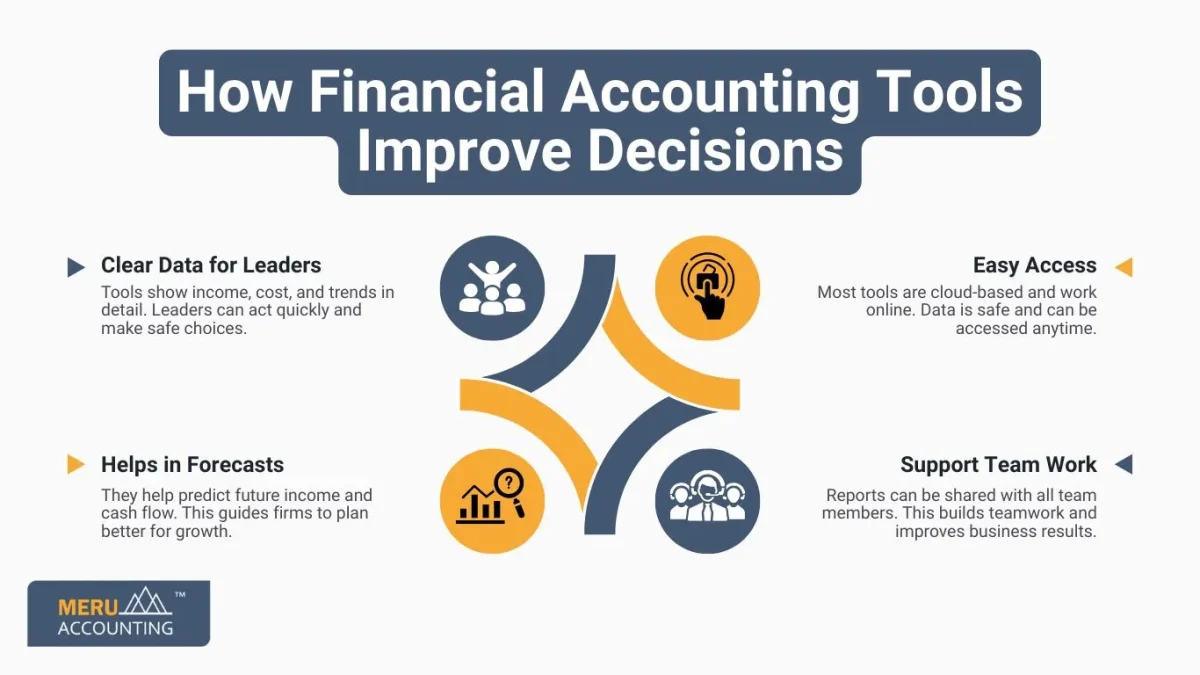
Easy Access
Most tools are cloud-based and work online. Data is safe and can be accessed anytime.
Support Team Work
Reports can be shared with all team members. This builds teamwork and improves business results.
Challenges Without Financial Accounting Tools
Risk of Errors
Without Financial Accounting Tools, manual work brings a high risk of errors. Wrong data may harm trust and cause loss.
Delay in Reports
Without tools, reports take a long time to prepare. Delays stop fast action and planning for growth.
High Costs
Poor tracking often leads to high costs. Lack of control reduces company profit over time.
Missed Tax Deadlines
Late or wrong tax filing invites fines. Firms may lose trust due to poor compliance.
Lack of Clear Data
Without tools, data is not clear or safe. Growth plans fail due to weak information.
Best Practices for Using Financial Accounting Tools
Regular Updates
Always keep Financial Accounting Tools updated with the latest features. Updates also ensure data safety from online risks.
Staff Training
Train staff to use tools in the correct way. It avoids errors and builds strong data use.
Data Backup
Do regular backups of all financial data. This prevents loss during crash or hack events.
Review Reports Often
Check reports on a regular monthly basis. This helps find issues early and take action.
Trends in Financial Accounting Tools
Cloud-Based Systems
Most tools now work online with cloud storage. This makes remote access easy and very secure.
AI Support
AI tools check data faster with great accuracy. They reduce errors and improve business results.
Mobile Access
Tools now have mobile apps for easy use. Managers can check data anytime and anywhere.
Data Security
More focus is given to data security today. Strong systems protect from hacks and online risks.
Financial Accounting Tools for Small Firms
Simple Tools
Small firms need simple and low-cost tools. They support invoices, reports, and tax filing.
Easy Setup
These tools are easy to set up and fast. No special skills are needed for small teams.
Cash Flow Support
Cash flow is managed in a simple way. This helps small firms avoid debt or loss.
Financial Accounting Tools for Large Firms
Complex Features
Large firms need complex Financial Accounting Tools for detailed reports. They track costs, taxes, and staff payroll easily.
Multi-User Access
Tools allow many users to work at once. This helps big teams share and check data.
Strong Security
Large firms need stronger data security always. These tools protect large records from online risks.
Role of Financial Accounting in Daily Business
Daily Sales Records
Financial Accounting tools store all daily sales in clear reports. This helps track profit and growth every day.
Payroll Tracking
Staff payroll is managed with strong records. Errors in salaries are reduced with tools.
Cash Flow Balance
Cash flow is tracked daily without any gaps. Firms can plan daily needs with ease.
Tax Data
All tax data is stored and always ready. This saves time when filing monthly or yearly.
Mistakes to Avoid in Financial Accounting Tools
Delayed Entries
Late entry of data makes reports less useful. Always update entries on time for correct results.
Wrong Use of Features
Not using features in the right way causes waste. Firms must train staff to avoid these mistakes.
Ignoring Security
Ignoring security settings may cause data loss. Always enable safety features in every tool.
No Report Review
Not checking reports makes issues stay hidden. Review helps fix problems at an early stage.
Steps to Choose the Right Financial Accounting Tool
Know Business Size
Pick tools based on business size and need. Small firms need simple tools, not complex ones.
Check Features
Look for features like cash flow and reports. Avoid tools with extra costly and unused features.
Plan Budget
Decide on the budget you want for the tool. Many tools offer low-cost or free plans.
Test Before Buying
Use demo versions to check tool performance. Make sure it is easy for staff to use.
Impact of Financial Accounting on Growth
Better Money View
Accounting shows a clear view of money flow. This improves control and avoids waste in plans.
Smart Cash Plans
Cash is planned with future needs in mind. Firms avoid cash gaps and stay stable.
Profit Control
Costs and income are checked to boost profit. This helps raise the value of the company.
Investor Trust
Clear records help in building investor trust. Firms can attract funds for growth plans.
Role of Technology in Financial Accounting Tools
AI Support
AI tools find errors and trends with speed. They improve accuracy and save staff time.
Cloud Storage
Cloud keeps all data safe in the online space. Teams can access it from any location.
Mobile Apps
Mobile apps make tools handy for leaders. Data is always ready on phone screens.
Automation
Automation helps with payroll, tax, and reports. It cuts errors and builds a smooth workflow.
Future of Financial Accounting Tools
More AI Use
AI will grow more in financial data checks. Reports will become faster and more accurate.
Smart Forecasts
Tools will provide smart and real forecasts. Firms will plan growth with stronger results.
Full Integration
Tools will link with all business systems. This will save time and boost smooth work.
Mobile Growth
Mobile apps will lead the future of tools. Data will be used in real time anywhere.
Financial Accounting and the right Financial Accounting Tools play a vital role in modern management. They reduce risks, save time, and improve profits. Managers can make safe and strong choices with real data. Small and large firms can use these tools for daily tasks and long-term growth.
At Meru Accounting, we provide expert support in Financial Accounting. Our team uses modern Financial Accounting Tools to deliver clear records. We help firms save time, reduce risks, and plan growth. With us, your business can stay secure, compliant, and future-ready. We build trust with accurate data and support your success.
FAQs
- What are Financial Accounting Tools?
They are software that record and report financial data. They help firms track costs and profits easily. - Why are they important for business?
They save time, reduce errors, and improve planning. They also support managers with real-time reports. - Can small firms use these tools?
Yes, small firms can use simple, low-cost tools. They are easy to set up and run. - Do these tools replace accountants?
No, they support but do not replace accountants. Accountants still guide in tax and planning. - Are Financial Accounting Tools safe to use?
Yes, most tools have strong online safety features. They keep data secure from loss or hacks. - Do these tools help in tax filing?
Yes, many tools prepare reports for tax filing. They also keep records ready for audits. - Are they useful for future planning?
Yes, they show trends for better growth plans. Firms can make safer and stronger choices.