
Every business owner wants to make informed decisions that increase profits, control expenses, and maintain financial stability. Without reliable financial information, it becomes difficult to plan for growth or respond to changing business conditions. Financial indicators provide clear measurements that show how a business is performing and where improvements may be needed.
Financial reports such as profit and loss statements, balance sheets, and cash flow statements become more useful when analyzed using financial indicators and key performance indicators.
These measurements reveal financial trends, highlight strengths and weaknesses, and guide better business decisions. Accurate bookkeeping also ensures that the information used for financial planning remains reliable and up to date.
What You Will Learn From This Blog
- What financial indicators are and why they matter.
- How business owners use financial information for daily decisions.
- The most important financial indicators every business should monitor.
- Why financial reports improve decision-making.
- How key performance indicators support operational success.
- Common mistakes businesses make while reviewing financial reports.
- Why professional bookkeeping improves financial accuracy.
- How reliable accounting information supports long-term business growth.
What are Financial Indicators in Accounting?
Financial indicators in accounting are numbers that come from your financial statements. They help you understand your business at a glance. These numbers tell you things like:
- How much profit do you make
- How fast can you collect money from customers
- How well you manage your bills
By checking these indicators, you can spot problems early and keep your business on track.
How Business Owners Use Financial Indicators in Daily Decision-Making
Business owners make financial decisions every day, from managing expenses to planning future investments. Financial indicators provide reliable information for better decisions, while key performance indicators measure progress toward business goals.
Managing Daily Cash Flow
Business owners review cash balances before approving payments or major expenses. Regular cash flow analysis shows whether enough funds are available for daily operations.
Controlling Business Expenses
Expense reports reveal spending patterns and highlight areas where costs can be reduced. Regular reviews keep business expenses under better control.
Setting Sales And Revenue Targets
Sales reports help owners set practical revenue goals. Regular tracking shows whether sales performance is meeting business expectations.
Planning Inventory Purchases
Inventory turnover reports show which products sell quickly and which remain in stock. This information allows owners to purchase inventory more efficiently.
Making Hiring and Investment Decisions
Before hiring staff or buying equipment, owners review profitability and cash flow. These reports show whether the business can comfortably manage additional costs.
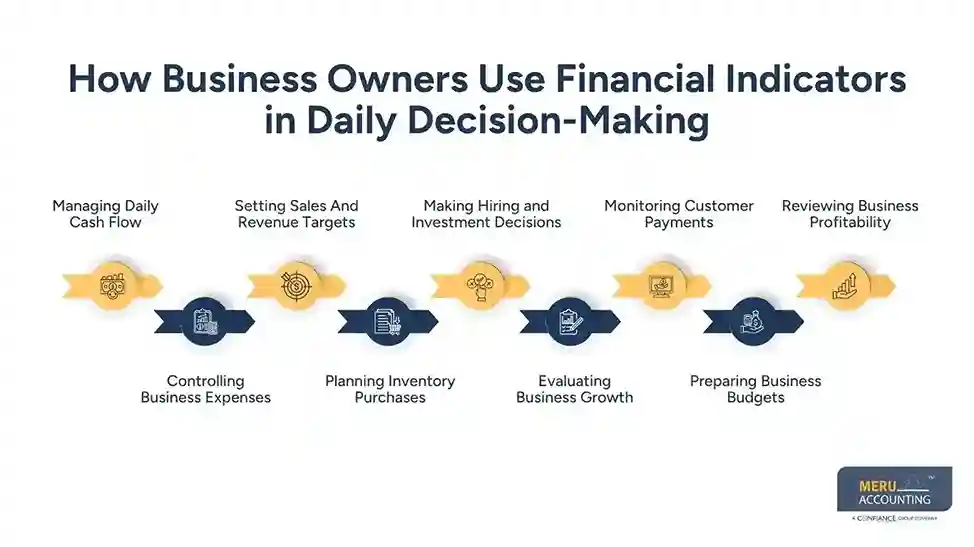
Evaluating Business Growth
Business owners compare current results with previous reporting periods to measure progress. Regular reviews provide a clear picture of business growth and financial performance.
Monitoring Customer Payments
Business owners track outstanding invoices to identify delayed customer payments. Collection reports reveal payment trends and maintain healthy cash flow.
Preparing Business Budgets
Budget planning becomes more accurate when based on recent financial results. Historical data guides realistic income and expense estimates for future planning.
Reviewing Business Profitability
Owners regularly compare profits with operating costs to measure financial success. These financial indicators identify areas that require better cost control or pricing adjustments.
Top Key Financial Indicators Every Business Should Know Know
1. Net Profit Margin
This number shows how much of your sales turn into profit. It is your net profit ÷ your sales × 100.
- High value means you keep more money from each sale.
- Low value means costs are rising or prices are too low.
2. Gross Profit Margin
This shows how well you make goods or sell services before extra costs like rent or bills. It is gross profit ÷ sales × 100.
- Good margin means you make money while selling.
- Low margin means your costs need to go down.
3. Current Ratio
This compares money you have right now to what you owe soon. It is one of the key performance indicators used to measure short-term financial strength.
- Ratio above 1 means you can pay bills easily.
- Ratio below 1 means you may have trouble paying.
4. Quick Ratio
This shows if you can pay bills fast without selling stock. It is (current assets – inventory) ÷ current liabilities.
- Good for businesses with slow-moving stock.
- If low, you may need to save more money.
5. Accounts Receivable Days (AR Days)
This tells how many days it takes to get paid by customers. Lower days mean cash comes in fast.
- Higher days mean cash is stuck in unpaid bills.
6. Accounts Payable Days (AP Days)
This tells how many days you take to pay bills.
- Higher days mean you manage cash well.
- But too high means you pay suppliers late.
7. Inventory Turnover
This shows how often you sell all your stock in a year. It is cost of goods sold ÷ average inventory.
- High means stock moves fast.
- Low means goods sit too long, using money.
8. Return on Assets (ROA)
This shows how well your business uses what it owns. It is net profit ÷ total assets × 100.
- Higher means you use assets well.
- Lower means assets may be underused.
9. Debt-to-Equity Ratio
This shows how much debt you have compared to what you own. It is total debt ÷ owner’s equity.
- High ratio means you borrow a lot.
- Low ratio means you rely on your own money.
10. Cash Flow from Operations
This tells how much money your business makes from its normal work.
- If you have positive cash flow, it means you make more money than you spend.
- If you have negative cash flow, it means you are spending more money than you are earning.
Importance of Financial Indicators
Spot Problems Early
When you look at your key financial indicators often, you can catch small problems before they turn big. For example, if your money is going out faster than it comes in, you will see it in your reports. This helps you take action fast.
Plan for the Future
Financial indicators in accounting are like signs on a road. You can see if your business is growing, staying the same, or going down. With this, you can plan to save money, hire help, or expand your work.
Make Smart Choices
You will know when it’s the right time to buy new tools, open a new store, or take a loan. These financial reports and key performance indicators provide reliable information for making better business decisions.
Talk With Bankers And Investors
If you want a business loan or need investment, lenders and investors will review your financial reports. Strong financial results increase confidence in your business and future plans.
Set Goals And Check Progress
Business owners can set clear goals such as increasing profits or reducing expenses. Regular report reviews show whether the business is moving toward those goals.
Stay On Budget
Monitoring financial reports makes it easier to compare actual spending with planned budgets. Early action keeps costs under control and prevents unnecessary overspending.
Improve Teamwork
Sharing business goals with employees creates a common direction for the entire team. Clear performance information encourages better coordination and accountability.
Know What’s Working
Financial reports show which products, services, or business activities generate the best returns. This information allows owners to focus on the most profitable opportunities.
Save Time and Worry
Instead of guessing, you can look at your numbers and know what’s going on. It gives peace of mind. You feel more in control of your business.
Be Ready for Taxes
When you check your financial statements all year, it’s easier to file your taxes. You don’t have to rush at the end. Everything is neat and ready.
How Key Performance Indicators Work Alongside Financial Indicators
Business owners rely on different measurements to understand business performance from both financial and operational perspectives. Using the right data allows better planning, smarter decisions, and steady business growth.
Measuring Business Goals
Key performance indicators measure progress toward revenue, customer, productivity, and profitability goals. Regular reviews show whether the business is moving in the right direction.
Tracking Operational Performance
Daily activities such as delivery time, customer service, and employee productivity affect overall business results. Monitoring these areas highlights opportunities for better operational efficiency.
Supporting Better Budget Planning
Historical financial data makes budgeting more accurate and realistic. Financial indicators provide valuable information for estimating future income and expenses.
Evaluating Department Performance
Different departments contribute to business success in different ways. Comparing measurable results helps management identify strengths and areas that need attention.
Encouraging Continuous Business Improvement
Regular performance reviews identify trends before they become major concerns. Consistent monitoring allows business owners to make timely operational and financial decisions.
optional anymore
on running the business
Common Mistakes Businesses Make When Using Financial Indicators
Looking At One Number Alone
One financial measurement rarely tells the complete story. Business owners should review several financial indicators together before making important decisions.
A complete financial review produces more balanced conclusions.
Ignoring Regular Reviews
Financial reports lose value when reviewed only once or twice a year. Monthly analysis allows businesses to respond quickly to changing financial conditions.
Regular monitoring also keeps key performance indicators aligned with business goals.
Using Incorrect Financial Data
Financial analysis depends on accurate bookkeeping. Missing transactions, duplicate entries, or incorrect account classifications reduce the reliability of every report.
Organized accounting records produce dependable financial information.
Comparing Different Reporting Periods Incorrectly
Seasonal businesses often experience natural changes throughout the year. Comparing different reporting periods without considering seasonal factors may produce misleading conclusions.
Owners should compare similar periods whenever possible.
Focusing Only On Revenue
Higher sales do not always produce higher profits. Rising expenses or weak cash flow may reduce overall financial performance even when revenue increases.
Business owners should review multiple financial indicators before evaluating success.
Ignoring Industry Benchmarks
Comparing business performance with industry averages provides valuable context. Benchmarks allow owners to identify strengths and areas requiring improvement.
Many professional accounting firms include benchmarking as part of financial reporting.
How Professional Bookkeeping Makes Financial Indicators More Reliable
Reliable financial analysis begins with accurate bookkeeping. Every financial report depends on properly recorded transactions, reconciled bank accounts, and organized financial records.
Accurate Financial Records
Professional bookkeepers record income, expenses, payroll, and bank transactions correctly. Accurate records create dependable financial indicators for decision-making. Reliable bookkeeping also reduces reporting errors.
Regular Bank Reconciliation
Reconciling bank accounts confirms that accounting records match actual bank balances. This process identifies missing transactions and corrects discrepancies. Accurate reconciliation increases confidence in financial reports.
Timely Financial Reporting
Monthly financial reports provide business owners with current information instead of outdated figures. Timely reporting allows faster responses to financial changes. Current reports also keep key performance indicators meaningful throughout the year.
Consistent Expense Classification
Correct expense categories make profit analysis much more reliable. Proper classification also simplifies budgeting and tax preparation. Consistent reporting creates stronger financial comparisons between reporting periods.
Better Financial Forecasting
Historical accounting records provide the foundation for future financial planning. Reliable reports make budgeting and forecasting more accurate. Business owners can prepare for future opportunities with greater confidence.
Compliance With Accounting Standards
Professional bookkeeping follows accepted accounting practices and maintains organized financial documentation. This creates reliable reports for lenders, investors, and tax authorities. Good compliance also strengthens business credibility.
Why Choose Meru Accounting?
Every financial decision becomes easier when business owners have accurate and up-to-date financial information. At Meru Accounting, we help businesses maintain organized bookkeeping, prepare reliable financial reports, and monitor important financial indicators that support confident decision-making.
Our experienced accounting professionals provide timely financial reporting, bank reconciliations, expense tracking, budgeting support, and performance analysis. These services allow business owners to understand profitability, cash flow, and overall financial health without spending valuable time managing complex accounting tasks.
Whether you operate a startup, a growing company, or an established business, our outsourced bookkeeping and accounting services provide dependable financial data that helps you plan for sustainable growth.
Our Expert Perspective
Strong financial decisions always begin with accurate bookkeeping. Many businesses focus only on sales or profit without reviewing cash flow, working capital, key performance indicators, or overall financial health. This often leads to delayed decisions and unnecessary financial risks.
At Meru Accounting, we believe businesses achieve better results when financial reports are reviewed consistently rather than only during tax season. Reliable bookkeeping, timely reconciliations, and regular reporting allow business owners to identify opportunities early, control expenses, improve profitability, and make informed decisions based on accurate financial information.
Our accounting professionals help businesses transform financial data into meaningful business insights that support confident planning and long-term growth.
Key Takeaways
- Financial indicators measure the financial health of a business.
- Regular financial analysis supports informed business decisions.
- Cash flow, profitability, liquidity, and debt ratios deserve continuous monitoring.
- Key performance indicators complement financial analysis by measuring operational performance.
- Accurate bookkeeping improves the reliability of financial reports.
- Monthly financial reviews help identify problems before they become serious.
- Financial reporting supports budgeting, forecasting, and investment planning.
- Professional accounting services improve decision-making and financial confidence.
FAQs
Financial indicators are measurements calculated from financial statements that help business owners evaluate profitability, liquidity, efficiency, and overall financial performance.
They provide reliable information for making informed decisions, controlling expenses, improving cash flow, and planning future business growth.
Most businesses benefit from reviewing financial reports every month. Regular reviews help identify financial issues before they become major problems.
Yes, even small businesses can strengthen budgeting, manage cash flow, reduce unnecessary expenses, and make better financial decisions by reviewing their financial reports regularly.
Professional bookkeeping keeps financial records accurate, ensures transactions are properly recorded, reconciles bank accounts, and produces dependable financial reports for analysis.