
Managing money in a small company can feel hard. Owners often face challenges in tracking bills, payments, and staff salaries. A virtual bookkeeper can handle all accounts remotely with care. This helps business owners save time and avoid mistakes.
Small businesses rarely have full-time staff for finance work. A virtual bookkeeper keeps records up-to-date and clear, fulfilling the role of an online finance manager. They use cloud tools and online apps to track cash. Business owners can focus on growth without worrying about accounts.
Why a Small Company Needs a Virtual Bookkeeper
Focus on Main Work
Small company owners often have many daily tasks. A virtual bookkeeper manages invoices, bills, and payroll clearly. This lets owners spend time on products and services.
Reduce Errors in Accounts
Errors in bills or payroll can cause stress and loss. A remote bookkeeper ensures records are accurate, giving oversight to an online finance manager.
Timely Financial Reports
Many small companies lack clear cash flow reports. A virtual bookkeeper, as an Online finance manager, creates monthly and quarterly summaries for clarity.
Cost-Effective Solution
Hiring full-time accountants is expensive for small businesses. A remote bookkeeper is affordable and saves long-term costs.
Benefits of Hiring a Virtual Bookkeeper
Save Money
Remote bookkeeping costs less than hiring a full-time accountant. Companies save on salaries, benefits, and office space.
Flexible Work Hours
A virtual expert works according to your schedule. Reports, payroll, and payments are handled on time.
Expert Knowledge
Remote bookkeepers know accounting rules and tools well. Small businesses gain professional experience without hiring in-house staff.
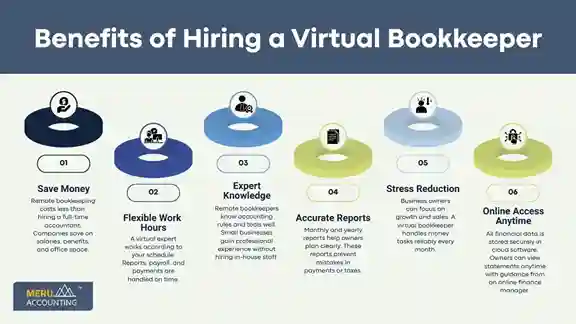
Accurate Reports
Monthly and yearly reports help owners plan clearly. These reports prevent mistakes in payments or taxes.
Stress Reduction
Business owners can focus on growth and sales. A Remote bookkeeper handles money tasks reliably every month.
Online Access Anytime
All financial data is stored securely in cloud software. Owners can view statements anytime with guidance from an online finance manager.
How a Virtual Bookkeeper Works for Small Companies
Record Daily Transactions
Every sale, purchase, and payment is logged carefully. Accounts are kept correct without delays or errors.
Bank Reconciliation
Bank statements are compared with company records daily. This ensures no payment is missed or wrongly recorded.
Track Invoices and Payments
Pending and overdue invoices are checked carefully. Virtual bookkeepers make sure money comes in on time.
Handle Payroll
Staff salaries, benefits, and deductions are managed fully. Payroll is done without mistakes or delays each month.
Prepare Financial Reports
Reports are made monthly and yearly for clarity. They give owners a clear view of the company’s money.
Online Finance Manager Role
A remote bookkeeper acts as an Online finance manager remotely. They provide updates and advice without being in the office.
Virtual Bookkeeper vs Traditional Accountant
Cost Comparison
Virtual bookkeepers cost less than full-time accountants. Small businesses save money without losing quality.
Work Location
Remote bookkeepers work from anywhere online. Traditional accountants need an office presence most of the time.
Flexibility
Remote bookkeepers adjust to your business schedule. Traditional accountants may have strict working hours.
Report Speed
Reports from remote bookkeepers are delivered faster. Traditional accountants often take longer to finish reports.
Technology Use
Cloud software and apps are used by remote bookkeepers. Traditional accountants may rely on paper or older systems.
Choosing the Right Virtual Bookkeeper
Check Experience
Look for professionals with small business experience. Experienced remote bookkeepers understand simple and complex financial tasks.
Software Knowledge
Ensure they can use cloud accounting tools well. This helps in faster and correct record keeping.
References and Reviews
Ask for client reviews or references. Positive feedback shows trustworthiness and good work quality.
Schedule Flexibility
Confirm they can meet deadlines every month. Flexible experts ensure smooth payroll and reporting.
Data Security
Financial data is sensitive and private. A reliable remote bookkeeper uses secure software and encryption.
Technology Used by a Virtual Bookkeeper
Cloud Accounting Software
All company data is stored safely in the cloud. Owners can check their records from any device quickly.
Payment Tracking Tools
Invoices and payments are tracked using simple apps. This keeps cash flow smooth each month without issues.
Payroll Software
Salaries, benefits, and taxes are paid on time. Staff get their pay correctly and without any delays.
Spreadsheet Backup
Backup sheets keep all financial data safe and clear. They give extra help to prevent mistakes or loss.
Reporting Dashboards
Dashboards show income, costs, and cash flow fast. Owners can view their money status clearly each month.
Signs Your Small Company Needs a Virtual Bookkeeper
Late Monthly Closing
Accounts are hard to close on time. This delays reports and financial planning for growth.
Mistakes in Bills
Errors in payments or invoices are common. A remote bookkeeper ensures accurate billing and tracking.
Payroll Problems
Staff may face late or wrong payments. Payroll mistakes affect motivation and trust in business.
No Regular Reports
Without reports, owners cannot track cash flow. Virtual bookkeeping provides clear summaries monthly.
Owner Overwork
Owners spend too much time on money tasks. Remote experts reduce workload and save time.
Cost of Hiring a Virtual Bookkeeper
Affordable Plans
Hourly or monthly options fit small business budgets. Outsourcing reduces long-term accounting costs.
Task-Based Pricing
Price depends on tasks and workload. More complex work may cost slightly more.
No Extra Office Cost
Remote work eliminates the need for office space. Savings come from fewer salaries and overhead.
Long-Term Savings
Reducing errors avoids fines and penalties. Investment in a remote bookkeeper pays off quickly.
A virtual bookkeeper helps small businesses track money fast. They keep payroll, bills, and reports clear and simple. Business owners save time and avoid errors with help.
Meru Accounting offers skilled virtual bookkeeping for small businesses. Our certified team manages accounts, invoices, and payroll carefully. We ensure all records are accurate and safe. Partner with Meru Accounting to maintain clear finances daily. We track cash, provide reports, and improve business planning.
FAQs
- What is a remote accounting expert for small businesses?
They track money, bills, and staff pay from anywhere. They give clear accounts without needing full-time office staff. - How can a remote accounting service improve small business finances?
They check cash, bills, and costs each month. This helps owners make smart plans and choices. - Why hire a virtual bookkeeper instead of in-house staff?
It saves money and keeps accounts right each month.
Small firms avoid extra pay and office costs. - Can an online bookkeeping service handle payroll for small companies?
Staff pay, taxes, and benefits are done without mistakes. Workers get paid on time, keeping work smooth. - How does an online accounting professional track invoices and payments?
Due and unpaid bills are checked each day. They also send notes to get money on time. - Can a remote accounting expert also act as an online finance manager?
Yes, they run accounts online and give clear reports. They help owners see where money comes and goes. - How much does hiring a remote accounting professional cost?
Price depends on tasks, bills, and report needs. Small firms can pick a plan that fits them. - What software do remote bookkeeping services use for small businesses?
Cloud tools, payroll apps, and invoice trackers are used. These keep accounts safe and easy to check online. - Can remote bookkeeping help with tax record preparation?
They make records ready to file taxes on time. This helps firms avoid fines or late fees. - How quickly can a virtual start for a business?
Setup and training take just a few short days. Work can start once accounts and access are shared. - What benefits does a digital bookkeeping service provide to small companies?
Better records, clear cash flow, and saved time. Owners can focus more on work and growth. - How can a virtual bookkeeper improve cash flow management?
They track cash in and out each month. Owners get clear info to avoid running out of money. - Are online bookkeeping solutions suitable for startups or small businesses?
Yes, these services are cheap and easy to use. They work well as the business grows and changes. - Can a remote accounting expert create reports for audits?
Monthly and yearly reports are made clear and fast. Reports are ready to show auditors or lenders. - How do small companies choose the right bookkeeping service?
Check skill, software knowledge, reviews, and work hours. Good talk and trust help make a long-term choice. - Is financial data secure with a digital bookkeeping solution?
Cloud tools and codes keep all accounts safe. Backups make sure no data is lost by accident. - How does a remote accounting professional save time for owners?
They handle bills, payroll, and reports each month. Owners can focus on clients, growth, and tasks. - Can digital bookkeeping reduce accounting errors?
Daily checks of bills, payroll, and costs stop mistakes. Mistakes are caught before they hurt the business. - How often are financial records updated by online bookkeeping services?
Accounts are updated each day, week, and month. This keeps reports right and shows real cash flow. - What tasks can small businesses outsource to a virtual bookkeeper?
Bills, payroll, payments, reports, and cash checks are done. Owners can also give budgeting and cost tracking tasks.