Starting a small business is exciting, but the first tax season can feel confusing and stressful. Many new business owners try to handle everything themselves, only to realize later that taxes, records, and compliance are not as simple as they thought. That’s why it is smart to hire an accountant for small business before your first tax season arrives.
When you hire an accountant early, you set up your business correctly from day one. You avoid costly mistakes, save time, and feel more confident about your finances. The right accountant will guide you through small business accounting and make sure you are prepared for tax season with accurate records and the correct filing structure.
What You Will Learn From This Blog
In this blog, you will learn:
- Why it’s important to hire an accountant for small business early
- How an accountant helps you prepare for your first tax season
- Common tax mistakes new businesses make
- How small business accounting prevents tax problems
- What to look for when hiring an accountant
- Questions to ask before you hire
A Simple Guide to Getting Started with an Accountant
Understanding Small Business Accounting Before Your First Tax Season
When you start a business, you may think accounting is just tracking income and expenses. But small business accounting is more than that. It includes:
- Recording sales and purchases
- Tracking invoices and payments
- Managing payroll (if you have employees)
- Setting up correct tax categories
- Preparing financial statements
- Tracking assets and liabilities
Most new business owners underestimate how much time accounting takes. Without a proper system, it becomes hard to track your money, and you may miss important deductions or deadlines.
That’s why it is better to hire an accountant for small business before your first tax season. They help you set up a clean system that makes tax filing easier and prevents mistakes.
Top Reasons to Hire an Accountant for Small Business Early
Here are some top reasons to hire a small business tax accountant:
Avoid Costly Mistakes
New business owners often make simple errors like mixing personal and business expenses, missing deductions, or recording transactions incorrectly. These mistakes can lead to penalties, audits, and extra fees. Hiring an accountant early helps prevent these problems. If you hire an accountant for small business early, you’ll avoid costly errors that can hurt your growth.
Get the Right Business Structure
Business structure impacts taxes and legal responsibilities for owners, which is why many founders hire an accountant for small business to choose the best structure. Sole proprietorships, LLCs, partnerships, or corporations have different rules. If you hire an accountant for small business, they can help choose the right structure that saves taxes and reduces risk.
Save Time and Focus on Growth
Running a business takes time and effort daily. Handling accounting alone can consume hours on tasks that may not be fully understood, which is why business owners often hire an accountant for small business. Hiring an accountant frees up time to focus on sales, marketing, and business growth.
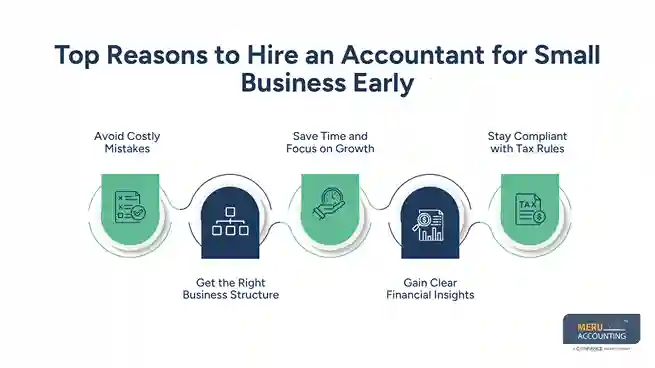
Gain Clear Financial Insights
A good accountant does more than file taxes. They provide reports that show how the business is performing. These insights help make better decisions about pricing, hiring, and spending.
Stay Compliant with Tax Rules
Tax rules change frequently every year. Missing a rule can lead to penalties and extra taxes.
If you hire an accountant for small business, you reduce the risk of penalties and missed filings. They ensure your filings meet the latest tax rules.
How an Accountant Helps You Prepare for Your First Tax Season
Here’s how a small business tax accountant can help in your first tax season:
Set Up Your Accounting System Correctly
Before the first tax season, an accountant sets up a clean system for small business accounting. This includes organizing the chart of accounts, tracking expenses properly, and ensuring records are easy to review.
Organize Your Documents
Tax filing requires proof for income and expenses. An accountant helps keep invoices, receipts, bank statements, and other documents organized.
Review Your Financial Records
An accountant reviews financial records to find mistakes or missing entries. This helps avoid problems during tax filing.
Identify Tax Deductions
When you hire an accountant for small business, you can maximize deductions and reduce taxes. An accountant identifies deductions that apply to the business, such as:
- Business expenses
- Home office expenses
- Vehicle expenses
- Equipment and supplies
- Marketing and advertising
- Travel expenses
Prepare and File Your Taxes
If you hire an accountant for small business, your first tax season becomes smooth and stress-free. An accountant prepares returns accurately and submits them on time.
Common Tax Mistakes New Small Businesses Make
Mixing Personal and Business Finances
One of the biggest mistakes is using the same bank account for personal and business expenses. This makes small business accounting confusing and can lead to errors.
Missing Deductions
Many new business owners do not claim deductions because they are unsure what qualifies. This increases your tax bill unnecessarily.
Not Tracking Receipts
Without receipts, you cannot prove your expenses. This can lead to disallowed deductions during an audit.
Incorrect Business Structure
Choosing the wrong business structure can increase your taxes. An accountant can help you select the right structure from the beginning.
Not Paying Estimated Taxes
If you expect to owe tax, you may need to pay estimated taxes throughout the year. Missing these payments can lead to penalties.
Not Understanding Sales Tax Rules
If you sell products, you may need to collect and pay sales tax. Rules vary by state and product type. An accountant can help you stay compliant.
How Small Business Accounting Prevents Tax Problems
When you hire an accountant for small business, you gain accuracy and peace of mind.
Clear Records Make Tax Filing Easier
When books are organized, tax filing becomes simple. An accountant can prepare accurate reports quickly, saving time and money.
Avoid Penalties
Accurate records help file on time and correctly. This reduces the risk of penalties or audits.
Improve Cash Flow
Tracking finances properly shows when money is coming in and going out. This helps plan for taxes, payroll, and business expenses.
Build Trust with Banks and Investors
Clean accounting records help secure loans or investments. Banks and investors want to see accurate financial statements.
Tax Planning Strategies Offered by Small CPA Firms
- Small CPA firms create tax strategies aligned with your business goals to reduce liabilities.
- Expert accountants analyze your financial situation and recommend approaches that help minimize taxes legally and efficiently.
- Choosing the right tax structure is essential for tax benefits. Guidance on operating as a sole proprietorship, LLC, or corporation ensures maximum savings and compliance.
- Tax credits and incentives are identified to maximize savings. Professional accountants make sure the business takes full advantage of available opportunities.
- Income and expenses can be planned to defer taxes. Deferring certain taxes helps manage cash flow and maintain financial stability throughout the year.
- Quarterly reviews prevent unexpected tax bills. Regular monitoring ensures strategies stay on track and adjustments can be made when needed.
- Year-end strategies help minimize tax burdens. Planning at the close of the fiscal year ensures the business benefits from every legal tax-saving opportunity.
Ensuring Compliance: How CPA Firms Help Small Businesses Stay Legal
Regulatory Filings
Small CPA firms ensure all required federal, state, and local filings are completed on time. Meeting these deadlines protects businesses from fines and legal complications. Proper documentation also makes future reporting and audits much easier.
Sales and Payroll Taxes
Payroll processing and sales tax compliance are carefully managed to prevent penalties. Accurate tax handling ensures employees are paid correctly and customer transactions are properly recorded.
Audit Support
A CPA firm for small businesses provides guidance if the business faces an audit. Expert support helps prepare necessary documents and ensures the audit process is handled efficiently.
Employment Law Compliance
Accountants offer guidance on labor laws, wages, and benefits reporting. Compliance protects the business from potential disputes and legal challenges while maintaining fair employee practices.
Internal Controls
Internal controls are established to prevent fraud and errors. Strong controls also improve financial record accuracy and provide clear oversight of company operations.
Keeping Up With New Laws
Regular updates from accountants help businesses stay compliant with changing laws.
Staying informed allows businesses to adapt quickly and avoid unexpected compliance issues.
The Importance of Financial Reporting for Growth
- A CPA firm for small business prepares detailed reports showing profits, losses, and cash flow trends.
- Financial reports guide small business owners in creating realistic budgets.
- Accurate reports reveal areas for cost reduction and revenue growth.
- Well-prepared financial statements help secure loans and attract investors.
- Small CPA firms track key performance indicators for informed decision-making.
- Financial reporting helps identify when and how to expand the business safely.
Managing Cash Flow and Budgeting With a CPA Firm for Small Business
Cash Flow Forecasting
A CPA firm for small businesses predicts cash needs to prevent shortages. Accurate forecasting ensures the business can meet its obligations at all times.
Expense Management
Analysis of spending patterns helps identify cost-saving opportunities. Reducing unnecessary expenses improves overall profitability.
Revenue Monitoring
Accountants track revenue trends to maintain steady cash flow. Monitoring income helps businesses plan for growth and investments.
Budget Creation
Small CPA firms develop practical budgets tailored to business goals. Budgets provide a clear roadmap for managing finances effectively.
Debt Management
Guidance on managing loans and credit prevents financial strain. Proper debt handling ensures long-term business stability.
What to Look for When You Hire an Accountant for Small Businesses
If you plan to hire an accountant for small business, here are the qualities to look for:
Experience with Small Businesses
Make sure the accountant has experience working with small businesses. They should understand common challenges and tax rules for new businesses.
Knowledge of Your Industry
Different industries have different tax rules. An accountant who understands your industry will provide better guidance.
Clear Communication
Your accountant should explain things in simple language. You should feel comfortable asking questions.
Strong Track Record
Ask for references or reviews from other clients before you hire an accountant for small business. This helps you know the accountant is reliable.
Affordable and Transparent Pricing
Choose an accountant with clear pricing. Avoid hidden fees or unclear billing methods.
Questions to Ask Before Hiring an Accountant
If you hire an accountant for small business, these questions will help you choose the right one.
- Do you have experience with small business accounting?
- Do you work with businesses in my industry?
- What services do you provide?
- How do you charge fees?
- How do you communicate with clients?
- Can you help me set up my accounting system?
- Do you offer tax planning throughout the year?
- Will you prepare and file my taxes?
- How often will you review my financial records?
- Do you offer support if I have questions during the year?
How to Get Started: Hiring an Accountant for Small Business
Getting started with an accountant is easy if you follow these steps:
Step 1: List Your Needs
Write down what you need help with. For example:
- Bookkeeping
- Tax filing
- Payroll
- Financial reports
- Tax planning
Step 2: Ask for Recommendations
Ask other business owners, friends, or online groups for referrals when you hire an accountant for small business.
Step 3: Interview 2–3 Accountants
Meet with a few accountants and ask the questions listed above.
Step 4: Review Their Pricing and Services
Choose an accountant who offers the services you need at a price you can afford.
Step 5: Set Up Your Accounting System
Once hired, your accountant will help you set up your system and start tracking your finances correctly.
Benefits of Outsourcing Accounting to Small CPA Firms
Cost Savings
Outsourcing to a CPA firm for small business is more cost-effective than hiring full-time staff. Businesses save on salaries, benefits, and training costs.
Access to Expertise
Small businesses gain access to skilled accountants without extensive training costs. Expert knowledge ensures accurate and reliable financial management.
Focus on Core Activities
Owners can focus on sales, marketing, and operations while accountants handle finance. This allows more time to grow the business efficiently.
Scalable Services
Small CPA agencies provide services that grow with your business. Services can expand as needs increase without hiring additional staff.
Improved Accuracy
Professional accountants reduce errors and improve data reliability. Accurate records support better financial decision-making.
Timely Reporting
Outsourced accounting ensures financial statements are delivered on schedule. Timely reporting helps businesses stay informed and compliant.
Why Choose Meru Accounting?
At Meru Accounting, we understand the challenges new small business owners face. Our comprehensive accounting services establish a correct and compliant financial system.
We support you throughout your first tax season to ensure accurate filing and timely compliance. Our specialized small business bookkeeping and accounting services help maximize deductions and optimize tax outcomes.
Here’s how Meru Accounting supports your business:
- Personalized guidance is provided for new business owners.
- Clean and accurate bookkeeping is maintained consistently.
- Tax planning and filing support is offered throughout the year
- Regular financial reports are delivered to help with decision-making.
- Clear communication and ongoing support are ensured at all times.
- Affordable pricing is offered with transparent fee structures.
When you hire an accountant for small business with Meru Accounting, you get peace of mind and a strong financial foundation for growth. Contact Meru Accounting today for a tailored small business accounting solution and clear, reliable support.
Key Takeaways
- Hiring an accountant early helps you avoid mistakes and penalties.
- Small business accounting is more than tracking income; it includes planning, compliance, and reporting.
- An accountant can help you choose the right business structure and maximize deductions.
- Proper accounting helps you stay organized and prepared for your first tax season.
- Meru Accounting provides expert support for new business owners, helping you grow with confidence.