
Larger transactions are carried out on a daily basis in this industry. Majorly, it includes guest payments, supplier invoices, payroll, and operating expenses. Without proper productivity with hospitality bookkeeping, these transactions can become hard to track. Standardized processes help to maintain accurate records for faster management.
Suitably managed accounts payable and receivable ensure timely and accurate payments. This article explains how hospitality bookkeeping is productive with growing changes and competition.
What You Will Learn From This Blog
- About the role of hospitality bookkeeping in hotel finance.
- Learn how standardized processes improve accounts payable and receivable.
- The most common bookkeeping challenges in hotel chains.
- Explore best practices for consistent financial records.
- Related automation supports hotel accounting accuracy.
- Well-centralized bookkeeping improves reporting.
- Understand why compliance matters in hospitality accounting.
- Discover how expert bookkeeping services support growing hotel businesses.
What Is Hospitality Bookkeeping?
Hospitality businesses handle more financial activity daily and with changing market requirements. Various involved activities with revenue and vendor payments create continuous accounting work. Hospitality bookkeeping helps with organizing these financial records and keeps every transaction systematic and accurate.
Managing Daily Financial Transactions
Hotels receive payments from various sources as per daily operations. These include online travel agencies, restaurants, spas, and various other segments. There is a need for correct recording of transactions consistently.
Accurate bookkeeping prevents missing entries. It also helps finance teams prepare reliable reports that help with precision.
Supporting Accounts Payable and Receivable
Efficient accounts payable processes ensure vendors receive payments on time. This helps ensure proper payments are processed.
This supports good client relations and reduces payment disputes. It also gives management a clear view of outstanding balances and other concerns with ease.
Creating Standard Financial Procedures
Large hotel chains often operate multiple properties. Each location may process thousands of transactions every month. Standard bookkeeping procedures help to ensure consistency.
Consistent methods improve reporting quality and simplify financial consolidation across locations.
Why Hotel Chains Need Standardized Bookkeeping
Growing hotel groups require financial consistency with productivity. Standardized hospitality bookkeeping helps maintain reliable accounting records.
Maintaining Consistent Financial Records
Different accounting methods create complexity, with increased issues and errors. One hotel may classify expenses differently from another. Such differences can affect financial analysis.
Standard bookkeeping policies ensure transactions follow identical accounting standards, which helps with various other processes.
Improving Cash Flow Visibility
Cash flow changes daily in hospitality businesses. There are frequent payment arrivals while supplier invoices continue throughout the month.
Accurate accounts payable records allow finance managers to monitor available cash, which helps with further planning.
Supporting Better Budget Planning
Reliable financial records improve and enhance accuracy in budgeting. Various data become easier to compare across different reporting periods.
This helps with seasonal trends and allocating resources with greater confidence.
How Hospitality Bookkeeping Improves Accounts Payable and Receivable
Effective hospitality bookkeeping strengthens financial control with well organizing payment cycles and customer collections. Standardized processes reduce delays that help with accuracy.
Recording Customer Payments Accurately
Guest payments come from several channels. Some guests pay immediately, while others pay later.
Proper bookkeeping records every payment correctly. This prevents outstanding balances from remaining unresolved that helps with client satisfaction.
Strengthening Internal Financial Controls
Hotels process high transaction volumes with growing services. Inaccurate controls increase the risk of accounting errors along with unauthorized payment issues.
Standard approval procedures improve oversight. Multiple review levels also reduce financial risks, which helps greatly.
Reducing Manual Errors
Manual bookkeeping often creates posting mistakes and missing invoices. These issues affect financial reports and increase correction work.
Modern hospitality bookkeeping combines skilled professionals with accounting software to reduce various common errors and problems while improving accuracy in reports.
Common Challenges Hotel Chains Face
Even experienced finance teams face accounting challenges. There are various levels of complexity to face daily.
High Transaction Volumes
Hotels process reservations, restaurant sales, event payments, and vendor invoices every day. Larger hotel chains may record thousands of transactions each month.
Without structured hospitality bookkeeping, there can be increased backlogs. These delays affect reporting accuracy, along with visibility in finances.
Multiple Revenue Channels
Revenue arrives from direct bookings, travel agencies, corporate clients, online platforms, restaurants, and additional guest services.
Every payment source requires accurate recording. Proper accounts payable procedures ensure accuracy with transactions at all levels.
Payment Timing Differences
Guests often pay before arrival, during their stay, or upon invoice receipt. Vendors also have different terms and procedures involved.
The teams involved with bookkeeping must monitor these timing differences carefully. Accurate scheduling supports stronger cash flow management and reduces overdue balances.
Compliance Requirements
Hotels must maintain complete financial records for audits, taxation, and financial reporting. Missing documentation enhances risks.
Standard bookkeeping procedures help maintain organized records efficiently.
How Technology Strengthens Hospitality Bookkeeping
Technology supports consistent accounting across every hotel property. It reduces manual work and improves reporting accuracy. Combined with skilled professionals, hospitality bookkeeping becomes more efficient and easier to manage.
Providing Real-Time Financial Information
Finance teams need current financial data for better decisions. Delayed reporting can affect purchasing, budgeting, and cash planning.
Modern bookkeeping systems provide updated information throughout the day. Managers can review outstanding invoices, receivables, and available cash whenever required.
Improving Financial Reporting Accuracy
Accurate reports depend on complete financial records. Missing entries or incorrect postings reduce reporting quality.
Well-managed hospitality bookkeeping ensures transactions are recorded correctly before reports are prepared. This improves monthly reviews and supports informed business decisions.
optional anymore
on running the business
Best Practices for Standardizing Accounts Payable and Receivable
Successful hotel chains follow consistent accounting practices across every location. These methods improve efficiency and reduce unnecessary corrections. Strong hospitality bookkeeping supports these standards every day.
Create Standard Approval Workflows
Every supplier invoice should follow the same approval process. This reduces confusion and prevents unauthorized payments.
Clearly defined workflows also improve accounts payable by keeping payment schedules consistent across all hotel properties.
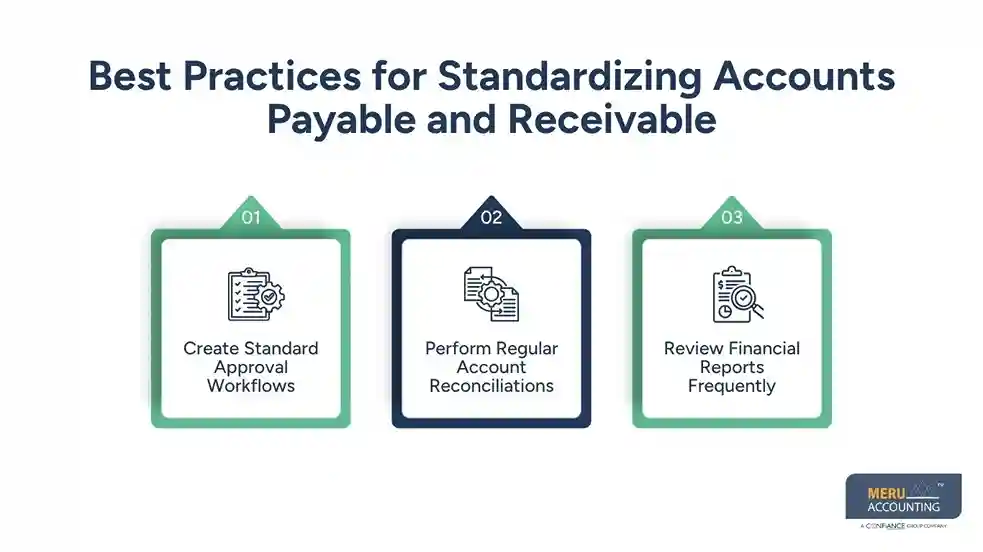
Perform Regular Account Reconciliations
Bank accounts, supplier balances, and customer accounts should be reconciled regularly. Small differences become larger problems when ignored.
Routine reconciliation improves financial accuracy and helps identify issues before month-end reporting begins.
Review Financial Reports Frequently
Monthly reports should not be the only review point. Regular financial analysis helps management identify unusual trends early.
Frequent reporting also improves accounts payable and receivable by highlighting overdue invoices, delayed collections, and payment bottlenecks before they affect operations.
Why Businesses Choose Meru Accounting
Managing hotel finances requires industry knowledge, structured processes, and reliable accounting support. Meru Accounting helps hospitality businesses maintain accurate financial records while improving accounting efficiency through professional bookkeeping services.
Our team understands the financial requirements of hotels, resorts, restaurants, and multi-property hospitality groups. We follow standardized accounting procedures that improve hospitality bookkeeping while supporting consistent reporting across locations.
Our services include bookkeeping, financial reporting, bank reconciliation, payroll accounting, tax-ready records, and management of accounts payable. We also support cloud accounting platforms that improve collaboration between hotel management and finance teams.
Every engagement follows established accounting practices and compliance requirements. This helps businesses maintain organized financial records while preparing for audits and regulatory reporting.
As transaction volumes increase, our accounting professionals provide practical support that helps businesses maintain consistency without increasing internal workloads.
If your hotel business wants stronger financial control and reliable bookkeeping support, Meru Accounting can provide practical guidance tailored to your operational needs.
From Our Expert Perspective
Hotels rarely struggle because of accounting complexity alone. Most challenges begin with inconsistent financial processes across different properties.
From our experience, most hotel accounting issues result from inconsistent processes rather than other complexities. Delayed approvals, incomplete records, and irregular reconciliations often reduce accuracy in reports and affect various required planning for cash flow.
Strong hospitality bookkeeping depends on consistent procedures and regular reviews. Suitable monitoring and reconciliation throughout the month improve financial accuracy. It is highly helpful and supports informed decisions. It prepares hotel chains for growth and changing operational needs.
Key Takeaways
- Hospitality bookkeeping creates consistent accounting practices required.
- Standard procedures help to improve the accuracy of accounts payable and receivable.
- On a daily and periodic basis, reconciliations reduce errors in reporting and strengthen financial control.
- Technology improves bookkeeping efficiency while supporting professional oversight.
- Standard approval workflows reduce payment delays and duplicate transactions.
- Complete financial documentation simplifies audits and compliance activities.
- Consistent reporting gives management reliable business insights.
FAQs
Hospitality bookkeeping is the process of recording and managing financial transactions for hotels, resorts, and other hospitality businesses. Highly useful for accurate financial records and good reporting.
Efficient accounts payable and receivable ensure suppliers receive timely payments Supportive and also improve cash flow that is needed and strengthen financial control.
Productive and standard procedures improve reporting consistency. Helps to reduce accounting errors, simplify financial consolidation, and supports good decisions.
Yes. Accounting software automates routine tasks with good and improved reporting accuracy. Professional review remains essential for maintaining reliable records.
When there is an increase in transactional volume, reporting becomes difficult, or financial processes need better consistency and compliance.
optional anymore
on running the business