
An attorney trust account plays a vital role in protecting client money by keeping it safe and separate from a law firm’s own funds, which helps build trust and prevent misuse. Most state bar associations require attorneys to use a lawyer trust account whenever they hold client funds, making it a legal obligation as well as a professional one.
Improper handling of these accounts can expose attorneys to serious penalties, including fines and disciplinary action, which increases financial risk. By clearly tracking deposits, payments, and balances for each client, trust accounts provide transparency and accuracy in financial records.
Using a lawyer trust account correctly also supports ethical and professional legal practice, reinforcing an attorney’s duty to act in the best interest of clients.
What You Will Learn From This Blog
- Explanation of what an attorney trust account is and the purpose it serves in protecting client funds.
- Overview of the legal requirements that make trust accounts mandatory for attorneys.
- Clear, step-by-step description of how money moves in and out of an attorney trust account.
- Simple guidance on compliance rules and recordkeeping responsibilities.
- Insight into how a lawyer’s trust account software supports compliance and proper fund management.
What Is An Attorney Trust Account?
An attorney trust account is a special bank account used to hold money that belongs to clients, not the lawyer or the law firm. These funds are kept separate from business or personal accounts to ensure they are protected and used only for their intended purpose.
The account acts as a temporary holding place for client money until it is properly earned or needs to be paid out. Money placed in an attorney trust account is not considered business income when it is received. It may include retainers, settlement funds, or advance payments for legal services and costs. Because these funds belong to clients or third parties, they must remain in the trust account until the attorney is legally allowed to transfer or disburse them.
Strict oversight applies to every transaction involving a lawyer’s trust account. Bar associations require accurate recordkeeping and clear documentation for all deposits and withdrawals. Following these rules helps maintain transparency, protects client interests, and supports ethical legal practice.
Why Attorney Trust Accounts Are Required
Client Protection
Rules protect clients from the misuse of funds held by attorneys. Trust accounts ensure client money remains secure and properly managed.
Ethical Responsibility
Proper handling of money reflects an attorney’s ethical responsibilities. Following trust rules helps maintain professional integrity and public confidence.
Preventing Commingling
Trust accounts keep client money separate from law firm funds. This separation reduces errors and prevents improper use of client funds.
Transparency
Clear financial records allow easier audits and account reviews. Accurate documentation supports accountability and clear financial reporting.
Financial Accuracy
Proper tracking ensures balances remain correct for every client. Accurate balances help prevent overdrafts and compliance violations.
Legal Enforcement
Violations of trust account rules can lead to serious discipline. Penalties may include fines, audits, or suspension of legal licenses.
How An Attorney Trust Account Works Step By Step
Opening The Account
The account is opened at an approved bank location. Banks must meet state trust account requirements before approval.
Receiving Client Funds
Client money is deposited into the attorney’s trust account promptly. Deposits are recorded immediately to maintain accurate client balances.
Recording Transactions
Each deposit is recorded under the correct client’s individual ledger. Detailed descriptions help explain the purpose of every transaction clearly.
Reviewing Account Activity
Regular reviews help identify errors or unusual transactions early. Frequent checks support accuracy and ongoing compliance.
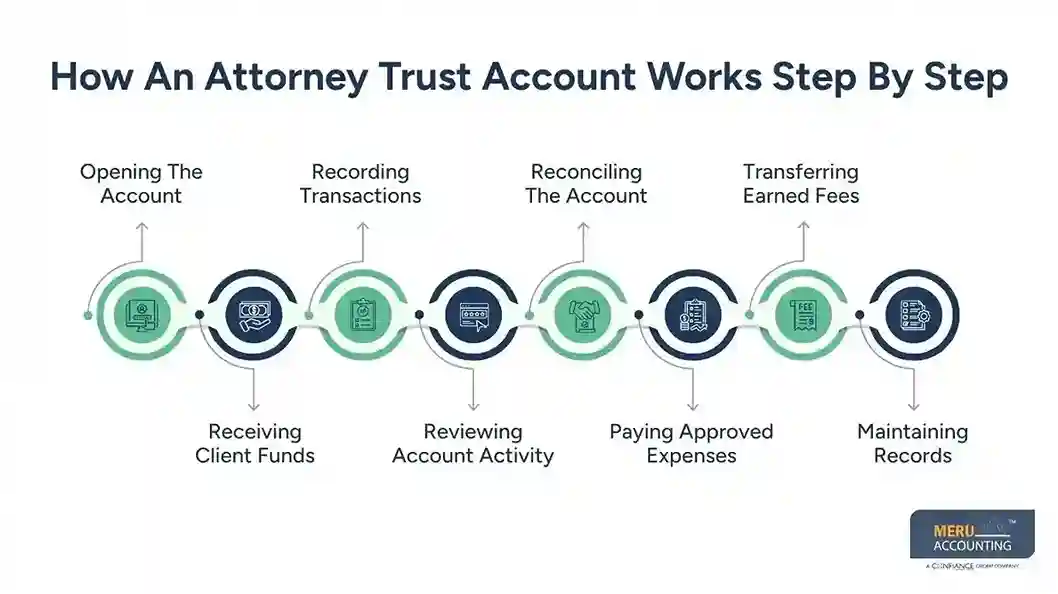
Reconciling The Account
Bank statements are compared with internal trust records monthly. Reconciliation ensures balances match and discrepancies are corrected.
Paying Approved Expenses
Funds are paid only for approved client-related expenses and obligations. Supporting documents should justify each payment made from trust funds.
Transferring Earned Fees
Fees are transferred after services are completed and properly earned. Transfers move money from the trust account to operating accounts.
Maintaining Records
Trust account records are stored for required retention periods. Organized records support audits and regulatory reviews.
Types Of Funds Held In An Attorney Trust Account
Retainer Fees
Advance payments are held until legal work is fully completed. Funds remain in trust until fees are properly earned.
Settlement Funds
Money received after a legal case reaches final resolution. Funds are distributed according to agreements and court instructions.
Court Fees
Funds set aside for filing fees and court-related costs. Money is paid when expenses become due during the case.
Third-Party Payments
Money held for medical providers or other approved lien holders. Funds are released only after receiving proper authorization.
Refundable Advances
Unused client funds that may be returned after matter’s completion. Remaining balances are refunded according to trust account rules.
Escrowed Funds
Funds are held temporarily pending specific conditions or legal outcomes. Money is released only when the required conditions are fully met.
Attorney Trust Account Rules And Compliance Requirements
State Bar Rules
Each state establishes its own specific attorney trust account rules. Attorneys must follow local regulations to remain fully compliant.
No Personal Use
Lawyers cannot use client trust funds for personal expenses. All withdrawals must relate directly to approved client matters.
Timely Deposits
Client funds must be deposited promptly after receipt by attorneys. Delays in deposits can create compliance issues and penalties.
Accurate Balances
Trust account balances must always reflect correct client fund amounts. Negative balances indicate serious errors requiring immediate corrective action.
Audit Readiness
Trust account records must be ready for audits at any time. Complete documentation helps demonstrate full compliance during official reviews.
Common Attorney Trust Account Recordkeeping Obligations
Client Ledgers
Each client must have a separate, clearly maintained trust ledger. Ledgers track individual balances, deposits, and disbursements accurately.
Monthly Reconciliation
Bank statements must be reviewed and reconciled every single month. Reconciliation ensures records match bank balances without discrepancies.
Deposit Records
All deposits must clearly show the source and deposit date. Proper records help verify client funds and prevent reporting errors.
Disbursement Logs
Each payment must list purpose, amount, and recipient clearly. Logs support transparency and simplify future audits or reviews.
Long-Term Storage
Trust account records must be retained for several required years. Long-term storage supports compliance with state bar requirements.
How Attorneys Manage Client Funds Safely
Clear Office Policies
Written financial procedures help reduce mistakes in trust handling. Policies guide staff on proper trust account management steps.
Staff Training
All staff handling money must understand trust account rules. Training reduces errors and improves compliance awareness.
Regular Reviews
Frequent internal reviews help catch errors at early stages. Regular checks reduce the risks of compliance violations.
Separation Of Duties
Different staff members manage deposits, approvals, and recordkeeping tasks. This separation limits misuse and accounting errors.
Technology Support
Many firms use attorney trust account software for better accuracy. Technology improves tracking and reduces manual entry mistakes.
How Attorney Trust Account Software Simplifies Compliance
Automated Tracking
Attorney trust account software records every transaction automatically. Automation reduces missed entries and improves consistency.
Built-In Rules
The software applies trust rules to prevent improper transfers. Built-in controls support compliance with state regulations.
Real-Time Balances
Users can view updated client trust balances at any time. Real-time access helps avoid overdrafts and allocation errors.
Easier Reconciliation
Attorney trust account software simplifies monthly reconciliation tasks. Clear reports make reviews faster and more reliable.
Reduced Errors
Attorney trust account software lowers common human accounting mistakes. Fewer errors reduce compliance risks and audit concerns.
Why Choose Meru Accounting For Attorney Trust Account Support
Legal Accounting Expertise
Meru Accounting understands complex lawyers’ trust account rules and requirements. Our team stays updated with changing compliance standards.
Accurate Recordkeeping
We maintain clear, organized, and compliant attorney trust account records. Accurate reporting helps reduce errors and compliance risks.
Software Guidance
Meru Accounting supports the proper use of attorney trust account software. We help firms improve tracking and financial accuracy.
Audit Preparation
Our team prepares trust account records for audits and reviews. Proper preparation helps reduce stress during compliance checks.
Ongoing Compliance Support
Continuous monitoring helps maintain compliance throughout the year. Regular oversight reduces the risk of unnoticed trust account issues.
Customized Reporting
Reports are tailored to meet law firm and bar requirements. Clear reporting improves understanding of trust account activity.
Key Takeaways
- An attorney trust account is legally required whenever an attorney handles or holds client money.
- Strict rules and regulations govern how all trust funds must be properly managed and recorded.
- Clear, accurate, and complete records help protect attorneys from errors, audits, and compliance issues.
- Using attorney trust account software significantly improves accuracy, tracking, and overall compliance management.
- Professional support from experts reduces risk, saves time, and ensures proper handling of client funds.
FAQs
A lawyer’s trust account is a bank account where lawyers hold client money separately from their own funds. It ensures client funds are safe and properly managed.
Client funds are deposited into the account, recorded for each client, and only moved out when authorized for fees, refunds, or expenses.
Attorney trust account software helps track deposits, withdrawals, and balances accurately, making compliance and reporting easier for law firms.
Lawyers cannot mix client funds with personal money, must deposit funds promptly, keep accurate records, and be ready for audits.
A lawyer’s trust account can hold retainers, settlement funds, court fees, or any client money that needs to be kept separate until used.