Payroll of a corporation refers to the payment of workers. Payroll outsourcing for small businesses offers many benefits. It covers the calculation of salaries, bonuses, taxes, and deductions. From an accounting view, payroll is the total amount paid to workers for their work over a set period.
Business owners and managers are always busy working to grow their businesses. One key task is keeping the payroll system up to date. Many find it hard to hire staff for this due to the work and issues it brings. While some companies handle payroll in-house, others choose to outsource it. As a result, many are looking for ways to outsource their payroll process.
What You Will Learn From This Blog
- What payroll outsourcing is and why it benefits growing businesses.
- The key factors to evaluate before choosing a payroll provider.
- Why manual payroll processing creates compliance and accuracy risks.
- The common payroll compliance challenges faced by multi-location businesses.
- How payroll services for small business improve payroll accuracy, reporting, and operational efficiency.
- The biggest myths about payroll outsourcing and the facts behind them.
- The essential steps for selecting and implementing the right payroll outsourcing solution.
What is Payroll Outsourcing?
Payroll outsourcing means giving payroll management to an outside party to handle tasks. Many businesses do this to cut costs and save time on complex work. Outsourcing lets experts manage payroll and stay up-to-date on tax laws. This lowers the risk of mistakes and fines. It also helps businesses focus on growth while keeping payroll accurate and on time.
What are the Factors to Think About Before Outsourcing Payroll and Dispensation Services?
When you decide to outsource payroll for your business, understanding the nature of employment and the service provider’s role is crucial.
- Nature of employment
- Data safety
- High accuracy level
- Compliance
- Accountability
- Price
If your small business payroll is simple, that’s rare. Most payroll systems are complex. No matter the size of your company, you need an expert to handle payroll.
Why is Manual Processing of Payroll Not Suitable for Small Businesses?
Manual payroll processing has many flaws that hurt small businesses, which is why many choose to outsource payroll. It is slow, error-prone, and takes too much time. As your business grows, the risks and complexity rise. There is no built-in way to avoid errors, track rules, or protect data. This is why many businesses switch to automated software for payroll. It helps cut errors and offers key benefits when outsourcing payroll.
Benefits of Payroll Services for Small Businesses
Payroll services for small businesses offer the following benefits:
- Cost-effective: Small businesses with fewer resources should outsource payroll. Outsourcing frees up time, allowing focus on core tasks. Many savings come from the time gained by no longer handling payroll tasks in-house. Duties like tax calculations, filings, managing payroll queries, and training are streamlined. It also cuts costs related to infrastructure and management.
- Saves Time: The payroll team handles complex tasks like filing W2 tax returns, managing hiring, training, terminations, and deductions. They must stay updated on state and federal rules. Payroll outsourcing for small businesses lets your team focus on core business tasks while handling complex payroll processes. This gives you a competitive edge by using time more effectively.
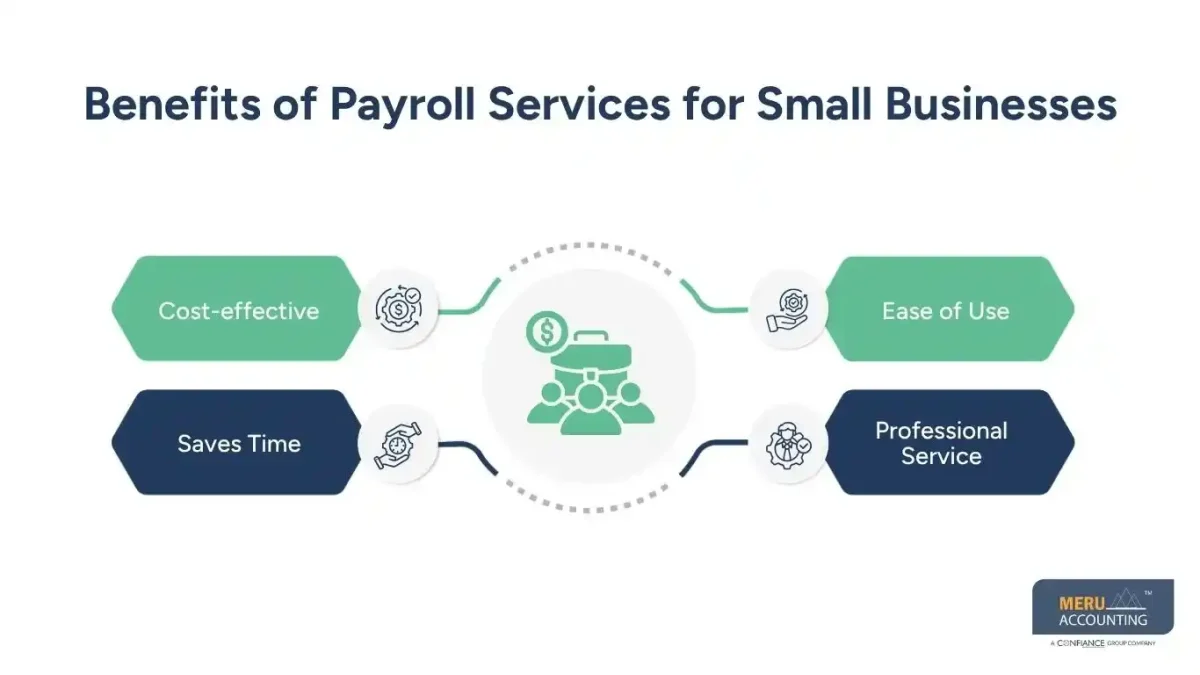
- Ease of Use: Many small businesses benefit from payroll outsourcing for small business, offering streamlined and secure systems to manage tasks faster. With tight security, backup systems, and multiple servers, the risk of fund tampering is low.
- Professional Service: When you choose payroll services for small businesses, you gain access to experts who are familiar with government rules and regulations. These experts ensure tax compliance and handle benefits and deductions in payroll.
Common Compliance Challenges for Multi-Location Businesses
Managing payroll for more than one business location is not just about paying employees on time. Every state or region can have different payroll rules, tax rates, wage laws, and filing deadlines. As a business expands, keeping up with these changes becomes more difficult.
Some of the most common compliance challenges include:
- Different tax requirements: Each state may have its own payroll tax rules, unemployment taxes, and filing schedules.
- Changing labor laws: Minimum wage, overtime rules, and paid leave policies can vary by location and change over time.
- Employee classification: Businesses must correctly classify full-time employees, part-time workers, and independent contractors to avoid penalties.
- Payroll reporting deadlines: Missing filing dates or submitting incorrect payroll reports can result in fines and interest charges.
- Recordkeeping requirements: Payroll records must be stored accurately and retained for the period required by law.
- Managing remote employees: Businesses with employees working in different states must comply with each state’s payroll and tax regulations.
Payroll outsourcing helps businesses overcome these challenges by providing experienced payroll professionals, automated payroll systems, and ongoing compliance support. Instead of tracking changing regulations internally, businesses can rely on specialists who help ensure payroll is processed accurately and on time while reducing compliance risks.
How to Deal with Shortcomings?
Payroll outsourcing is ideal for many businesses. However, the shortcomings of outsourcing might make you skeptical about it. One of the best ways to deal with it is through cloud services or online payroll services. Online payroll provides remote access to your business information on a real-time basis. You can connect 24×7 via phone, Skype, and WhatsApp.
How to Outsource Payroll?
Step 1: Identify your needs
- First, look at your staff and contractors. Think about how to link payroll with your accounting system. Know the taxes, costs, and bonuses to manage.
Step 2: Research payroll providers
- Choose a payroll provider based on your business size and needs. Small businesses have many options, like hiring an accountant or using online payroll services like Wagepoint, ZenPayroll, or Wave.
Step 3: Match services to your needs
- Make sure the services match your needs. If you need real-time reports, storing records, or tracking costs, pick a provider that meets those needs. Breaking tasks into smaller chunks helps improve results.
Step 4: Find a good match
- The payroll service must fit your needs. It should handle tasks well and use the latest tech with good security. This allows you to focus on sales, marketing, and growth.
Is Outsourcing Payroll Ideal for Business?
Outsourcing payroll is great for all types of businesses. It helps you focus on the bigger picture. A global payroll service can do more than your team can. It removes barriers and makes the process easy. An outsourced service will save time, cut costs, and reduce risks. Many payroll providers use cloud systems to store and manage data.
Even payroll services for small businesses improve data accuracy and visibility, and help with audits. Centralizing payroll means easy access online. This improves reach and saves time compared to doing it in-house. More businesses, both big and small, are choosing to outsource payroll to experts who can handle it full-time.
What are the Misconceptions of Outsourcing?
Payroll outsourcing for small businesses offers many benefits, but myths often stop businesses from trying it. Here are some of the common misunderstandings:
Loss of Control
A big myth is that outsourcing means losing control. In truth, businesses can still manage approvals and benefits, while experts handle the technical side of payroll.
Only for Large Companies
Many believe outsourcing is just for large firms. But small and medium-sized businesses (SMBs) can also benefit. Outsourcing gives SMBs top-tier service, security, and compliance, all without high costs.
More Expensive
Some think outsourcing is more expensive. But it can actually save money by cutting payroll staff, software costs, and admin work. Many providers offer flexible pricing to fit any budget.
Security Risks
Outsourcing can bring up worries about data safety. Trusted providers use strong tools. Encryption keeps your data safe. At times, it’s better than in-house teams.
One-Size-Fits-All
Some think outsourcing offers no customization. That’s not true. Services are flexible and can be tailored to fit your business’s needs, like taxes, bonuses, or compliance.
Inflexibility
Outsourcing is thought to mean less flexibility. But many providers let businesses pick payroll cycles (weekly, bi-weekly, or monthly). They can also adjust services to fit needs.
Reasons Why Multi-Location Businesses Outsource Payroll
Improves productivity across all locations
Managing payroll for several branches takes a lot of time. Each location may have different work schedules, tax rules, and payroll deadlines. Payroll outsourcing reduces this workload, allowing business owners and managers to focus on growth instead of payroll tasks.
Handles complex multi-location payroll calculations
Payroll becomes more complex when employees work in different states or branches. Different tax rates, overtime rules, and local deductions must be calculated correctly. Payroll outsourcing helps ensure every calculation is accurate and compliant.
Access to multi-location payroll experts
Payroll providers have experts who understand payroll laws across different states and regions. They stay updated on changing regulations and process payroll correctly for every location. This reduces compliance risks and costly payroll errors.
Centralized payroll reporting
Managing payroll data from multiple locations can be difficult when each branch uses different records. Payroll outsourcing provides one reporting system for all locations. This makes it easier to review payroll costs, prepare reports, and support audits.
Reduces operating costs
Building payroll teams for every location increases staffing, software, and training costs. Payroll outsourcing lets businesses manage payroll for all branches through one provider. This lowers operating costs while maintaining consistent payroll processes.
Faster payroll processing for every branch
Businesses with multiple locations often have different payroll schedules and employee groups. Payroll outsourcing uses automated systems and experienced teams to process payroll on time for every location. This helps employees receive accurate payments without delays.
As more businesses expand into new cities and states, managing payroll across multiple locations becomes more challenging. Payroll outsourcing provides the expertise, technology, and compliance support needed to keep payroll accurate, efficient, and consistent across every business location.
optional anymore
on running the business
Step-by-Step Process of Payroll Outsourcing
Understand the present system
Before outsourcing the payroll, you must list down the current payroll system in a proper way. It will help the third-party agency to understand the basic things about your payroll management structure. So, if there is any complex, manual processing in the payroll system, they have to figure it out correctly.
Making up a system document for the present process
This is a significant step for payroll process outsourcing. There are many complex processes in the annual processing system, which might be a challenge to find. Also, if there is any use of software in the present method, it is necessary for proper documentation. In short, before outsourcing the payroll system to any third party, an appropriate document of the policy must be made of the present system. This will help the third party handle the payroll to make a proper structure for payroll handling in their organization.
Preparing a checklist for payroll
When outsourcing payroll, follow the right checklist. It helps organize payroll tasks in a clear and simple way.
There are a lot of things in the payroll checklist; Some of them are:
- Complete details of the timesheets of an employee working
- Reviewing all the changes in the employee records
- Inclusion of all additional payments [Bonus, Commission, Incentives, etc.]
- Tax and other necessary deductions
- Considering all the things accurately
Templates for information exchange
There is a lot of information exchanged in the payroll system. So, it is vital to make proper templates related to it in a very standard way. This will make it simpler for the third party to manage the payroll. This is one of the vital tips for secure outsourcing of payroll.
These are a few things to make a proper payroll system. By following these tips for secure outsourcing of payroll, most businesses can leverage the advantage of outsourcing payroll.
Meru Accounting is one of the prominent companies providing payroll management services to businesses. We do all the calculations accurately and ensure that each employee gets their payment on time. Meru Accounting, with the help of experts, makes all the payroll returns and payroll taxes accurately.
Our Expert Insight
As businesses expand into multiple locations, payroll becomes more than just paying employees on time. Different tax laws, labor regulations, reporting deadlines, and employee classifications increase compliance risks. Our experts recommend adopting payroll outsourcing before payroll complexity begins affecting business operations. An experienced payroll partner can standardize payroll across every location, reduce compliance risks, improve reporting, and ensure employees are paid accurately and on time. For growing companies, investing in reliable payroll services for small business is not just a way to save time—it is a strategic decision that supports long-term growth and operational efficiency.
Key Takeaways
- Payroll outsourcing helps multi-location businesses manage payroll accurately while meeting state and federal compliance requirements.
- Outsourcing reduces manual work, payroll errors, and administrative costs while improving productivity.
- A professional payroll provider offers expertise in tax laws, payroll calculations, reporting, and regulatory compliance.
- Centralized payroll systems make it easier to manage payroll across multiple branches and prepare for audits.
- There are many misconceptions about payroll outsourcing, but payroll services for small businesses offer noticeable benefits.
- Choosing the right payroll partner helps businesses scale confidently while maintaining secure, accurate, and timely payroll processes.
FAQs
Payroll outsourcing means hiring a third-party provider to manage employee pay, taxes, deductions, and payroll processing. It helps businesses save time, improve accuracy, and focus on core operations.
Payroll outsourcing helps businesses manage payroll across multiple locations by handling different tax rules, labor laws, payroll deadlines, and compliance requirements from one centralized system.
Choose a provider that offers payroll accuracy, strong data security, compliance expertise, clear reporting, and services that can grow with your business.
Yes. Payroll services for small businesses reduce the costs of hiring payroll staff, maintaining payroll software, and correcting payroll errors. It is a cost-effective solution for many small businesses.
Yes. Most payroll providers use encryption, secure cloud systems, and access controls to protect payroll data and employee information.