Restaurant finances involve many daily transactions, from sales and supplier bills to payroll, card fees, and food purchases. Without clear records, small errors can make it hard to know the true cost and profit of the business. Knowing how to manage restaurant bookkeeping gives owners a clear way to record, check, and review these transactions.
A clear financial process makes tax work, cash flow checks, and monthly reporting easier to handle. As sales grow, however, keeping every transaction accurate can take more time than an owner can spare. Knowing when to hire restaurant bookkeeper services and how to find restaurant bookkeeper options can bring more control to the financial side of the business.
What You Will Learn From This Blog
- How to manage restaurant bookkeeping with a clear daily and monthly work plan.
- Which sales, cost, stock, pay, and bank records need close review.
- When a food firm may need to hire restaurant bookkeeper help.
- How to find restaurant bookkeeper options that fit your needs.
- What can affect the cost of a restaurant bookkeeper.
- How to check a bookkeeper’s skill, tools, scope, and fit.
- Which book errors can lead to poor cash and profit data.
- How Meru Accounting can manage key financial tasks for your restaurant.
What Is Restaurant Bookkeeping and Why Does It Matter?
Restaurant bookkeeping covers the financial work needed to track sales, costs, payroll, cash, and business spending. Understanding how to manage restaurant bookkeeping helps owners keep financial records accurate and make better spending decisions.
Track Daily Sales
Record sales from cash, cards, delivery apps, and other payment channels each day. Compare POS totals with deposits to spot missing amounts, refunds, or payment gaps.
Monitor Food And Supply Costs
Food purchases, waste, stock use, and vendor bills can affect restaurant margins. Tracking these costs gives owners a clearer view of spending and shows where costs may be rising.
Manage Payroll And Tips
Wages, tips, payroll taxes, and other staff costs need proper tracking. Payroll figures should match payroll reports and payments, so labor costs remain accurate.
Monitor Cash Flow
Knowing how to manage restaurant bookkeeping helps owners look beyond sales and monitor available cash. Rent, supplier bills, payroll, taxes, loan payments, and card fees can reduce available cash, making regular cash flow checks important.
Maintain Tax Support Records
Invoices, receipts, sales reports, payroll files, and payment records provide support for tax filings. Keeping these documents organized also makes it easier to verify transactions when questions arise.
How to Manage Restaurant Bookkeeping Effectively
Knowing how to manage restaurant bookkeeping is not just about entry work. The goal is to build a set work plan that links the POS, bank, cards, payroll, bills, and stock data.
Set A Clear Chart Of Accounts
Create separate accounts for food, drinks, wages, rent, repairs, fees, and other major costs. Use the same account rules each month to keep financial reports consistent and easy to compare.
Reconcile Bank And Card Data
Compare bank deposits and card payouts with recorded sales on a set schedule. Check fees, refunds, deposits, and unusual entries so gaps can be found before the monthly report is prepared.
Match POS With Deposits
When considering how to manage restaurant bookkeeping, compare daily POS totals with cash deposits and card payouts. Review voids, refunds, tips, and payment fees during the check. Any difference should be reviewed and corrected without delay.
Review Food And Labor Costs
Food and labor often make up a large share of restaurant costs. Compare these costs with sales each month to spot waste, price changes, overtime, or other issues that may affect profit.
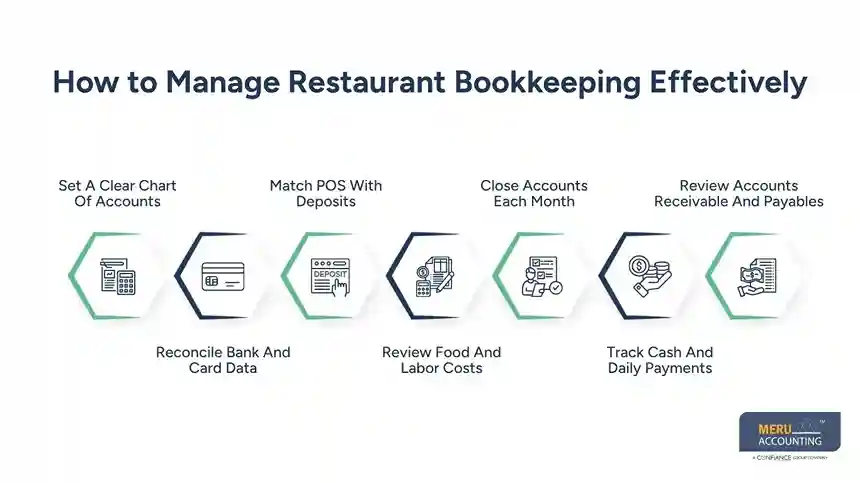
Close Accounts Each Month
Set a fixed date for the monthly financial close. Review sales, bank activity, card payments, supplier bills, payroll, and major costs before preparing the final reports.
Track Cash And Daily Payments
Record cash sales, cash payouts, card payments, and delivery app receipts each day. Compare payment records with POS data to identify missing deposits, fees, refunds, or other differences.
Review Accounts Receivable And Payables
Track unpaid bills and amounts due from business accounts on a regular basis. Review payment dates, supplier balances, and overdue amounts to keep cash planning clear.
optional anymore
on running the business
Key Restaurant Bookkeeping Tasks To Manage Regularly
Daily Sales Review
Check POS sales, cash, cards, tips, refunds, and voids each day. A daily check can spot gaps before they grow into larger month-end issues.
Vendor Bill Entry
Record bills as they arrive and link them to the right vendor and cost type. Old or missing bills can make profit reports less useful.
Inventory Records
Knowing how to manage restaurant bookkeeping also requires accurate inventory records and regular stock checks.
Payroll Records
Review wages, tips, payroll tax, and staff cost data. Make sure payroll entries agree with payroll reports and bank payments.
Bank Reconciliation
Compare each bank account with the financial records on a set schedule. Check deposits, fees, checks, card payouts, and other transactions to find missing or incorrect entries before the period is closed.
When Should You Hire A Restaurant Bookkeeper?
Sales Have Grown
More sales often mean more entries, more bills, and more payment data, making it important to find restaurant bookkeeper support when the workload becomes difficult to manage. If the owner cannot keep up, outside book help may be a sound choice.
Financial Records Fall Behind
Late entries can make cash flow and profit figures hard to trust. A clear understanding of how to manage restaurant bookkeeping can help keep transaction records current and the monthly close on schedule.
When records remain incomplete for weeks or months, knowing how to find restaurant bookkeeper options can help bring the accounts up to date.
Errors Keep Rising
Many bank gaps, POS gaps, or wrong cost codes can show that the current process is not strong. A skilled bookkeeper can review the work and set clear checks.
Tax Work Takes Too Much Time
Tax prep needs sound records and source files. If the owner spends too much time sorting bills and sales data, it may be time to find restaurant bookkeeper support for these tasks.
More Than One Location
Each site may have its own sales, costs, staff, and cash flow. Knowing how to manage restaurant bookkeeping across multiple locations requires consistent rules for recording and reporting each site. A bookkeeper can keep location data separate while giving the owner one clear view.
How To Find A Restaurant Bookkeeper For Your Business
Check Restaurant Experience
When you find restaurant bookkeeper options, ask about past work with restaurants. Industry experience can make it easier to handle sales, payroll, food costs, and vendor records.
Review Service Scope
Ask what the bookkeeper will manage each month. Services may include sales, bank checks, payroll data, bills, reports, and monthly account closing.
Check Software Skills
Ask which accounting and POS systems the bookkeeper knows. When you find restaurant bookkeeper options, check whether each provider can work with your existing accounting and POS systems.
Ask For Work Samples
Ask how they handle bank gaps, POS issues, supplier bills, and monthly reviews. Practical experience can also show whether they understand how to manage restaurant bookkeeping accurately
Check Review Process
Ask who reviews the financial records before reports are sent. A second review can catch errors and strengthen basic financial controls.
Compare Pricing And Fees
Compare the total cost of each bookkeeping service before making a choice. Check whether payroll, cleanup work, monthly reports, and other tasks are included in the quoted fee.
How Much Does A Restaurant Bookkeeper Cost?
Monthly Fixed Fee
Some bookkeepers charge one set fee each month. The fee may vary by sales volume, account count, staff size, and service scope.
Hourly Billing
Some firms charge by time spent on the work. Learning how to manage restaurant bookkeeping also helps owners understand which tasks require regular support.
Cleanup Work
Catch-up work may cost more than regular monthly services. Older records may need account checks, bank corrections, POS checks, and missing transaction entries.
Payroll Add-Ons
Payroll work may be priced apart from core bookkeeping. Ask if staff pay, tax data, tips, and payroll reports are part of the quoted fee.
Reporting Needs
Understanding how to manage restaurant bookkeeping helps owners decide which reports and review services are actually needed.
How To Choose The Right Restaurant Bookkeeping Service
Check Industry Knowledge
A team that understands how to manage restaurant bookkeeping can handle sales, food costs, stock, payroll, tips, vendor bills, and card fees more accurately. Ask how the team handles these items in its normal work.
Check Turnaround Time
Ask when monthly records will be finalized and reports will be ready. A fixed schedule makes it easier to review financial results each month.
Ask About Communication
When you find restaurant bookkeeper services, confirm who will handle questions and provide regular updates. Clear contact rules can keep small issues from staying open for too long.
Compare The Full Scope
Do not compare firms on price alone. Check the work list, review process, report set, tax links, software skill, and service terms before making a choice.
Common Restaurant Bookkeeping Mistakes To Avoid
Mixing Personal And Business Spend
Keep business and personal spend apart. Mixed accounts can make bank checks, tax work, and profit reports much harder to review.
Ignoring Small Cash Gaps
Small cash gaps can add up over time. Check cash sales, cash use, deposits, and cash payouts on a set plan.
Missing Card Fees
Card sales may not equal the cash that hits the bank. Record card fees so sales and bank deposits are shown in the right way.
Delaying Bank Reconciliation
Knowing how to manage restaurant bookkeeping also means keeping bank records up to date. Reconcile bank and card data on a set schedule and clear open items soon.
Why Choose Meru Accounting for Restaurant Bookkeeping?
Meru Accounting provides restaurant bookkeeping covering sales, food costs, vendor bills, payroll, tips, card fees, bank and POS reconciliation, expense tracking, stock records, and month-end reports
Restaurant-Focused Bookkeeping
Our team can manage records for sales, food costs, vendor bills, payroll, tips, card fees, and other common restaurant transactions. A clear process keeps these records in the right accounts.
Regular Account Reconciliation
Bank, card, and POS records need regular checks. Our team can compare these records, review open items, and flag gaps before they affect monthly reports.
Monthly Financial Reports
Restaurant owners need timely reports to review sales, costs, and profit. Meru Accounting can prepare agreed reports after the monthly books are checked and closed.
Flexible Service Scope
Some restaurants need full bookkeeping, while others need support with selected tasks. Service scope can be set based on transaction volume, locations, payroll needs, and reporting needs.
Support For Growing Restaurants
Growing restaurants may find restaurant bookkeeper support useful as transaction volume and reporting needs increase. Our team can provide a structured process for how to manage restaurant bookkeeping as transaction volume increases.
Our Expert Perspective
Our experience shows that understanding how to manage restaurant bookkeeping requires a clear and repeatable process for daily sales, payment checks, food and labor costs, payroll, bank reconciliation, and month-end close.
Restaurant owners should use clear account codes, review monthly reports, and set rules for who records and checks each transaction. Before you find restaurant bookkeeper options, focus on restaurant experience, service scope, review controls, reporting quality, and value rather than price alone.
Key Takeaways
- Understanding how to manage restaurant bookkeeping helps keep sales, costs, payroll, bank data, and stock records accurate.
- Reconcile POS, bank, and card records on a set schedule to catch errors early.
- Track food, labor, rent, fees, and other major costs to keep reports clear.
- Hire a restaurant bookkeeper when records fall behind, or errors become common.
- Check industry experience, service scope, software skills, review rules, and pricing before choosing a bookkeeper.
- Keep business spending separate and store source records for sales, costs, payroll, and tax work.
FAQs
Understanding how to manage restaurant bookkeeping starts with recording and checking sales, costs, payroll, bills, bank data, stock, and other business transactions.
Daily sales and key cash data should be checked each day. Bank accounts and other accounts should be reconciled on a set schedule, with a full month-end close.
Consider hiring a restaurant bookkeeper when financial records fall behind, errors increase, sales grow, tax work takes too much time, or daily financial tasks become hard to manage.
To find a restaurant bookkeeper, check restaurant experience, service scope, software skills, review rules, pricing, and client references before making a choice.
The cost varies by sales volume, account count, staff size, cleanup needs, payroll work, and report needs. Ask for a clear scope and full fee before signing.
optional anymore
on running the business