
Every business that is successful in the world has its terms clear from the beginning. When you hire experts for bookkeeping, tax, payroll, and other financial tasks, both sides must have clear terms. If both sides do not share the same view of the work, small issues can grow into big ones. Missed tasks, added fees, or late filings can all create stress for a business. An engagement letter helps stop these problems even before they start. It is a written agreement that explains the work your accountant will do.
It also lists the duties of both sides, the fee terms, key dates, and other rules for the job. Since each side knows what to expect, the work can move ahead with fewer delays and less risk. No matter the size of your business, it is smart to read an engagement letter with care before signing it. A clear letter helps build trust, keeps work on track, and supports a strong working bond.
In this blog, you will learn what an engagement letter is, why it matters, and how it helps define accounting and tax services for your business.
What You Will Learn From This Blog
- What an engagement letter is and why it is used.
- Why every business should ask for an engagement letter before work starts.
- The main aspects of a well-written engagement letter.
- How it helps lower risk and avoid mix-ups.
- Why do trusted accounting firms use these letters to set clear terms?
- Tips for reading and reviewing an engagement letter before you sign it.
What Is an Engagement Letter?
An engagement letter is a written agreement between a business and its accountant or accounting service provider. It explains the work the accountant will do and sets the rules for the work. Unlike a price quote, an engagement letter gives full details about the job. It lists the services to be done, the duties of each side, the fee plan, the work dates, and other key terms. It also shows what is not part of the work.
Why Every Business Needs an Engagement Letter
Every business should have a written agreement before accounting work begins. Finance work often deals with tax rules, due dates, and private data. Without clear terms, there is more room for mix-ups. An engagement letter tells the business what work is part of the service. For example, bookkeeping may not include tax advice, payroll work, or audit help unless those tasks are listed in the letter.
The letter also explains what the client must do. Many jobs need the client to send bank records, bills, payroll data, and other files on time. If these items come in late, the work may also be late. Fee details are another key part of the agreement. This letter shows how much the work will cost, how bills will be sent, when payment is due, and if added work will lead to added fees.
Many accounting firms also use engagement letters to meet high work standards. A clear agreement shows that both sides are serious about the work and helps build trust from the start. As a business grows, its finances often grow too. A good letter keeps both sides on the same page as new work is added over time.
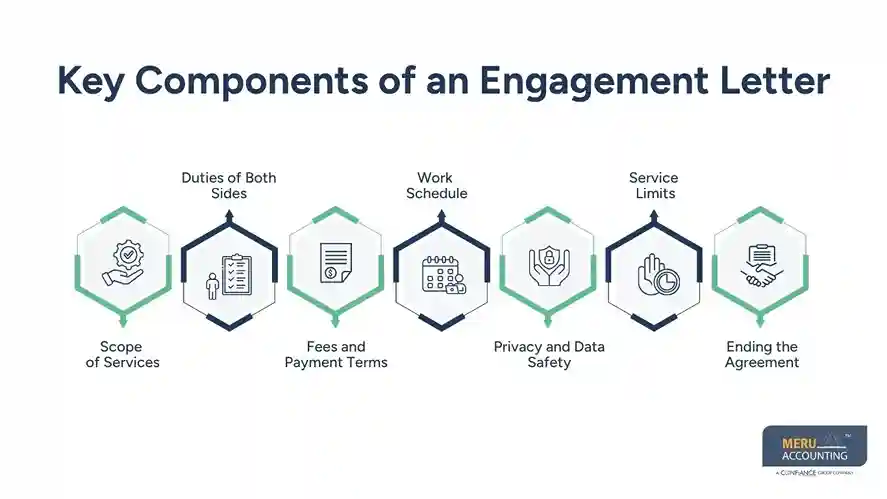
Key Components of an Engagement Letter
While each business has its own needs, most engagement letters include several key parts.
Scope of Services
The scope of work is one of the most important parts of this letter. It tells the client what work the accountant will perform.
The work may include:
- Bookkeeping
- Payroll work
- Tax return work
- Tax planning
- Sales tax filing
- Financial reports
- Year-end reports
- Finance support
A clear scope helps stop wrong ideas about work that is not part of the agreement.
Duties of Both Sides
This letter explains what each side must do.
The accounting team agrees to provide the listed services with care and skill. The client agrees to share full and correct records on time.
When both sides meet their duties, work flows more smoothly.
Fees and Payment Terms
Every letter should explain how fees are charged.
This part may include:
- Flat monthly fees
- Hourly rates
- Project fees
- Due dates for payment
- Late payment rules
- Fees for added work
Clear fee terms help businesses plan their costs and avoid billing issues.
Work Schedule
Many accounting jobs must meet strict due dates.
The letter should list:
- Start date
- Due dates
- Tax filing dates
- Report dates
- Expected reply times
This helps both sides stay on track and finish work on time.
Privacy and Data Safety
Businesses share private financial data with their accountant. A good letter explains how this data will be kept safe and how records will be handled with care. This helps build trust and supports safe record handling.
Service Limits
Many business owners think all financial work is part of one service. That is not always true. This letter lists the work that is not part of the agreement. For example, bookkeeping may not include tax audit help unless that work is clearly listed. These limits help stop false expectations and reduce future issues.
Ending the Agreement
Most letters also explain how either side can end the work.
This part often covers:
- Notice before ending the work
- Final payments
- Return of client files
- Final reports, if needed
Having these terms in writing helps protect both the business and the accounting provider if the work ends.
Benefits of an Engagement Letter for Businesses
A good engagement letter does more than list the work. It gives both sides a clear plan before the job starts. When each side knows what to do, the work moves faster, stays on track, and has fewer issues.
Better Day-to-Day Communication
A good work environment starts with clear communication. An engagement letter tells both sides what work will be done, when it will be done, and who will do each task. Since the rules are clear from the start, there is less doubt and fewer mix-ups. Clear communication also helps solve small issues before they grow into big ones.
Clear Cost Terms
Every business should know what it will pay. The letter lists the work, the fee plan, due dates for bills, and any extra costs if new work is added later. This helps owners plan their cash and keeps billing clear for both sides.
Less Risk
Many work issues start because each side expects something different. The letter reduces this risk by putting the work terms in writing before the job starts. If a question comes up later, both sides can look at the same paper instead of trying to recall what was said. This saves time and helps stop long disputes.
Clear Jobs for Both Sides
Each side has work to do. The client must send full and correct files on time. The accounting team must finish the agreed work with care and by the stated due dates. When both sides do their part, the work stays on time, and the end result is much better.
Helps Meet Tax Rules
Bookkeeping and taxation often have strict due dates. A clear letter shows who will file each form, who must send the needed files, and when each task must be done. This helps lower the risk of late work and missed due dates.
Helps with Growth Plans
A clear work plan makes it easier to run a business. When owners know what work is covered, they can plan cash flow, watch costs, check reports, and make better choices for the months ahead.
That makes it easier to grow with fewer surprises.
How Meru Accounting Helps Your Business
A reliable accounting team will give you more than good prices. It also gives quick replies and a process that is easy to follow. At Meru Accounting, we give outsourced accounting and bookkeeping services to help businesses keep clean and up-to-date books. We make sure each client knows what work we will do, how we will do it, and when reports will be shared.
Our team helps with bookkeeping, payroll support, tax-ready books, reports, and other back-office work. We begin each task with clear communication about the work, due dates, file needs, and how we will stay in touch. This step helps cut delays, save time, and keep the work running well. As your business grows, our team grows with you by giving steady support that fits your needs.
Whether you need help each week or full outsourced accounting support, we work to make your books easy to manage so you can spend more time on your business.
Our Expert Insight
An engagement letter should not be seen as just one more form. It is one of the best ways to build trust before any work starts. Many owners look only at price when they choose among accounting firms. Price is important, but clear work terms are just as important. A good letter tells you what work is part of the job, what is not, who must do each task, and how both sides will work together.
Read the full letter before you sign it. Check the task list, fees, due dates, file needs, and any work limits. If you have a question, ask before the job starts. A few extra minutes spent on the review can help save many hours later.
Key Takeaways
- An engagement letter tells both sides what work will be done.
- It lists the jobs of the client and the accounting team.
- Clear work terms help stop mix-ups and surprise requests.
- Fee terms, due dates, and work limits should be read with care.
- Good accounting firms use letters to build trust and clear work plans.
- Reading the letter first helps both sides start with the same goals.
FAQs
An engagement letter is a written document that explains the accounting or tax work, the fees, the due dates, and the roles of both sides before work starts.
Most accounting firms use these letters to set clear work terms, avoid mix-ups, and help both the client and the firm know what to expect.
In many cases, yes. This letter can serve as a legal agreement after both sides accept its terms. The final effect depends on the law and the words used in the letter.
Yes. If the work changes or new tasks are added, the letter can be updated after both sides agree to the new terms.
Read the work list, fees, due dates, file needs, work limits, and end terms. A full review helps make sure the work matches what your business needs.
optional anymore
on running the business