
Insurance bookkeeping plays an important role in managing an agency’s financial health and increasing long-term profits. Insurance agencies handle multiple transactions, including client premiums, commissions, refunds, operating costs, and carrier payments. Without proper financial tracking, agencies may lose control over cash flow and miss opportunities to increase earnings.
Accurate records allow agency owners to understand where money comes from and where expenses are going. A structured approach to insurance bookkeeping creates better visibility into income patterns, reduces financial errors, and supports better business decisions.
Modern insurance firms need organized financial processes because profit growth depends on more than selling policies. Strong financial management, proper expense tracking, and regular reporting create a clear path toward higher margins. Many agencies use insurance agency accounting and bookkeeping practices to maintain accurate records and manage financial responsibilities with confidence.
What You Will Learn From This Blog
- How financial records influence insurance agency profits.
- Why accurate bookkeeping matters for insurance businesses.
- Ways proper financial tracking increases revenue control.
- Important reports every insurance agency should review.
- When professional bookkeeping services become necessary.
What Is Insurance Bookkeeping?
Insurance bookkeeping is the process of recording, organizing, and reviewing all financial transactions within an insurance agency. It includes tracking policy commissions, renewal payments, service fees, client payments, carrier payments, accounts receivable, and daily operating expenses.
Since insurance agencies handle multiple income sources and transactions, maintaining accurate financial records helps owners understand their agency’s financial position and manage business activities effectively.
A major part of insurance bookkeeping involves monitoring revenue, commissions, and expenses. Agencies need to record payments received from different carriers, match commissions with issued policies, and track costs such as employee salaries, software fees, marketing expenses, office costs, and compliance charges.
Proper financial tracking reduces payment errors, identifies unnecessary expenses, and provides a clear view of profitability.
Regular account reviews and financial reporting are essential parts of maintaining accurate agency records. Reviewing transactions helps identify missing entries, duplicate records, and incorrect balances before they create problems in business decisions.
Financial reports such as profit and loss statements, cash flow reports, and expense summaries provide clear insights into agency performance. These reports allow owners to measure growth, monitor cash movement, and create better plans for future business needs.
Why Insurance Agency Accounting and Bookkeeping Matter for Profitability
Insurance agency accounting and bookkeeping create a strong financial foundation for agencies that want consistent profit growth. Accurate records allow owners to monitor income, control expenses, and understand overall financial performance.
Better Cash Flow Management
Cash flow problems can affect even successful insurance agencies. Proper financial records show when money enters and leaves the business. Regular cash flow reviews allow agencies to plan payments, manage expenses, and maintain stable operations.
Accurate Profit Measurement
Many agencies focus on sales numbers but overlook actual profits. Financial records separate revenue from expenses to show true earnings. Using insurance agency accounting and bookkeeping methods helps owners understand whether business activities are generating sustainable returns.
Improved Expense Control
Uncontrolled expenses can reduce agency profits over time. Organized bookkeeping identifies spending areas that need review. Agency owners can compare monthly costs and take steps to reduce unnecessary expenses.
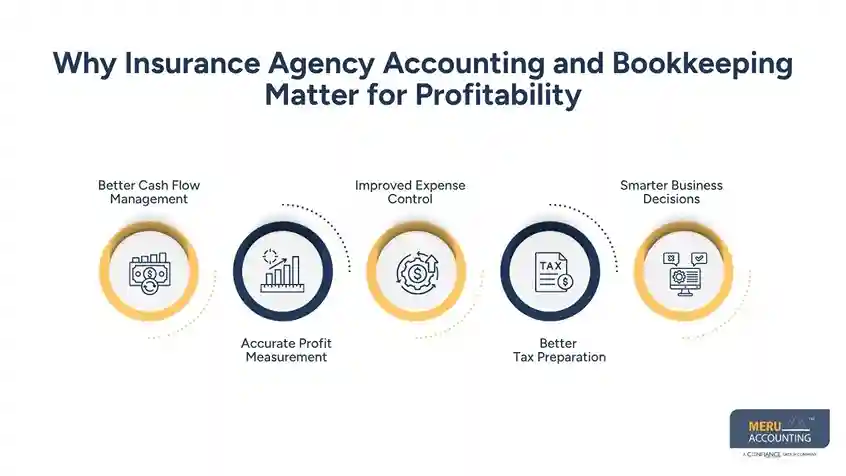
Better Tax Preparation
Insurance agencies must maintain accurate financial records for tax reporting. Proper documentation maintained through insurance bookkeeping reduces confusion during tax preparation and financial reviews.
Smarter Business Decisions
Business decisions become easier when financial data is accurate. Owners can review reports before investing in new employees, technology, or marketing campaigns. Reliable information creates better planning and reduces financial uncertainty.
Ways Insurance Bookkeeping Increases Agency Profits
Insurance bookkeeping directly impacts agency profitability by creating better financial control and visibility. Organized records allow agencies to identify growth opportunities, control expenses, and make informed financial decisions.
Identifying Profitable Insurance Products
Financial records help agencies compare revenue and performance across different insurance products. Understanding product profitability allows owners to focus on services that generate stronger returns.
Reducing Financial Errors
Regular bookkeeping checks help identify incorrect entries, missed payments, and reporting mistakes. Accurate records protect agency income and maintain reliable financial information.
Controlling Operating Costs
Detailed financial tracking shows where agency funds are being spent each month. Reviewing expenses helps owners reduce unnecessary costs and maintain better profit margins.
Improving Commission Management
Organized records make it easier to track commission payments from multiple insurance carriers. Better commission monitoring prevents missed payments and improves revenue accuracy.
Supporting Growth Planning
Accurate financial data helps agencies plan expansions, new services, and future investments. Financial insights allow owners to create realistic growth strategies based on actual performance.
Increasing Financial Transparency
Clear financial records provide owners and stakeholders with a better view of agency performance. Transparent reporting builds trust and encourages responsible financial management.
optional anymore
on running the business
Key Financial Reports Every Insurance Agency Should Monitor
Insurance bookkeeping becomes more effective when agencies regularly review financial reports. These reports provide useful information about revenue, expenses, cash position, and overall business performance. Regular monitoring allows agency owners to find financial gaps before they affect profits.
Profit and Loss Statement
A profit and loss statement shows the agency’s income and expenses during a specific period. It helps owners understand whether the business is earning profit or facing losses.
Reviewing this report every month gives a clear view of financial performance and helps identify areas needing attention.
Cash Flow Statement
A cash flow statement tracks money coming into and going out of the agency. Insurance businesses often manage delayed commissions and recurring expenses, making cash flow review important.
Regular cash flow checks allow agencies to maintain enough funds for daily operations and future plans.
Accounts Receivable Report
Accounts receivable reports show unpaid amounts owed to the agency. Delayed payments can affect business stability and reduce available working capital.
Tracking outstanding balances allows agencies to follow up on pending payments and maintain better cash control.
Expense Report
An expense report provides details about business spending. It includes costs related to staff, technology, office operations, and marketing.
Reviewing expense reports helps agencies find unnecessary spending and create better cost plans.
Commission Tracking Report
Commission reports help agencies monitor payments received from insurance carriers. These reports match expected commissions with actual payments.
Accurate commission tracking prevents missing revenue and creates better financial visibility.
Common Bookkeeping Challenges Insurance Agencies Face
Many insurance agencies manage complex financial activities involving multiple carriers, payments, and income sources. Proper insurance agency accounting and bookkeeping practices create better control over financial records and reduce common bookkeeping difficulties.
Managing Multiple Carrier Payments
Insurance agencies work with different carriers that follow separate payment schedules and reporting methods. Organized bookkeeping keeps carrier payments accurate and reduces tracking difficulties.
Handling Large Transaction Volumes
Agencies manage many transactions, including policy payments, renewals, commissions, and refunds. A proper insurance bookkeeping system keeps records organized and reduces errors caused by high transaction volumes.
Maintaining Compliance Records
Insurance businesses need accurate financial documents for tax filing, reviews, and audits. Proper record management ensures required information remains available when needed.
Avoiding Data Entry Mistakes
Manual record entry can create errors such as duplicate transactions, incorrect amounts, or missing details. Regular reviews and professional bookkeeping processes maintain accurate financial reports.
Managing Time Effectively
Agency owners often spend valuable time handling financial tasks instead of focusing on clients and growth. Outsourced bookkeeping services allow owners to dedicate more time to important business activities.
Best Practices For Effective Insurance Bookkeeping
Following proper insurance bookkeeping practices creates stronger financial control and better business outcomes. Agencies can maintain accurate records by using organized methods and regular reviews.
Separate Business And Personal Finances
Keeping personal and business transactions separate creates cleaner records. Separate accounts make expense tracking and tax preparation easier. Clear financial separation also provides a more accurate view of agency profitability.
Review Financial Records Regularly
Monthly financial reviews help identify issues early. Agencies can check income, expenses, payments, and outstanding balances. Regular reviews create better awareness of the agency’s financial condition.
Use Reliable Accounting Systems
Accounting software can simplify transaction recording and financial reporting. It reduces manual work and creates organized financial data. Many agencies combine technology with professional services for better accuracy.
Maintain Proper Documentation
Invoices, payment records, receipts, and commission statements should be stored properly. Complete documentation supports accurate reporting. Good record management also saves time during tax preparation and financial reviews.
Create Monthly Reporting Procedures
Monthly reports allow owners to compare results and track progress. A consistent insurance bookkeeping routine makes it easier to prepare reports that show revenue trends, expenses, and profitability.
Work With Accounting Professionals
Professional accountants understand industry-specific financial needs. They can manage complex transactions and provide accurate financial reports. Expert guidance allows agencies to maintain reliable financial systems.
Signs Your Insurance Agency Needs Professional Bookkeeping Services
Growing agencies often face challenges while managing increasing financial tasks and transactions. Professional insurance agency accounting and bookkeeping services provide the expertise needed to maintain accurate records and improve financial management.
Financial Reports are Often Delayed
Delayed financial reports make it harder for owners to understand current agency performance.
Professional bookkeeping ensures timely reports with accurate financial information.
Errors Appear Frequently
Frequent mistakes in records, payments, or expenses can affect financial accuracy.
Expert bookkeeping processes reduce errors and maintain dependable financial data.
Cash Flow Problems Continue
Poor tracking of income and expenses can create ongoing cash flow concerns, which can be managed better through consistent insurance bookkeeping practices.
Business Growth Creates More Complexity
Growing agencies handle more clients, carriers, and transactions that require better systems.
Professional services create organized processes to manage increasing financial responsibilities.
Owners Spend Too Much Time on Books
Agency owners should focus on clients, sales, and business growth instead of daily bookkeeping tasks. Outsourced bookkeeping services save time and allow owners to focus on key activities.
Why Choose Meru Accounting For Insurance Bookkeeping Services?
Managing insurance finances requires accuracy, industry understanding, and consistent reporting. At Meru Accounting, we provide professional insurance bookkeeping services designed to help agencies maintain organized financial records and understand their business performance.
Our team follows structured processes for tracking income, expenses, commissions, and financial reports. We focus on creating accurate records that support better business decisions.
With our insurance agency accounting and bookkeeping expertise, agencies receive reliable financial support without increasing internal workload. We help maintain clean books, improve reporting accuracy, and provide timely financial information.
Our experienced accounting professionals work with modern accounting systems and follow industry-focused practices. Agencies can depend on organized financial management while focusing more on serving policyholders and growing their business.
Our Expert Perspective
At Meru Accounting, we have seen that agencies with organized financial records make stronger decisions because they understand their true income and expenses. Consistent bookkeeping is not only about recording transactions; it creates financial clarity that allows insurance businesses to manage costs, plan growth, and protect profitability.
Key Takeaways
- Proper insurance bookkeeping creates better control over agency finances
- Accurate financial records help identify profit opportunities
- Regular reports provide clear business performance insights
- Expense tracking reduces unnecessary spending
- Commission monitoring prevents missed revenue
- Professional bookkeeping services save valuable time
- Organized records support better tax preparation
- Strong financial processes help agencies plan future growth
FAQs
Insurance bookkeeping helps increase profits by tracking income, controlling expenses, and showing areas where agencies can save money.
Bookkeeping is important for insurance agencies because it keeps financial records accurate, manages commissions, and supports better profit decisions.
Insurance agencies can reduce costs with better bookkeeping by identifying unnecessary expenses and improving financial planning.
Insurance agencies should track profit and loss statements, cash flow reports, expense reports, and commission reports to monitor profits.
Insurance agencies should outsource bookkeeping services when financial tasks become complex or they need accurate reports for business growth.
optional anymore
on running the business