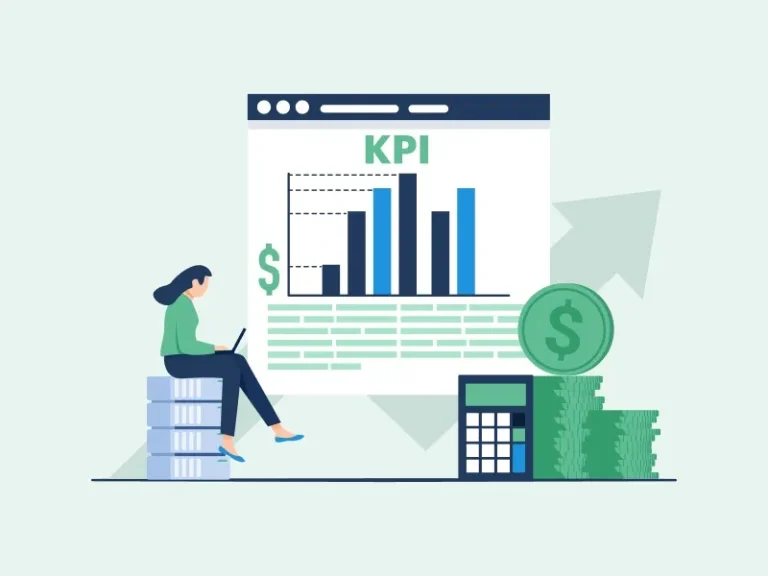
KPI reporting services help businesses convert raw numbers into clear insights that support better choices. In many companies, financial data stays scattered across systems, making it hard to see what is truly working. This is where KPI reporting solutions bring structure and meaning to data so leaders can act with confidence.
The importance of financial reporting is growing as businesses face tighter margins, faster change, and more data sources. Without proper reporting, even strong companies struggle to understand performance. With proper systems in place, KPI reporting services help turn data into direction.
This blog explains how KPI reporting solutions work, why they matter, and how they improve business decisions using clear financial signals.
What You Will Learn From This Blog
- How KPI reporting services convert financial data into decision-ready insights
- Why is the importance of financial reporting critical for growth
- Key financial KPIs that guide business direction
- How reporting improves planning, forecasting, and daily control
- Common gaps in financial reporting without KPI systems
- How businesses can select the right reporting support
What Are KPI Reporting Services And Why They Matter
Understanding KPI Reporting Services
KPI reporting services are structured systems that track and present key performance indicators from financial data. These services collect data from accounting systems and turn it into reports that show business health in simple terms.
Why Businesses Depend On KPI Reporting Solutions
Many companies struggle with raw data overload. KPI reporting solutions solve this by filtering only the most useful numbers. This improves clarity and supports faster action.
Link Between Financial Reporting And Decision Making
The importance of financial reporting lies in its ability to guide decisions on cost control, pricing, and growth. Without structured reporting, decisions often depend on guesswork.
Real-Time Financial Visibility
Modern KPI reporting services allow near real-time tracking of income, expenses, and margins. This helps leaders respond quickly when performance changes.
Why Accuracy Matters In Reporting
Errors in financial data can lead to poor planning. Reliable KPI reporting solutions reduce manual errors and improve trust in reports.
Building A Data-Driven Culture
When businesses use KPI reporting solutions, teams start focusing on measurable outcomes instead of assumptions. This strengthens overall performance control.
Importance Of Financial Reporting In Business Decision-Making
Financial Reporting as a Decision-Based
The significance of financial reporting is seen in how it supports every major business decision, from hiring to expansion. It ensures leaders are not relying on assumptions but on structured financial data.
Improving Transparency In Operations
Clear reporting improves trust between departments. The importance of financial reporting ensures everyone works with the same numbers.
Supporting Long-Term Strategy
Strategic planning depends on accurate data. KPI reporting services help highlight trends that guide long-term goals.
Reducing Financial Uncertainty
When reports are clear, risk is easier to manage. This is why the significance of financial reporting cannot be ignored in modern businesses.
Enhancing Stakeholder Confidence
Investors and partners rely on reports. Strong KPI reporting solutions improve communication and financial confidence. Reliable reporting also supports better investment decisions.
Aligning Goals With Performance
The importance of financial reporting ensures business goals match actual performance, reducing gaps between planning and execution. It helps track whether strategies are delivering expected results.
How KPI Reporting Services Transform Raw Financial Data
Converting Data Into Meaningful Insights
KPI reporting solutions take raw financial data and organize it into structured insights that are easy to read and understand.
This helps business leaders quickly identify performance trends and financial movement without analyzing complex data sets.
Filtering Key Financial Indicators
The significance of financial reporting lies in focusing only on financial metrics that directly impact business performance.
This ensures companies track revenue, costs, and profitability instead of getting distracted by irrelevant data points.
Visual Representation Of Data
KPI reporting services present financial information through dashboards, charts, and visual summaries.
This makes it easier for teams to understand trends and compare performance across different time periods.
Identifying Performance Gaps
These services highlight areas where actual performance is lower than expected targets.
This allows businesses to take timely corrective actions before issues affect financial stability.
Supporting Faster Decisions
KPI reporting solutions reduce dependency on slow manual reports and outdated spreadsheets.
This enables decision-makers to act quickly based on updated financial insights.
Strengthening Financial Control
The importance of financial reporting increases when businesses use KPI systems for consistent tracking.
It improves control over expenses, revenue monitoring, and overall financial discipline.
Role Of KPI Reporting Services In Measuring Business Performance
- KPI reporting services track revenue performance by monitoring income trends over time, helping businesses clearly understand whether growth is improving, stable, or declining.
- Cost efficiency monitoring becomes easier by identifying areas where expenses are rising faster than revenue, allowing better control over financial outflows.
- Profit margin measurement forms a key part of KPI reporting solutions, helping businesses understand actual earnings after all direct and indirect costs.
- The significance of financial reporting becomes clear when evaluating operational efficiency, showing how effectively resources are used to generate results.
- Performance comparison across different time periods, such as monthly, quarterly, or yearly reports, helps identify financial patterns and changes in business results.
- Continuous improvement is supported through KPI reporting solutions by enabling regular performance reviews and steady operational adjustments over time.
Key Financial KPIs That Drive Better Business Decisions
Revenue Growth Rate
Revenue Growth Rate shows how fast income is increasing over time and helps businesses understand the overall growth direction.
Consistent tracking of this KPI also helps identify whether growth is stable or influenced by seasonal changes.
Net Profit Margin
KPI reporting solutions track Net Profit Margin to measure the actual profit earned after all expenses are deducted.
This KPI also helps evaluate whether rising revenue is translating into real financial strength.
Operating Expenses Ratio
Operating Expenses Ratio helps control unnecessary spending by comparing operating costs with total revenue.
A higher ratio often signals inefficiencies that need immediate attention for better cost control.
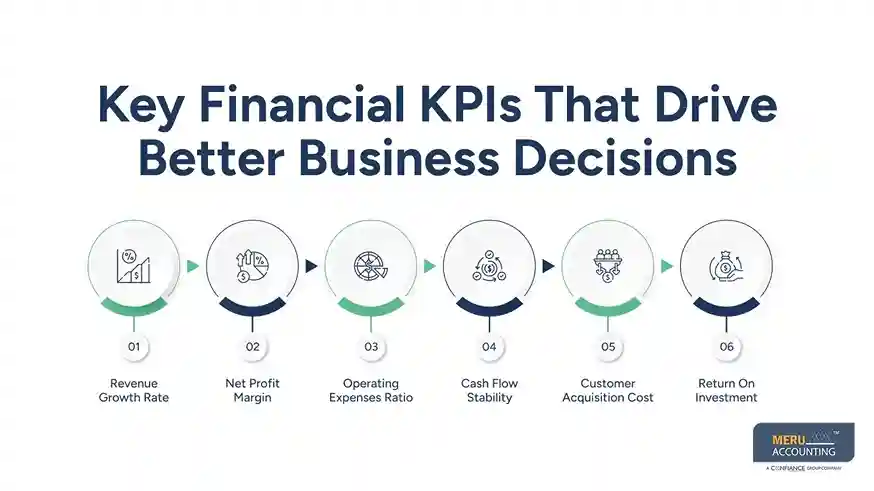
Cash Flow Stability
The importance of financial reporting is critical in tracking cash movement in and out of the business.
Strong cash flow stability supports smooth operations, timely payments, and better financial planning.
Customer Acquisition Cost
Customer Acquisition Cost evaluates how much is spent to gain a new customer and measures marketing efficiency.
Lower acquisition cost with higher customer value reflects stronger marketing performance.
Return On Investment
Return On Investment is a core KPI in KPI reporting services that measures the return generated from investments.
This KPI supports better decision-making by highlighting which investments deliver stronger financial outcomes.
How KPI Reporting Services Improve Operational Efficiency
Reducing Manual Work
KPI reporting services reduce manual reporting effort by automating data collection and report generation. This allows finance teams to focus more on analysis rather than repetitive data entry tasks.
Improving Team Coordination
Shared financial reports improve alignment across departments by ensuring everyone works with the same data. Clear visibility of KPIs also reduces miscommunication between finance, operations, and management teams.
Faster Financial Close Cycles
Structured reporting systems make monthly closing faster by organizing financial data in real time. This helps businesses finalize accounts quickly and focus on performance review without delays.
Better Resource Allocation
The significance of financial reporting becomes clear when resources are allocated based on accurate financial insights. Better visibility into costs and returns helps businesses distribute budgets more effectively.
Error Reduction In Data Entry
Automated systems reduce human errors by minimizing manual input in financial reporting processes. This improves data accuracy and builds stronger confidence in financial statements.
Continuous Monitoring Of KPIs
KPI reporting solutions ensure ongoing performance tracking instead of relying only on periodic reports. Continuous monitoring helps businesses detect issues early and maintain stable operational performance.
Benefits Of Using KPI Reporting Services For Growing Businesses
Better Financial Control
KPI reporting services help businesses gain stronger control over income, expenses, and overall financial movement.
Improved visibility into financial data also supports better monitoring of budgets and spending behavior.
Improved Decision Speed
KPI reporting solutions enable leaders to access accurate financial insights without delay.
Faster access to data supports timely decisions in areas like pricing, hiring, and expansion.
Stronger Growth Planning
The importance of financial reporting supports realistic growth planning based on actual performance data.
Reliable insights help businesses set achievable targets and avoid overestimating future outcomes.
Higher Profit Visibility
Clear KPI tracking improves understanding of where profits are generated and which areas underperform.
This visibility helps businesses focus on profitable segments and reduce low-return activities.
Reduced Business Risk
Early warning signals from KPI reporting solutions help identify financial issues before they grow.
This allows businesses to take corrective action early and reduce the chances of financial loss.
Improved Investor Confidence
Reliable KPI reporting solutions improve trust with stakeholders by presenting clear and consistent financial data.
Strong reporting practices also support better communication with investors during funding or review discussions.
Common Challenges In Financial Reporting Without KPI Systems
- Data disorganization becomes a major issue when KPI reporting services are not used, as financial information remains scattered across multiple files and systems.
- Slow decision-making often occurs due to manual reporting processes that delay access to updated financial information needed for timely actions.
- Limited financial insight is a common challenge because the importance of financial reporting is often not fully utilized in manual or unstructured systems.
- Higher error rates are seen in financial reports due to repeated manual entry and lack of automated validation controls.
- Lack of real-time data prevents businesses from accessing updated financial performance, leading to outdated decisions and missed opportunities.
- Poor performance tracking develops when KPI systems are not in place, making it difficult to measure progress or identify areas needing improvement.
How KPI Reporting Services Support Forecasting And Budgeting
Improving Budget Accuracy
KPI reporting solutions help create realistic budgets based on actual financial performance and historical trends. This reduces the gap between planned budgets and real business spending behavior.
Supporting Revenue Forecasts
Future income becomes easier to estimate using structured data and performance patterns tracked through KPI reporting services. Accurate forecasting also helps businesses plan growth strategies with more confidence.
Tracking Spending Patterns
The significance of financial reporting helps identify spending trends across different departments and time periods.
This visibility allows businesses to control unnecessary costs and improve financial discipline.
Enhancing Scenario Planning
Businesses can test different financial outcomes by analyzing various KPI-based scenarios. This supports better preparation for changes in market conditions or internal cost shifts.
Strengthening Cash Flow Forecasts
Cash flow visibility improves planning accuracy by tracking incoming and outgoing funds more clearly. Better forecasting ensures smoother operations and reduces the risk of liquidity issues.
Reducing Financial Surprises
Better reporting reduces unexpected financial issues by highlighting risks early through KPI tracking. Early insights help businesses take corrective actions before problems impact overall performance.
Choosing The Right KPI Reporting Services For Your Business
Understanding Business Needs
Every business needs different KPI structures based on its size, industry, and financial goals. Clear understanding of internal requirements helps in selecting reporting systems that match actual decision-making needs.
Checking Reporting Accuracy
Reliable KPI reporting services must ensure accurate and consistent financial data across all reports. High accuracy also builds trust in financial insights used for planning and performance evaluation.
Integration With Accounting Systems
Smooth integration improves data flow between accounting software and KPI reporting tools. This reduces manual work and ensures real-time synchronization of financial information.
Custom KPI Design
Reports should match business goals instead of using a one-size-fits-all reporting structure. Custom KPIs help track metrics that are directly linked to business performance and growth targets.
Scalability For Growth
Systems must grow with the business as transaction volume and reporting needs increase over time. Scalable solutions ensure consistent performance without requiring frequent system changes.
Strong Support And Guidance
The importance of financial reporting increases with expert support that helps interpret complex data correctly. Ongoing guidance ensures businesses use KPI insights effectively for better financial decisions.
How Meru Accounting Supports KPI Reporting Services
Meru Accounting provides structured KPI reporting services designed to help businesses turn financial data into clear decisions. Our team of certified experts focuses on accurate reporting, real-time dashboards, and KPI tracking that support both daily operations and long-term planning.
With strong experience in financial systems, Meru Accounting improves the significance of financial reporting by making data easier to understand and use. Businesses receive clear reports that highlight profit, cost control, and performance trends.
Our KPI reporting solutions also support forecasting, budgeting, and compliance reporting. This helps businesses reduce reporting gaps and improve financial clarity across all levels.
Our Expert Perspective
From our expert perspective in business finance, most reporting issues do not arise from a lack of data, but from the absence of a clear structure. When financial numbers are not organized into well-defined KPIs, decision-making becomes slower and less reliable.
The importance of financial reporting becomes more evident when businesses begin to miss early warning signals in cost, cash flow, or profit trends. KPI reporting services help close this gap by converting scattered financial data into simple, meaningful insights that support both daily operations and long-term strategic decisions.
Key Takeaways
- KPI reporting solutions help convert financial data into clear, structured insights that support faster and more confident business decisions.
- The importance of financial reporting remains central to business success as it supports planning, control, and overall financial understanding.
- KPI systems improve accuracy, speed, and financial control by reducing manual errors and improving real-time visibility of performance.
- Businesses gain stronger forecasting and planning ability through better tracking of revenue, costs, and cash flow patterns.
- Strong reporting systems reduce financial risk and support better growth decisions by highlighting issues early and improving response time.
FAQs
KPI reporting services are systems that turn financial data into simple reports. These reports help businesses understand performance and make better decisions.
The importance of financial reporting lies in helping businesses track income, costs, and profit clearly. It supports better planning and control.
They provide clear financial signals that show what is working and what is not, helping leaders make faster decisions.
Yes, even small businesses can use KPI reporting solutions to improve financial control and planning.
Without structured reporting, businesses may face errors, slow decisions, and weak financial understanding.