

For solo and small boutique law firms, managing finances while focusing on client cases can be overwhelming. This is where law firm bookkeeping services become an essential tool for maintaining accuracy, compliance, and financial clarity.
Proper bookkeeping ensures that every transaction, invoice, and expense is tracked, freeing lawyers to focus on what they do best; practicing law.
In this blog, we will explore how law firm bookkeeping services can streamline operations, improve financial insights, and support the growth of small legal practices. We will also discuss the role of law firm accounting and bookkeeping in providing a structured approach to managing a firm’s finances.
What You Will Learn From This Blog
- The key aspects of law firm bookkeeping services and why they matter to solo and boutique firms.
- How law firm accounting and bookkeeping components help maintain organized records.
- Ways outsourcing bookkeeping can reduce errors and improve cash flow.
- How bookkeeping services enhance client trust and professional reputation.
- Tips for selecting the right bookkeeping partner for small legal practices.
- Practical advice for maintaining efficient accounting practices in small firms.
By the end of this blog, you will have a clear understanding of how law firm bookkeeping services can simplify financial management and help your firm succeed.
Introduction to Law Firm Bookkeeping Services
Law firm bookkeeping services are specialized financial management solutions designed specifically for legal practices. These services cover recording income, tracking expenses, managing client trust funds, and handling invoices, all while ensuring compliance with accounting standards.
By keeping every financial detail organized, law firms can maintain clear and accurate records without adding extra workload to their legal team.
Small and solo law firms often face challenges in managing time and resources efficiently. Proper bookkeeping not only keeps financial records accurate but also supports strategic planning and timely tax filing.
While bookkeeping focuses on recording transactions, accounting interprets these records to provide insights for financial decision-making. Together, law firm accounting and bookkeeping create a complete and organized view of the firm’s finances, helping lawyers make informed choices.
Compliance is another critical aspect of law firm bookkeeping. Legal practices must follow strict rules when handling client funds and maintaining records. By using law firm bookkeeping services, firms can ensure they meet trust accounting requirements and adhere to local regulations.
For small firms, outsourcing these services is a cost-effective solution, allowing lawyers to focus on their legal work while ensuring that all financial processes are handled accurately.
Key Components of Law Firm Accounting and Bookkeeping
Client Trust Accounting
Managing client funds requires precision. Law firm accounting and bookkeeping ensures that trust accounts are reconciled regularly, avoiding any legal complications.
Income and Expense Tracking
Tracking revenue from billable hours, retainers, and expenses is crucial for small firms. This provides clear insights into profitability.
Billing and Invoicing Management
Accurate billing prevents missed payments. Accounting and bookkeeping services help generate professional invoices promptly, improving cash flow.
Financial Reporting
Reports such as profit and loss statements, balance sheets, and cash flow statements allow lawyers to make informed decisions.
Tax Preparation Support
Keeping records organized simplifies tax filing and reduces errors. Law firm accounting and bookkeeping services often include preparation support for income and business taxes.
Payroll Management
Even small firms need payroll accuracy. Proper bookkeeping ensures salaries, deductions, and benefits are managed without errors.
How Outsourcing Law Firm Bookkeeping Services Benefits Solo and Boutique Firms
Saves Time for Lawyers
Outsourcing bookkeeping frees up valuable hours, allowing lawyers to focus on client cases instead of financial management.
Reduces Errors
Professional bookkeeping reduces mistakes in transaction records, invoices, and trust accounts. Accuracy in accounting protects the firm from legal and financial issues.
Cost Efficiency
Hiring a full-time accountant can be expensive. Outsourced law firm bookkeeping services provide expertise at a fraction of the cost.
Access to Professional Expertise
Bookkeeping service providers have specialized knowledge in law firm accounting and bookkeeping, ensuring proper handling of legal finances.
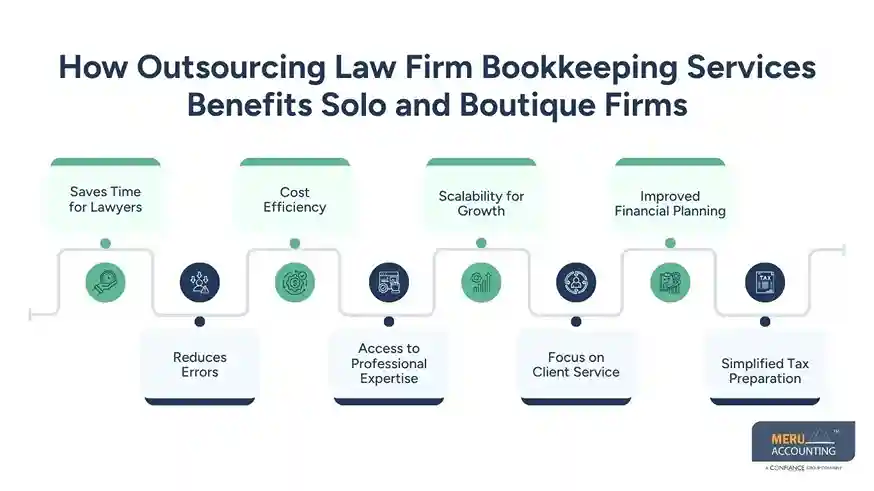
Scalability for Growth
As the firm grows, outsourced bookkeeping services can adjust to handle increased financial complexity without the need for additional in-house staff.
Focus on Client Service
With bookkeeping handled, lawyers can dedicate more attention to clients, improving service quality and satisfaction.
Improved Financial Planning
Outsourced services provide timely reports and insights, helping small firms make informed decisions about budgeting, investments, and expansion.
Simplified Tax Preparation
Keeping accurate and organized records makes tax filing easier and reduces the risk of errors or penalties.
How Law Firm Bookkeeping Services Improve Client Relationships
Accurate Billing Builds Trust
Clients trust firms that provide clear and accurate invoices. Law firm bookkeeping services ensure every charge is recorded and explained properly.
Timely Updates on Account Status
Regular financial reporting allows clients to see how funds, such as retainers, are managed, strengthening transparency.
Enhanced Communication
Bookkeeping systems help lawyers provide precise financial information to clients when needed, reducing misunderstandings.
Better Fee Management
Proper bookkeeping prevents overcharging or undercharging, maintaining ethical standards and client satisfaction.
Professional Image
Accurate and organized financial records present a professional image to clients, reinforcing the firm’s credibility.
Client Retention
Satisfied clients are more likely to continue services and recommend the firm to others. Proper financial management contributes directly to client loyalty.
Choosing the Right Law Firm Accounting and Bookkeeping Partner
Look for Legal Industry Expertise
Select a provider experienced in handling law firm accounting and bookkeeping, familiar with trust accounts, billable hours, and legal regulations.
Evaluate Service Offerings
Ensure the provider offers comprehensive bookkeeping services, including income tracking, expense management, and financial reporting.
Technology and Software Integration
Choose partners who utilize reliable accounting software that integrates with your current practice management tools.
Cost Transparency
Compare service fees and ensure no hidden costs. Clear pricing allows for accurate budgeting.
Reputation and Reviews
Check testimonials and case studies to ensure the provider has a proven track record with small and solo firms.
Personalized Support
Small firms benefit from partners who offer dedicated support and understand unique financial needs.
Tips for Maintaining Efficient Law Firm Bookkeeping in Small Practices
Keep Transactions Organized
Maintain a consistent system for recording client payments, expenses, and invoices. This helps prevent missed entries and ensures all financial activity is documented.
Reconcile Accounts Regularly
Regular reconciliation of bank accounts and trust accounts prevents errors and discrepancies. It also helps detect any unusual or unauthorized transactions early.
Track Billable Hours Accurately
Ensure that all client work is tracked and billed correctly to maintain revenue accuracy. Accurate tracking also ensures clients are billed fairly and on time.
Separate Personal and Business Finances
Keep personal and firm finances separate to simplify accounting and tax filing. This separation also makes audits and financial reviews much easier.
Use Accounting Software
Utilize software solutions for automated tracking, reporting, and invoice generation. Software also reduces manual errors and saves time on routine tasks.
Review Financial Reports Periodically
A monthly review of reports helps identify trends, cash flow issues, and areas for improvement. Regular reviews support informed decision-making for the firm’s growth.
Why Choose Meru Accounting for Law Firm Bookkeeping Services
Partnering with Meru Accounting for law firm bookkeeping services ensures that solo and boutique firms receive expert financial management tailored to their unique needs. With Meru Accounting, law firms can maintain accuracy, compliance, and clarity while focusing on delivering exceptional client service.
Expertise in Law Firm Accounting
Meru Accounting specializes in law firm accounting and bookkeeping, offering tailored solutions for solo and boutique practices.
Experienced Team
Our professionals understand legal finance, trust accounting, and billing nuances, ensuring accurate records.
Flexible Services
We provide scalable law firm bookkeeping services to meet your firm’s current and future needs.
Cost-Effective Solutions
Meru Accounting delivers professional bookkeeping at a cost lower than hiring a full-time accountant, ideal for small firms.
Reliable Support
With Meru Accounting, you gain a dependable partner for managing finances, allowing you to focus on clients and growth.
Key Takeaways
- Law firm bookkeeping services help small and solo firms manage finances accurately, saving time and reducing stress.
- Law firm accounting and bookkeeping involves income tracking, client trust management, billing, and financial reporting.
- Outsourcing bookkeeping improves accuracy, saves costs, and allows lawyers to focus on clients.
- Proper bookkeeping strengthens client relationships by providing accurate, timely, and transparent financial information.
- Choosing a knowledgeable and experienced partner like Meru Accounting ensures tailored services and peace of mind.
FAQs
Law firm bookkeeping services involve recording and managing a law firm’s financial transactions, including client payments, expenses, and invoices.
They save time, reduce errors, and help maintain accurate financial records, allowing lawyers to focus on clients.
Yes, outsourcing provides expert services at a lower cost than hiring a full-time accountant.
Accurate billing, transparent financial reporting, and timely updates build client trust and satisfaction.
Look for a provider with experience in law firm accounting and bookkeeping, good reviews, clear pricing, and reliable support.