
Running a modern legal practice today requires more than just legal expertise and client management skills. Law office accounting provides lawyers with a clear understanding of their income, expenses, and overall financial health, ensuring that daily operations remain organized and transparent.
With proper accounting, firms can track cash flow, manage client funds, and make informed financial decisions that directly impact their stability and growth.
Accurate accounting records also play a critical role in reducing tax pressure. By maintaining well-structured financial statements, lawyers can monitor their liabilities, identify potential deductions, and avoid surprises during tax season.
Law office accounting forms the foundation for effective tax planning for lawyers, helping legal professionals stay compliant while maximizing savings.
For new and growing firms, organized accounting systems are essential. As financial transactions increase with business expansion, structured processes prevent errors, minimize risks, and provide a reliable framework for long-term financial stability.
What You Will Learn From This Blog
- How law office accounting works and why it is essential for financial planning in legal practices.
- How organized records directly support Tax planning for lawyers and help reduce unnecessary tax payments.
- Common accounting mistakes that increase tax liability and how to avoid them.
- Practical steps to improve accounting systems in a clear and manageable way.
- How consistent accounting practices support long-term tax savings and overall financial stability.
- How proper accounting helps law firms prepare for audits with confidence and minimal stress.
- The role of accurate financial data in making informed decisions about firm growth and investments.
What Is Law Office Accounting?
Overview And Purpose
Law office accounting refers to the process of recording, organizing, and reviewing all financial activities within a legal practice in a structured manner. It ensures that all transactions, from client payments to operational expenses, are properly documented for clarity and control.
Legal-Specific Financial Rules
Unlike other businesses, law firms handle client trust accounts, retainers, and settlements, which require careful tracking and compliance. Following these specialized rules prevents legal and financial penalties while maintaining client confidence.
Importance Of Accurate Records
Accurate accounting ensures financial transparency and supports reliable reporting for tax and compliance needs. It also provides a clear picture of the firm’s financial health, helping lawyers make informed business decisions.
Daily Financial Operations
Billing, payroll, operating expenses, and reimbursements all rely on consistent law office accounting practices. Proper daily management ensures that the firm’s finances are organized and accessible at any time.
Connection To Tax Planning
Clean financial data allows Tax planning for attorneys to be based on facts rather than estimates. Accurate records make it easier to identify deductions, manage liabilities, and reduce unnecessary tax payments.
How Law Office Accounting Supports Strategic Tax Planning
Clear Income Recording
When income is recorded properly, lawyers can understand taxable earnings and plan payments accurately. This helps in forecasting revenue trends and preparing for year-end tax obligations with confidence.
Expense Documentation
Detailed expense tracking ensures that eligible deductions are not missed during tax filing. Proper categorization of expenses also makes it easier to justify deductions if questions arise from tax authorities.
Regular Financial Review
Consistent review of accounting reports helps lawyers identify tax-saving opportunities early. It also allows them to spot irregularities or overspending before it affects the firm’s financial health.
Support For Estimated Taxes
Accurate law office accounting allows better calculation of quarterly tax payments. This ensures timely payments and prevents unnecessary interest or penalties.
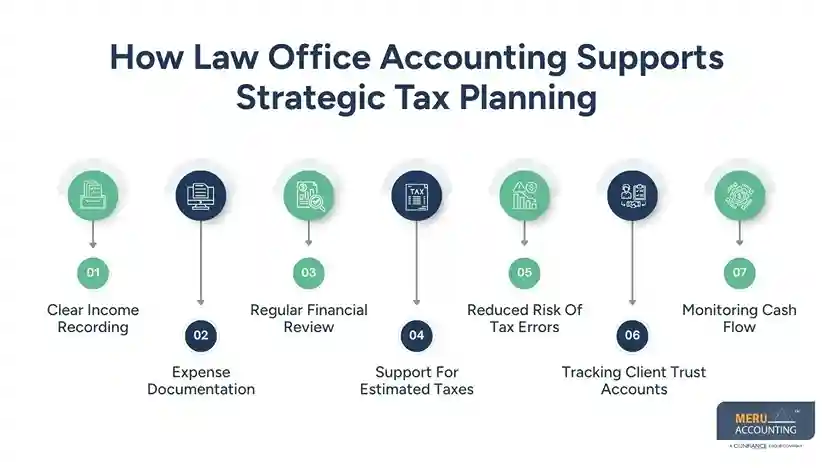
Reduced Risk Of Tax Errors
Organized records lower the chance of filing mistakes that can trigger penalties. Reliable data also simplifies audit processes and gives lawyers peace of mind.
Tracking Client Trust Accounts
Proper management of client trust accounts ensures funds are handled legally and ethically. It also prevents misallocation of funds that could lead to compliance issues or financial disputes.
Monitoring Cash Flow
Regular cash flow monitoring helps lawyers plan for upcoming expenses and tax liabilities. It provides a clear picture of available resources for operational or investment decisions.
Why Tax Planning for Lawyers Starts With Accurate Accounting Systems
Reliable Financial Information
Tax planning for lawyers depends on correct numbers that reflect actual business performance. Accurate data allows lawyers to make informed decisions and avoid surprises during tax season.
Consistent Data Entry
Regular updates prevent gaps that can lead to misreporting and tax confusion. Maintaining consistent records also makes it easier to track trends and spot discrepancies early.
Clear Separation Of Funds
Keeping personal, business, and trust funds separate is essential for both compliance and tax accuracy. This separation protects client funds and ensures clarity in financial reporting.
Year-End Readiness
Strong accounting systems prevent rushed tax preparation and missed deductions. They also simplify the compilation of reports needed for filing taxes on time.
Better Audit Preparedness
Clear records provide confidence and support if financial reviews occur. Organized accounting reduces stress during audits and helps demonstrate compliance with all financial regulations.
Common Law Office Accounting Mistakes That Increase Tax Liability
Mixing Personal And Business Spending
Using one account for all expenses creates confusion and often leads to higher taxable income. It also makes it difficult to track deductible expenses and can trigger red flags during tax audits.
Incomplete Expense Records
Missing receipts weaken an attorney’s tax planning and reduce valid deductions. Without proper documentation, even legitimate expenses may be disallowed by tax authorities.
Late Financial Updates
Delayed entries cause inaccurate reports and poor tax decisions. Regular updates ensure that financial statements reflect the current status of the firm’s finances at all times.
Trust Account Errors
Improper handling of trust funds can result in compliance issues and financial penalties. Careless management may also damage client relationships and lead to reputational risks.
Lack Of Regular Review
Without ongoing review, small errors grow into larger tax problems. Consistent monitoring allows lawyers to catch discrepancies early and maintain financial accuracy.
Core Components of Law Office Accounting for Tax Planning Success
Structured Chart Of Accounts
A clear chart of accounts helps organize financial data properly. It categorizes income, expenses, assets, and liabilities in a way that makes reporting and analysis much easier for lawyers.
Trust Account Management
Trust accounts require careful tracking to meet legal and financial rules. Proper management ensures client funds are protected, avoids regulatory penalties, and maintains professional integrity.
Expense Tracking Systems
Consistent expense tracking supports effective Tax planning for lawyers. Keeping detailed records of all expenditures ensures that eligible deductions are maximized and tax filings are accurate.
Billing And Revenue Recording
Accurate billing ensures income is reported correctly. It also helps monitor outstanding invoices, track client payments, and manage cash flow efficiently.
Financial Reporting Tools
Reports provide insight needed for informed tax decisions. They allow lawyers to review profitability, plan for upcoming tax obligations, and make strategic financial choices with confidence.
Proven Steps To Improve Law Office Accounting Systems
Establish Clear Accounting Policies
Written rules help maintain consistency in financial recording. They ensure everyone in the firm follows the same process for income, expenses, and reporting, reducing errors and confusion.
Perform Monthly Reviews
Monthly reviews help keep law office accounting accurate and current. Regular monitoring also allows early detection of discrepancies and improves preparedness for tax planning.
Separate Financial Accounts
Using different accounts reduces errors and supports compliance. Keeping personal, business, and trust accounts separate ensures transparency and protects client funds.
Maintain Supporting Documents
Invoices and receipts provide proof for deductions and tax filings. Keeping organized records also simplifies audits and strengthens Tax planning for lawyers.
Seek Professional Assistance
Expert support strengthens accounting systems and tax planning. Professionals can advise on best practices, correct mistakes, and implement systems tailored to the firm’s needs.
Automate Routine Processes
Using accounting software for routine tasks reduces manual errors and saves time. Automation also ensures that reports, invoices, and reconciliations are always up-to-date.
Train Staff On Accounting Practices
Educating employees on proper financial procedures ensures consistency and accuracy across the firm. Staff awareness minimizes mistakes and enhances overall accounting quality.
Monitor Regulatory Changes
Keeping track of changes in tax laws and accounting standards helps the firm stay compliant. It ensures that Tax planning for lawyers remains accurate and legally sound.
How Law Office Accounting Supports Long-Term Tax Savings
Better Financial Forecasting
Accurate records allow lawyers to plan future tax payments with confidence. Forecasting helps anticipate potential liabilities and ensures funds are available when taxes are due.
Smarter Expense Control
Understanding expenses helps reduce unnecessary spending and taxes. Detailed tracking highlights areas where costs can be optimized without affecting operations.
Planned Use Of Deductions
Strong law office accounting helps identify eligible deductions early. This ensures that lawyers can maximize savings while remaining fully compliant with tax regulations.
Lower Risk Of Penalties
Proper records reduce errors that cause fines and interest. Maintaining organized documentation also makes it easier to respond to any inquiries from tax authorities.
Stable Practice Growth
Good accounting supports steady financial progress over time. By understanding cash flow, revenue, and expenses, law firms can make informed decisions to expand sustainably.
Law Office Accounting and Tax Planning Solutions by Meru Accounting
Experience With Legal Accounting
Understanding the unique financial needs of law firms is essential for accurate accounting. Knowledge of trust accounts, retainers, and client settlements ensures compliance and smooth operations.
Accurate Financial Recordkeeping
Maintaining clear and organized law office accounting systems helps lawyers track income, expenses, and liabilities. Reliable records provide transparency and support informed business decisions.
Focus On Tax Planning Support
Well-structured accounting systems strengthen Tax planning for lawyers by providing accurate data for deductions, estimated taxes, and year-end filings. Organized data reduces errors and improves overall tax efficiency.
Trust Account Compliance Support
Proper management of client trust accounts ensures that all funds are handled according to legal and ethical requirements. This protects clients, prevents penalties, and builds trust in the firm.
Ongoing Financial Guidance
Regularly reviewing financial statements helps law firms plan for growth, identify cost-saving opportunities, and manage tax obligations effectively. Continuous monitoring supports long-term stability and savings.
Implementing Best Practices
Adopting standardized accounting procedures across the firm ensures consistency and reduces the risk of mistakes. Clear workflows make training new staff easier and keep all financial processes efficient.
Utilizing Financial Reports
Using regular reports and analytics allows law firms to make strategic decisions about cash flow, budgeting, and investment opportunities. These insights contribute to smarter planning and reduced tax liability.
Key Takeaways
- Strong law office accounting provides a solid foundation for effective tax planning and financial management.
- Maintaining accuracy in daily financial activities directly impacts year-end tax outcomes and overall firm health.
- Planning ahead for taxes through organized accounting reduces stress and prevents unexpected liabilities.
- Small mistakes in accounting can lead to high costs, so attention to detail is essential.
- Professional guidance and support in accounting improve accuracy, efficiency, and long-term financial results.
FAQs
Law office accounting tracks all financial activities in a law firm, including income, expenses, and trust accounts. It is important for accuracy, compliance, and supporting tax management for lawyers.
Accurate accounting shows real income and expenses, helping lawyers identify deductions and plan taxes. This makes Tax planning for lawyers more precise and effective.
Mistakes include mixing personal and business expenses, late expense recording, and ignoring trust account rules. These errors raise tax liability and complicate Tax planning for lawyers.
Law firms should review their records at least monthly to catch errors early. Regular reviews make Tax planning for lawyers simpler and more accurate.
Yes, professionals ensure accurate records, proper trust account handling, and smooth attorney Tax Planning. This reduces risks and saves time for law firms.