A production line can run all day and still lose money. A machine may be busy, orders may leave on time, and output may look strong, yet high scrap, excess stock, long setups, or rework can eat into the margin. This is where lean manufacturing accounting gives finance and production teams a shared view of what is really happening.
Think of a plant that makes 10,000 units a month. If the plant cuts setup time by 20 minutes per batch, the gain is not just a smaller time figure. It can mean more available machine time, smaller batches, less stock, and faster order flow. Lean manufacturing accounting brings these changes into the cost view so managers can see the financial effect of operational decisions.
What You Will Learn From This Blog
- What lean manufacturing accounting means in a real manufacturing setting.
- How value streams can change the way manufacturing costs are viewed.
- How to plan lean accounting implementation without changing everything at once.
- Which production measures should be linked with finance data.
- Why lean accounting implementation can fail even when the numbers look right.
- How to measure results after the new accounting approach is in place.
What is Lean Manufacturing Accounting?
Links Finance With the Shop Floor
Finance may see labor cost, material cost, and overhead, while a production manager sees downtime, queues, scrap, and setup time. Lean manufacturing accounting brings these views closer so the same business problem can be seen from both sides.
Focuses on Value Streams
Instead of asking only, “What did this machine cost?” a value-stream view asks, “What does it cost to move this product from order to shipment?” This approach gives a wider view of related work, people, machines, stock, and costs.
Uses Clear Cost Data
A long cost report can contain plenty of data but still leave managers unsure what action to take. Lean manufacturing accounting aims to put useful cost information in a form that plant teams can read and act on.
Cuts Extra Transactions
Manufacturers often spend time moving figures between reports that add little value. A lean approach looks for a simpler flow of data while keeping the checks needed for financial control and audit work.
Keeps Financial Control
Lean does not mean ignoring accounting rules. Lean manufacturing accounting can be used for management decisions while normal financial reporting, tax records, inventory controls, and audit requirements remain in place.
Why Manufacturers Need Lean Accounting for Better Cost Control
Cost Data Can Lag
Imagine production falls behind on Tuesday but finance sees the cost effect weeks later. That gap can make a small issue look like a month-end surprise. Lean manufacturing accounting brings operating events and cost review closer together.
High Stock Can Hide Waste
A warehouse full of finished goods can look like strong production, but unsold stock also ties up cash. Looking at stock alongside demand, flow, and cost gives managers a better view of whether the extra output has real value.
Batch Runs Can Mislead
A large batch may reduce the reported cost per unit while creating more stock and longer waits. Lean manufacturing accounting looks beyond that single unit figure and considers what the batch does to the full value stream.
Capacity Has a Cost
Suppose a setup change frees two hours each day. The gain is not automatically a payroll saving. It may create room for more orders, maintenance, or smaller batches, so the freed capacity needs to be tracked.
Decisions Need Full Data
A product may look costly under one cost rate, while another may use more rework, stock, or machine time. A complete cost view gives managers the facts they need before changing prices, batch sizes, staffing, or processes.
Core Principles of Lean Manufacturing Accounting
Value Stream Costing
Lean manufacturing accounting groups related work around a value stream rather than treating every task as an isolated cost point. This can make it easier to see what it takes to serve a product family.
Simple Reports
The best report is not always the longest one. A weekly value-stream report can bring sales, cost, stock, quality, delivery, and capacity into one place so managers can spot a change without reading several reports.
Daily Operating Data
Month-end numbers tell you what happened, but they may not tell you why. Output, downtime, scrap, setup time, and order flow add the operating detail needed to explain a cost change.
Capacity Matters
A process change may free machine hours without cutting any fixed cost. The lean cost approach tracks that spare capacity because it can later be used for more orders, smaller batches, planned maintenance, or fewer delays.
Continuous Review
A report that works today may not work after the plant changes its product mix. Lean manufacturing accounting therefore needs regular review so the measures remain tied to actual production needs.
Lean Accounting Implementation: A Step-by-Step Roadmap
Map the Current State
Do not begin by changing the accounting software. Start by following one product family from order to shipment. During lean accounting implementation, this shows where material, information, time, and cost actually move.
Pick a Pilot Area
A pilot keeps the first test manageable. Choose a value stream with clear demand, known problems, and a team willing to compare the current reports with the new approach.
Set the Cost View
Decide what belongs to the selected value stream. Material, labor, equipment, outside work, facility costs, and other relevant costs should have clear rules before lean accounting implementation moves further.
Build the Report
Build a report around questions managers already ask: Are orders moving on time? Is stock rising? Where is scrap growing? Is capacity being used? A useful reporting setup turns these questions into a small set of linked measures.
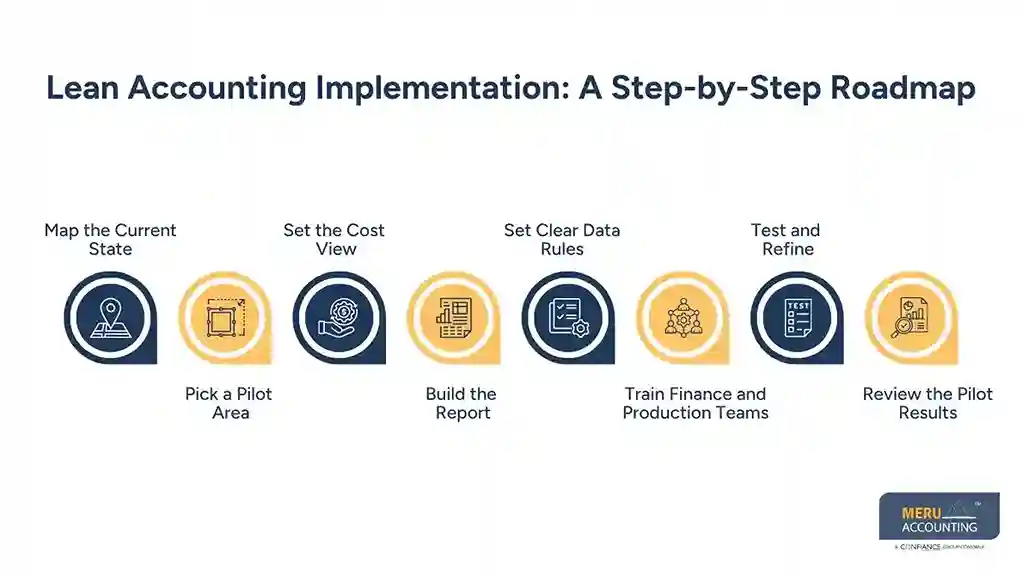
Set Clear Data Rules
Define where each figure will come from and who will check it. Clear rules for sales, material, labor, inventory, scrap, and production data can prevent different teams from using different numbers.
Train Finance and Production Teams
The new process works better when finance and production teams understand the same measures. Show staff how each metric is calculated, where the data comes from, and how it should be used.
Test and Refine
Run the new report beside the existing financial reports for a set period. This part of lean accounting implementation can reveal missing data, poor account mapping, timing gaps, or measures that do not match the plant’s actual work.
Review the Pilot Results
Compare the new reports with the old process and check what changed. Review cost, inventory, quality, delivery, and capacity results before deciding whether the approach is ready for another value stream.
optional anymore
on running the business
How to Align Lean Accounting With Production Metrics
Track On-Time Delivery
A lower cost means little if customer orders are late. On-time delivery should sit beside cost and output so the plant can see whether a cost change is also affecting service.
Track Inventory Days
Inventory days show how long cash may remain tied up in material or finished goods. A fall can be useful, but stock still needs to meet production and customer demand.
Track Scrap
Scrap does more than waste material. It can also use labor, machine time, energy, and floor space. Lean manufacturing accounting should connect major scrap changes with their cost effect.
Track Setup Time
If setup time falls from 60 minutes to 35 minutes, the gain is more than 25 minutes on a sheet. The plant may now run smaller batches or use the freed time for other orders.
Track Productivity
Productivity should be read with the type of work being done. A rise in units per worker may look good, but the full picture also needs quality, delivery, product mix, and value-stream cost.
Common Challenges in Lean Accounting Implementation
Old Cost Systems
Many plants have years of data built around standard costs and departmental reports. These reports may still be needed, but lean accounting implementation may require an additional view for daily operating decisions.
Too Many Measures
When every team adds its own metric, the report soon becomes hard to use. A small set of cost, flow, quality, stock, delivery, and capacity measures is often easier to review.
Poor Data Links
Production data may sit in one system while sales, stock, and finance data sit in others. Lean accounting implementation can stall when teams cannot agree on which source is correct.
Fear of Change
Finance may worry about control while production may worry about extra reporting work. A pilot, clear roles, and side-by-side testing can show how the new process will work before a wider rollout.
Weak Lean Process
Accounting cannot fix a production flow that has not been studied. Lean manufacturing accounting works best when finance understands the value stream and production understands how its actions affect cost.
How to Measure Lean Accounting Results and Improve Performance
Compare Cost Per Stream
Compare value-stream cost over time instead of reacting to one month’s figure. Lean manufacturing accounting can show whether changes in material, labor, scrap, or flow are changing the total cost.
Review Cash and Stock
Look at stock levels together with purchase timing, sales, and production demand. This shows whether a fall in unit cost is being offset by more cash sitting in inventory.
Check Quality Cost
A plant can raise output while also raising rework and claims. Tracking these costs beside production volume gives managers a clearer view of whether the change is actually useful.
Review Capacity Gains
If a process change frees 100 machine hours, record what happens next. Lean manufacturing accounting should show whether those hours create more sales, shorter lead times, planned maintenance, or another measurable gain.
Use a Value-Stream Scorecard
A value-stream scorecard can bring financial and operating measures together. It gives managers one place to compare sales, cost, stock, quality, delivery, and capacity instead of piecing the story together from separate reports.
Why Choose Meru Accounting For Lean Manufacturing Accounting?
Reviews Manufacturing Cost Data
Meru Accounting provides accounting services for manufacturers and reviews financial data across key business areas. Lean manufacturing accounting data can be viewed with other financial information to give management a more complete cost picture.
Connects Finance With Operations
Production changes often show up in financial data later. Meru Accounting can review finance data alongside production, sales, stock, and related business information during a lean accounting implementation project.
Works With Accounting Systems
At Meru Accounting, we provide accounting services using QuickBooks, Xero, Zoho Books, NetSuite, and Odoo. The right system setup depends on the firm’s size, production process, data needs, and reporting structure.
Builds Clear Reports
A report should tell managers what changed without making them search through pages of figures. Meru Accounting can structure reports around the measures that matter to each value stream and management team.
Our Expert Perspective
Lean manufacturing accounting should start with the work, not the spreadsheet. Follow the value stream, find where cost and time are being lost, test the data, and then build a report that tells managers what needs attention.
The report should also show what changed after each process step, not just the final cost. This makes it easier to link shop-floor actions with their effect on stock, output, quality, and margin.
A small set of clear measures is often more useful than a large report that no one checks on a regular basis.
Key Takeaways
- Lean manufacturing accounting connects financial data with actual plant activity.
- Value-stream costing gives managers a wider view than a single unit cost.
- Lean accounting implementation works best when it starts with one pilot area.
- Cost, quality, stock, delivery, and capacity should be read together.
- Production data can explain why a financial result changed.
- Lean accounting implementation needs clear data rules and defined roles.
- Capacity gains should be tracked after process changes.
- A simple value-stream report can make finance and plant reviews easier.
FAQs
Lean manufacturing accounting connects financial data with production activity to track costs, waste, inventory, quality, delivery, and capacity.
It groups financial and production data around value streams so manufacturers can see the cost of producing and delivering a product family.
The process usually includes mapping a value stream, choosing a pilot area, setting cost rules, creating reports, testing data, and reviewing results.
Common metrics include value-stream cost, inventory, scrap, on-time delivery, setup time, productivity, sales, and available capacity.
Manufacturers can compare value-stream cost, inventory, quality, delivery, capacity, and cash results before and after process changes.
optional anymore
on running the business