
Your practice may be growing, but can you tell if your profits are growing with it? Medical and dental accounting gives you a clear look at revenue, expenses, payroll, insurance payments, and unpaid balances.
As patient volume rises, so does the amount of financial data behind each month. More providers can mean more payroll. More procedures can mean more insurance claims. And higher revenue does not always mean more cash in the bank.
A solid accounting process helps you keep those numbers in check. It also gives you the information you need to spot issues early and make sound choices as your practice grows.
What You Will Learn From This Blog
In this blog, you will learn how to:
- Adjust your accounting setup as your practice grows
- Keep patient and insurance income easy to track
- Review the key numbers that show the health of your practice
- Set up a simple monthly finance review
- Know when outside accounting help may be useful
- Avoid common financial and record-keeping gaps
What Changes Financially as a Medical or Dental Practice Grows?
Growth can change the way money moves through your practice. As the practice adds providers or locations, accountants for dental practices can also help create a reporting setup that keeps each area easier to track.
You may add more staff, bring in new providers, move to a larger site, or open a new office. Each change adds more bills, pay data, income, and records to track.
Patient and insurance payments can also become more complex. A higher number of claims means more items to post, check, and follow up on. A small error in one claim may seem minor. Many such errors can have a real effect on cash flow.
Your cost base may grow as well. Rent, payroll, supplies, lab fees, software, equipment, and other costs can rise at the same time as sales.
This is why your accounting process should grow with the practice. You need clear records, set rules, and regular reviews.
A growing practice should not rely on its bank balance alone. Cash in the bank does not always show what you have earned, what you owe, or what is still due from a payer. This is where medical and dental accounting becomes more important as the practice adds people, services, and locations.
What Does Medical and Dental Accounting Include?
Medical and dental accounting covers the day-to-day work needed to keep your practice books in good shape. The exact tasks can vary by practice size, setup, and type of care. The goal of medical and dental accounting is to keep these records accurate and useful for day-to-day practice decisions.
Common tasks include:
Bookkeeping and Transaction Tracking
All sales, costs, fees, and other business items should be posted to the right account. A clear chart of accounts makes reports easier to read and compare.
Bank and Card Reconciliation
Your books should be checked against bank and card records on a set schedule. This helps find errors, missed items, and duplicate entries.
Accounts Receivable
You need to know what is due from patients and payers. Aging reports can help you spot old balances that need action.
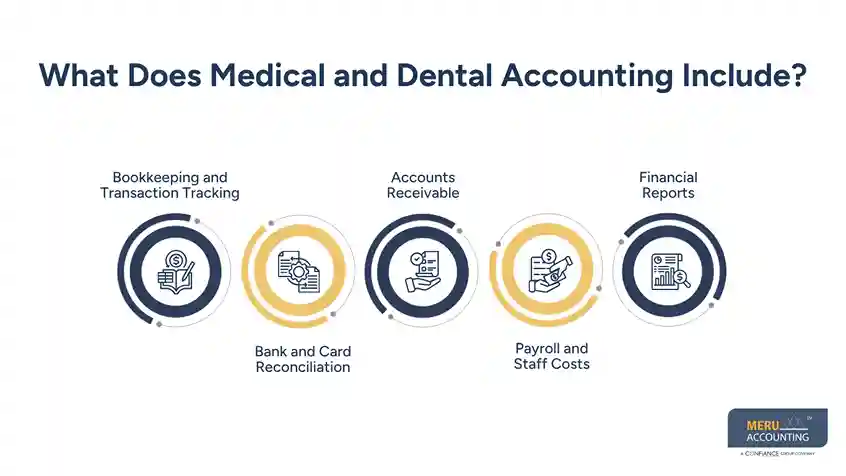
Payroll and Staff Costs
Payroll is often one of the highest costs in a practice. Tracking wages, benefits, and related costs helps you see the true cost of your team.
Financial Reports
Profit and loss reports, balance sheets, cash flow data, and other reports can give you a clear view of the practice.
Good medical and dental accounting is not just about putting numbers into software. It is about making sure the numbers are right and useful.
optional anymore
on running the business
Keep Patient and Insurance Revenue Accurate
Revenue can look strong on paper while cash flow remains tight. This can happen when claims are slow to pay or patient balances are left open.
Start by keeping patient payments and insurance payments easy to track. Your accounting records should also tie back to your practice management system where possible.
Review deposits on a regular basis. Check that the amount received matches the records in your system. If the numbers do not match, find the cause rather than letting the gap roll into the next month.
Insurance adjustments also need care. Write-offs, denied claims, refunds, and other changes can affect reported revenue. Your team should use clear rules for how these items are posted. Strong medical and dental accounting also makes it easier to trace these changes back to the records behind your revenue.
It is also wise to review aging reports. Look for balances that have been open for too long. A rising amount of old receivables can be a sign that your billing or follow-up process needs work.
The same rule applies to patient balances. Do not wait until year-end to find out that a large amount of money is still unpaid.
Monitor the Financial Metrics
You do not need to review every number each day. You do need a small set of useful numbers on a regular basis.
Revenue
Track total revenue over time. If you have more than one provider, service line, or site, review results by each area when your system allows it.
Accounts Receivable
Review the age and size of open balances. A rise in older balances can affect cash flow even when sales are growing.
Collection Rate
Your collection rate can help show how much of the money earned is being collected. A drop may point to billing, claim, or payment issues.
Payroll Cost
Watch payroll as a share of revenue. A growing team can help a practice serve more patients, but labor costs need to stay in line with the value the team brings.
Operating Costs
Review rent, supplies, lab costs, software, repairs, marketing, and other key costs. Compare them with past periods to spot sharp changes.
Cash Flow
Cash flow shows how money moves in and out of the practice. A practice can report a profit and still face cash pressure if too much money is tied up in unpaid balances or large bills.
These metrics make medical and dental accounting more useful for day-to-day decisions. Accountants for dental practices can help turn these numbers into useful trends rather than leaving the owner to review each report alone.
How to Create a Monthly Financial Review Process
A monthly review does not need to take hours if your records are kept up to date.
Start with your bank and card accounts. Make sure each account is reconciled and that open items have been checked.
Next, review your profit and loss report. Look for major changes in sales or costs. Ask why a number moved before you decide what to do about it.
Then review accounts receivable. Look at both the total balance and its age. Pay close attention to old patient and insurance balances.
Review payroll and other large costs as well. If expenses rose, check whether the change was planned. This can help you catch a cost issue before it grows.
Finally, compare the current month with prior months or your budget. Look for trends instead of judging the practice from one month alone.
Keep a short list of items that need follow-up. Assign each item to a person and set a due date. This simple step can stop small issues from being lost. This monthly routine makes medical and dental accounting part of your regular practice review instead of a year-end task.
Medical and Dental Accounting Services by Meru Accounting
As a practice grows, keeping up with books can take time away from patient care and practice management. For practices that need ongoing financial oversight, accountants for dental practices can provide the added review needed as operations become more complex.
Meru Accounting provides medical and dental accounting services to help practices keep their financial records clear, current, and ready for review.
Our medical and dental accounting services include:
- Day-to-day bookkeeping
- Bank and credit card reconciliation
- Income and expense tracking
- Accounts receivable review
- Financial reporting
- Clean, tax-ready records
- Support with accounting software
The right level of support depends on your practice. Some owners need help with daily books. Others need a full accounting process with regular reports and review.
Our goal is the same: give you reliable financial data without adding more work to your day.
Our Expert Insight
One mistake we see in growing practices is judging financial health by revenue alone. A practice can post strong collections and still have weak margins if provider pay, supplies, lab fees, rent, or other costs rise at a faster rate.
We also look beyond the month-end profit number. For example, a rise in accounts receivable may not mean the practice is earning more. It may mean claims are taking longer to pay. The same goes for a sudden jump in cash. A large deposit can look positive until you trace it back to the claims, patient payments, or prior balances behind it.
This is where experienced accountants for dental practices can add value. The job is not only to record transactions but to question unusual changes, compare trends, check whether reports tie to source records, and help the owner understand what the numbers are saying. At Meru Accounting, we use that review mindset to help medical and dental practices maintain books that are useful for real business decisions—not just records prepared for tax filing.
Key Takeaways
- Practice growth brings more financial data and more room for error.
- Your accounting process should grow as your team, services, and revenue grow.
- Keep patient and insurance income well tracked and easy to check.
- Review accounts receivable before old balances become a cash flow issue.
- Focus on revenue, collections, payroll, costs, and cash flow.
- Use a monthly review to spot trends and fix issues early.
- Medical and dental accounting should support decisions, not just record past activity.
- When the work becomes too complex to manage in-house, accountants for dental practices can provide added support and insight.
FAQs
Review your profit and loss, balance sheet, cash flow, and accounts receivable aging. These reports give you a better view of profit, cash, and unpaid balances.
Compare revenue with payroll, provider pay, supplies, lab fees, rent, and other major costs. Higher collections do not always mean higher profit.
Your books may need a new reporting structure to track income and costs by provider or location. This makes it easier to see which areas are performing well.
Consider outside support when bookkeeping takes too much time, reports are delayed, or the practice has become more complex. Multiple providers or locations can also be a good reason to get help.
Software can automate many accounting tasks, but it cannot replace proper setup and review. Your records still need accurate data, correct account categories, and regular reconciliation.
optional anymore
on running the business