Starting a business is a big step, and the first thing you must do is choose the type of business you want. Some people run a small shop, some work as one-person businesses, and others want to build big companies. If you dream of growing your business, you may want to learn about C Corps, also known as C Corporations. Choosing the right kind of business is important. It affects how you pay taxes, avoid common tax issues, how much money you can raise, and what rules you must follow.
Many large companies, like Apple and Coca-Cola, are C Corps. But even small businesses can become C Corps if they want to grow big one day. Let’s explore what a C Corporation is, why people choose this kind of company, and how it helps business owners reach their goals.
What You Will Learn From This Blog
- What a C Corporation is and how it works.
- The basic structure and key features of a C Corporation.
- The benefits and drawbacks of choosing a C Corporation.
- When a C Corp should outsource accounting and tax management.
- Common signs that indicate the need for outsourced accounting services.
- Factors to consider when choosing an outsourced accounting provider.
- How Meru Accounting supports C Corps with accounting and tax management.
What is a C Corporation?
A C Corporation is one type of business setup. It is separate from the people who own it. That means the company has its own legal rights, can make money, pay taxes, and even go to court. The people who own it are called shareholders. These owners are not personally responsible for the company’s debts.
Here are some main features of a C Corp:
- It is a separate legal person (different from the owners).
- It pays taxes on its profits.
- It can sell shares (pieces of the company) to raise money.
- It must follow strict rules and file reports every year.
This kind of setup is used by many big businesses. But even a small company can choose to be a C Corporation if it wants the same benefits while staying prepared for future accounting and tax issues.
Basics of a C Corporation (C Corps)
A C Corporation is a kind of business formed by law. It is treated like a person. It can own things, get loans, and pay taxes.
Who Owns a C Corp
A C Corp is owned by people called shareholders. They buy shares, which are small parts of the company.
Who Runs a C Corp
A group called the board of directors runs the company. They help make big plans and pick top managers.
How Does a C Corp Pay Taxes
A C Corp pays its own taxes on the money it earns. When it gives money to owners, the owners also pay tax. This is called double taxation and requires proper planning to avoid tax issues.
What Rules Must a C Corp Follow
A C Corp must follow state and federal rules. It must file papers and hold yearly meetings.
Are the Owners Protected
The owners are not held responsible for business debts. They only lose the money they put into the company.
How Long Does a C Corp Last
A C Corp does not end when an owner leaves or dies. It can last forever unless it is closed by law.
Can a C Corp Raise Money
A C Corp can sell more shares to raise money. This helps it grow and do more business.
Where is a C Corp Registered
A C Corp must be registered in a state. Each state has its own rules for how to set one up.
How Do You Start a C Corp?
You must file papers called articles of incorporation and pay fees. Then the state lets you start the company.
Signs Your C Corporation Should Outsource Accounting and Tax Management
Several situations indicate that a business corporation may benefit from outsourcing professional accounting services.
Rapid Business Growth
Business expansion usually increases financial transactions, payroll processing, inventory management, and reporting requirements. Outsourcing provides additional expertise without hiring a larger internal accounting team.
Increasing Financial Transactions
As transaction volume grows, bookkeeping becomes more time-consuming. Professional accountants help maintain accurate records, reduce administrative workload, and minimize potential tax issues.
Complex Tax Filing Requirements
Expanding operations into different states or countries often creates additional tax obligations. Professional support helps a C corporation manage complex filings while reducing potential tax issues.
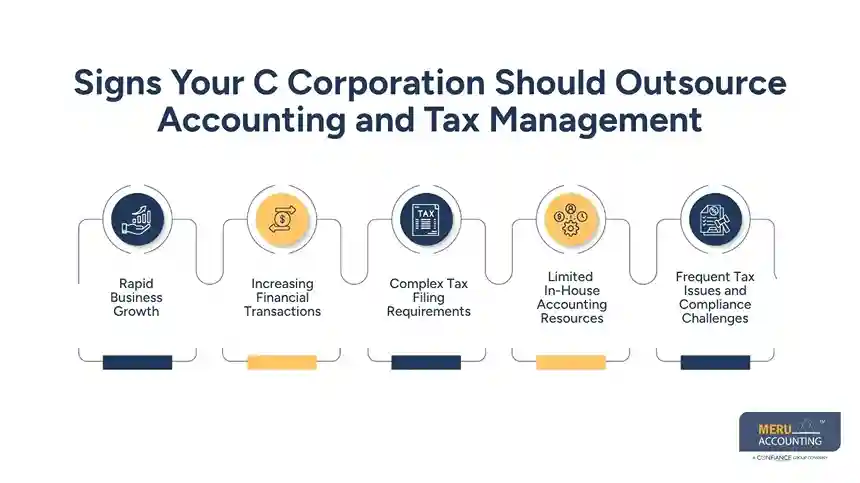
Limited In-House Accounting Resources
Small accounting teams may struggle to manage daily bookkeeping, payroll, tax preparation, and financial reporting simultaneously. Outsourcing fills these gaps efficiently.
Frequent Tax Issues and Compliance Challenges
Repeated filing errors, missed deadlines, or government notices indicate that professional tax management may be necessary. Outsourced specialists help identify risks before they become costly problems.
Benefits of a C Corporation (C Corp)
Now let’s look at how becoming a C Corporation can help a business grow.
Limited Personal Risk
In a C Corporation, the company is its own legal body. This means if the business owes money or is sued, the owner’s personal property (like a house or car) is safe. Owners only risk the money they put into the business.
Easier to Raise Money
A C Corp can sell shares of stock. That means it can invite people to invest in the company. More money can help the business grow faster. This is why big companies choose this setup. Investors often like C Corps because they trust the rules they follow.
Company Lives On
If the owner of a small business leaves or passes away, the business may stop. But a business corporation keeps going. It can live on for many years, even if owners change. This gives it a strong future.
Can Hire More People
With more money and growth, C Corps can hire more workers, offer better pay, and give health benefits. This helps the company do more and serve more customers.
Builds a Good Image
A C Corp often looks more professional to banks, vendors, and clients. People trust it more because it follows state and federal laws. This can help the business grow and win big projects.
More Tax Options
While C Corps pay taxes on their profits, they also get many tax breaks. The company can deduct costs like wages, travel, and supplies. A C Corporation may pay less tax in the end with smart planning from an expert while avoiding unnecessary tax issues.
Shares Can Be Sold or Traded
If the company grows big, its shares can be traded on a stock exchange. That means people can buy and sell parts of the company. This gives the owners a chance to make more money.
Drawbacks of a C Corporation
While there are many good things about C Corporations, there are also some things to think about before you choose this type of business. Here are the downsides:
Double Tax
The company pays tax on its income. Then, if the owners take out money as dividends, they pay tax again, which may create additional tax issues for shareholders.
More Rules and Paperwork
They must hold meetings, write reports, and file forms with the state and federal offices every year.
Higher Setup and Running Costs
Starting a business corporation can cost more. You may need help from lawyers and accountants. There are also yearly fees to keep the business going.
Harder to Make Quick Decisions
In a C Corp, big choices often need approval from the board or shareholders. This can take time and may slow down quick changes.
More Public Reports
A C Corporation may need to share more business information with the public. This includes income, losses, and who owns shares. It can reduce privacy.
Stricter Record-Keeping
You must keep clean and clear records of every meeting, vote, and money transaction. Poor record-keeping can cause legal or tax problems.
Not Always Right for Small Teams
For very small businesses with only one or two people, a C Corp might be too much. The rules and costs may not be worth it unless you plan to grow big.
How to Choose the Right Outsourced Accounting Provider
Before selecting an accounting provider, evaluate several important factors to ensure your business receives reliable and professional financial support.
Industry Experience
Choose professionals with experience serving a C corporation and understanding corporate financial requirements. An experienced provider can identify industry-specific challenges and recommend solutions that support compliance and business growth.
Qualified Team
Verify professional qualifications, certifications, and technical expertise. A knowledgeable accounting team can manage complex financial tasks accurately, reduce tax issues, and keep up with changing tax regulations.
Technology and Security
Ensure the provider uses secure cloud accounting software and follows strong data protection practices. Modern technology also enables real-time financial reporting, secure document sharing, and better collaboration.
Transparent Pricing
Understand the pricing structure before signing an agreement. Clear pricing helps avoid unexpected costs and allows your business to budget accounting expenses with confidence.
Client Support
Responsive communication and ongoing guidance make outsourcing more valuable throughout the year. Choose a provider that offers timely assistance and regular financial updates whenever your business needs support.
Why Choose Meru Accounting for C Corporation Services?
A C Corporation is a strong choice for business owners who want to grow and raise money. It gives safety, a good image, and a long life. It does come with more rules, but the rewards can be great.
If you are thinking about setting up a C Corp, get help from someone who understands business tax and laws. Meru Accounting is a trusted name that helps small and large businesses. Our team knows all about C Corps and helps businesses manage taxes, reports, planning, and complex tax issues. With Meru Accounting, you can grow smart, follow the rules, and save money.
Our experts provide practical guidance at every stage, from business formation to ongoing tax compliance. We help reduce administrative work, improve financial management, and support your business as it grows.
Our Expert Perspective
As a C Corporation grows, financial management becomes more complex. Managing bookkeeping, payroll, tax filings, financial reporting, and regulatory compliance requires specialized knowledge and continuous attention. Many businesses initially handle these responsibilities internally, but increasing transaction volumes and changing tax regulations often make outsourcing a more practical solution.
Professional outsourced accounting services help C Corps maintain accurate financial records, meet filing deadlines, improve cash flow visibility, and reduce compliance risks. By allowing experienced accountants to manage financial operations, business owners and management teams can dedicate more time to strategic planning, expansion, and customer growth while maintaining confidence in their financial reporting.
Key Takeaways
- A C Corporation is a separate legal entity that protects shareholders from personal liability.
- C Corps can raise capital by issuing shares to investors.
- Business growth often increases accounting and tax management complexity.
- Outsourcing accounting improves financial accuracy and operational efficiency.
- Professional tax management helps reduce compliance risks, filing errors, and potential tax issues.
- Cloud-based accounting provides secure access to real-time financial information.
- Selecting an experienced accounting provider supports long-term business growth.
- Meru Accounting offers specialized accounting and tax solutions for growing C Corps.
FAQs
Yes, even small companies can choose to become C Corps if they want to grow and bring in investors.
A C Corporation pays taxes on its own. An LLC usually passes income to the owners, who pay taxes. Also, C Corps can sell stock to raise money.
Yes, this is called “double tax.” The company pays once, and owners pay again if they get dividends. But tax planning can help reduce this.
Yes, many investors prefer C Corporations because they can buy stock, and the company follows clear laws.
A tax expert or business accountant, like those at Meru Accounting, can guide you. We will help with setup, rules, and tax filing.
optional anymore
on running the business