Online accounting for small businesses gives owners a way to track money, costs, bills, and tax data through cloud tools and remote accounting teams. Online accounting for small business can cover daily entries, bank checks, bills, payroll, reports, tax work, and cash flow. The IRS says firms need records that show income and costs and back up tax claims. Electronic records must also provide a full and clear record.
A well-planned online accounting setup also keeps key financial data in one place. Owners can review income, costs, unpaid bills, and cash activity without handling every task on their own. The right service can also set a clear process for monthly checks, reports, and tax-ready records.
What You Will Learn From This Blog
- The blog explains what online accounting covers and how the process works.
- This blog also outlines the daily finance tasks that can be handled online.
- The section on outsourced online accounting services explains how external teams manage accounting work.
- Key factors that can affect monthly accounting fees are also covered.
- The content explains when outside accounting support may be suitable for a small business.
- Practical points for choosing a secure and reliable accounting service are included.
What Is Online Accounting for Small Business?
How Online Accounting Works
Online accounting uses cloud tools to record and sort firm data. Staff or outside teams can view data, check entries, and send reports from a remote setup.
Key Difference From Traditional Accounting
Traditional work may rely on local files and in-house staff. Online work lets firms share data, files, and reports with a remote team.
Who Can Use It
A shop, agency, trade firm, or solo firm can use online accounting for small businesses. Businesses using outsourced online accounting services also need a clear process for sharing source data and setting user access.
Cloud Data Access
Cloud tools can give owners a view of cash, bills, and sales from any place. Access should use strict sign-in rules and role-based rights.
Record Rules
The IRS says electronic systems must meet the same core record rules as paper systems. Records should show income, costs, and key source data.
What Services Are Included in Online Accounting for Small Businesses?
Online accounting for small businesses covers more than basic transaction entry. The service can include daily records, account checks, payment tracking, reports, payroll, tax support, and cash planning. The exact scope can vary by business size, industry, software, and monthly transaction volume.
Bookkeeping and Transaction Recording
Daily work can cover sales, costs, bank feeds, bills, and other entries. Each item should be placed in the right account and time period for clear financial records.
Bank and Credit Card Reconciliation
Bank and credit card data is matched with the accounting records on a set schedule. Differences, missing entries, duplicate charges, and bank fees can then be reviewed and corrected.
Accounts Payable Management
Accounting teams can track vendor bills, payment dates, and unpaid balances. A clear payable list gives owners a better view of upcoming cash needs and avoids missed due dates.
Accounts Receivable Tracking
Online accounting for small businesses can help track customer invoices, payments, overdue amounts, and open balances. Regular review can show which customers have unpaid invoices and which payments need follow-up.
Financial Reporting
Common reports include profit and loss statements, balance sheets, cash flow reports, and account summaries. Monthly reports can give owners a clear view of revenue, costs, assets, debts, and cash.
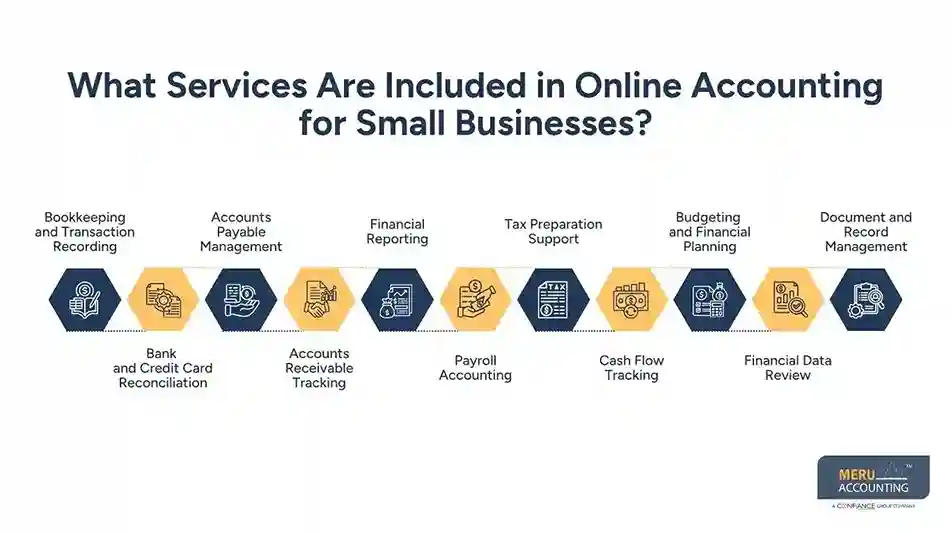
Payroll Accounting
Payroll accounting can include wage entries, payroll expense records, employee payments, and payroll tax data. The exact service can vary based on the payroll system and the provider’s scope.
Tax Preparation Support
Accounting teams can keep financial data and source files ready for tax review. Tax support may include organizing records, preparing reports, and giving needed data to the tax professional.
Cash Flow Tracking
Cash flow tracking shows money coming into and going out of the business. Regular cash reviews can show upcoming gaps and give owners time to plan payments.
Budgeting and Financial Planning
Online accounting services can also track actual results against a set budget. Owners can review revenue, costs, and cash targets to plan upcoming business needs.
Financial Data Review
Regular reviews help make online accounting for small businesses more reliable by checking entries, reconciliations, and financial reports. With outsourced online accounting services, regular data reviews can help identify unusual transactions before financial reports are finalized.
Document and Record Management
Invoices, receipts, bills, bank records, and other source files can be stored with the related financial data. Organized records make monthly reviews and tax preparation easier to manage.
optional anymore
on running the business
How Online Accounting Services Manage Daily Finances
Record Each Deal
Sales, fees, rent, ads, and other costs need a clear entry. Each entry should link to a source file where needed.
Track Income and Costs
Outsourced online accounting services can sort income and costs by account, client, site, or job based on the business’s reporting needs. Such views show where cash comes from and where it goes.
Manage Bills and Invoices
Invoice status can show what is sent, paid, or late. Vendor bills can be listed by due date to plan cash needs.
Check Bank Data
Reconciliation compares bank data with the ledger. A close review can spot double entries, missing fees, wrong dates, or items that need proof.
Keep Records In Order
Keeping these records organized is an important part of effective online accounting for small businesses. The IRS notes that such records can back up entries and tax claims.
What Are Outsourced Online Accounting Services?
How Outsourcing Works
Outsourced online accounting services move some or all finance work to an outside team. The business keeps control of its data, accounts, financial decisions, and final approvals.
Common Work Included
The service may cover bookkeeping, bank checks, bills, invoices, reports, payroll entries, and tax preparation support. The exact tasks should be listed in the service agreement.
In-House Vs. Outsourced Work
An in-house accountant offers direct daily access but adds hiring, salary, training, and staff costs. An outside team can provide accounting skills without adding a full-time role.
When Outsourcing Fits
Outsourcing may suit firms with rising transaction volume or limited staff time. It can also fit when monthly reports are late, or records need regular cleanup.
Control And Review
Outsourced online accounting services should use clear roles, review steps, and secure access. Owners should know who can view data, approve changes, and fix errors.
Benefits of Online Accounting for Small Business
- Online accounting for small businesses reduces routine finance work, giving owners more time for clients, staff, sales, and core business tasks.
- Clear financial data gives owners a simple view of income, costs, unpaid bills, and available cash.
- Regular reports give owners timely data to review business results and spot cash issues sooner.
- Organized records can make tax filing easier by keeping income, costs, receipts, and other key data ready for review.
- Online accounting for small businesses can fit changing needs as sales, staff, accounts, and reporting needs increase.
How Much Does Online Accounting for Small Business Cost?
What Sets The Price
Online accounting for small business pricing can vary by sales volume, account count, payroll size, and report needs. Clean source data can also cut monthly work time.
Monthly Plans
Many firms offer a set monthly plan for a set scope. Online accounting for small business plans may include close work, reports, and set filing tasks.
Hourly Or Fixed Fee
Hourly billing may suit short or rare tasks. A fixed fee can be easier to plan when the work list stays stable.
Extra Work
Catch-up work, tax filings, payroll, cleanup, and special reports may cost extra. Ask what is in the base fee before signing a plan.
Compare Total Cost
The lowest quote may not cover all key tasks. Compare scope, review steps, reply time, software, and tax work along with the fee.
How To Choose The Right Online Accounting Service
Check The Work List
Ask for a clear list of tasks, due dates, and reports. Online accounting for small businesses should match the real needs of your firm.
Check Software Fit
Confirm that the team knows your accounting tool and can work with bank, card, payroll, and sales links. Ask how data will move if a tool changes.
Review Price And Terms
Ask if the fee is fixed, what counts as extra work, and how scope changes are priced. A written scope can reduce later disputes.
Assess Communication
Set clear points for who answers daily questions and who handles tax or close issues. Online accounting for small businesses works best when reply times are clear.
Check Data Safety
Ask about access rights, backups, file sharing, and staff access. Online accounting for small businesses involves financial data, so data safety must be part of the review.
When Should A Small Business Consider Outsourced Accounting?
More Transactions
A rise in sales, cards, bank accounts, or vendor bills can increase the daily accounting load. A growing transaction count may make outside accounting a practical choice.
Few Internal Resources
A small team may not have enough time or skill for monthly close work. Outsourced online accounting services can fill that gap with a clear work plan and defined responsibilities.
More Tax Needs
New staff, new states, new entities, or a new tax setup can add more accounting work. Outsourced online accounting services can keep records ready for tax review and filing needs.
Need For Monthly Reports
Owners may need regular profit, cash, and balance reports each month. A remote accounting team can run a close cycle and send reports on a set date.
Growth Or Change
A new site, owner, loan, or sale can raise the need for clean and timely data. Outside accounting can give the firm more finance capacity during such changes.
Why Choose Meru Accounting?
Clear Scope
Meru Accounting can define a clear scope for online accounting for small businesses, covering entries, checks, reports, and other finance tasks. A set scope makes the monthly fee easier to understand.
Skilled Remote Team
Our team can manage routine finance work while keeping review steps in place. Owners can stay focused on key firm tasks while receiving regular reports.
Tax-Ready Records
Our process can keep source files and finance data in order for tax work. Tax filing should match the firm’s tax needs and the scope agreed with the client.
Flexible Service
Meru Accounting can adjust the work plan as account count, sales, payroll, or report needs rise. Changes should be set in the service scope before work starts.
Timely Financial Reports
Our team can follow a set reporting cycle for monthly financial statements and key account reviews. Timely reports give owners current data for business decisions.
Secure Data Handling
Meru Accounting can use controlled access and secure file sharing for financial records. Clear access rules can limit who views or manages sensitive business data.
Dedicated Client Support
Our team can provide a clear point of contact for accounting questions and task updates. Regular communication keeps work status, pending items, and reporting needs clear.
Our Expert Perspective
For small firms, online accounting for small business offers more value when remote access is supported by clean records and regular reviews. The real value comes from clean entries, timely checks, clear reports, and a process that fits the firm’s size and tax needs.
An effective accounting process should also give owners a clear view of cash, unpaid bills, and income. Regular review can spot errors before they affect reports or tax work. The right service should also grow with the firm’s needs without adding work that has little value.
Key Takeaways
- Online accounting can cover entries, bank checks, bills, reports, payroll, tax work, cash flow, and budget work.
- Clean records are vital for tax work and financial review.
- Online accounting for small businesses can suit firms with rising volume or limited staff time.
- Price depends on scope, transaction volume, payroll, reports, and extra work.
- A service plan should state tasks, fees, access rules, and reply times.
- Choose a team that fits your software, data, and reporting needs.
FAQs
Online accounting can include bookkeeping, bank reconciliation, accounts payable and receivable, payroll records, financial reports, cash flow tracking, budgeting, and tax preparation support.
Online accounting uses cloud accounting software to record transactions, connect bank accounts, organize financial data, reconcile accounts, and provide reports through secure online access.
Online accounting may cost less than a full-time accountant because small businesses can pay for the services they need without covering a full-time salary and employee benefits.
Yes, many online accountants can manage payroll records and tax preparation support, but tax filing, payroll filing, and other services depend on the provider’s agreed scope.
Compare the provider’s service scope, accounting software skills, pricing, reporting process, communication times, tax support, security practices, and experience with businesses like yours.
optional anymore
on running the business