Remote work has changed how firms do their tasks everyday. Teams now work from homes, shared work hubs, and even from other states or nations. While this setup gives firms more reach and more hiring choice, it also adds new accounting tasks. Firms must track payment, bills, tax data, and cash flow from many places at once. So, for this, they need a specialized online business bookkeeping for smooth functioning of their remote work.
Cloud-based tools now help firms store, sort, and track financial data in real time. Teams can share files fast, check reports from any place, and maintain books with less stress. For remote-first firms, strong books are not just good to have. They help firms stay ready for tax time, plan growth, lower risk, and make smart calls. When data stays accurate and easy to access, firms can spend less time fixing errors and more time growing sales.
Also, there are many firms that now work with remote bookkeeping firms to gain expert help at lower cost. These firms give steady support without the need to build a full in-house team.
What You Will Learn From This Blog
In this blog, you will learn:
- Why financial control is vital for remote-first firms
- How online business bookkeeping works
- Common issues faced by remote teams
- The pros and cons of in-house staff and remote bookkeeping firms
- How expert bookkeeping support helps firms stay well organized
Why Financial Organization Matters in Remote Business Operations
Remote-first firms deal with many things at once. Staff may work in many time zones as they work individually and remotely from different locations. Some team members may be full-time staff while others work as freelancers. Sales may come from many web tools, apps, or sites.
Without bookkeeping, it becomes hard to know where cash goes each month. Firms may miss bills, fail to track costs, or face tax issues later.
Having correct records help firms:
- Track gains and losses with ease
- Review cash flow often
- Keep tax files ready
- Set smart budgets
- Plan future growth
- Lower money waste
- Build trust with banks and buyers
With online business bookkeeping, firm owners can view key reports from any place. This helps remote teams stay linked and informed at all times.
Fast access to financial data also helps leaders make quick calls. If sales drop, costs rise, or cash flow slows, firms can act fast before small issues grow worse.
What Is Online Business Bookkeeping and How Does It Work?
Online business bookkeeping is the process of tracking and managing firm money data through cloud-based tools. These systems help firms store records online so teams can view and update them from any place with web access.
Tasks often handled through online business bookkeeping include:
- Sales tracking
- Bill entry
- Bank reconciliation
- Payroll support
- Tax record prep
- Cash flow review
- Month-end reports
- Cost tracking
Most cloud systems link with bank feeds, pay tools, and sales apps. This helps lower hand entry work and cuts down on human error. For remote-first firms, this setup works well because staff do not need to sit in one office to view records. Team leads, owners, and bookkeepers can all work from the same live data.
Cloud tools also help firms keep files safe. Most systems use backup plans, user access rules, and data locks to help guard key money records. Many remote bookkeeping firms also use cloud systems to help clients gain fast and smooth support. This means firms can get expert help without long delays or office visits.
Key Financial Challenges Faced by Remote-First Companies
While remote work gives firms more freedom, it also brings tasks that may be hard to manage without the right systems.
Managing Costs Across Many Locations
Remote staff may use many tools and apps for work. Firms often pay for team chat apps, web tools, home office aid, and cloud systems. If costs are not tracked well, waste can rise fast.
Tracking Freelance and Contract Work
Many remote-first firms hire freelance help. This means firms must track many pay dates, work terms, and tax forms. Without strong books, firms may miss due dates or make wrong payments.
Cash Flow Gaps
When firms sell through many web channels, cash flow can become hard to track. Some payments may clear fast while others take more time. Online business bookkeeping helps firms view real-time cash flow and lower the risk of shortfalls.
Tax Rules in Many States
Remote teams may work from many states. This can create tax filing tasks in more than one place. Many remote bookkeeping firms help firms track tax duties and keep records ready for filing time.
Poor Record Sharing
If money files stay spread across emails or hard drives, teams may lose key records. Cloud-based bookkeeping helps place all data in one safe system.
Choosing Between In-House Accounting and Remote Bookkeeping Firms
Many firms ask if they should hire in-house staff or work with remote bookkeeping firms. Both choices have good points, but the best fit often depends on firm size, growth plans, and cost goals.
In-House Accounting Teams
An in-house team works from within the firm. This setup may fit large firms with high daily money tasks.
Pros
- Direct team control
- Fast face-to-face talks
- Full-time support
Cons
- High pay and staff costs
- More need for office space and tools
- Hiring and training time
- Hard to scale fast
Remote Bookkeeping Firms
Remote bookkeeping firms give cloud-based support from off-site teams. This model has grown fast with remote work trends.
Pros
- Lower cost than full-time staff
- Easy access to expert help
- Scales with firm growth
- Cloud-based support from any place
- Less hiring stress
Cons
- Less in-person contact
- May need clear work systems for smooth talks
For many remote-first firms, remote bookkeeping firms give the best mix of cost control, skill, and ease of use.
How Online Business Bookkeeping Improves Daily Operations
Instead of just tracking money, bookkeeping helps firms run better each day.
Better Budget Planning
When firms can view real-time cost data, they can build smart budgets with less need for estimation.
Faster Reports
Cloud systems help firms make reports in less time. Owners can check gains, losses, and cash flow in just a few clicks.
Less Manual Work
Bank feeds and smart tools help lower manual entry tasks. This saves time and cuts down on errors.
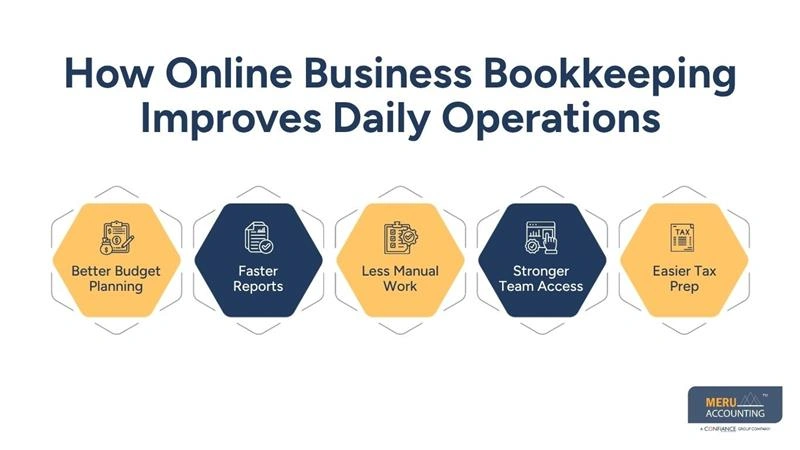
Stronger Team Access
Remote staff can view the same data from many places. This keeps work smooth and cuts delays.
Easier Tax Prep
When books stay accurate all year, tax filing becomes much less stressful.
Why Remote-First Firms Need Real-Time Financial Data
Remote work is almost always fast. Firm owners often make key calls from many places during the day. They may approve costs, review sales, or plan growth while away from a main office.
Real-time financial data helps leaders stay informed at all times.
With online business bookkeeping, firms can:
- View live bank data
- Check unpaid bills
- Review sales trends
- Track staff costs
- Watch profit margins
- Plan hiring needs
This level of quick access helps firms stay flexible in changing markets.
How Meru Accounting Supports Remote-First Companies
At Meru Accounting, we help remote-first firms build clean, simple, and well-managed bookkeeping systems that support long-term growth.
Our online business bookkeeping services help firms:
- Track daily tasks with ease
- Keep books neat and up to date
- Manage cash flow more clearly
- Lower manual work through cloud tools
- Prepare records for tax filing
- Gain custom reports for smart planning
Our team works with modern cloud systems that allow safe access from any place. This helps remote teams stay linked to their financial data at all times.
Unlike many basic service providers, Meru Accounting focuses on clear communication, fast support, and smooth workflows built for remote business models. We also help firms that want to move from old systems to cloud-based online business bookkeeping without stress or long setup times.
For growing firms that need expert help without the cost of large in-house teams, our support model gives a flexible and cost-smart choice.
Our Expert Insight
Remote-first firms often focus first on sales growth, hiring, and team tools. Accounting systems tend to get less focus during early growth stages. Over time, this creates gaps in reports, cash flow tracking, and tax records. Small issues that seem easy to manage at first can become larger money problems as the firm grows.
From our work at Meru Accounting, firms that use online business bookkeeping from the start often gain better control over daily money tasks and long-term plans. Clear books help leaders spend less time fixing records and more time on growth goals. Many remote-first firms also see stronger cash flow planning and faster reporting when they work with skilled remote bookkeeping firms and use cloud-based systems built for modern business needs.
Key Takeaways
- Remote-first firms face unique money tracking tasks
- Online business bookkeeping helps firms manage records from any place
- Cloud systems improve cash flow tracking, reports, and tax prep
- Remote bookkeeping firms give expert help with lower overhead costs
- Real-time money data helps leaders make faster business choices
- Clean books help firms lower risk and improve long-term growth
- Meru Accounting supports remote firms with cloud-based bookkeeping solutions built for modern business needs
FAQs
Online business bookkeeping is the use of cloud-based systems to track, manage, and store business money records through online tools.
Remote-first firms often manage teams, costs, and sales from many places. Organized books help them track cash flow, manage taxes, and reduce money errors.
Remote bookkeeping firms provide expert support, cloud-based tracking, and flexible service plans without the high cost of full-time in-house staff.
Yes. Online systems help firms track live bank data, unpaid bills, and sales trends, which improves cash flow planning.
Cloud systems allow safe access from any place, improve team sharing, reduce manual work, and help firms keep real-time money records organized.