Outsourced accountancy services can give small firms access to trained finance staff without the cost of a full in-house team. In the US, the price can range from a few hundred dollars per month for basic work to several thousand dollars for wider finance help. The final fee depends on the work scope, number of monthly transactions, payroll, tax needs, number of accounts, and level of review.
For accountancy for small business, price should not be the only point to check. A low fee may cover only data entry, while a higher fee may include bank checks, reports, tax work, payroll, and financial review. Current 2026 US market guides show basic outsourced accounting near $300–$800 per month, full-service work near $800–$2,500, and controller-level work near $2,500–$6,000. Some firms charge more when the work includes CFO-level advice or a full finance function.
What You Will Learn From This Blog
- What outsourced accountancy services mean for a US small business.
- Typical monthly costs for basic, mid-level, and wider finance work.
- What can raise or lower the monthly fee.
- How accountancy for small businesses can fit different business needs.
- How to compare service plans before you hire a provider.
- Ways to keep your finance cost under control.
- What to ask before signing an accounting service agreement.
What Are Outsourced Accountancy Services?
Accounting Work By An Outside Team
Outsourced accountancy services mean hiring an outside accounting firm to manage part or all of your finance work. The provider may handle records, bank checks, reports, payroll, tax work, or other tasks.
The service can be set up around your needs. A small firm may start with basic work and add more tasks as sales and staff grow.
Bookkeeping And Account Checks
Bookkeeping may cover sales, costs, bills, payments, bank entries, and account checks. The provider keeps the records in order and flags items that need review.
The IRS says firms need records that clearly show income and expenses. Those records can also be used to prepare financial statements and tax returns.
Tax And Filing Work
Some plans include tax prep and filing work. The exact work can vary based on the business type, state, local rules, and federal tax needs.
Tax work may be part of a monthly plan or billed as a separate yearly fee. A written quote should state which returns and filings are included.
Payroll And Employee Records
Payroll can be added when a firm has employees. The work may include pay data, payroll entries, tax records, and payroll reports.
A firm with two employees may need far less payroll work than a firm with 30 employees. Employee count can therefore affect the total monthly fee.
Financial Reports
Many outsourced accountancy services include monthly reports such as profit and loss statements and balance sheets. Some providers also offer cash flow reports and budget checks.
The IRS notes that clear records are needed to prepare financial statements and monitor business activity.
How Much Should Small Businesses Pay for Outsourced Accountancy Services?
Basic Accounting Plans
Basic plans often suit firms with low transaction volume and simple finance needs. Work may include transaction entry, bank reconciliation, and basic monthly reports.
US market guides for 2026 place basic bookkeeping or accounting near $300–$800 per month in many cases. Actual fees vary by provider and scope.
Full-Service Accounting Plans
A growing firm may need more than basic record work. A full plan can include bookkeeping, bank checks, monthly close, financial reports, accounts payable, or accounts receivable through outsourced accountancy services.
Current US pricing guides place many full-service plans around $800–$2,500 per month. More complex firms can pay more when the workload is higher.
Controller-Level Accounting Plans
Some firms need regular review from a senior accounting professional. Controller-level work can include financial controls, reporting review, budget checks, close management, and audit preparation.
These plans may fall around $2,500–$6,000 per month based on current US market guides. The cost rises when the provider takes on wider finance duties.
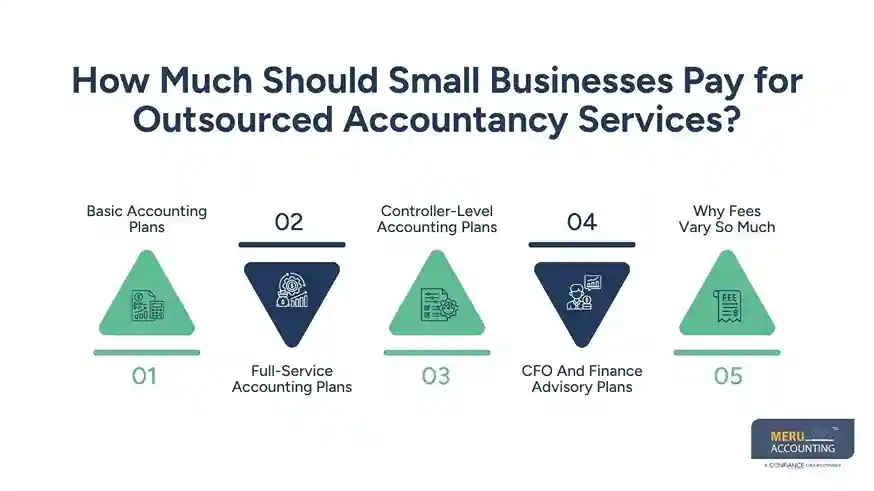
CFO And Finance Advisory Plans
A small firm may also need cash flow planning, forecasts, budget review, or high-level finance advice. Such work is broader than routine bookkeeping.
Some 2026 market guides place wider finance or CFO-level outsourcing at $6,000–$15,000 or more per month, depending on the firm’s size and needs.
Why Fees Vary So Much
There is no single price for accountancy for small businesses. Two firms with the same annual sales can have very different workloads when using outsourced accountancy services.
For example, a consulting firm with 80 monthly transactions may need a simple plan. An online seller with 1,000 transactions, several payment systems, payroll, refunds, and inventory may need a much wider plan.
optional anymore
on running the business
What Factors Affect Outsourced Accountancy Services Pricing?
Monthly Transaction Volume
More sales, bills, payments, refunds, and bank entries require more accounting work. Some providers also set monthly transaction limits.
Number of Accounts
Each bank and credit card account may need regular reconciliation. More accounts can increase the time and cost of monthly accounting work.
Payroll and Employees
Payroll adds work for each pay period. Employee count, pay schedules, payroll filings, and reports can affect the total service fee.
Tax And Compliance Work
Federal, state, and local tax needs can add to the cost of outsourced accountancy services. The business structure can also affect the amount of work needed.
For example, a sole proprietorship, partnership, S corporation, and C corporation may have different filing needs. Tax filing fees should be shown apart from routine accounting fees when they are billed separately.
Business Type and Complexity
Retail, construction, real estate, and e-commerce firms may need more detailed accounting. Inventory, sales tax, and multiple locations can add work.
Reporting and Advisory
Basic financial reports may cost less than cash flow reviews, budgets, forecasts, or finance advice. Extra advisory work should be listed in the service agreement.
What Are the Benefits of Outsourcing Accountancy for Small Business?
Lower In-House Staff Cost
Hiring a full-time accountant can mean more than salary. A business may also pay for benefits, leave, training, software, equipment, and other staff costs.
Outsourced accountancy services can give a small firm access to finance staff for a set monthly fee instead of building a full accounting team.
Access To More Skills
An outside firm may have staff who handle bookkeeping, payroll, tax, reports, and account review. A small firm may not need each skill every day.
That model can give the owner access to more finance skills without hiring several full-time staff members.
More Time For Business Work
Finance work can take time away from sales, customer care, staff work, and daily operations. Moving routine finance tasks to an outside team can free up owner time.
The owner can then focus more on work that brings in sales and keeps the firm moving.
Better Record Control
The IRS states that business records can help owners track income, expenses, financial statements, and tax returns. Records must also support items reported on tax returns.
A set monthly process through outsourced accountancy services can make it easier to find missing data, old bills, and account items that need review.
Easier Monthly Reports
Regular reports can show sales, costs, profit, cash, assets, and liabilities. Owners can use these figures when making choices about spending and hiring.
Strong accountancy for small business should turn raw finance data into clear reports that an owner can read and use.
Flexible Support As You Grow
Finance needs often change as a firm grows. More staff, more customers, new locations, and new sales channels can increase the workload.
A flexible provider can add tasks when needed. That can be easier than hiring a new finance worker each time the workload rises.
How To Reduce Outsourced Accountancy Services Costs
Choose The Work You Need
Start with the tasks your firm truly needs. Do not pay for advanced reporting or advisory work if basic monthly accounting is enough.
A clear scope can keep outsourced accountancy services costs closer to the work your firm actually uses.
Keep Finance Records Ready
Late or missing records can create extra work. Send invoices, receipts, bank data, payroll details, and other files on time.
The IRS says supporting documents are needed for business transactions and tax records.
Keep Business And Personal Spending Apart
Separate business and personal accounts can make recordkeeping work easier. The IRS also advises sole proprietors to keep business and personal accounts separate where possible.
Clear separation can reduce the time needed to sort transactions and ask about personal spending.
Ask For A Fixed Monthly Fee
A fixed monthly plan can make costs easier to track. It can also give the owner a clear view of the expected monthly spend.
Before signing, ask about transaction limits, payroll fees, tax filing fees, year-end work, and extra project charges.
Compare Full Service Scope
Do not choose outsourced accountancy services only because the quoted price is low. One low-cost plan may cover only transaction entry, while another may include reconciliations, reports, payroll, and tax work.
Compare the full scope before choosing. The right accountancy for small business plan should fit your needs and budget.
Why Choose Meru Accounting For Outsourced Accountancy Services?
Clear Monthly Service Plans
Meru Accounting can build outsourced accountancy services around the needs of your US small business. Our team can cover bookkeeping, payroll, financial statements, tax work, and related accounting tasks.
The service scope can be set based on transaction volume, accounts, staff, reporting needs, and other finance work.
Skilled Accounting Team
Our accounting team can handle routine finance tasks while giving your business access to trained accounting staff. That can be useful when a firm does not need a full in-house accounting department.
The goal is to keep the finance work organized while giving owners clear reports for review.
Cloud-Based Accounting Work
Cloud-based tools can allow shared access to finance data and records. Our team can work with common accounting platforms and use a structured process for routine finance work.
Shared records can also make it easier to send files, review reports, and keep work on a set monthly cycle.
Fixed-Fee Pricing
Meru Accounting uses value-based, fixed monthly pricing for many outsourced accountancy service plans. A set fee can make monthly planning easier than an open-ended hourly model.
The final fee still depends on the work scope, transaction volume, payroll, tax needs, and reporting needs.
Services That Can Scale
Your accounting needs may change as the firm grows. Meru Accounting can provide bookkeeping, payroll, tax returns, financial statements, and other finance services as your needs change.
A service plan can be adjusted when the workload changes rather than forcing the firm into one fixed model.
Our Expert Perspective
The best outsourced accountancy services plan is not always the cheapest plan. A low quote may leave out key work, create extra fees, or provide little review of the numbers.
For accountancy for small businesses, we recommend asking for a written scope before you sign. Check the monthly fee, transaction limit, account limit, payroll terms, tax work, year-end fees, report list, response times, and extra-work charges. Clear terms make it easier to compare providers and plan your finance budget.
Key Takeaways
- Outsourced accountancy services can range from hundreds to several thousand dollars per month in the US.
- Basic accounting often costs less than full-service accounting.
- Transaction volume can have a major effect on the monthly fee.
- Payroll, tax, reports, and complex accounts can raise the cost.
- Fixed monthly pricing can make finance costs easier to plan.
- A low quote may not include all the work your firm needs.
- Clear records can reduce extra review work.
- Business and personal spending should be kept separate.
- Compare service scope, not just the monthly price.
- Accountancy for small business should match the firm’s size, needs, and growth plans.
FAQs
US small businesses may pay around $300 to $2,500 per month, based on the work, transaction volume, and level of service.
Services may include bookkeeping, bank reconciliation, financial reports, payroll, accounts payable, accounts receivable, and tax support.
Transaction volume, bank accounts, payroll, tax needs, business type, reporting needs, and service scope can affect the monthly fee.
Outsourcing can cost less when a business needs part-time accounting work instead of a full-time accountant and related employment costs.
A business can lower costs by keeping records ready, choosing needed services, comparing full service scope, and checking for extra fees.
optional anymore
on running the business