
A payroll management system helps businesses organize employee payments, tax calculations, attendance tracking, and payroll reports. For every small business, accurate payroll processing is important to maintain employee trust and meet compliance needs.
The system reduces manual errors, saves administrative time, and manages tasks such as wages, deductions, benefits, overtime, and employee records in one organized process.
Choosing the right payroll solution allows businesses to handle payroll activities with better accuracy and control. A reliable payroll solution should be simple to use, secure, and flexible enough to meet changing business needs. It allows owners to focus on daily operations while
What You Will Learn From This Blog
- How a payroll management system works and why it matters for daily payroll activities.
- The important features that make payroll processing accurate and reliable.
- How payroll software reduces manual work for a small business.
- The benefits of using automated payroll tools for business growth.
- Factors to consider before selecting a payroll solution.
- How professional payroll services maintain accuracy and compliance.
What is a Payroll Management System, and Why is it Important for Small Business Operations?
A payroll management system is a software solution that manages employee payment activities, including salary calculations, tax deductions, attendance records, and payroll reports. It processes wages, overtime, bonuses, and deductions using stored employee information, which reduces calculation errors and maintains accurate payroll records.
The system keeps employee details, payment information, tax records, and work hours organized in a single location. Reducing dependence on manual spreadsheets and files saves time, simplifies payroll tasks, and lowers administrative effort. Business owners can manage daily operations more efficiently with better access to organized payroll information.
A payroll solution supports tax reporting and compliance by maintaining proper records and following required payroll processes. It also creates detailed reports that help owners review labour costs, payment history, and overall payroll expenses.
For a small business, accurate payroll management improves employee satisfaction, supports financial planning, and reduces risks related to payroll mistakes.
Better payroll visibility allows owners to understand salary expenses and make informed decisions. Organized payroll information creates a stronger financial foundation and prepares businesses to handle future growth with better control.
Key Features That Make a Payroll Management System Effective
An effective payroll management system includes features that simplify payroll activities while maintaining accuracy and control. The right features allow businesses to manage employee payments, records, and reports without creating unnecessary complexity.
Automated Salary Processing
Automated salary processing reduces the manual steps involved in payroll calculations. The system calculates wages based on employee details, working hours, overtime, and payment rules.
Automation reduces calculation mistakes and creates consistent payroll results. Businesses can complete salary processing faster with fewer corrections.
Employee Self-Service Access
Employee self-service features allow workers to view payslips, payment details, and personal information. This reduces repeated requests handled by administrative teams.
A payroll management system with self-service options improves communication between employees and employers. Workers can access important payroll information whenever required.
Attendance and Time Tracking Integration
Attendance records directly affect salary calculations, especially for hourly employees. Integrated time tracking records working hours, overtime, and leave details accurately.
Connecting attendance tools with payroll software reduces errors caused by manual data entry. Accurate time records create fair and reliable salary calculations.
Tax Calculation and Reporting Tools
Tax management is an important payroll responsibility that requires accurate calculations and proper reporting. Businesses need reliable records for deductions and compliance requirements.
Payroll software with tax features organizes tax information and reduces the chances of incorrect reporting. Proper records also make financial reviews easier.
Secure Data Management
Payroll information includes sensitive employee and financial details that require proper protection. Security features prevent unauthorized access and maintain data confidentiality.
An effective payroll solution uses access controls and secure storage methods. Strong data protection is important for every business managing employee information.
Custom Reporting Options
Payroll reports provide details about salary expenses, deductions, and employee costs. Custom reports allow business owners to review specific payroll areas.
Reporting features provide better visibility into payroll trends and support future budget planning. Clear reports help owners make informed financial decisions.
How a Payroll Management System Simplifies Small Business Payroll Processes
Payroll management can become complex when businesses handle multiple employees, payment schedules, and compliance tasks. A payroll management system creates a structured workflow that makes daily payroll activities easier.
Simplifies Payroll Data Collection
Payroll requires details such as attendance, employee information, and payment updates. A centralized system stores all required data in one place and reduces repeated manual entries.
Reduces Payroll Calculation Errors
Payroll involves wages, overtime, deductions, and taxes that require accurate calculations. Automated processes reduce mistakes and maintain consistent payment records.
Saves Administrative Time
Manual payroll preparation requires time for data checking, calculations, and report creation. Automated tools complete repeated tasks faster and reduce administrative workload.
Creates Faster Payroll Reports
Payroll reports provide details about employee payments and salary expenses. Quick report generation allows business owners to review financial information easily.
Improves Employee Payment Experience
Employees expect accurate salary payments and clear payment details. Organized payroll processes create better communication and increase employee confidence.
Supports Business Expansion
Growing companies need better payroll control as employee numbers and requirements increase. A flexible payroll process allows businesses to manage changing needs effectively.
Benefits of Using a Payroll Management System for Small Business Growth
A payroll management system provides several benefits that support financial control, employee management, and accurate payroll operations. Businesses can reduce administrative effort while maintaining better control over payment processes.
Better Control Over Payroll Expenses
Payroll is a major business expense, and understanding salary costs helps owners manage budgets and cash flow. Detailed expense records provide better visibility into payment patterns.
Improved Payroll Accuracy
Accurate salary processing builds trust between employers and employees. Automated calculations reduce mistakes related to wages, deductions, and payment records.
Easier Compliance Management
Payroll compliance requires proper documentation and timely reporting. Organized records make it easier to manage required information and reduce compliance concerns.
Better Employee Satisfaction
A payroll management system provides accurate payslips, payment details, and reliable salary schedules. Clear payroll information improves employee confidence and workplace communication.
Reduced Operational Costs
Manual payroll tasks require additional time and administrative effort. Automation reduces repeated work and allows businesses to manage resources more effectively.
More Time For Business Activities
Handling payroll manually can limit the time available for planning and growth activities. A structured payroll process allows owners to focus on important business priorities.
How Automation Improves Small Business Payroll Operations
Automation has changed the way companies manage regular payroll activities. Automated features reduce repeated tasks, improve workflow organization, and create a more efficient process for handling employee payments and records.
Automates Regular Payroll Tasks
Payroll activities such as salary calculations, deductions, and report creation require regular attention. Manual handling of these tasks increases workload and the chance of mistakes.
A payroll management system automates routine activities and creates a consistent payroll workflow. Businesses can complete payroll cycles with better speed and accuracy.
Reduces Manual Data Entry
Manual data entry can create errors when employee details or working hours are entered incorrectly. Rechecking information also takes additional time.
Automated payroll tools collect and process stored information more accurately. A small business can reduce unnecessary corrections caused by data entry mistakes.
Provides Real-Time Payroll Information
Updated payroll information allows business owners to review expenses and manage financial planning. Quick access to records supports better decisions and clearer cost understanding
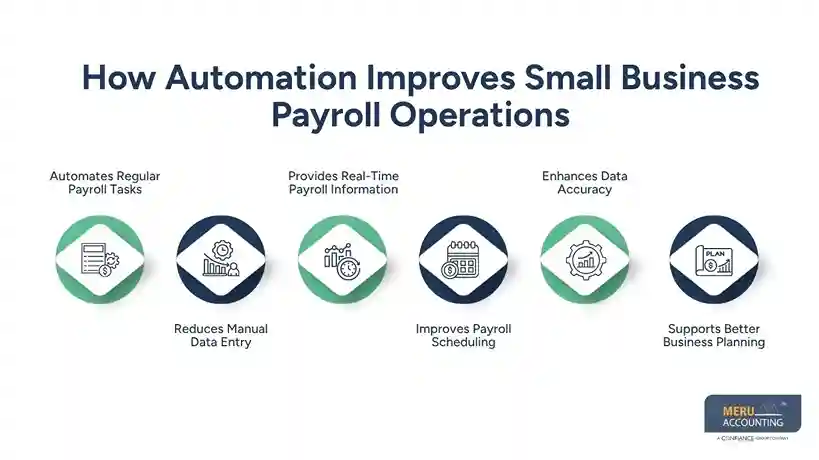
Improves Payroll Scheduling
Scheduled processes and reminders help businesses maintain regular payment cycles. Proper planning ensures employees receive payments on time without constant monitoring.
Enhances Data Accuracy
Accurate payroll depends on correct employee details, tax information, and payment records. Automated processes reduce mistakes and maintain reliable financial data.
Supports Better Business Planning
Payroll reports provide insights into employee costs and operational expenses. Clear information helps owners plan budgets and make informed business decisions.
Important Factors to Consider When Choosing a Payroll Management System
Selecting the right payroll management system requires careful evaluation of business needs, employee size, and operational goals. A suitable system should match the company’s requirements while providing accuracy, security, and ease of management.
Ease of Use
A payroll system should be simple for business owners and employees to understand. Easy navigation reduces training needs and allows teams to complete payroll tasks efficiently.
A user-friendly system creates a smoother workflow and makes daily payroll activities easier to manage.
Integration With Existing Tools
Businesses often use accounting software, attendance systems, and employee management tools. A payroll solution that connects with existing platforms reduces repeated work.
Better integration keeps financial and employee information organized while creating a more efficient process.
Security Features
Payroll information includes sensitive details such as salaries, tax records, and employee data. Protecting this information is important for maintaining privacy.
A reliable payroll system should include secure access controls, user permissions, and proper data protection methods.
Scalability for Future Needs
Business requirements change as employee numbers increase and operations expand. A payroll solution should support future growth without requiring frequent changes.
Flexible features allow businesses to adjust payroll processes according to changing needs.
Customer Support Availability
Technical issues can affect payroll deadlines and employee payments. Reliable customer support helps businesses resolve problems quickly.
A responsive support team provides additional assistance, especially for businesses with limited internal resources.
Cost and Value Assessment
Cost plays an important role when selecting payroll software. Businesses should compare features, support, and long-term value before selecting a payroll management system that fits their requirements.
The right solution should provide useful features while maintaining affordability and meeting business requirements.
How a Payroll Management System Helps Small Business Owners Maintain Compliance
Payroll compliance requires accurate records, proper reporting, and timely processing. A payroll management system provides organized tools that help businesses maintain payroll information and follow required processes.
Maintains Required Payroll Records
Businesses need accurate employee payment records for reporting and internal reviews. Missing information can create difficulties during compliance checks.
Organized payroll records make important information easier to access and maintain.
Calculates Correct Tax Deductions
Payroll taxes require accurate calculations based on employee details and applicable regulations. Incorrect deductions may create financial and reporting issues.
A structured payroll process ensures deductions are recorded properly and reduces calculation mistakes.
Supports Payroll Reporting
Payroll reports provide details about wages, deductions, and employee payments. These reports are useful for financial reviews and record keeping.
Clear reporting helps businesses maintain proper documentation and review payroll information easily.
Tracks Employee Payment History
Payment records provide proof of completed salary transactions. Businesses may need this information for future reference or internal checks.
Maintaining organized payment history creates better transparency and control.
Reduces Compliance Risks
Payroll mistakes can lead to payment issues, penalties, or additional administrative work. Proper payroll processes reduce these risks.
Accurate records and organized workflows support better compliance management.
Keeps Payroll Information Updated
Payroll requirements and reporting rules may change over time. Businesses need updated systems to maintain accurate processes.
Regular updates help companies manage payroll changes more effectively.
Common Payroll Challenges Solved By a Payroll Management System
Many businesses experience payroll difficulties due to manual processes, limited resources, and increasing employee requirements. A structured payroll solution addresses these challenges through better organization and automation.
Managing Multiple Employee Payments
Employees may have different wages, working hours, overtime rules, and payment structures. Managing these details manually can become difficult.
A reliable payroll management system provides a structured platform to manage different employee payment requirements, wage details, and working hours.
Avoiding Payroll Calculation Mistakes
Payroll calculations involve wages, deductions, taxes, and other payment details. Manual calculations may result in errors.
Automated calculations create consistent results and reduce payment-related mistakes.
Handling Employee Information Changes
Employee information may change due to updated payment details, tax information, or personal records.
An organized payroll process allows businesses to update information easily and maintain accurate records.
Preparing Payroll Reports Quickly
Manual report preparation requires additional time and careful checking. Delays can affect financial reviews and planning.
Automated reporting provides quick access to payroll information and improves decision-making.
Managing Payroll Deadlines
Payroll deadlines require proper scheduling to ensure timely employee payments. Missed deadlines may affect employee satisfaction.
Scheduled processes and reminders help businesses complete payroll tasks on time.
Reducing Administrative Pressure
Payroll management requires regular monitoring, record updates, and payment processing. Small teams may find these tasks difficult to manage.
Organized payroll processes reduce repetitive work and allow owners to focus on other business activities.
How Meru Accounting Supports Effective Payroll Management
Managing payroll requires accuracy, compliance knowledge, and organized financial processes. Meru Accounting provides professional payroll support to help businesses maintain reliable payroll operations.
Professional Payroll Processing Support
Meru Accounting manages payroll preparation, record updates, and payment-related activities with structured procedures. Our support reduces administrative workload and allows businesses to focus on daily operations.
Accurate Payroll Records Management
Meru Accounting maintains organized payroll records for financial reviews and compliance requirements. Clear documentation allows businesses to access important payroll information when needed.
Support For Growing Businesses
Meru Accounting provides flexible payroll solutions that adjust to changing business requirements. A scalable payroll management system allows growing companies to handle increasing payroll needs while reducing additional internal workload.
Integration With Accounting Processes
Meru Accounting connects payroll activities with accounting processes for better financial visibility. Our expertise helps maintain accurate records for reporting and business planning.
Focus on Compliance and Accuracy
Meru Accounting follows reliable procedures to reduce payroll errors and maintain accuracy. Our services focus on correct calculations, proper documentation, and timely processing.
Our Expert Perspective
Payroll management requires more than processing employee salaries. A well-structured payroll management system helps businesses achieve these goals by improving payroll organization, accuracy, and record management.
At Meru Accounting, we believe effective payroll processes should match business size, operational needs, and future goals. Small businesses often require reliable solutions that reduce manual effort while maintaining accuracy.
Combining suitable software with professional payroll support creates stronger control over payroll activities. Businesses can maintain reliable operations while focusing on growth opportunities
Key Takeaways
- A payroll management system organizes salary processing, employee records, tax calculations, and payroll reporting.
- Accurate payroll processes build employee trust and improve financial control.
- Automation reduces manual tasks and lowers the chances of payroll errors.
- Businesses should consider security, integration, scalability, and support before choosing a payroll solution.
- Small businesses can manage payroll responsibilities more effectively with organized processes.
- Professional payroll support helps maintain accuracy and compliance.
FAQs
A payroll management system is software that manages employee payments, salary calculations, deductions, records, and payroll reports in one place.
A small business needs payroll software to reduce manual work, improve payment accuracy, and manage employee payroll tasks efficiently.
Yes, payroll software can calculate deductions, organize tax information, and maintain records required for payroll reporting.
Payroll automation saves time by handling repeated tasks such as calculations, record updates, and report preparation.
Businesses should check ease of use, security, features, cost, support, and whether the software matches their payroll requirements.
optional anymore
on running the business