
Personal finance is a crucial part of everyday life. It helps people manage their finances, plan for the future, and reach financial goals. Understanding the key areas of finance can improve your financial management skills. This blog explains the key areas of personal finance and how to manage them in simple points.
Personal finance, also known as individual finance, includes management techniques based on financial principles applicable to individual or family unit financial activities. This financial regulation helps manage money, budgets, savings, expenditure, and maintain a book of accounts for better financial tracking. It also takes into account future risks and life events that involve financial matters. Thus, certain key financial areas need to be explored that help to provide financial freedom for a lifetime.
What You Will Learn From This Blog
- Understand the key areas of personal finance and why they are important for financial stability.
- Learn how maintaining a book of accounts helps you track income, expenses, and overall financial activities.
- Discover the role of budgeting, saving, investing, and tax planning in managing your money effectively.
- Explore the importance of retirement planning, asset protection, and succession planning for long-term financial security.
- Find practical tips to improve your money management skills and avoid common personal finance mistakes.
- Learn how regular financial planning can help you achieve your short-term and long-term financial goals.
What is Personal Finance?
Personal finance means managing finances smartly. It includes how people earn, spend, save, invest, maintain a book of accounts, and keep their money safe. Knowing these areas helps people make good choices and avoid money troubles.
Good money skills help you build wealth and keep your future safe. It shows you how to plan for high costs and surprise bills. Learning about finance gives you more control and peace of mind.
Main Areas of Personal Finance
Here are the main areas of personal finance you should know about:
Personal Book of Accounts
These personal account books must be kept to record the ledger accounts in the finance system. They include two separate ledgers that show total debits and total credits. This helps track every account well.
Nominal ledger accounts use double entry, while journals or daybooks handle a small number of transactions. The data from ledger accounts is used to make the trial balance. Maintaining a book of accounts also helps individuals review their financial records, monitor spending, and prepare accurate financial information when needed.
Personal Taxation
This is a type of direct tax on a person’s income. It applies to individuals, partnerships, known legal bodies, and undivided estates. It involves figuring out the tax due, filing a tax return, and paying taxes each year. Taxable income must be checked with care. Proper math helps the taxpayer reduce taxes by using allowed deductions and claims. These steps help set fair tax rates and exemptions for everyone.
Retirement and Pension Plans
Both plans aim to give financial security and keep life steady. They help you live well without cutting your standard of living, even with high costs and rising prices. These savings plans pay for both planned and unexpected costs after you retire. Pension and retirement plans guide you to keep your income safe after work.
Guaranteed pension plans let you choose your retirement age and how much you want to pay. The money you pay builds up to a sum you get at retirement. You can decide how long to make payments.
Retirement plan projects towards buying an annuity plan for a lifetime policyholder who receives a guaranteed income for life. You may like to read Tax Strategies to optimize your taxes for US-based businesses. As per the need, the account holder can avail of an immediate or a deferred annuity. Depending on the income that the policyholder wishes to receive on retirement, the purchase price can be set.
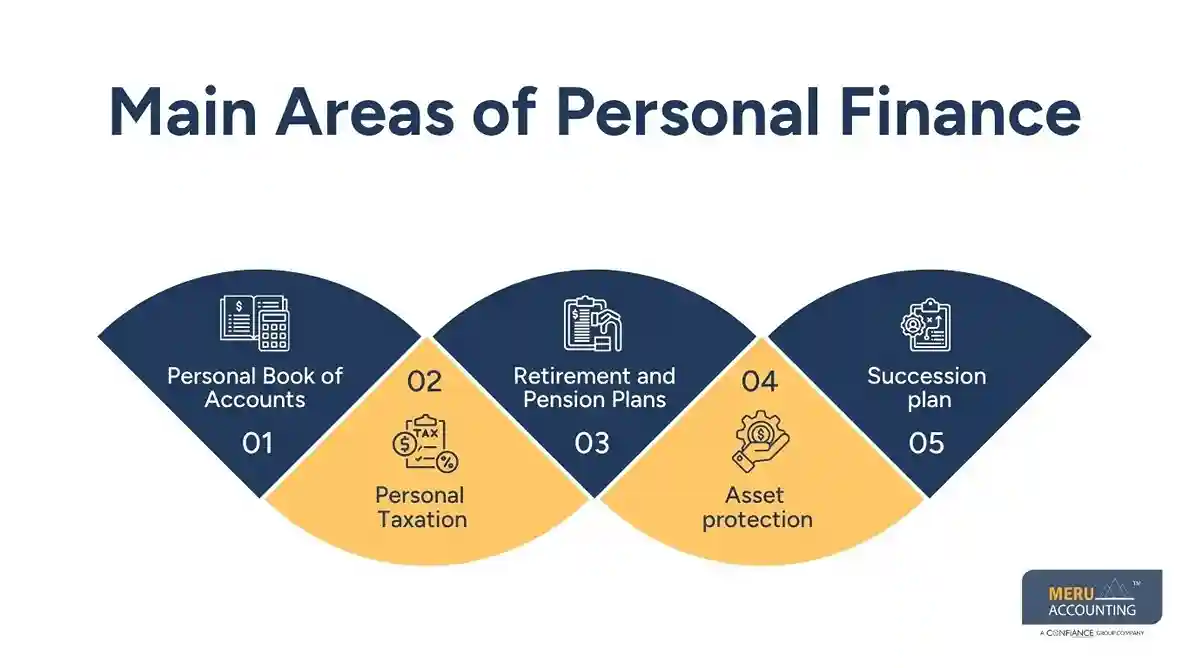
Asset protection
Deals with planning for protecting individual assets and business entities owing to significant assets. Certain factors have to be considered to avail asset protection to apply the desired debtor-creditor law. The identity of the debtor and the liable aspects. Nature of claim and assets, and the creditor’s identity
Succession plan
You need to plan for new members or leaders to take over if the old person leaves, retires, or passes away. This helps keep control of money safe.
To protect personal financial rights, you should move credit guarantees to family or the next in line. This also helps build good credit for the future.
Why Understanding Areas of Finance is Important
- Understanding the areas of finance helps you avoid many financial problems. It lets you make smart choices that stop trouble with cash.
- It helps you learn how to budget, save, invest, and maintain a book of accounts for better financial control. With these skills, you can control your money better.
- Knowing these areas helps you set clear goals for your money. You can then take steps to reach those goals.
- It lowers stress about money because you feel sure when you handle your cash. Knowing finance brings peace in hard times.
- Understanding finance helps you build a safe financial future. It helps you plan for emergencies and for later in life. This makes your life more secure.
Tips for Managing Personal Finance
- Track your income and expenses often by keeping a book of accounts to see where your money goes. This helps you find waste and make changes.
- Follow your budget well to avoid spending too much. A good budget keeps your money balanced.
- Save money first before you spend. Set aside some income as soon as you get paid to help your savings grow.
- Avoid debts you don’t need. Too much debt can hurt your future. Borrow only what you can pay back.
- Invest smartly and learn about different ways to grow your money. Spreading your investments lowers risk and may raise returns.
- Check your money plan often to change it as your income or goals change. This keeps your plan working well.
- Plan for emergencies and for life after work. Good plans protect you from surprise costs and help you live well later.
- Use insurance to keep your things safe and cut the financial risks from accidents or harm. Insurance is a safety net for hard times.
Common Mistakes in Personal Finance
- Not making a budget or tracking expenses can lead to spending too much. Without a clear plan, managing money gets hard.
- Spending more than you earn can cause debt and money problems. It’s important to live within your income.
- Not saving or investing means you miss chances to grow your money over time. Small, regular savings help build wealth.
- Using too much credit can lead to high debt and hurt your credit score. Always use credit cards and loans carefully.
- Waiting too long to plan for retirement means you will have less money later. Start early to make sure your future is safe.
- Not having enough insurance can cause a big financial loss if something goes wrong. Good insurance protects you and your family.
Personal finance covers many key areas like income, budgeting, saving, investing, debt, insurance, retirement, and taxes. Knowing these areas helps you manage money well and build a strong future. Focus on learning these areas of finance, maintaining a book of accounts, and applying good financial habits in your daily life. Meru Accounting helps people with these important money topics. We give clear advice and easy solutions. Our skilled team helps you stay on track with your financial goals. We make managing personal finance simple and easy to handle.
Our Expert Insight
Managing personal finance is not just about earning more money—it’s about making informed financial decisions every day. Keeping a proper book of accounts, following a realistic budget, planning for taxes and retirement, and reviewing your finances regularly can help you stay financially organized and prepared for unexpected expenses. Small, consistent financial habits often lead to long-term financial stability and peace of mind.
Key Takeaways
- Personal finance includes budgeting, saving, investing, taxes, insurance, retirement planning, and asset protection.
- Maintaining a book of accounts helps monitor income, expenses, and overall financial health.
- Creating and following a budget is essential for controlling spending and achieving financial goals.
- Regular saving and smart investing help build long-term wealth and financial security.
- Proper tax planning, insurance coverage, and retirement planning protect your financial future.
- Avoid common mistakes such as overspending, excessive debt, and delaying retirement savings.
- Reviewing your financial plan regularly helps you adapt to changing income, expenses, and life goals.
FAQs
What is personal finance?
Personal finance is the management of your income, expenses, savings, investments, taxes, and financial goals to achieve long-term financial stability.
Why is budgeting important in personal finance?
Budgeting helps you track spending, control expenses, save consistently, and make better financial decisions.
How can I start saving money?
Start by setting a budget, saving a fixed amount regularly, and keeping your savings in a separate account for future needs.
What is debt management?
Debt management means handling loans and credit responsibly by making timely payments and avoiding unnecessary debt.
Why is insurance important in personal finance?
Insurance protects you from unexpected financial losses and helps secure your savings during emergencies.